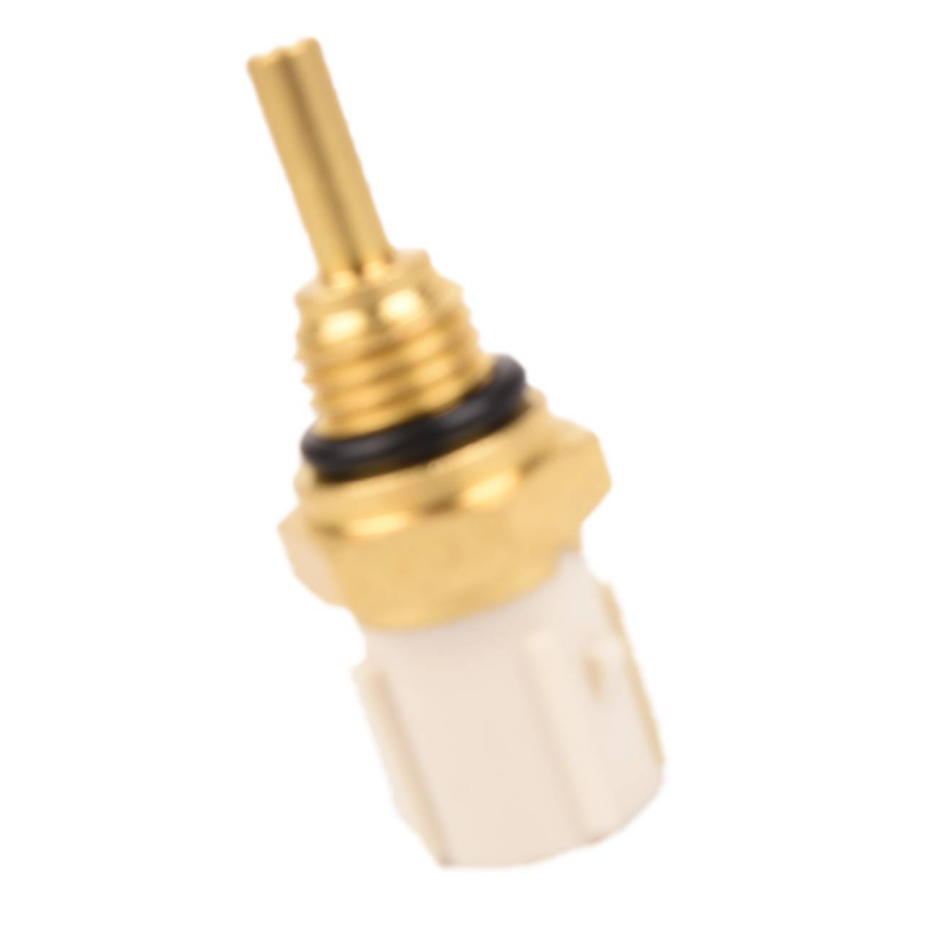

Photos from current listings. Actual item, color, and included accessories may vary.
Temperature Sensor Buying Guide
A temperature sensor converts thermal changes into an electrical signal for engine control, HVAC, appliances, or industrial loops. The primary trade-off is sensor element type and packaging: negative-temperature-coefficient (NTC) thermistors are fast and inexpensive but nonlinear, while resistance-temperature-detector (RTD) and thermocouple designs offer wider range and better accuracy at higher cost. Choose an OEM-equivalent NTC with a sealed connector for automotive coolant use, and specify RTD or thermocouple only when the control loop demands linearity or extreme temperatures.


At a glance
- Category
- Electrical, Sensors & Switches
- Data updated
- Nov 15, 2026
Current offers
Highlights
- NTC thermistors dominate automotive coolant and HVAC air sensing: 2-wire variable resistance, typically 2–20 kΩ at 25 °C, with a negative temperature coefficient of roughly 3–5 %/°C.
- RTD elements (Pt100/Pt1000) deliver near-linear output and ±0.1–0.5 °C accuracy over −50 to +500 °C, but need 3- or 4-wire excitation and a matched transmitter.
- Thermocouples (K, J, T types) cover −200 to +1,350 °C and generate microvolt-level Seebeck output, requiring cold-junction compensation and shielded extension wire.
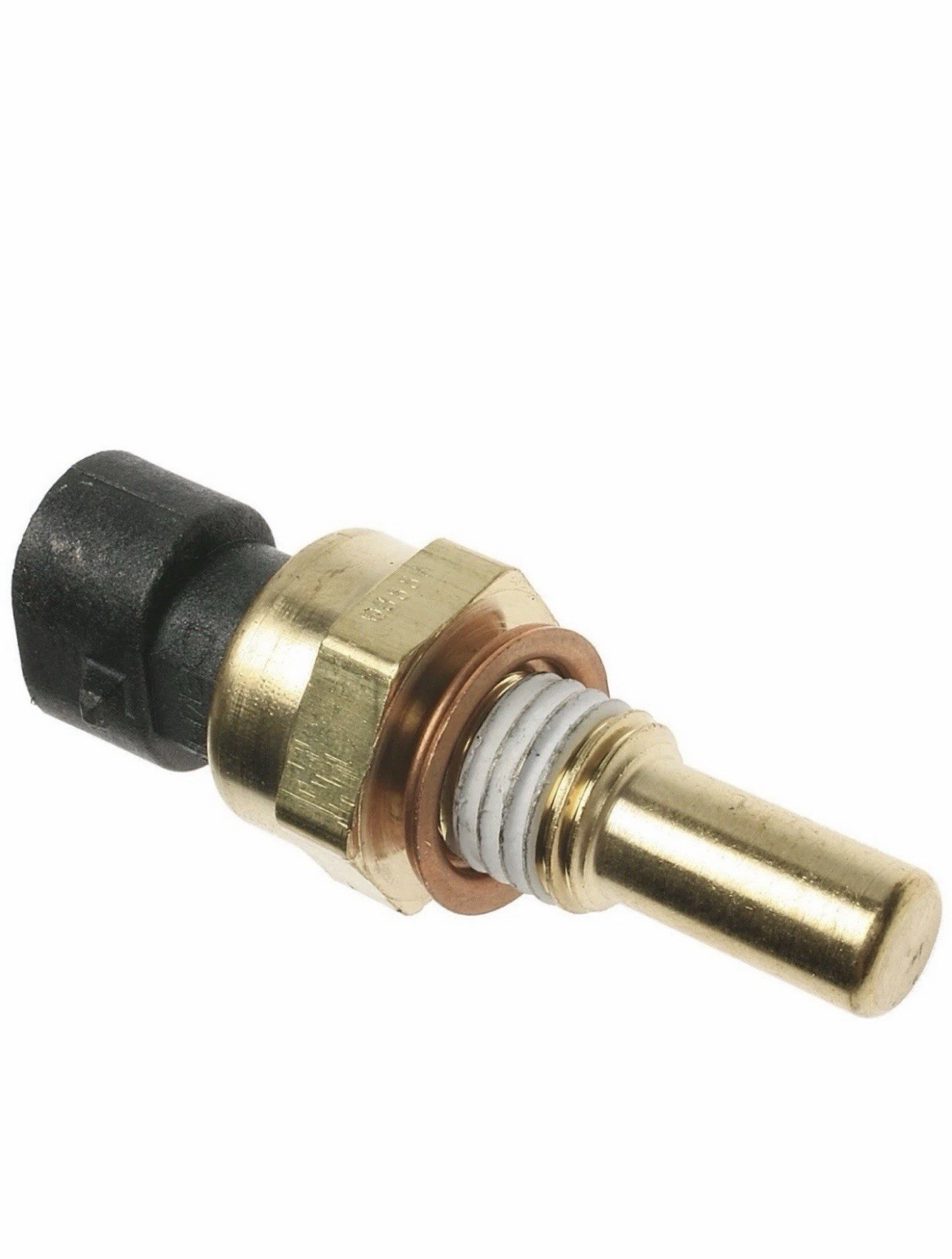
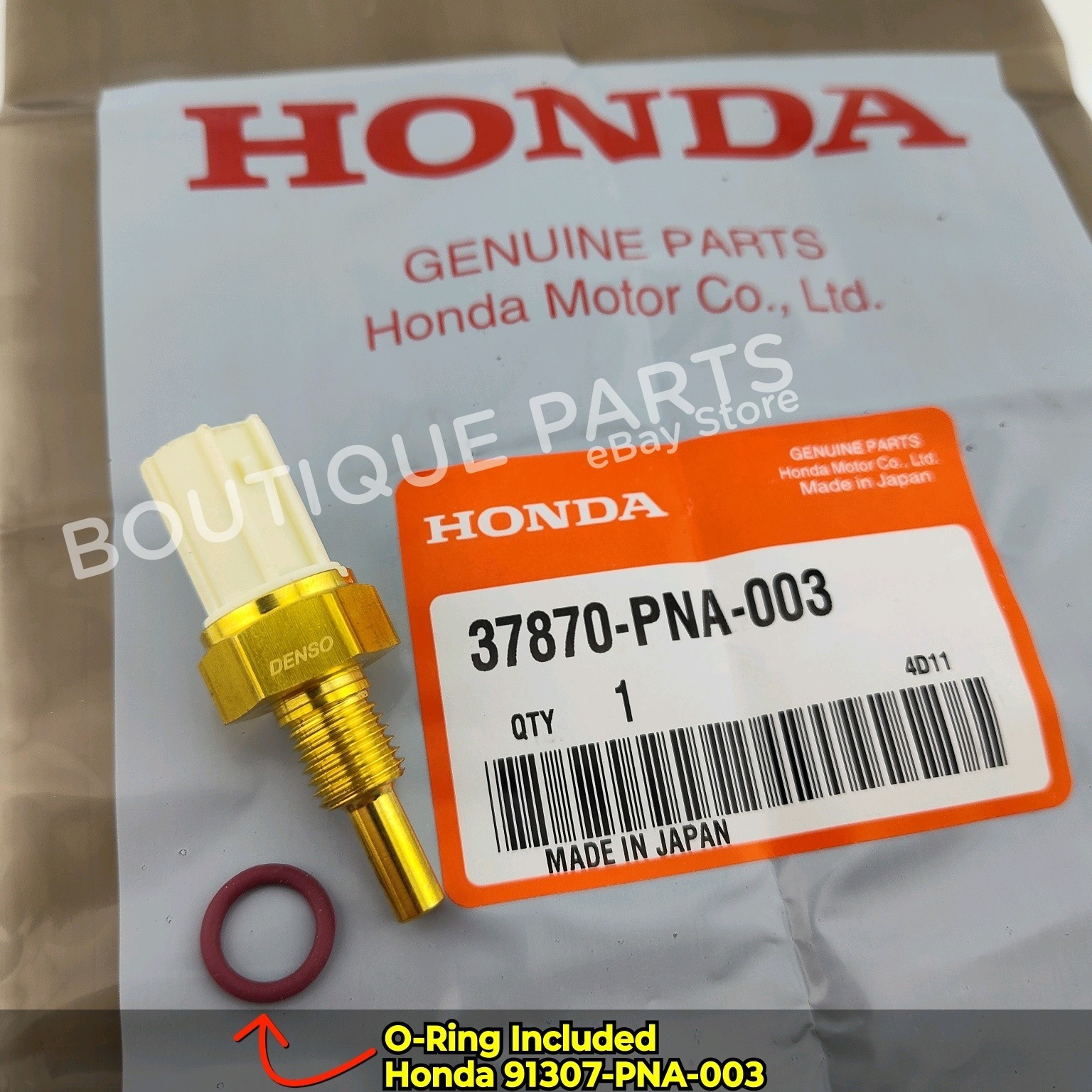
- Automotive coolant sensors use a brass or stainless-steel threaded body with an integrated NTC and a sealed 2-pin connector; OEM part numbers such as 12608814, 37870-PNA-003, and 37870-PJ7003 map to specific thread, resistance curve, and connector keying.
Best use cases
- Engine coolant monitoring on a specific vehicle: buy the OEM-equivalent part number and resistance curve (e.g., Delphi 12608814 for GM, Denso 37870-PNA-003 for Honda) rather than a universal thread-match sensor.
- HVAC duct or room air sensing: choose a 10 kΩ NTC with a protective housing and ±0.5 °C interchangeability; skip industrial RTD probes that need transmitters and 3-wire cabling.
- Industrial process loops above 300 °C: specify a K-type thermocouple or Pt100 RTD with the correct sheath material and cold-junction compensation; avoid plastic-bodied automotive NTCs.
- Battery or electronics thermal protection: use a surface-mount NTC or thin-film RTD bonded to the cell or heatsink; do not substitute a threaded coolant sensor, which has the wrong thermal mass and mounting.
Buying tips
- Match the resistance curve, not just the thread: two M12×1.5 coolant sensors can have different NTC curves (e.g., 2.2 kΩ vs 10 kΩ at 25 °C), causing gauge or ECU errors.
- For RTDs, choose 3-wire or 4-wire wiring to cancel lead resistance; 2-wire Pt100 is only acceptable when lead resistance is negligible relative to element tolerance.
- Thermocouple type must match the transmitter and extension wire (K-type with K-type); mixing types creates junction errors of several degrees.
- Verify connector keying and pin count against the harness: OEM sensors like 37870-PNA-003 use specific latch and seal shapes that aftermarket universal sensors often do not replicate.
Specs
| Sensor Element | NTC / RTD / Thermocouple |
|---|---|
| Temperature Range | −50 to +1,350 °C by type |
| Output Signal | Resistance / mV / 4–20 mA |
| Mounting Interface | Threaded / Probe / Surface-mount |
Related searches
What to check before buying
- Measure the mounting thread and thread pitch (e.g., M12×1.5, M14×1.5, 3/8 NPT) and confirm the sensor insertion depth clears the coolant jacket or duct wall.
- Confirm the electrical interface: 2-wire NTC, 3/4-wire RTD, or 2-wire thermocouple, and that the ECU or controller expects that element type and resistance range.
- Check temperature range and medium compatibility: coolant sensors need brass or stainless bodies and O-ring seals rated for glycol and 120–130 °C; air sensors can use plastic housings.
- For thermocouples and RTDs, verify cold-junction compensation, extension wire type, and shield grounding to avoid noise in long cable runs.
FAQ
Data sources: eBay / Amazon listings and product attribute feeds Data updated Nov 15, 2026.
Some links on this page are affiliate links. If you buy after clicking one, we may earn a commission at no extra cost to you. This does not change which products appear here or their order. Affiliate disclosure.