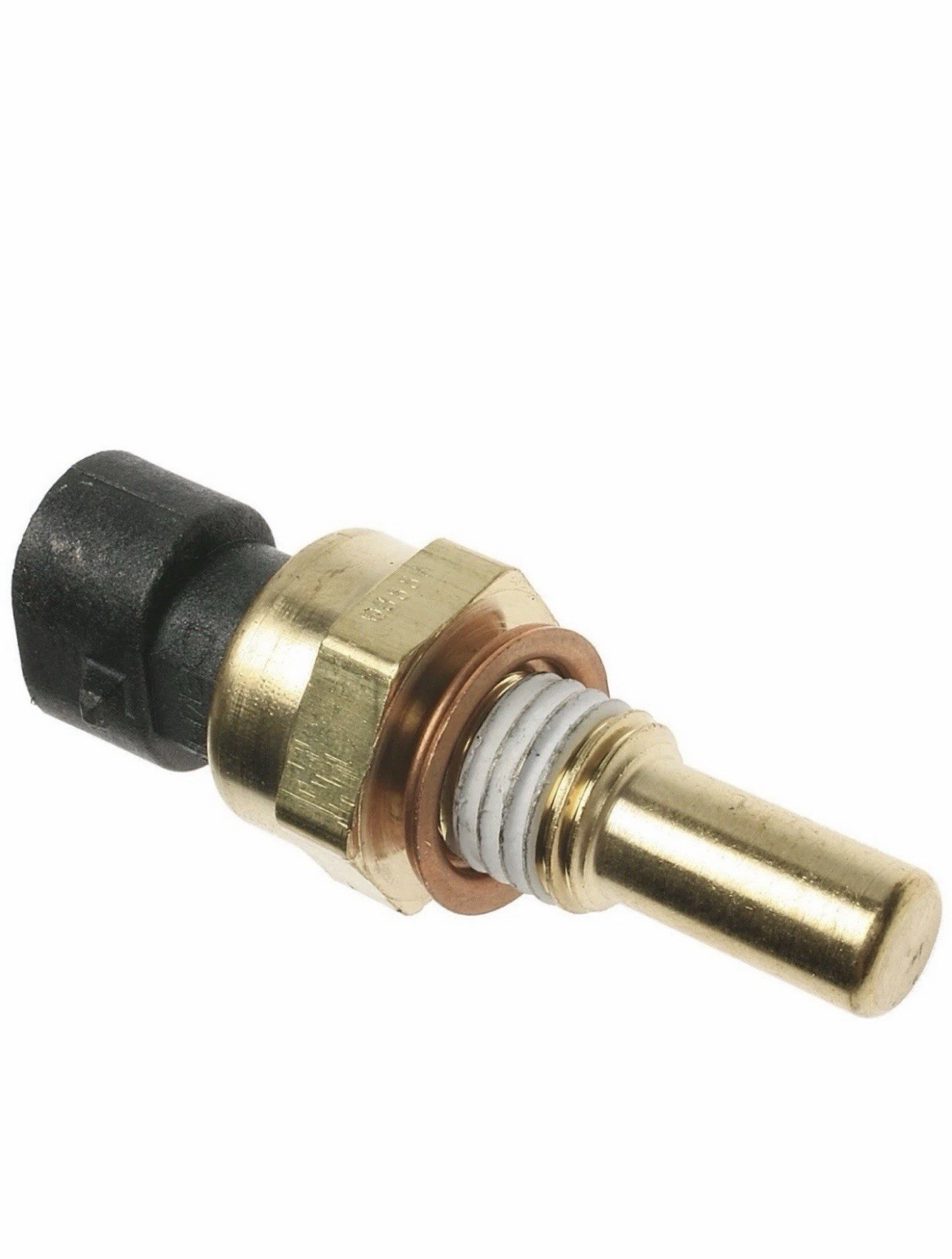

Photos from current listings. Actual item, color, and included accessories may vary.
Engine Coolant Temperature Sensor Buying Guide
An engine coolant temperature (ECT) sensor is a thermistor that reports coolant temperature to the ECU, controlling fuel enrichment, fan activation, and gauge readings. The core trade-off is OEM-style thermistor accuracy and connector sealing versus generic sensors with loose resistance tolerances that cause cold-start and fan faults. Buy the exact OEM part number or a Tier-1 equivalent with a sealed connector; skip unbranded sensors lacking resistance specs.


At a glance
- Category
- Electrical, Sensors & Switches
- Data updated
- Nov 15, 2026
Current offers
Highlights
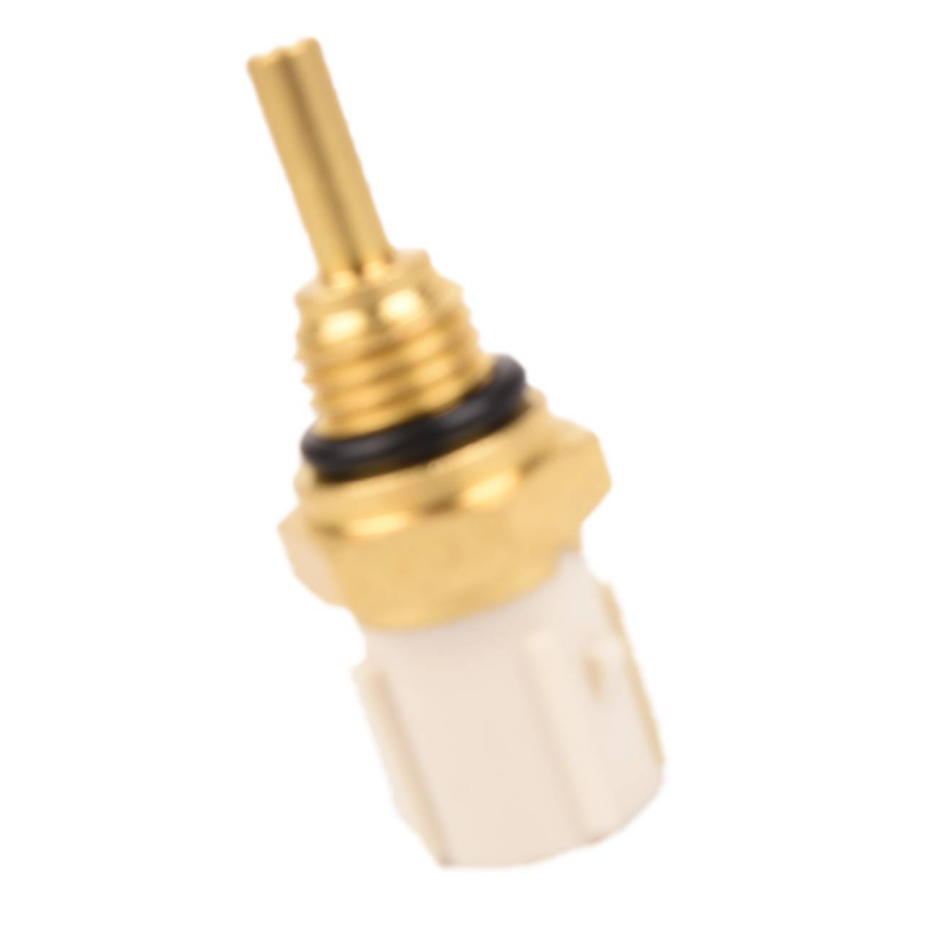
- Two architectures exist: 2-wire NTC thermistors (ECU signal only) and 3-wire units that add a dedicated gauge circuit; match wire count to your harness.
- OEM examples show the fitment rule: GM 12608814 (Delphi) and Honda 37870-PJ7-003 are vehicle-specific—cross-reference the part number, not just thread size.
- NTC resistance falls as temperature rises (typically ~2–3 kΩ cold to ~200–300 Ω hot); sensors outside this curve trigger P0115–P0119 codes.
- Sealing is decisive: OEM sensors use molded connector seals and brass or stainless bodies; generic sensors often use unsealed crimps that corrode at the connector.
Best use cases
- Best fit: OEM replacement on a stock daily driver—buy by VIN or exact part number (e.g., GM 12608814) to preserve ECU calibration and connector fit.
- Best fit: 3-wire gauge-plus-ECU systems—select the 3-wire variant only if the factory harness has three terminals; a 2-wire sensor leaves the gauge dead.
- Wrong fit: racing or swapped engines with custom ECUs—skip OEM curve sensors and use a sensor matched to your ECU's resistance table.
- Wrong fit: buying by thread size alone—M12×1.5 or 3/8 NPT bodies are not interchangeable in depth, tip length, or connector keying.
Buying tips
- Cross-reference the OEM number first (e.g., 12608814, 37870-PJ7-003); aftermarket interchanges must list your exact engine and year.
- Demand a published resistance table at 20°C and 80–90°C; a sensor without a curve cannot be verified against the factory spec.
- Choose brass or stainless-steel bodies with molded connector seals; painted or potted generic bodies crack and leak at the threads.
- Match wire count and connector keying to the harness—2-wire vs 3-wire and oval vs square plugs are not adapter-free swaps.
Specs
| Sensor Type | NTC thermistor, 2-wire or 3-wire |
|---|---|
| Thread Sizes | M12×1.5 / M14×1.5 / 3/8 NPT |
| Body Material | Brass or stainless steel |
| Connector Seal | Molded seal, keyed plug |
Related searches
What to check before buying
- Confirm the harness connector shape, pin count, and keying against the old sensor before ordering.
- Verify thread size and reach (M12×1.5, M14×1.5, 3/8 NPT) and whether a copper crush washer or O-ring seals the port.
- Check coolant type and system voltage (12V negative ground) so the sensor's materials and electrical spec match.
- Inspect the thermostat housing and wiring pigtail—brittle connectors and corroded pins cause false ECT codes after replacement.
FAQ
Data sources: eBay / Amazon listings and product attribute feeds Data updated Nov 15, 2026.
Some links on this page are affiliate links. If you buy after clicking one, we may earn a commission at no extra cost to you. This does not change which products appear here or their order. Affiliate disclosure.