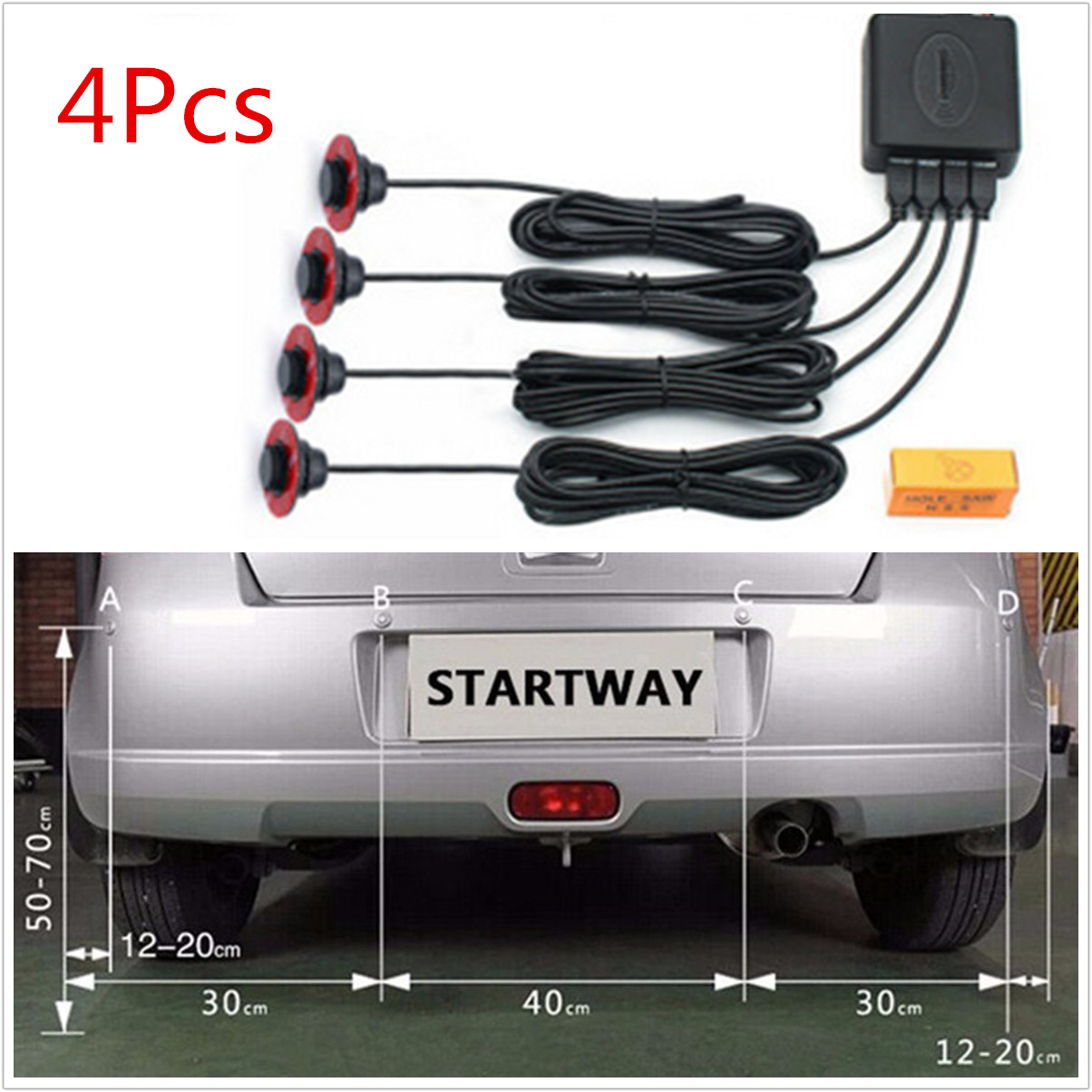

Photos from current listings. Actual item, color, and included accessories may vary.
Car Reverse Sensor Buying Guide
Car reverse sensors are ultrasonic obstacle-detection systems that alert drivers to rear blind-zone hazards, and the core trade-off is between basic buzzer-only kits and multi-sensor systems with adjustable sensitivity and display feedback. Durable options use weather-sealed ultrasonic transducers with wide voltage tolerance and proper drill-fit hardware; compromises skimp on IP rating, cable length, or sensor count and fail in rain or on curved bumpers.


At a glance
- Category
- Electrical, Sensors & Switches
- Data updated
- Nov 15, 2026
Current offers
Highlights
- Sensor count drives coverage: 4 sensors cover a standard bumper; 6-8 sensors are needed for long beds or wide SUVs to eliminate corner blind spots.
- Ultrasonic frequency around 40 kHz is standard; detection range typically 0.3-2.5 m, with accuracy degrading below 0.3 m due to transducer ring-down.
- IP67 or IP68 transducer rating is the durability threshold; unrated kits fail from moisture ingress at the sensor diaphragm within a season.
- Display type separates tiers: audible-only buzzers are entry level; LED distance bars or video-integrated displays add graded proximity feedback and reduce false alarms.
Best use cases
- Best fit: 4-sensor audible kit on a compact sedan or hatchback with a flat rear bumper — simple, low-cost, and covers the primary blind zone.
- Best fit: 6-8 sensor system with LED display on a full-size SUV, pickup, or van — long rear overhangs and wide corners demand extra transducer coverage.
- Wrong fit: buying an unrated 2-sensor kit for a curved or stepped bumper — poor transducer seating causes constant false alerts and water intrusion.
- Wrong fit: expecting any ultrasonic kit to detect low curbs, posts, or children at close range — supplement with a backup camera for sub-0.3 m visibility.
Buying tips
- Match sensor count to bumper width: 4 sensors for bumpers under 1.8 m, 6 sensors above 1.8 m, and 8 for dual-rear-wheel or long-bed trucks.
- Check voltage range: kits rated 9-16 V DC work on 12 V and most 24 V truck systems; 12 V-only kits need a converter on heavy vehicles.
- Confirm drill diameter matches the transducer: common sizes are 18.5 mm, 21 mm, and 22 mm — a mismatched hole ruins a waterproof seal.
- Prefer kits with adjustable sensitivity and volume, plus a mute button, to avoid nuisance alarms in tight parking garages and traffic.
Specs
| Sensor Count | 2 / 4 / 6 / 8 transducers |
|---|---|
| Ingress Rating | IP67-IP68 (unrated = compromise) |
| Detection Range | 0.3-2.5 m typical |
| Alert Type | Buzzer / LED display / video |
Related searches
What to check before buying
- Measure rear bumper height and curvature: transducers need a flat vertical face at least 40-50 cm above ground for reliable echo return.
- Verify vehicle electrical standard: confirm 12 V negative-ground wiring and locate a fused reverse-light circuit for trigger power.
- Check cable length from each sensor to the control box: short kits force mounting compromises on long vehicles; 2.5 m per sensor is safe.
- Confirm bumper material and thickness: plastic bumpers under 4 mm drill cleanly; metal or reinforced bumpers require stepped hole saws and rust treatment.
FAQ
Data sources: eBay / Amazon listings and product attribute feeds Data updated Nov 15, 2026.
Some links on this page are affiliate links. If you buy after clicking one, we may earn a commission at no extra cost to you. This does not change which products appear here or their order. Affiliate disclosure.