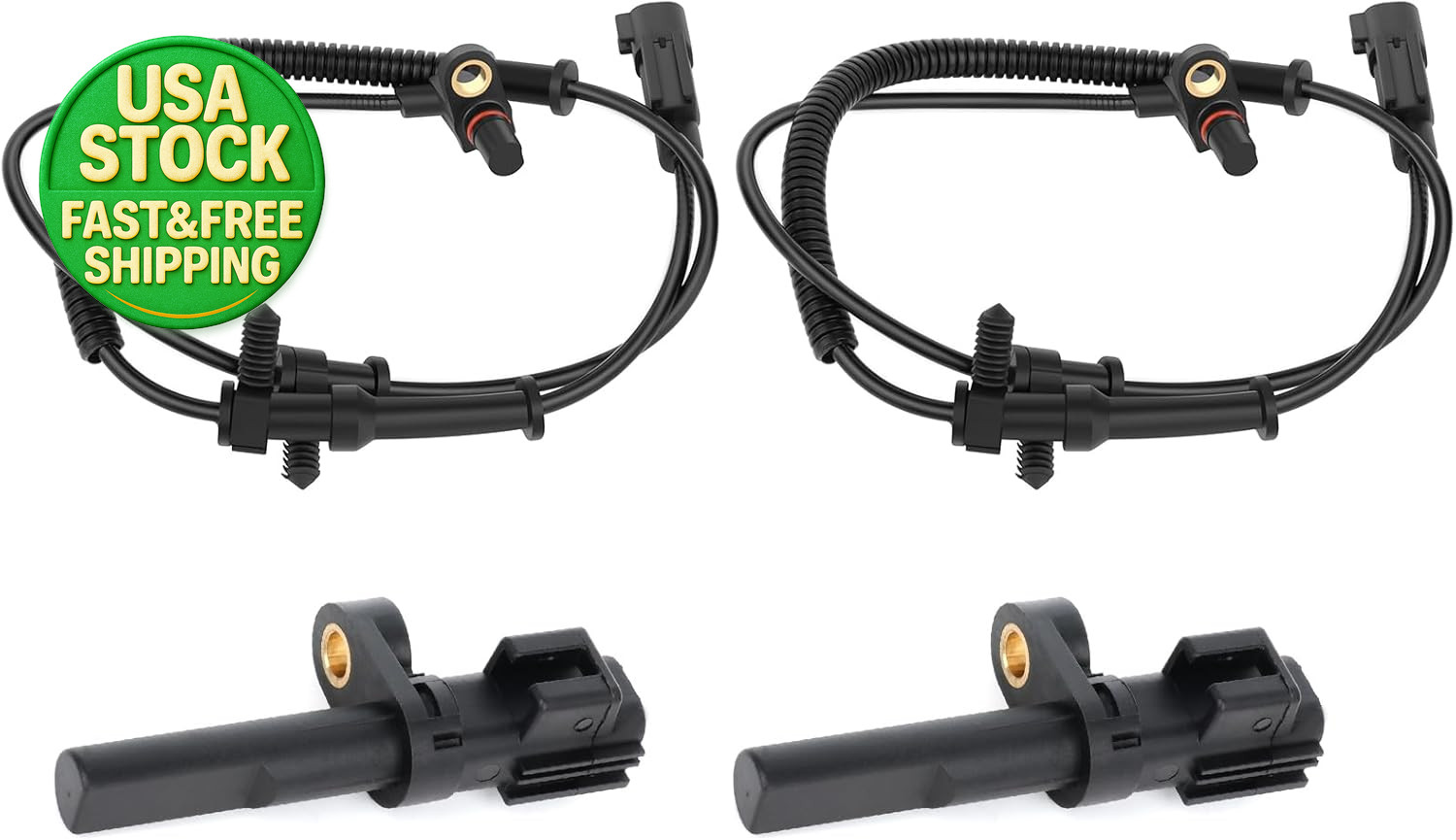

Photos from current listings. Actual item, color, and included accessories may vary.
Abs Wheel Speed Sensor Buying Guide
An ABS wheel speed sensor is the active or passive transducer that reports each wheel's rotational speed to the ABS/ESC module; the core trade-off is passive two-wire inductive vs active three-wire Hall-effect or magneto-resistive construction, which dictates signal quality at low speed and compatibility with the vehicle's module. The decision rule: match the OEM sensor architecture (passive vs active, connector pin count, harness length) to your chassis and buy a sealed, OE-cross-referenced unit, because a wrong-type or poorly sealed sensor triggers phantom ABS/ESC faults and repeat failures.


At a glance
- Category
- Electrical, Sensors & Switches
- Data updated
- Nov 15, 2026
Current offers
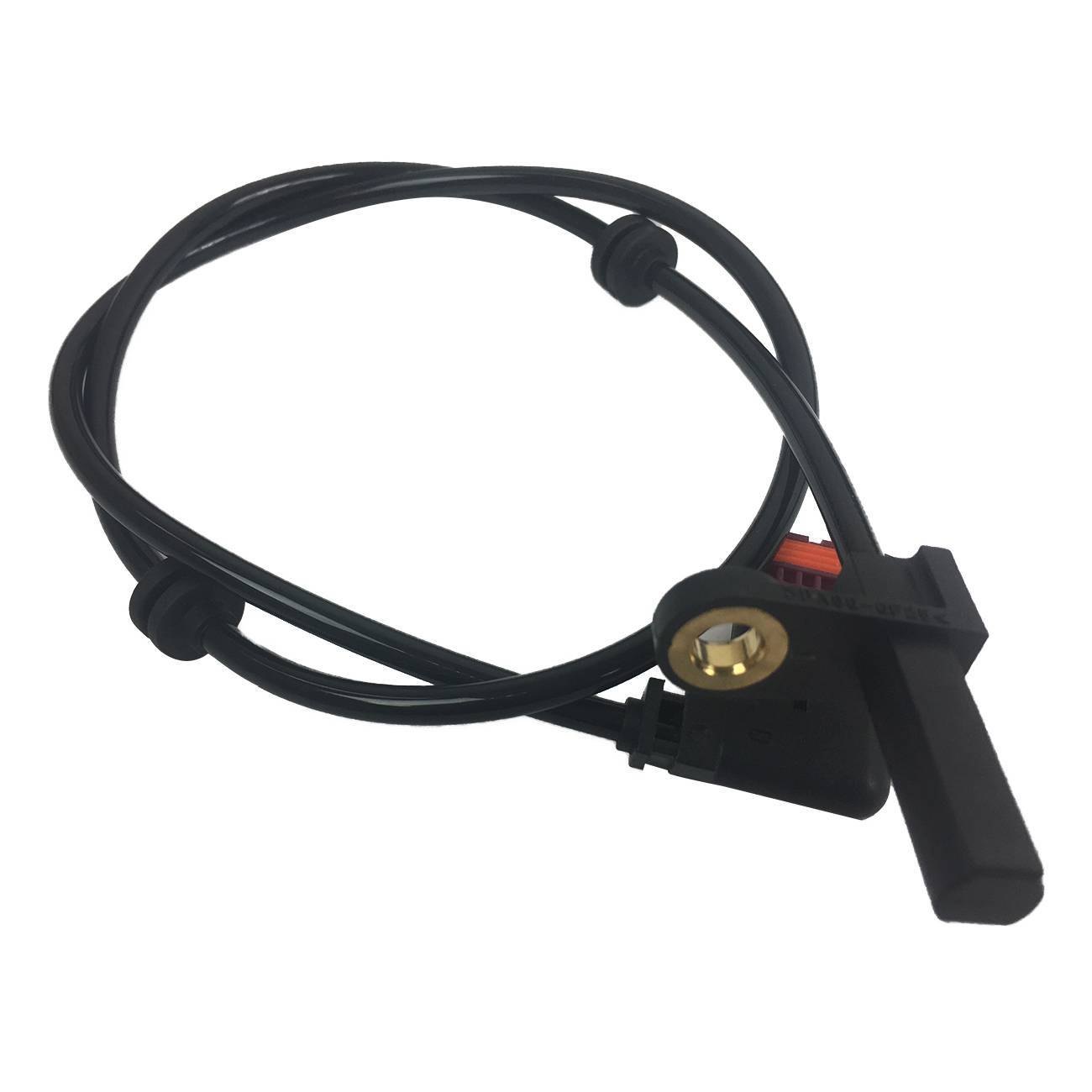
Highlights
- Passive inductive sensors generate their own AC voltage proportional to wheel speed and cannot read below roughly 3-5 mph; active Hall-effect/MR sensors need a 12V supply and read down to zero speed, which is required for hill-hold and ESC.
- Connector and wire count are the fastest compatibility check: 2-wire equals passive inductive, 3-wire equals active Hall/MR; a 2-wire harness on an ESC-equipped vehicle will not function.
- Sealing and harness construction decide service life: OEM-grade units use molded overmolded bodies, silicone seals, and strain-relieved leads rated for the wheel-well environment; cheap units crack at the body-to-harness joint and admit water.
- Mounting and air-gap tolerances are model-specific: the sensor must seat fully in the knuckle bore with the correct retaining bolt torque, and a corroded or oversized bore destroys the air gap and the signal.
Best use cases
- Best fit: a daily-driven vehicle showing an ABS/ESC/traction light with a scan-tool-confirmed single-wheel speed code — buy the exact OEM-cross-referenced active or passive sensor for that corner and replace the harness clip if brittle.
- Best fit: rust-belt or high-mileage cars where the old sensor is seized — buy a coated or stainless-bodied sensor and plan to clean or ream the knuckle bore before install to restore the air gap.
- Wrong fit: buying a 4-piece 'fits multiple years' kit when only one corner failed — diagnose the code first; replacing all four on a working system adds cost and new sealing risk without benefit.
- Skip: universal or cut-and-splice 'one-size' sensors on CAN-bus/ESC vehicles — the module expects the exact waveform, resistance, and connector, and splicing degrades the low-speed signal.
Buying tips
- Decode the fault first: a P0500/ABS code naming one wheel means one sensor; a code naming all wheels or intermittent all-wheel dropouts points to the module, harness, or reluctor ring — do not buy sensors blindly.
- Match wire count and connector keyway to the original: 2-wire passive vs 3-wire active is non-negotiable, and the connector shell must click into the vehicle harness without force or adapter.
- Verify the reluctor/tone ring: many 'sensor failures' are cracked or rust-swollen tone rings; if the ring is damaged, a new sensor will read intermittently regardless of quality.
- Choose OEM-cross-referenced part numbers (e.g., matching the 68060333AB family for the Ram application) over generic 'compatible with' listings, and prefer sensors with molded strain relief over heat-shrink joints.
Specs
| Sensor Type | Passive inductive vs active Hall/MR |
|---|---|
| Wire Count | 2-wire passive / 3-wire active |
| Signal At Low Speed | Active reads to 0 mph; passive ~3-5 mph |
| Sealing & Body | Molded overmold + silicone seal |
Related searches
What to check before buying
- Confirm the vehicle's ABS type (passive 2-wire vs active 3-wire) from the OEM parts diagram or connector pin count before ordering.
- Measure or photograph the original sensor's harness length and connector keyway — short or keyed-wrong leads cannot be adapted safely.
- Inspect the knuckle bore and tone ring for rust, cracks, or debris; plan for bore cleaning and the correct retaining bolt torque on install.
- Check the vehicle harness side for corrosion or broken clips, since a good sensor on a damaged pigtail still throws the same code.
FAQ
Data sources: eBay / Amazon listings and product attribute feeds Data updated Nov 15, 2026.
Some links on this page are affiliate links. If you buy after clicking one, we may earn a commission at no extra cost to you. This does not change which products appear here or their order. Affiliate disclosure.