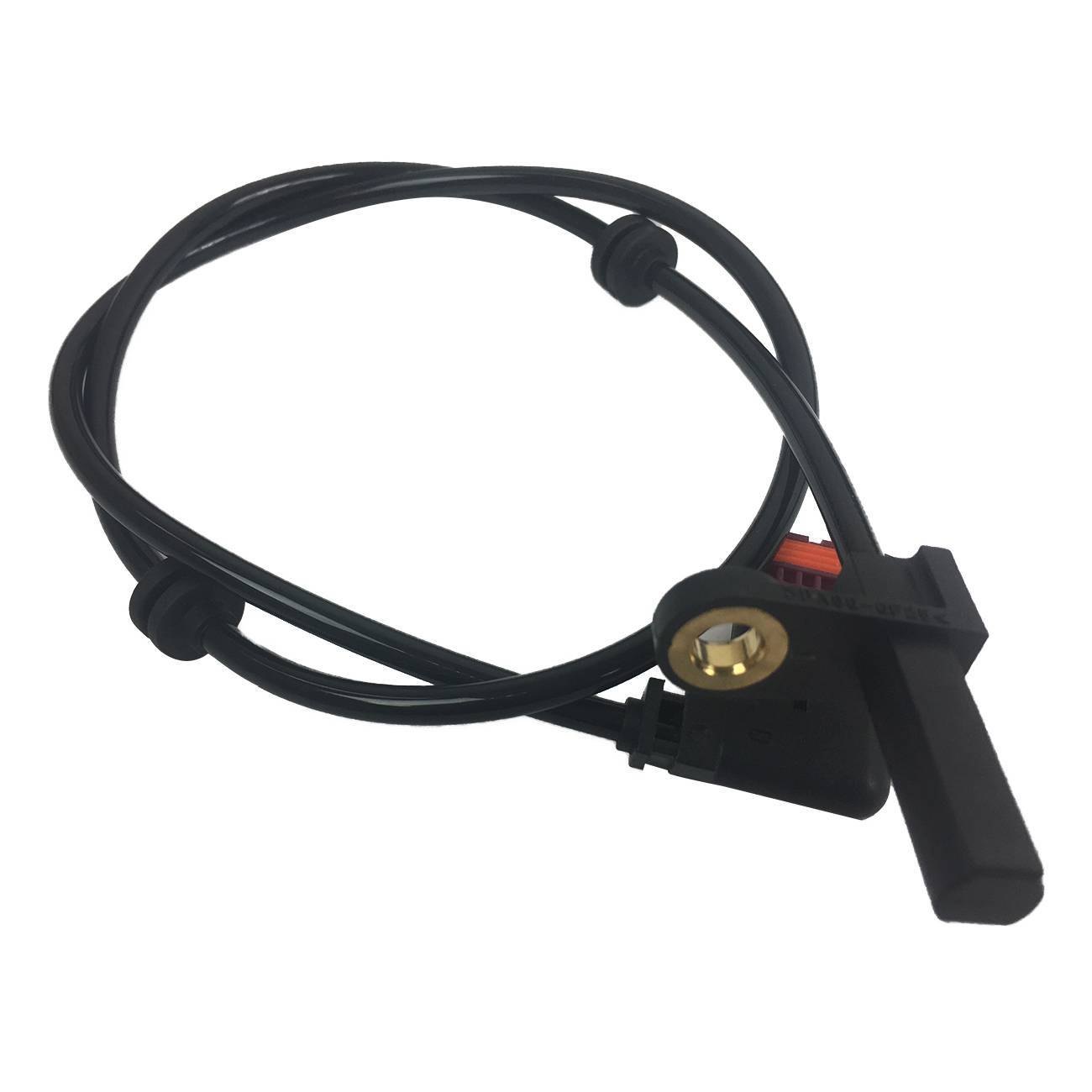

Photos from current listings. Actual item, color, and included accessories may vary.
Abs Speed Sensor Buying Guide
An ABS speed sensor is a sealed Hall-effect or variable-reluctance pickup that reports wheel rotational speed to the ABS module, and its durability hinges on the sensing element type, connector sealing, and harness strain relief. Buy OEM or OE-equivalent sensors with the correct connector keyway and pre-terminated pigtail; generic drop-in sensors without vehicle-specific indexing cause intermittent faults and false ABS activation.


At a glance
- Category
- Electrical, Sensors & Switches
- Data updated
- Nov 15, 2026
Current offers
Highlights
- Hall-effect sensors output a digital square wave and are position-sensitive; variable-reluctance sensors output an AC sine wave that weakens at low speed and requires a precise air gap.
- OE sensors use sealed connector housings with double-lip seals and strain-relieved pigtails; bargain sensors often skip the secondary seal and corrode at the pins within one winter.
- Wheel-speed sensor harness length and clip placement are vehicle-specific; a sensor that fits the hub but routes the pigtail too close to the brake caliper will chafe and fail open-circuit.
- Rear-wheel ABS systems use a single sensor in the differential; four-channel systems use one sensor per wheel, so confirm axle count and whether the sensor reads a tone ring or the hub bearing encoder.
Best use cases
- Best fit: direct-fit OE or OE-equivalent sensor matched to your VIN, axle position, and connector keyway for a repair that clears the ABS light without recurring faults.
- Best fit: pre-terminated pigtail sensors when the original connector is brittle or corroded; splice with heat-shrink butt connectors and route along the factory clip points.
- Wrong fit: universal two-wire sensors sold by wire length alone—they lack the correct mounting flange, air-gap shim, and sealed connector, and often trigger false wheel-speed codes.
- Wrong fit: buying a full four-pack before diagnosing which wheel is faulting; scan the ABS module for the specific wheel-speed code and inspect that sensor's tone ring first.
Buying tips
- Match the sensor to the exact axle position (front left/right, rear left/right) and drive type; AWD and 4WD models frequently use different rear sensor lengths than 2WD.
- Prefer sensors with a molded, sealed connector and a flexible pigtail over bare-pin sensors; the connector seal is the primary failure point on older vehicles.
- Check the tone ring or encoder ring condition before replacing the sensor; a cracked or rust-swollen ring produces the same code as a failed sensor.
- For variable-reluctance sensors, confirm the air gap specification and use a non-magnetic feeler gauge; for Hall-effect sensors, confirm supply voltage and signal type from the service manual.
Specs
| Sensor Type | Hall-effect (digital) vs variable-reluctance (AC) |
|---|---|
| Connector Style | Sealed keyed housing / pre-terminated pigtail |
| Axle Position | Front/rear left/right; differential single-sensor |
| Signal Output | Square wave (Hall) / sine wave (VR) |
Related searches
What to check before buying
- Verify the ABS module wheel-speed code with a scan tool to identify the exact corner or axle before ordering.
- Measure the distance from the hub mounting hole to the first factory harness clip so the replacement pigtail routes without tension.
- Inspect the tone ring or hub encoder for cracks, missing teeth, or rust jacking; replace it if damaged.
- Confirm connector keyway and pin count against the original sensor; keyed connectors will not seat on the wrong housing.
FAQ
Data sources: eBay / Amazon listings and product attribute feeds Data updated Nov 15, 2026.
Some links on this page are affiliate links. If you buy after clicking one, we may earn a commission at no extra cost to you. This does not change which products appear here or their order. Affiliate disclosure.