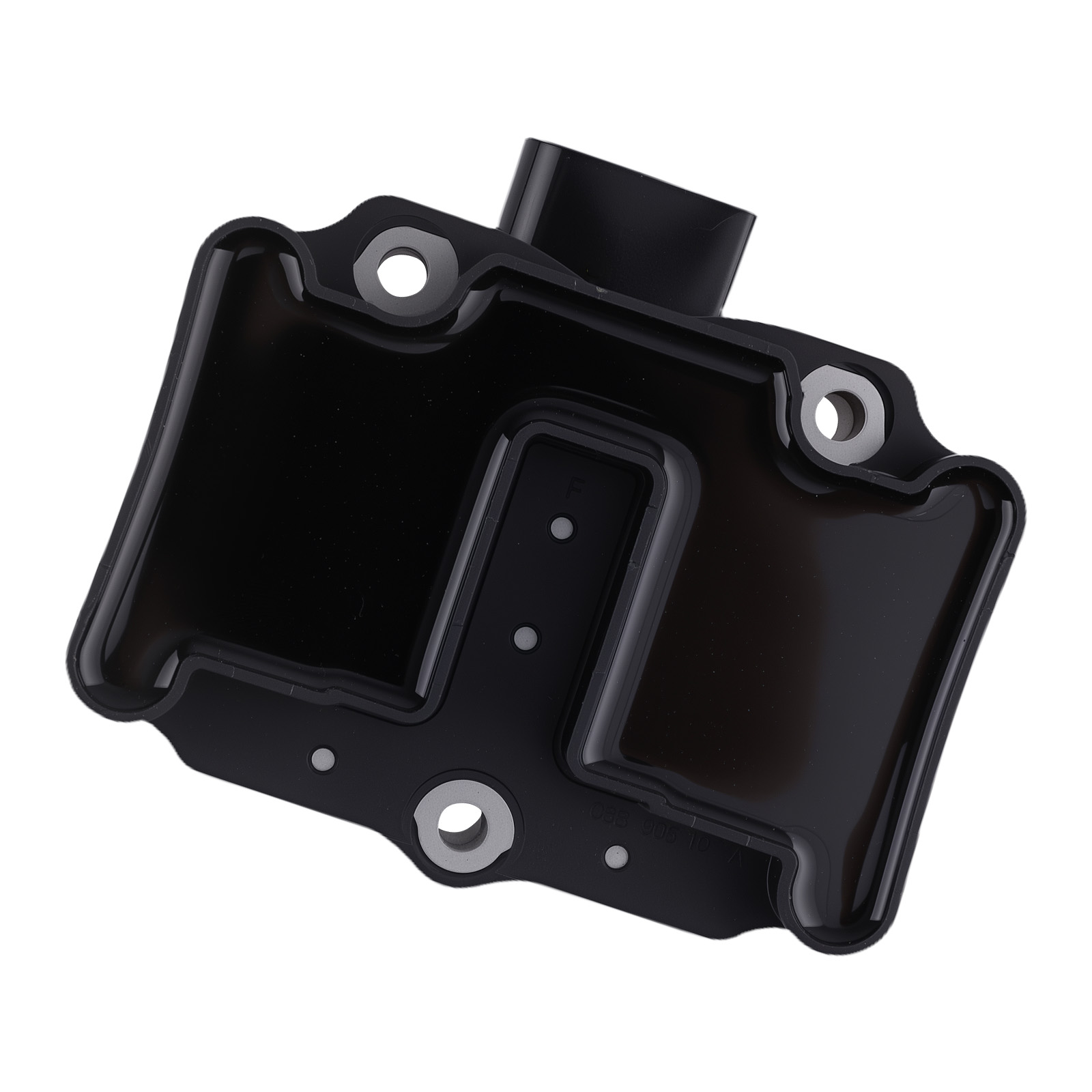

Photos from current listings. Actual item, color, and included accessories may vary.
Volkswagen Ignition Coil Buying Guide
A Volkswagen ignition coil transforms the battery's low voltage into the 20–40 kV needed to fire the spark plugs, and the core trade-off is OEM-style epoxy-potted construction versus cheaper oil-filled or thin-resin coils that fail under heat. The decisive rule: match the exact VW engine code and coil generation (e.g., AEG 2.0L vs TSI/FSI), and choose a coil rated for your ignition system's dwell and voltage—anything less invites misfires and premature failure.


At a glance
- Category
- Engine, Exhaust & Fuel System Parts
- Data updated
- Nov 15, 2026
Current offers
Highlights
- Coil architecture splits into two families: wasted-spark coil packs (two outputs, common on older 2.0L AEG/ABA engines) and individual coil-on-plug (COP) sticks for later TSI/FSI engines; they are not interchangeable.
- OEM-style coils use epoxy potting with integrated igniter modules and secondary insulation rated above 30 kV; budget coils often use oil filling or thin resin that breaks down under heat cycling.
- The VW part number 032905106B (Beru/Bosch equivalent 178-8271) is specific to 2.0L AEG-era engines—cross-reference by engine code, not by vehicle model year alone.
- Primary resistance typically measures 0.4–1.0 Ω and secondary 5–8 kΩ; out-of-range readings indicate a failing coil even before a misfire code appears.
Best use cases
- Best fit: a 1999–2005 Jetta/Golf 2.0L AEG with a misfire code on paired cylinders—use the wasted-spark coil pack (032905106B) rather than converting to COP.
- Best fit: a TSI/FSI engine with a single-cylinder misfire—replace the individual coil-on-plug stick on that cylinder and inspect the spark plug boot for carbon tracking.
- Wrong fit: buying a generic 'universal' coil by model year only—VW used multiple coil architectures within the same generation, so engine code and connector type must match.
- Wrong fit: upgrading to a high-output coil without a matching tune—stock ECUs are calibrated to OEM dwell and resistance, and mismatched coils can cause misfires or driver damage.
Buying tips
- Cross-reference the VW part number stamped on the old coil (e.g., 032905106B) against the engine code, not just the model and year, because VW shared platforms across multiple coil types.
- Choose epoxy-potted coils with a molded igniter module over oil-filled designs; potting resists vibration and heat cycling that cause internal arcing and misfires.
- Replace coils in matched sets for wasted-spark packs (both outputs share a circuit) and inspect all spark plugs and boots whenever one COP fails.
- Measure primary and secondary resistance with a multimeter before installation; a new coil reading outside 0.4–1.0 Ω primary or 5–8 kΩ secondary should be rejected.
Specs
| Coil Type | Wasted-spark pack vs COP stick |
|---|---|
| Construction | Epoxy-potted vs oil-filled |
| Primary Resistance | 0.4–1.0 Ω |
| Secondary Resistance | 5–8 kΩ |
Related searches
What to check before buying
- Confirm the engine code (e.g., AEG, ABA, TSI, FSI) from the timing cover or VIN decode—coil fitment is engine-code-specific, not model-year-specific.
- Inspect the connector style: wasted-spark packs use a multi-pin harness plug, while COP sticks use individual 3- or 4-pin connectors; they are physically incompatible.
- Check spark plug condition and gap—worn plugs increase required firing voltage and can destroy a new coil within thousands of miles.
- Verify ignition system voltage and dwell requirements match the coil's rating; stock ECUs expect OEM-spec resistance and inductance.
FAQ
Data sources: eBay / Amazon listings and product attribute feeds Data updated Nov 15, 2026.
Some links on this page are affiliate links. If you buy after clicking one, we may earn a commission at no extra cost to you. This does not change which products appear here or their order. Affiliate disclosure.