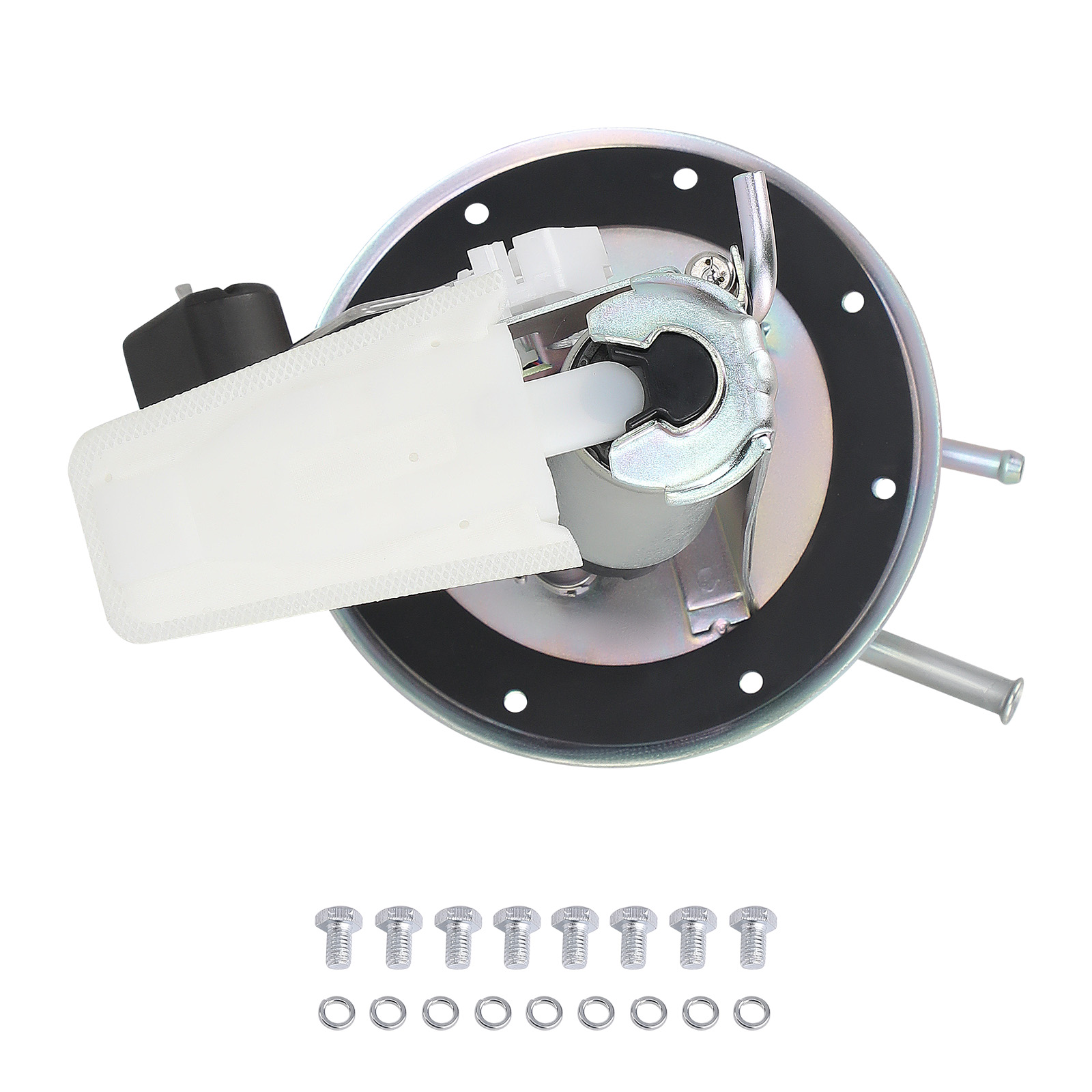

Photos from current listings. Actual item, color, and included accessories may vary.
Toyota Fuel Pump Buying Guide
A Toyota fuel pump is the in-tank electric assembly that delivers gasoline at the correct pressure and volume to the fuel rail. The core trade-off is OEM-style turbine pump quality versus cheap generic motors with undersized brushes, weak check valves, and incorrect float-arm geometry. Buy a pump that matches your engine code and tank depth exactly; skip any 'universal fit' listing that lists multiple unrelated models.


At a glance
- Category
- Engine, Exhaust & Fuel System Parts
- Data updated
- Nov 15, 2026
Current offers
Highlights
- OEM Denso and Aisan pumps use a turbine impeller and carbon brushes rated for 100,000+ miles; generic pumps often use a smaller brushed motor that fails early.
- Return-style systems (most 1990s–early 2000s Toyota) run lower base pressure (~35–45 psi) than returnless systems (~50–60 psi); pumps are not interchangeable.
- Corolla/Prizm 1.6L and 1.8L (1993–1997) use a module with a specific tank depth and float arm; a 1.8L module will not read correctly in a 1.6L tank sender.
- Fuel pump modules include the sender unit and float; buying only the bare pump omits the strainer, O-ring, and wiring pigtail that cause most re-install failures.
Best use cases
- Best fit: 1993–1997 Corolla or Geo Prizm 1.6L/1.8L with a failed pump — buy the complete module (2322062020-style) with sender and strainer to avoid a second labor job.
- Best fit: a high-mileage 1990s Toyota with a failing check valve (long cranks, hard hot starts) — replace the entire module, not just the pump motor, because the valve is integrated in the module.
- Wrong fit: a 2003+ Toyota with returnless fuel system — do not install a return-style module; pressure and regulator architecture differ and will cause rich/lean codes.
- Skip: any listing that says 'fits Corolla, Camry, Tacoma' — tank depth, flange, and sender resistance differ per chassis; only buy by exact year, engine, and body style.
Buying tips
- Match the Toyota engine code (5SFE, 7AFE, 1ZZFE) and model year range exactly; pump modules changed flange and sender resistance at mid-cycle refreshes.
- Choose a module with a new strainer and tank O-ring included — reusing a hardened O-ring causes EVAP leaks and fuel smell.
- Prefer OEM Denso or Aisan part numbers; aftermarket pumps with brass-colored impellers often indicate a generic motor with lower flow at high pressure.
- Check the connector pin count and color — 1990s Toyota modules use 4-pin square connectors; a mismatch means cutting the harness, which invites corrosion.
Specs
| Pump Type | Turbine electric in-tank |
|---|---|
| System Pressure | Return 35–45 psi / Returnless 50–60 psi |
| Module Contents | Pump + sender + strainer + O-ring |
| Fitment Match | Engine code + year + tank depth |
Related searches
What to check before buying
- Measure your fuel tank depth and module flange diameter before ordering; 1993–1997 Corolla tanks differ from later models by several millimeters.
- Confirm your vehicle is return-style (fuel pressure regulator on the rail) versus returnless (regulator in tank) by tracing the fuel line.
- Verify the sender resistance range matches your gauge (typically 0–90 ohm or 110–0 ohm) so the fuel gauge reads correctly.
- Inspect the fuel pump fuse and relay first — a blown fuse mimics a dead pump, and replacing the module won't fix it.
FAQ
Data sources: eBay / Amazon listings and product attribute feeds Data updated Nov 15, 2026.
Some links on this page are affiliate links. If you buy after clicking one, we may earn a commission at no extra cost to you. This does not change which products appear here or their order. Affiliate disclosure.