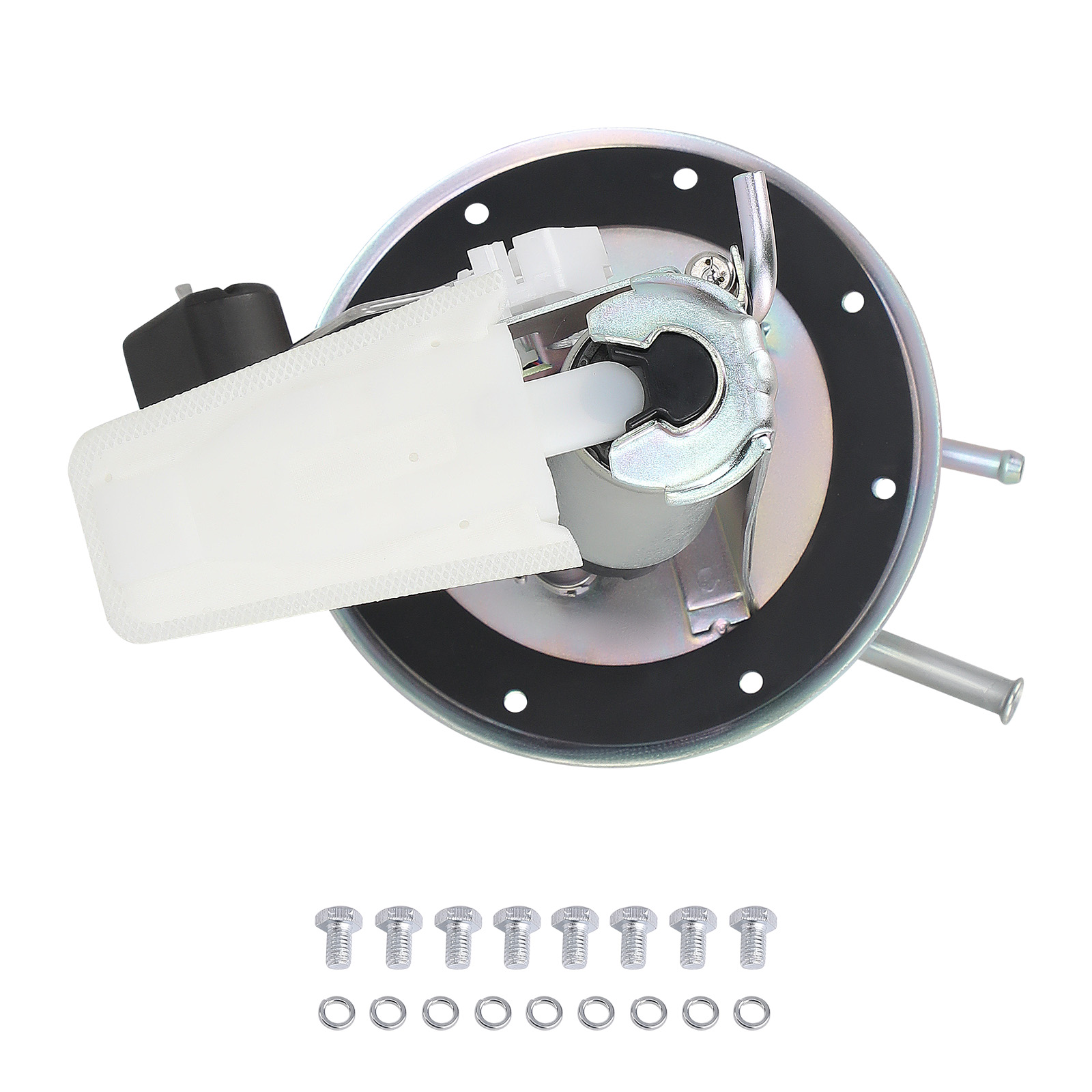

Photos from current listings. Actual item, color, and included accessories may vary.
Toyota Corolla Fuel Pump Buying Guide
A Toyota Corolla fuel pump is the in-tank electric assembly that delivers gasoline at 35–45 psi to the fuel rail; the primary trade-off is OEM-grade turbine pump and sender quality versus cheap aftermarket modules with weak connectors and incorrect float calibration. Buyers should match the exact chassis generation and engine displacement, then choose a complete module with a new strainer and OEM-compatible connector—not a bare pump that reuses worn 20-year-old plastic.


At a glance
- Category
- Engine, Exhaust & Fuel System Parts
- Data updated
- Nov 15, 2026
Current offers
Highlights
- OEM Corolla pumps use a turbine-style electric motor rated for 12V and 35–45 psi; aftermarket units vary widely in commutator brush grade and seal quality
- Complete fuel pump modules include the sender unit, float arm, and strainer; bare pumps require reusing the original housing and often leak at the outlet O-ring
- 1993–1997 Corolla and Geo Prizm 1.6L/1.8L use a return-style fuel system with a specific module flange and 6-pin connector; 1998+ Corolla switched to returnless systems
- Module flange diameter and lock-ring pattern must match the tank opening exactly—Corolla generations differ by 1–2 mm, which is enough to prevent sealing
Best use cases
- Best fit: 1993–1997 Corolla or Geo Prizm 1.6L/1.8L with hard-start, whining pump, or dead fuel gauge—buy a complete module with strainer and sender, not a bare pump.
- Best fit: High-mileage 2003–2008 Corolla with intermittent stall—replace the whole module assembly because the plastic housing and float pivot wear out before the motor fails.
- Wrong fit: Rust-belt cars with a leaking steel tank—a new pump module will not fix a perforated tank; replace the tank and pump together or skip the repair.
- Wrong fit: Performance or engine-swap builds—a stock replacement pump flows about 80–100 LPH; forced induction needs a 255 LPH Walbro-style in-tank pump with upgraded wiring.
Buying tips
- Match the engine displacement and chassis code: 1.6L 4A-FE and 1.8L 7A-FE Corolla modules are not interchangeable because the tank depth and float arm length differ.
- Buy a complete module with a new strainer, O-ring, and lock ring; reusing a hardened 20-year-old O-ring causes fuel odor and EVAP codes.
- Check connector pin count and shape—1993–1997 Corolla uses a 6-pin rectangular connector; mismatched pigtails require soldering and are a common failure point.
- For returnless 1998+ Corolla, the pump module has no return line and runs at higher pressure; do not install a return-style module, as the regulator is in the tank.
Specs
| Pump Type | Electric in-tank turbine |
|---|---|
| Fuel System | Return-style 93-97 / Returnless 98+ |
| Pressure Range | 35-50 psi (system-dependent) |
| Module Contents | Pump + sender + strainer + O-ring |
Related searches
What to check before buying
- Measure the tank opening flange diameter and lock-ring style before ordering—Corolla generations vary between 110 mm and 120 mm flange sizes.
- Confirm the connector pin count and shape on your original module; 1993–1997 uses a 6-pin rectangular plug, later models use a 4-pin oval.
- Verify fuel system type—return-style (1993–1997) versus returnless (1998+)—because the pressure regulator location and line count differ.
- Inspect the tank interior for rust or sediment; a new pump will clog its strainer within months if the tank is not cleaned or replaced.
FAQ
Data sources: eBay / Amazon listings and product attribute feeds Data updated Nov 15, 2026.
Some links on this page are affiliate links. If you buy after clicking one, we may earn a commission at no extra cost to you. This does not change which products appear here or their order. Affiliate disclosure.