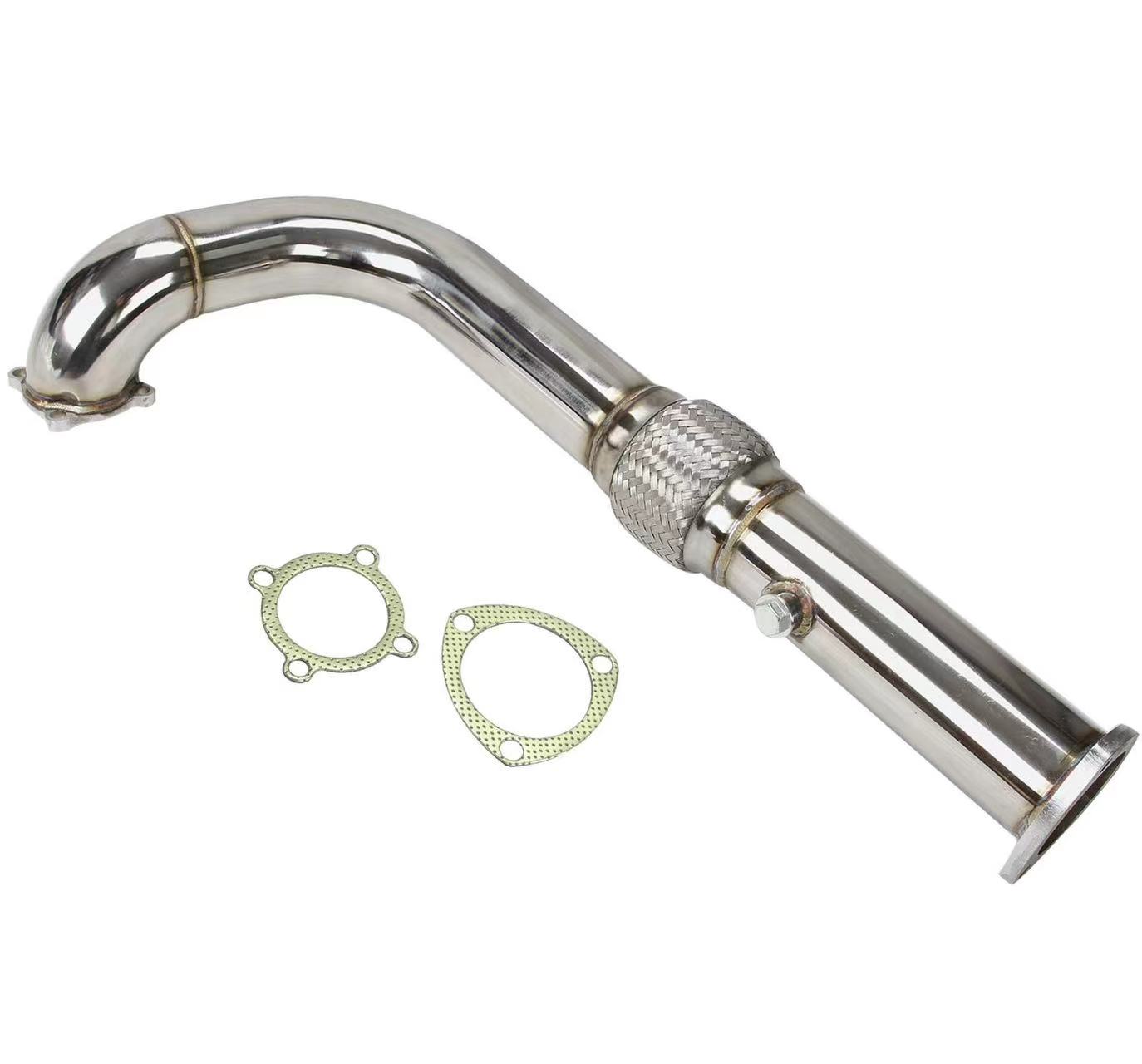

Photos from current listings. Actual item, color, and included accessories may vary.
Subaru Exhaust Manifold Buying Guide
A Subaru exhaust manifold is the cast-iron or tubular stainless header that routes boxer-engine exhaust gas from the cylinder heads to the turbocharger or catalytic converter. The core trade-off is cast-iron durability and OEM fitment versus tubular stainless flow and weight, with material grade and flange thickness deciding whether a part survives heat cycling or cracks at the welds. Buy cast-iron or thick-wall 304 stainless for daily-driven cars; treat thin-wall mild-steel tubular headers as race-only consumables.


At a glance
- Category
- Engine, Exhaust & Fuel System Parts
- Data updated
- Nov 15, 2026
Current offers
Highlights
- OEM-style cast-iron log manifolds resist heat cycling and cracking far better than thin tubular steel for daily-driven WRX, STI, and Forester XT applications.
- Tubular stainless headers in 304 grade with 1.5-1.75 in primary runners and 3/8 in head flanges flow better for GT35/GT35R T3 turbo swaps but demand proper bracing.
- Subaru boxer engines use unequal-length (rumble) or equal-length (EL) headers; EL headers change exhaust note and scavenging, so match the design to your tuning goals and ECU calibration.
- Turbo flange standards matter: T3 single-scroll and twin-scroll (V-band or bolt) flanges are not interchangeable, and GT35R kits require a T3 footprint with matching downpipe and uppipe.
Best use cases
- Daily-driven WRX/STI or Forester XT: pick a cast-iron OEM-replacement manifold with factory heat-shield mounts; skip thin tubular headers that crack under stock boost cycling.
- GT35/GT35R T3 turbo build: choose a 304 stainless tubular header with a true T3 flange and 3 in collector; skip OEM cast logs that choke high-RPM flow.
- Equal-length sound and scavenging conversion: select an EL tubular header matched to your ECU tune; skip unequal-length units if you want the classic rumble and stock calibration compatibility.
Buying tips
- Measure head flange thickness: 3/8 in (9.5 mm) or thicker resists warping; thinner flanges leak at the gasket under heat cycling.
- Confirm material grade: 304 stainless handles exhaust temperatures to roughly 1500°F; 321 stainless is better for sustained high-EGT turbo builds, mild steel needs coating.
- Match turbo flange type exactly: T3 bolt pattern, twin-scroll, or V-band; a mismatched flange requires an adapter that adds length and leak points.
- Check primary runner diameter: 1.5 in suits stock-to-mild builds, 1.75 in supports GT35/GT35R flow; oversized primaries hurt low-RPM torque on small-displacement boxers.
Specs
| Header Material | Cast iron / 304 or 321 stainless |
|---|---|
| Primary Runner Size | 1.5-1.75 in (mild to GT35) |
| Turbo Flange Type | T3 / twin-scroll / V-band |
| Head Flange Thickness | 3/8 in (9.5 mm) or thicker |
Related searches
What to check before buying
- Confirm your engine generation (EJ205, EJ255, EJ257, FA20DIT) because head port spacing and uppipe routing differ across generations.
- Measure turbo flange and uppipe mating surfaces; GT35R T3 kits need a matching T3 inlet and 3 in downpipe v-band or bolt pattern.
- Verify heat-shield and sensor bungs: oxygen sensor locations and EGT bungs must match your ECU harness or you need weld-in adapters.
- Check clearance to steering shaft, subframe, and oil cooler; tubular headers with larger primaries can contact stock components on lowered cars.
FAQ
Data sources: eBay / Amazon listings and product attribute feeds Data updated Nov 15, 2026.
Some links on this page are affiliate links. If you buy after clicking one, we may earn a commission at no extra cost to you. This does not change which products appear here or their order. Affiliate disclosure.