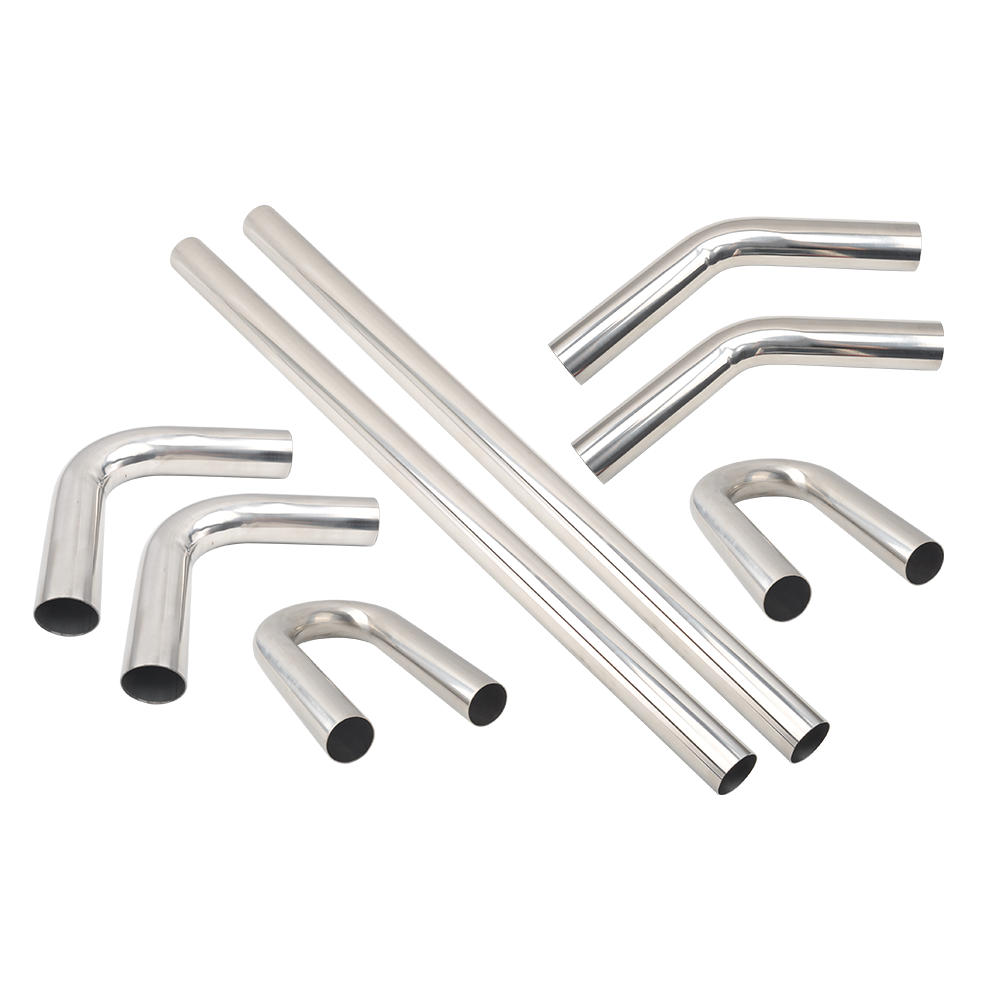

Photos from current listings. Actual item, color, and included accessories may vary.
Straight Pipe Exhaust Buying Guide
A straight pipe exhaust replaces restrictive mufflers and resonators with uninterrupted tubing, trading noise suppression and backpressure control for maximum flow and a raw tone. The core decision is pipe diameter, material grade, and whether the system is a true bolt-on cat-back or a custom weld-in section. Choose mandrel-bent 304 stainless in a diameter matched to your power level; skip crush-bent aluminized steel that rusts and chokes flow.


At a glance
- Category
- Engine, Exhaust & Fuel System Parts
- Data updated
- Nov 15, 2026
Current offers
Highlights
- Mandrel bending holds tube diameter constant through bends; crush bending necks down 10-20%, cutting flow exactly where exhaust velocity matters most.
- 304 stainless resists salt and condensate for a decade-plus; 409 stainless is cheaper but surface-rusts, and aluminized mild steel typically perforates within a few winters.
- Pipe diameter sets power band: 2.25 in suits stock naturally aspirated four-cylinders, 2.5 in supports mild bolt-on builds, and 3 in and larger favor turbo or high-displacement V8 flow.
- Flange-and-clamp cat-back sections bolt to factory hangers; weld-in straight sections require cutting the OEM line and are not reversible for emissions inspection.
Best use cases
- Best fit: weekend track or off-road toys where decibel limits do not apply and a cat-back flange kit allows quick restoration of the stock muffler.
- Best fit: turbo builds needing the least backpressure after the downpipe, paired with a 3 in mandrel-bent system and a resonator to tame drone.
- Wrong fit: daily-driven street cars in inspection states, where removing the converter or muffler fails emissions and noise ordinances; choose an axle-back or high-flow muffler instead.
- Wrong fit: stock naturally aspirated engines below 200 hp, where a 3 in straight pipe loses low-end scavenging and produces drone without a power gain.
Buying tips
- Match pipe size to exhaust gas volume: 2.25 in for 1.6-2.0L NA fours, 2.5 in for 2.0-3.0L NA or mild turbo, 3 in for 350+ hp turbo or V8 applications.
- Specify 304 stainless with TIG-welded seams and mandrel bends for coastal or winter-salt climates; 409 is acceptable only for dry-climate budget builds.
- Confirm flange bolt pattern and hanger locations match your chassis before ordering a cat-back; universal straight pipe sections need cutting, clamping, and often welding.
- Choose resonated straight-pipe sections or add a Helmholtz resonator to cancel 150-200 Hz drone that makes unmuffled highway driving fatiguing.
Specs
| Pipe Material | 304 stainless / 409 stainless / aluminized |
|---|---|
| Bend Type | Mandrel-bent vs crush-bent |
| Pipe Diameter | 2.25 in / 2.5 in / 3 in / 4 in |
| Install Type | Cat-back flange / weld-in / axle-back |
Related searches
What to check before buying
- Measure your existing exhaust diameter at the cut point with calipers; OEM lines are often 2.0-2.25 in even when the bumper cutout looks larger.
- Verify local emissions and noise rules: converter and muffler deletion is illegal for street use in most inspection jurisdictions.
- Check ground clearance and hanger positions for a 3 in or larger pipe, which hangs lower and can contact speed bumps or subframe braces.
- Confirm the kit includes gaskets, clamps, and flange hardware in the correct material; stainless systems need stainless clamps to avoid galvanic corrosion.
FAQ
Data sources: eBay / Amazon listings and product attribute feeds Data updated Nov 15, 2026.
Some links on this page are affiliate links. If you buy after clicking one, we may earn a commission at no extra cost to you. This does not change which products appear here or their order. Affiliate disclosure.