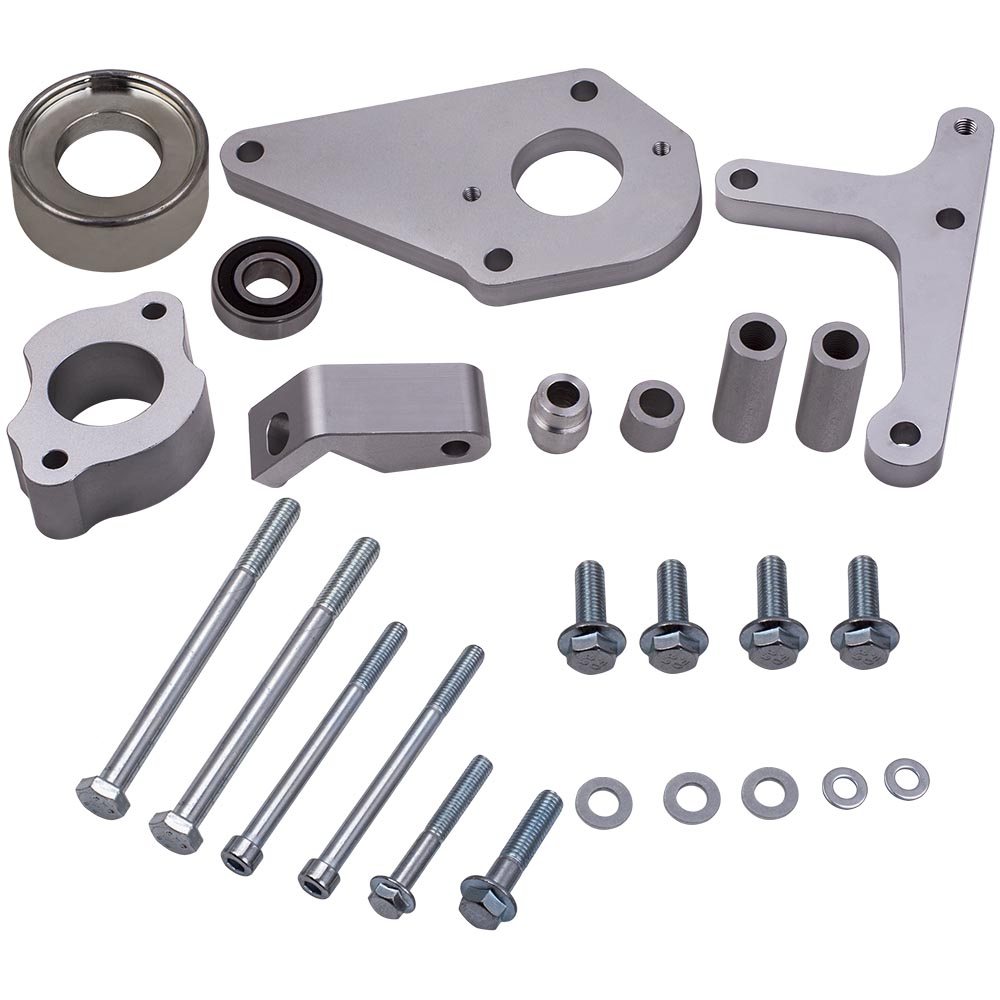

Photos from current listings. Actual item, color, and included accessories may vary.
Power Steering Pump Buying Guide
A power steering pump provides hydraulic pressure to assist steering, and the core trade-off is between OEM-style reliability and universal retrofit geometry. Durable options match the original pulley offset, reservoir style, and pressure curve for your chassis; compromises are universal brackets and pumps that ignore mount and line compatibility.
Pump Family:GM Type II / Ford CII / ChryslerDisplacement:8-16 cc/rev by vehicle classPressure Valve:1,000-1,600 psi by brake systemPulley & Belt:Press-on/keyed; 6-rib vs 8-rib
Typical price range$140.99


At a glance
- Category
- Engine, Exhaust & Fuel System Parts
- Data updated
- Nov 15, 2026
Current offers
Highlights
- OEM replacement pumps are vehicle-specific: Saginaw/GM Type II pumps use different reservoir necks and pressure valves than Ford CII or Chrysler pumps, so cross-brand swaps require matching brackets and hose adapters.
- LS-swap low-mount brackets usually combine alternator and power steering pump mounting to clear truck accessory drives, which changes pulley alignment and belt length versus factory high-mount layouts.
- Pump displacement is typically 8-12 cc/rev for passenger cars and 12-16 cc/rev for trucks; undersizing a heavy vehicle causes hard steering at idle, while oversizing adds heat and drag.
- Housing material is almost always cast aluminum or cast iron; aluminum saves weight but iron housings resist heat soak better in tight engine bays with headers.
Best use cases
- Best fit: direct OEM replacement on a stock GMC or Chevrolet truck — choose a pump listed for your exact year, engine, and hydroboost vs vacuum-brake configuration rather than a universal unit.
- Best fit: LS engine swap into an older chassis — pick a low-mount bracket and pump kit that includes the correct pulley, belt tensioner provision, and pressure line adapter for your steering gear.
- Wrong fit: buying a universal 'fits GMC' bracket without confirming pulley offset and belt routing — this causes misalignment, belt chirp, and premature pump bearing failure.
- Wrong fit: using a passenger-car pump on a truck with large tires or hydroboost — the lower displacement and pressure curve produce hard steering and brake assist lag.
Buying tips
- Match the pump family first: GM Type II/Saginaw, Ford CII/CIII, and Chrysler/Dodge pumps have distinct mounting ears and reservoir shapes; cross-family swaps need a dedicated bracket and hose kit.
- Confirm pulley type and offset: press-on vs keyed pulleys and 6-rib vs 8-rib serpentine belts are not interchangeable; measure from the block face to the first belt groove before ordering.
- Check pressure valve rating: hydroboost systems typically need 1,400-1,600 psi, while standard rack-and-pinion systems run 1,000-1,300 psi; a mismatched valve causes stiff steering or seal blowout.
- For LS swaps, buy a complete kit (bracket, pump, pulley, belt, and line adapters) rather than piecing parts — mixed-brand components are the top cause of alignment and leak failures.
Specs
| Pump Family | GM Type II / Ford CII / Chrysler |
|---|---|
| Displacement | 8-16 cc/rev by vehicle class |
| Pressure Valve | 1,000-1,600 psi by brake system |
| Pulley & Belt | Press-on/keyed; 6-rib vs 8-rib |
Related searches
What to check before buying
- Measure the engine bay clearance from the block accessory drive to the steering gear and frame rail; low-mount kits require at least 3-4 inches of clearance below the alternator.
- Identify your brake system: hydroboost units need a higher-pressure pump and return line sizing than vacuum-boost vehicles.
- Confirm belt routing and length after installing a new bracket — LS truck accessory drives use different belt part numbers than car drives with the same bracket.
- Verify line fittings: O-ring port vs inverted flare and metric vs SAE thread sizes must match the steering gear and cooler lines.
FAQ
Data sources: eBay / Amazon listings and product attribute feeds Data updated Nov 15, 2026.
Some links on this page are affiliate links. If you buy after clicking one, we may earn a commission at no extra cost to you. This does not change which products appear here or their order. Affiliate disclosure.