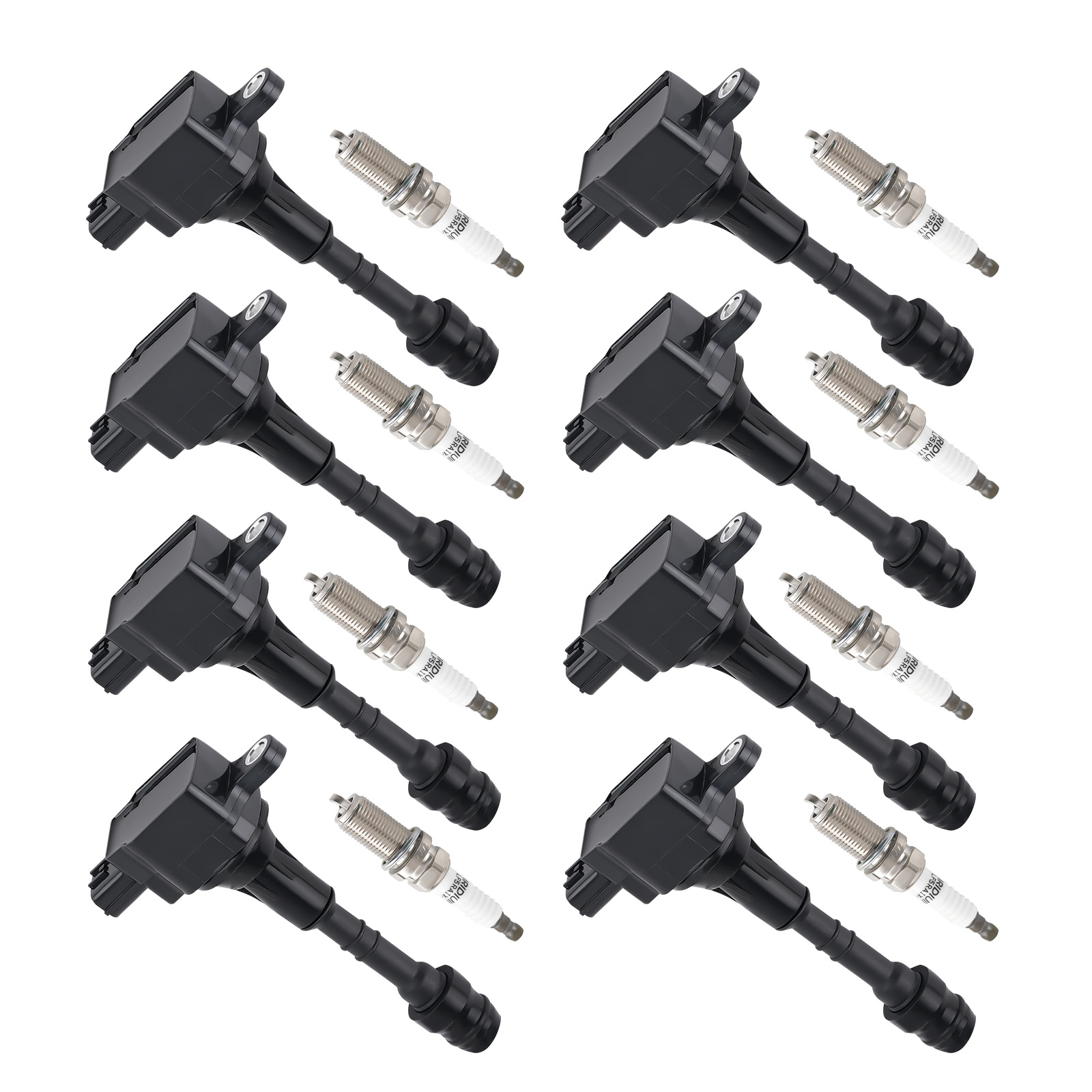

Photos from current listings. Actual item, color, and included accessories may vary.
Nissan Ignition Coil Buying Guide
A Nissan ignition coil is the step-up transformer that converts 12V battery voltage into the 20–40 kV needed to fire each spark plug, and the key trade-off is OEM-style epoxy-potted construction versus cheaper oil-filled or loosely wound aftermarket units that fail under heat cycling. Buy the exact coil architecture your engine management expects: pencil-style COP for modern VQ/VR engines, block-style for older trucks, and always match coil count and connector generation to your model year.


At a glance
- Category
- Engine, Exhaust & Fuel System Parts
- Data updated
- Nov 15, 2026
Current offers
Highlights
- Coil-on-plug (COP) pencil coils dominate modern Nissan VQ35/VQ37/VR30 engines; older KA24 and VG33 trucks use remote block coils with plug wires.
- Primary resistance typically 0.5–1.5 ohms and secondary 8–15 kOhms; out-of-range readings indicate a failing winding or internal short.
- Epoxy-potted coils resist underhood heat and vibration far better than oil-filled aftermarket units, which can leak and arc under sustained load.
- Genuine Hitachi and Hanshin units are common OEM suppliers; counterfeit 'OEM' coils often use thinner secondary windings that break down at high rpm.
Best use cases
- Best fit: replace all coils at once on high-mileage VQ35DE/VQ37VHR engines — matched coils prevent repeated misfire codes and uneven ignition timing.
- Best fit: carry one spare COP coil for 4.0L VQ40DE Armada/Pathfinder/Titan trucks used for towing, where heat soak shortens coil life.
- Wrong fit: buying a generic 8-coil kit for a 4-cylinder Sentra/Altima — coil count, connector keying, and dwell timing differ; use the exact engine-specific set.
- Skip: oil-filled budget coils for turbocharged or high-compression builds — epoxy-potted OEM-style units are required for boost and heat reliability.
Buying tips
- Match coil count to cylinders: 4-cylinder engines take 4 COP coils; V6 takes 6; V8 takes 8 — never trim or bridge a kit designed for a different engine layout.
- Confirm connector generation: Nissan changed COP plug keying across 2000s and 2010s generations; a coil that physically bolts down can still have the wrong latch or pinout.
- Measure primary resistance with a multimeter before installing: 0.5–1.5 ohms is healthy; anything outside that range or with visible cracks is a reject.
- Prefer epoxy-potted coils with metal heat shields and OEM-supplier branding (Hitachi, Hanshin, Diamond) over unbranded units with no secondary resistance spec.
Specs
| Coil Type | COP pencil vs block coil pack |
|---|---|
| Primary Resistance | 0.5–1.5 ohms healthy range |
| Secondary Resistance | 8–15 kOhms healthy range |
| Construction | Epoxy-potted vs oil-filled |
Related searches
What to check before buying
- Pull the exact engine code (e.g., VQ35DE, VQ40DE, VR30DDTT) from the VIN or door jamb plate before ordering — displacement alone does not guarantee the same coil.
- Inspect existing coil connectors and boot length: short boots vs long boots and round vs square latches are not interchangeable.
- Check spark plug well condition and valve cover gasket health — oil fouling destroys new coils, so fix leaks first.
- Verify whether the engine uses individual COP coils or a coil pack with plug wires; mixing architectures causes immediate misfire.
FAQ
Data sources: eBay / Amazon listings and product attribute feeds Data updated Nov 15, 2026.
Some links on this page are affiliate links. If you buy after clicking one, we may earn a commission at no extra cost to you. This does not change which products appear here or their order. Affiliate disclosure.