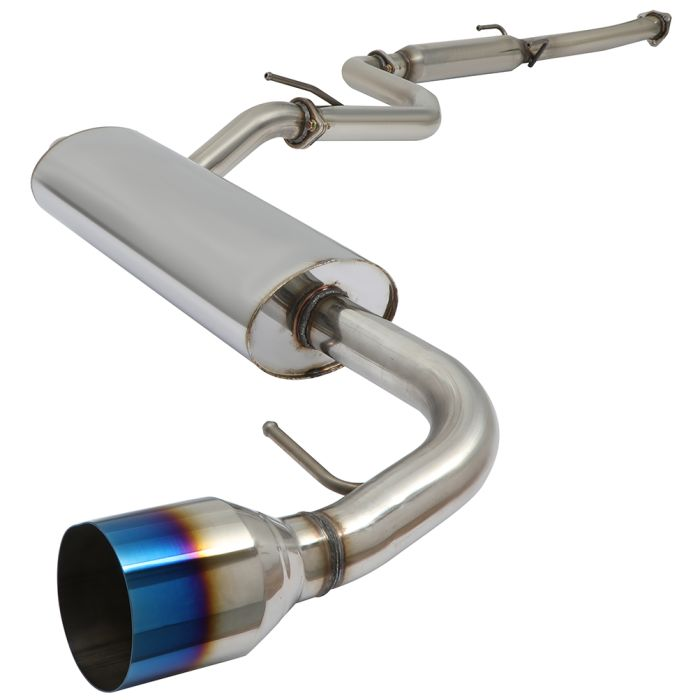

Photos from current listings. Actual item, color, and included accessories may vary.
Honda Muffler Buying Guide
A Honda muffler is the rear silencer section of the exhaust system, and the key decision is whether to replace just the muffler or the full catback, plus matching pipe diameter and flange type to the chassis. Durable options use 409 or 304 stainless steel with OEM-style flanges; compromises use aluminized steel with slip-fit clamps that rust through in salt climates.


At a glance
- Category
- Engine, Exhaust & Fuel System Parts
- Data updated
- Nov 15, 2026
Current offers
Highlights
- OEM Honda mufflers are typically aluminized steel with a 1.75-2.25 in inlet; 409 stainless lasts 5-7 years, 304 stainless 10+ years in road-salt regions.
- Catback systems replace the muffler plus mid-pipe and resonator, using 2.25-2.5 in mandrel-bent tubing for 5-8% better flow than crush-bent OEM piping.
- Flange-style bolt-on mufflers (2-bolt or 3-bolt) seal reliably; slip-fit clamp joints are the most common leak and rattle point on budget replacements.
- CRX-era Honda mufflers like the 1990-1991 1.5L use a 4.5 in tip and specific hanger locations; later Civics/Accords use different inlet offsets and hanger rods.
Best use cases
- Daily-driven Civic/Accord with a rusted-through rear can: pick a direct-fit 409 stainless muffler with OEM flange and hangers; skip universal slip-fit cans.
- 1990-1991 CRX 1.5L owner wanting a bolt-on catback: choose a system listing the exact chassis/year/engine and 4.5 in tip; skip generic 2.5 in universal kits.
- Performance build with headers and intake: step to a 2.25-2.5 in mandrel-bent catback in 304 stainless; skip aluminized steel if you drive in winter salt.
- Quiet-restoration stock build: use an OEM-replacement chambered muffler; skip straight-through glasspack designs that drone at highway speed.
Buying tips
- Match inlet diameter to your existing mid-pipe: measure the OD of the pipe entering the muffler; 1.75 in is stock for most 1.5-1.8L Hondas, 2.25 in for larger engines.
- Choose flange type by your OEM connection: 2-bolt flange for most Honda rear sections; slip-fit only if you plan to weld or use a band clamp.
- Prefer 409 stainless for wet/salt climates and 304 stainless for coastal or long-hold ownership; aluminized steel is a 3-5 year part in road-salt use.
- Confirm hanger rod positions and tip exit side (driver/passenger) against your bumper cutout; wrong hanger spacing causes rubbing and broken welds.
Specs
| Material Grade | Aluminized / 409 / 304 stainless |
|---|---|
| System Type | Muffler-only vs catback |
| Inlet Diameter | 1.75-2.5 in OD |
| Joint Style | 2-bolt flange vs slip-fit clamp |
Related searches
What to check before buying
- Measure your mid-pipe OD and flange bolt spacing before ordering; a 1.75 in inlet will not seal on a 2.25 in pipe without an adapter.
- Check rear bumper cutout height and tip exit side so the 4.5 in tip clears plastic and does not melt the cover.
- Verify hanger rod locations on the chassis; OEM-style welded hangers prevent sag and exhaust leaks at the muffler body.
- Confirm your climate: road-salt winters demand 409/304 stainless; dry climates tolerate aluminized steel.
FAQ
Data sources: eBay / Amazon listings and product attribute feeds Data updated Nov 15, 2026.
Some links on this page are affiliate links. If you buy after clicking one, we may earn a commission at no extra cost to you. This does not change which products appear here or their order. Affiliate disclosure.