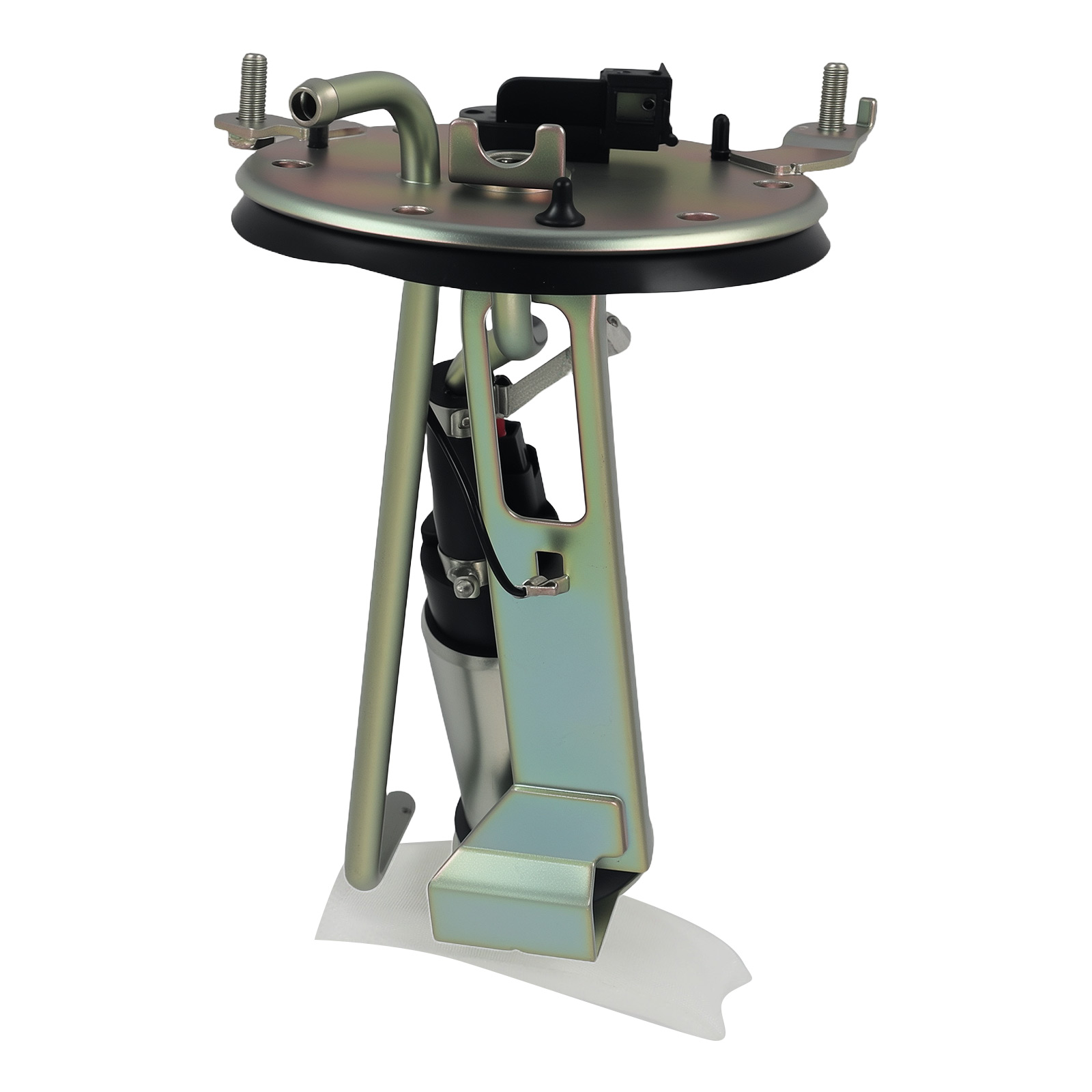

Photos from current listings. Actual item, color, and included accessories may vary.
Honda Accord Fuel Pump Buying Guide
A Honda Accord fuel pump is the in-tank electric assembly that delivers gasoline at 35–50 psi to the fuel rail; the core trade-off is genuine OEM/Denso-level motor and sender quality versus generic drop-in assemblies with unverified flow and corrosion resistance. Buy a pump matched to your Accord generation, engine, and tank configuration—not a universal fitment—to avoid lean codes, hard starts, and premature sender failure.


At a glance
- Category
- Engine, Exhaust & Fuel System Parts
- Data updated
- Nov 15, 2026
Current offers
Highlights
- OEM-tier pumps use a brushed DC motor with a commutator and carbon brushes rated for 100,000+ miles; generic assemblies often use lower-grade brushes and thinner windings that fail early.
- Flow rate must meet or exceed the engine's demand: 2.2L/2.4L four-cylinders typically need 30–40 gph at 40 psi, while 3.0L/3.5L V6s need 40–50 gph; under-flowing causes lean codes and power loss.
- Generation matters: 1990–1993 Accords (CB/CD) use a return-style system with a distinct sender flange, while 2003+ models (K-series) use returnless systems with different pump modules and pressure regulators.
- Fuel-level sender resistance and tank seal O-ring material (Viton vs nitrile) determine gauge accuracy and leak resistance; generic pumps often ship with nitrile seals that degrade with ethanol blends.
Best use cases
- Best fit: your Accord cranks but won't start or stumbles under load and you've confirmed low fuel pressure at the rail—replace with a Denso or OEM-equivalent assembly matched to your exact year, engine, and tank type.
- Best fit: high-mileage (150k+) Accord with an erratic fuel gauge—replace the full module with sender rather than the pump alone, since the sender wiper and float arm wear together.
- Wrong fit: buying a universal 'fits Honda' pump or a 1990–1993 E8322H assembly for a 2003+ K-series Accord—mounting flange, tank depth, and connector pinout differ and will not seal or run correctly.
- Skip: replacing only the pump motor on a 20-year-old module with a corroded sender and brittle plastic housing—the assembly is the durable unit, not the motor alone.
Buying tips
- Match the part number to your VIN or engine code: 1990–1993 2.2L uses 17708-SM4-A31/E8322H; 1994–1997 2.2L uses a different flange; 2003–2007 2.4L and 3.0L use distinct returnless modules—never interchange them.
- Choose a pump with a metal-bodied motor and Viton seals for E10/E15 ethanol compatibility; nitrile seals swell and weep fuel within a few seasons.
- Verify flow rating at your system pressure: a 255 lph (67 gph) pump is overkill for a stock four-cylinder and can overwhelm a returnless regulator, while a 190 lph unit is the safe stock replacement.
- Buy the complete assembly with strainer, sender, and tank O-ring; piecing a pump into a used housing risks a poor seal and a repeat job.
Specs
| Pump Type | In-tank electric assembly |
|---|---|
| Flow Rate | 110–190 lph (stock 4-cyl/V6) |
| System Style | Return vs returnless by generation |
| Seal Material | Viton (ethanol-safe) vs nitrile |
Related searches
What to check before buying
- Confirm your Accord's generation, engine displacement, and return vs returnless fuel system from the VIN or underhood sticker before ordering.
- Measure your fuel tank depth and inspect the module flange pattern—1990–1993 CB/CD flanges differ from 1994+ and 2003+ modules.
- Check fuel line fitting type and electrical connector pin count on your existing module; match them exactly to the replacement.
- Verify the replacement includes a new tank O-ring and locking ring; reuse of old seals is the leading cause of fuel smell and leaks.
FAQ
Data sources: eBay / Amazon listings and product attribute feeds Data updated Nov 15, 2026.
Some links on this page are affiliate links. If you buy after clicking one, we may earn a commission at no extra cost to you. This does not change which products appear here or their order. Affiliate disclosure.