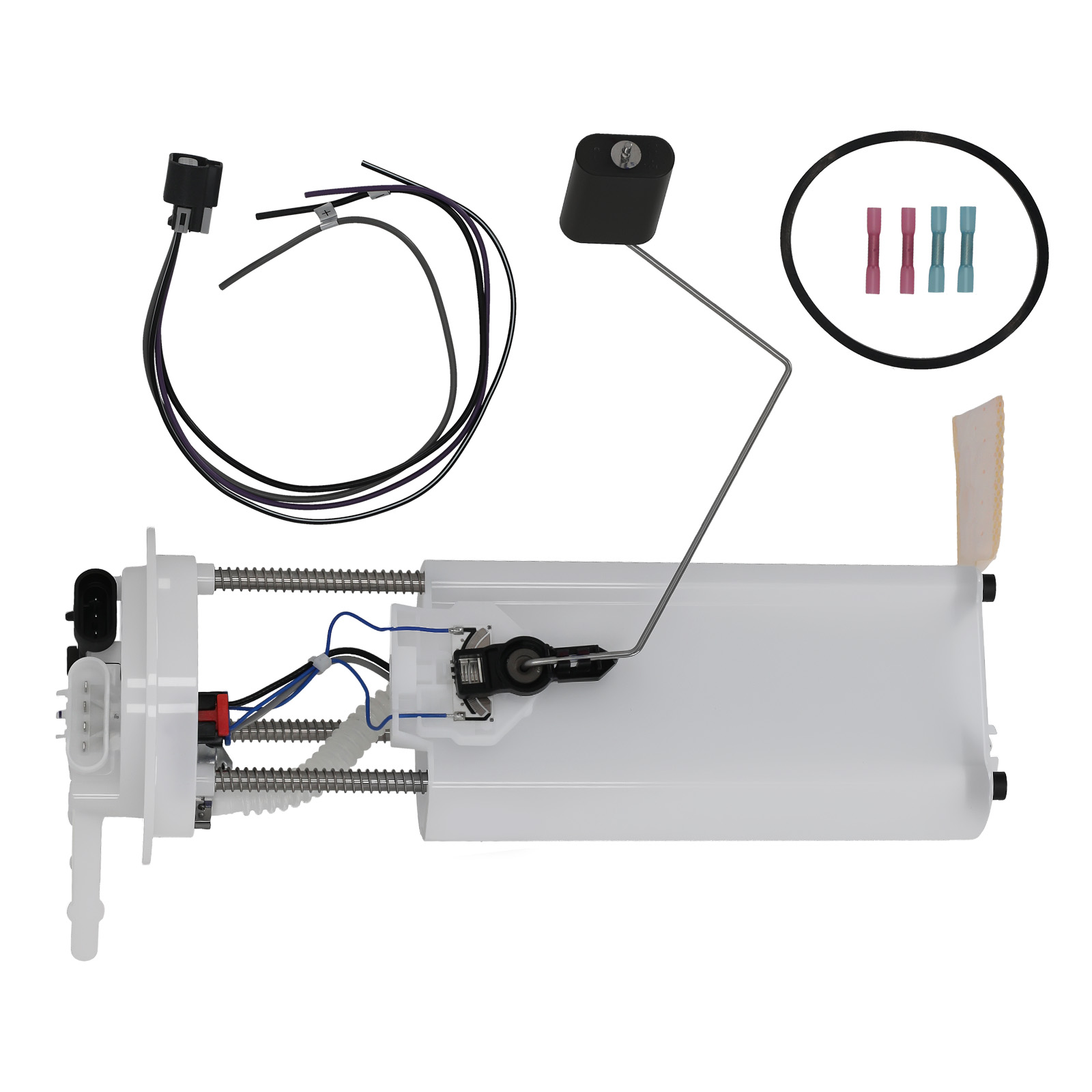

Photos from current listings. Actual item, color, and included accessories may vary.
Chevrolet Fuel Pump Buying Guide
A Chevrolet fuel pump is the in-tank electric module that delivers gasoline at pressure to the engine, and the key trade-off is between OE-style turbine pump architecture and cheaper generic motors that fail early. Buyers must match pump type (return-style vs returnless PWM), pressure/flow rating, and tank/sending-unit configuration to the exact chassis, or the engine runs lean or the gauge reads wrong.


At a glance
- Category
- Engine, Exhaust & Fuel System Parts
- Data updated
- Nov 15, 2026
Current offers
Highlights
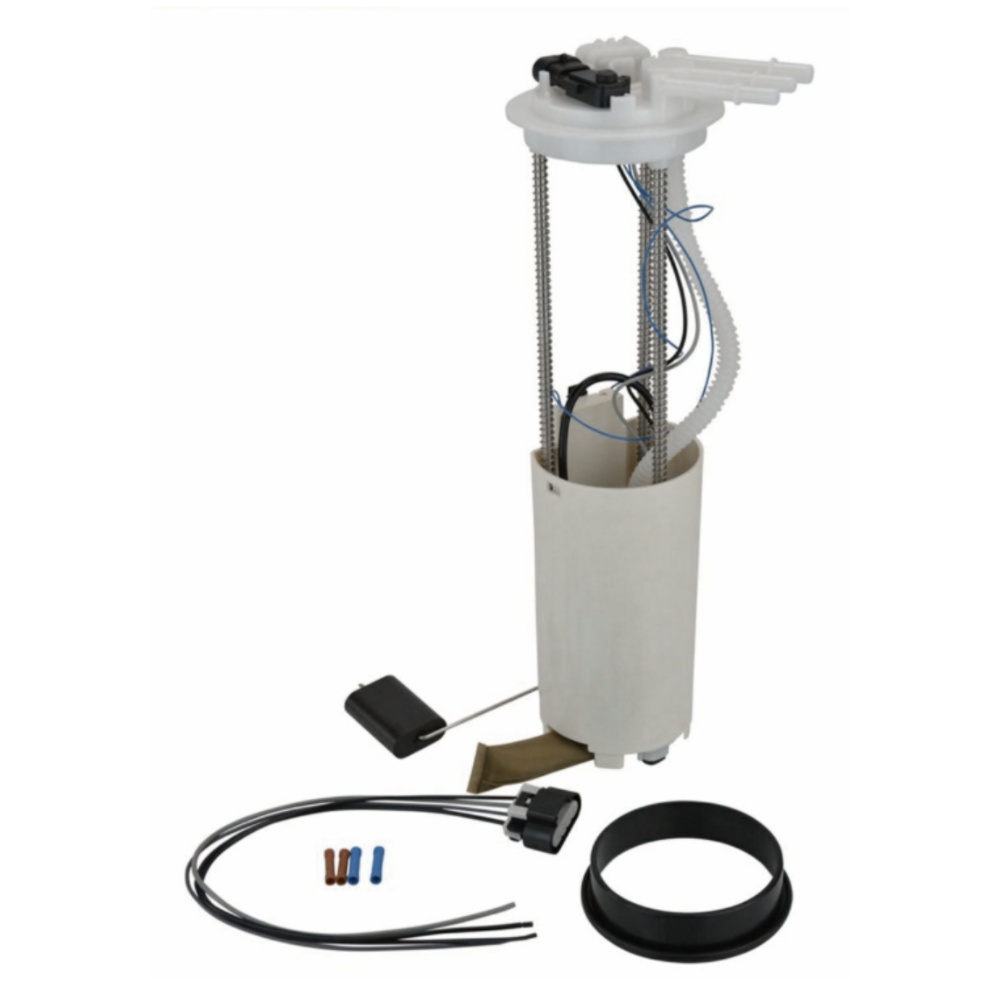
- OE GM modules use a turbine-style pump with integrated fuel level sender, strainer, and pressure regulator; replacement quality hinges on using a turbine (not roller-vane or generic brushed) motor.
- Returnless systems (most 2004+ GM trucks and cars) regulate pressure at the module and require a PWM-compatible pump; return-style systems (many 1999-2002 Camaro/Firebird) use a regulator on the rail and a simple high-flow pump.
- Sending unit resistance must match the vehicle's gauge: GM trucks typically use 0-90 ohm (empty-full) while many passenger cars use 40-250 ohm; a mismatched sender reads inverted or wrong.
- Flow rating is specified in liters per hour (lph) at a set pressure—stock replacement for a 4.3L V6 or 5.7L V8 typically needs 255 lph or the OE-equivalent; forced induction or high-horsepower builds require 340 lph or dual-pump setups.
Best use cases
- Best fit: 1999-2002 Camaro/Firebird (LS1) with return-style fuel system—choose a complete module with correct 0-90 ohm sender and 255 lph turbine pump; skip generic inline pumps that lack the tank seal and sender.
- Best fit: 2000s Chevrolet/GMC Crew Cab 4.3L V6 truck—pick a module assembly with integrated sender and EVAP-compatible top hat; skip universal hang-on pumps that require cutting the factory bucket.
- Wrong fit: High-horsepower LS swap with boost—stock 255 lph modules run out of fuel above ~500 hp; step to a 340 lph or dual-pump return system rather than a stock replacement.
- Wrong fit: Flex-fuel (E85) vehicles—standard pumps corrode with ethanol; specify an E85-rated module with stainless internals or the factory flex-fuel part number.
Buying tips
- Match the pump to the fuel system type: return-style (regulator on rail, two lines) vs returnless (single line, PWM control). Installing the wrong type causes rich/lean codes and pump whine.
- Verify sending unit resistance: 0-90 ohm for most GM trucks, 40-250 ohm for many cars. A mismatched sender makes the fuel gauge read empty when full or vice versa.
- Choose flow in liters per hour (lph): 255 lph suits stock V6/V8; 340 lph for mild boost; dual 450 lph for high-power builds. Under-sizing causes lean conditions at high RPM.
- Inspect the tank seal and lock ring: OE-style modules include a new O-ring and retainer; reusing a hardened seal causes EVAP leaks and fuel smell. Replace the fuel filter at the same time.
Specs
| Pump Type | Turbine in-tank module vs generic brushed |
|---|---|
| Fuel System | Return-style vs returnless PWM |
| Flow Rating | 255 / 340 / 450 lph at 58 psi |
| Sender Resistance | 0-90 ohm (truck) / 40-250 ohm (car) |
Related searches
What to check before buying
- Confirm tank capacity and module opening diameter—Crew Cab short-bed vs long-bed tanks differ, and the lock-ring size must match the new module flange.
- Check fuel line fitting type and count: return-style has two lines (feed and return), returnless has one; the module top hat must match exactly.
- Verify electrical connector pin count and shape at the tank—GM uses 4-pin and 5-pin variations depending on gauge and EVAP configuration.
- Confirm fuel type (gasoline vs E85) and pressure requirement (typically 58 psi for returnless GM); the pump and regulator must be rated for that pressure and alcohol content.
FAQ
Data sources: eBay / Amazon listings and product attribute feeds Data updated Nov 15, 2026.
Some links on this page are affiliate links. If you buy after clicking one, we may earn a commission at no extra cost to you. This does not change which products appear here or their order. Affiliate disclosure.