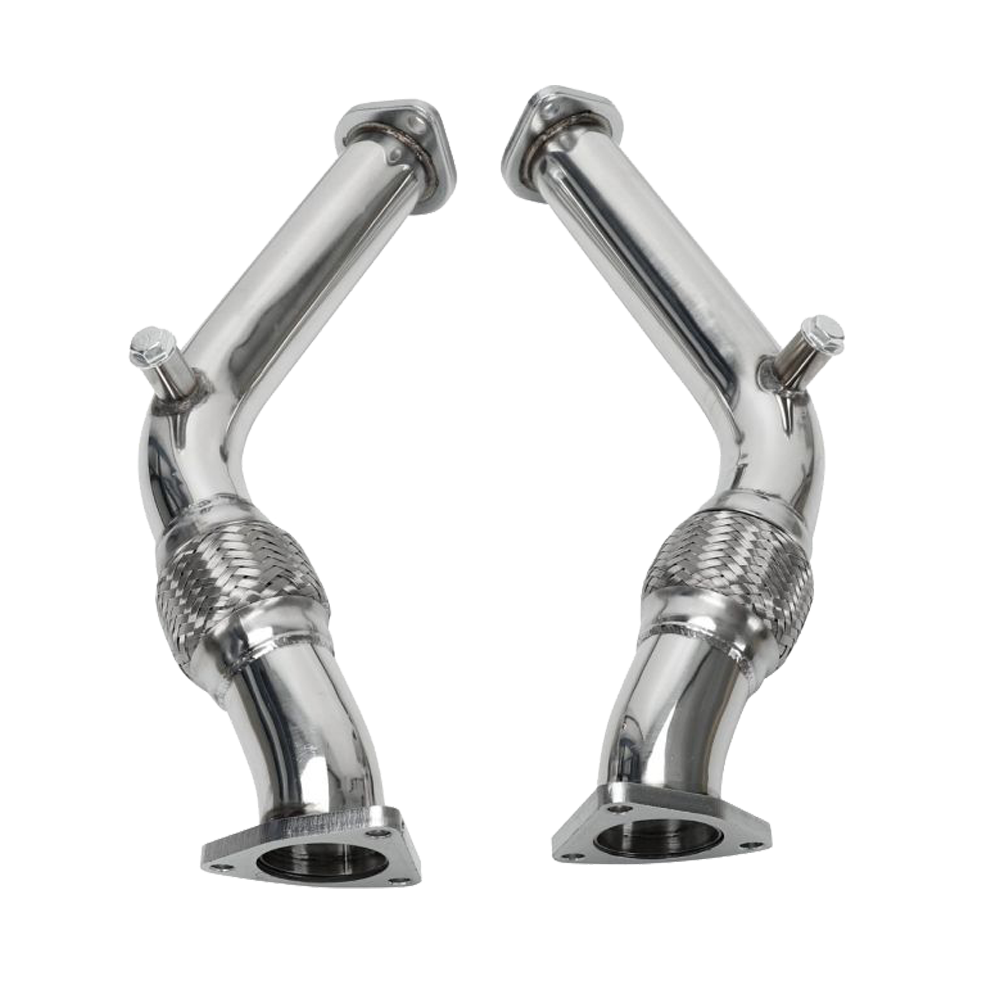

Photos from current listings. Actual item, color, and included accessories may vary.
3 Exhaust Pipe Buying Guide
A '3 exhaust pipe' refers to the 3-inch-diameter mandrel-bent tubing used in cat-back and turbo-back systems, where diameter, bend method, and material grade dictate flow, fitment, and corrosion life. The core trade-off is aluminized mild steel versus 304 stainless: mild steel fits the budget but rusts within a few winters, while 304 stainless lasts the vehicle's life at a higher cost. The decision rule is straightforward: buy 304 stainless with mandrel bends if you keep the car more than three years or drive in salt-belt winters; buy aluminized steel only for short-term or dry-climate use.


At a glance
- Category
- Engine, Exhaust & Fuel System Parts
- Data updated
- Nov 15, 2026
Current offers
Highlights
- 3-inch OD tubing flows roughly 40-50% more exhaust volume than 2.5-inch, supporting 400-550 hp naturally aspirated or 350-450 hp turbocharged before backpressure becomes a restriction.
- Mandrel bending preserves full 3.00-inch internal diameter through bends; crush bending necks the pipe to 2.6-2.75 inches, costing 10-15% flow exactly where exhaust velocity peaks.
- 304 stainless (18% chromium, 8% nickel) resists salt and heat-cycle oxidation for 10+ years; aluminized mild steel (aluminum-silicon coating) typically perforates in 3-5 winters in road-salt climates.
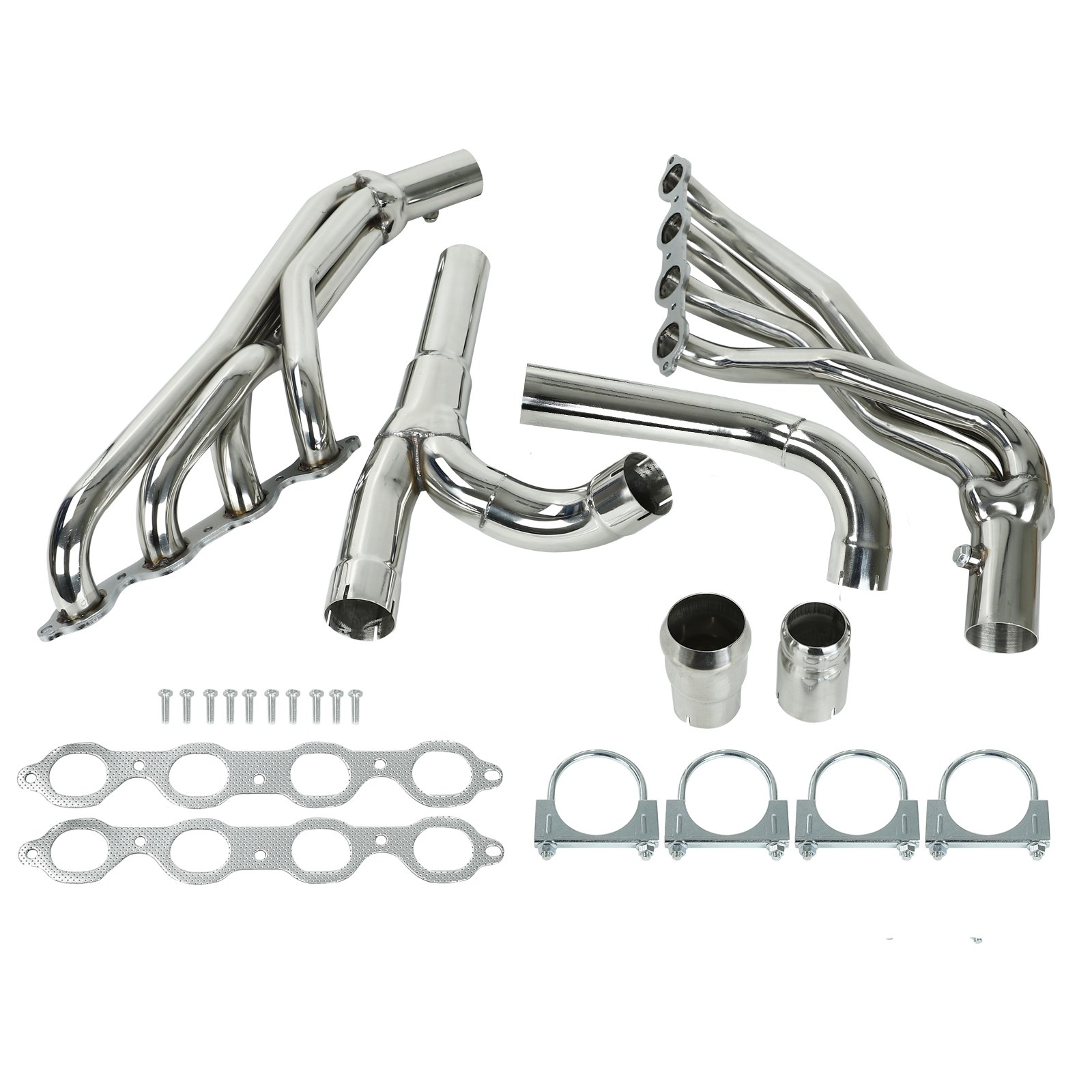
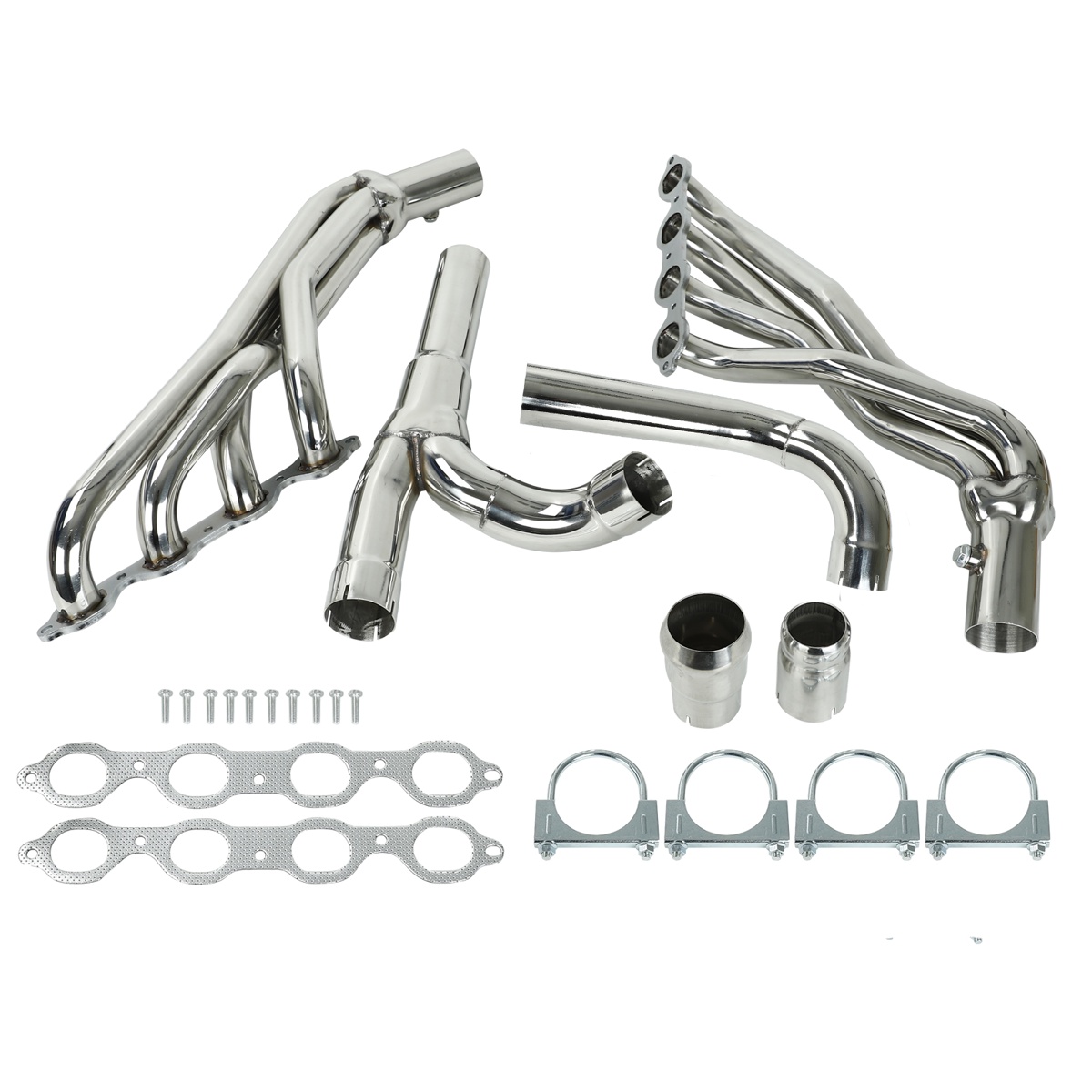
- Exhaust headers and Y-pipes are vehicle-specific: 2014-2017 Chevy/GMC 5.3L and 6.2L trucks use different flange angles and O2 bung locations than 2003-2006 Infiniti FX35/G35 VQ35DE setups, so engine-family fitment determines whether a 3-inch pipe bolts on.
Best use cases
- Best fit: a 2014-2017 Chevy/GMC 5.3L or 6.2L truck owner adding a 3-inch cat-back or Y-pipe — choose a 304 stainless mandrel-bent kit with factory-style flanges and O2 bungs matched to the engine family.
- Best fit: a 2003-2006 Infiniti FX35/G35 VQ35DE owner replacing a rusted mid-pipe — pick a 3-inch aluminized or 304 stainless section with correct resonator placement, since aftermarket VQ35 exhausts are drone-sensitive.
- Wrong fit: a stock daily driver in a dry climate who never tows — a 2.5-inch system preserves low-end torque and costs less; a 3-inch pipe on a stock engine sacrifices scavenging below 3,000 rpm for no gain.
- Wrong fit: a buyer matching a 3-inch pipe to a vehicle by brand name only — 3-inch systems for turbo applications require a matching downpipe flange and tune; bolting one to a naturally aspirated stock ECU triggers lean codes and drone.
Buying tips
- Match pipe diameter to power: 2.25-2.5 inches for stock to lightly modified engines under 300 hp; 3 inches for 350-550 hp or turbo builds; 3.5-4 inches only above 600 hp or for diesel.
- Specify bend method and material together: mandrel-bent 304 stainless is the durable standard; crush-bent aluminized steel is the budget tier that rusts in salt climates within 3-5 years.
- Confirm flange and O2 bung compatibility by engine family (e.g., GM 5.3/6.2L LS/LT vs Nissan VQ35DE) rather than vehicle year alone — bolt patterns and sensor locations differ.
- Choose clamp style deliberately: lap-joint band clamps seal 3-inch slip fits without distorting tubing; U-bolt clamps crush the pipe and create leak paths at the joint.
Specs
| Pipe Diameter | 2.25 / 2.5 / 3.0 / 3.5 / 4.0 in OD |
|---|---|
| Material Grade | 304 stainless vs aluminized mild steel |
| Bend Method | Mandrel-bent vs crush-bent |
| Wall Thickness | 16-ga (0.065 in) vs 18-20-ga |
Related searches
What to check before buying
- Measure your existing pipe OD at the cat outlet and muffler inlet — 3-inch systems require 3.00-inch mating flanges or slip joints; a 2.75-inch factory outlet needs an adapter.
- Verify underbody clearance: 3-inch tubing is 0.5 inch larger in radius than 2.5-inch and can contact floor braces, driveshaft loops, or sway bars on lowered vehicles.
- Confirm your climate and parking: road-salt winters demand 304 stainless; dry or garage-kept vehicles can run aluminized steel without early perforation.
- Check required companion parts: 3-inch systems often need a matching downpipe, band clamps, new hangers, and a tune or O2 spacer on turbo cars to avoid check-engine lights.
FAQ
Data sources: eBay / Amazon listings and product attribute feeds Data updated Nov 15, 2026.
Some links on this page are affiliate links. If you buy after clicking one, we may earn a commission at no extra cost to you. This does not change which products appear here or their order. Affiliate disclosure.