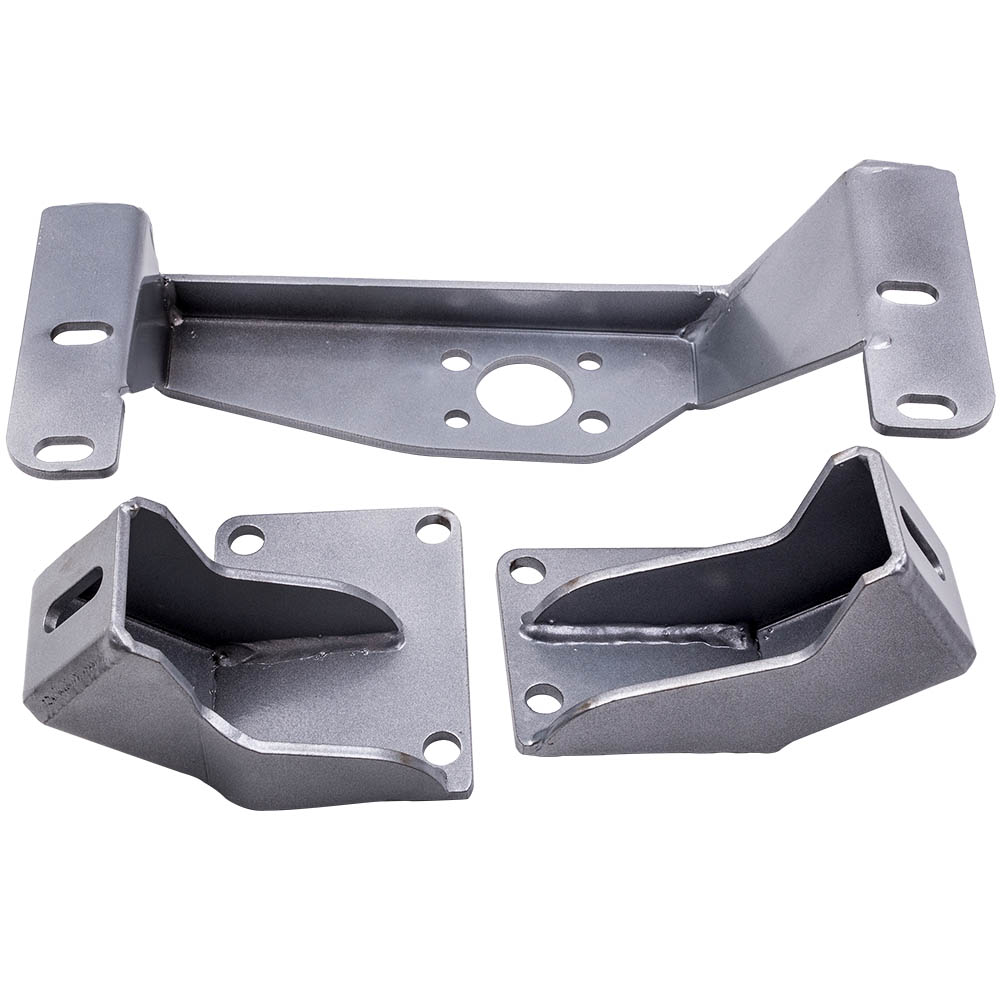

Photos from current listings. Actual item, color, and included accessories may vary.
1jz Engine Buying Guide
The 1JZ is Toyota's 2.5L inline-six engine family, split between the original 1JZ-GTE (twin-turbo, non-VVT-i) and the later 1JZ-GTE VVT-i and 1JZ-FSE variants. Buyers face a binary choice between complete engine swaps, long-block assemblies, and bare blocks/castings, with the primary trade-off being proven compression/leakdown health versus bare-core rebuild cost. The decision rule: buy a compression-tested complete engine when you need drop-in reliability; buy a bare block only if you have a verified machinist and plan to build internals.


At a glance
- Category
- Engine, Exhaust & Fuel System Parts
- Data updated
- Nov 15, 2026
Current offers
Highlights
- 1JZ-GTE generations split by head flow and ECU: early non-VVT-i (1990-1995) uses twin CT12A turbos and a simpler harness; later VVT-i (1996+) adds variable valve timing and different ECU pinouts.
- Displacement is 2,492 cc with an 86 mm bore and 71.5 mm stroke; factory compression is 8.5:1 for GTE and 10.0:1 for naturally aspirated 1JZ-GE, so forced-induction builds must match piston choice to turbo targets.
- Iron block with aluminum head is the durability baseline; bare blocks must be checked for cylinder-wall thickness before boring beyond 0.5 mm over standard.
- Engine-swap mounts and brackets are chassis-specific, not engine-specific: a 240SX (S13/S14) mount kit for 1JZ/2JZ uses different frame-rail geometry than JZX or BMW swap kits.
Best use cases
- Best fit: buy a complete compression-tested 1JZ-GTE VVT-i with harness and ECU for a street-driven JZX or 240SX swap where factory driveability and emissions compliance matter.
- Best fit: buy a bare 1JZ block or long block if you already own a machinist quote, forged internals, and a standalone ECU—this is the only rational path for 500+ hp builds.
- Wrong fit: buying a non-VVT-i 1JZ-GTE for a daily-driven automatic car expecting modern idle quality and torque—skip it and source a VVT-i variant or a 2JZ-GE for reliability.
Buying tips
- Require a leakdown test result under 10% per cylinder and a compression test within 10% across all six cylinders; a 1JZ showing more than 15% variance needs a rebuild budget before purchase.
- Match the engine generation to the ECU and harness you can actually wire: non-VVT-i uses a 1990s-era harness with different connectors than VVT-i, and mixing them adds a standalone ECU cost.
- For swap mounts, buy the bracket kit specific to your chassis (240SX S13/S14, JZX100, or BMW E36) rather than a universal 1JZ/2JZ mount claiming fitment across platforms.
- Buy the complete engine with turbochargers, intake manifold, and alternator included—piecing these separately routinely exceeds the cost difference of a complete pull-out.
Specs
| Engine Family | 1JZ 2.5L inline-six (GE / GTE) |
|---|---|
| Head / Block | Aluminum head / cast iron block |
| Induction | Twin-turbo GTE vs NA GE |
| Valve Timing | Non-VVT-i vs VVT-i (1996+) |
Related searches
What to check before buying
- Measure your engine bay and transmission tunnel: a 1JZ inline-six is longer than a four-cylinder, so radiator clearance and firewall-to-pulley distance must be verified before ordering mounts.
- Confirm your chassis mount kit matches the engine block's mount bosses: 1JZ and 2JZ share many mount points but not all chassis brackets are drilled for both.
- Check fuel system capacity: a turbo 1JZ-GTE needs a high-pressure pump and return line; a factory four-cylinder feed line is inadequate for boost.
- Verify ECU and harness compatibility with your target transmission—manual and automatic 1JZ ECUs use different pinouts and cannot be swapped without repinning.
FAQ
Data sources: eBay / Amazon listings and product attribute feeds Data updated Nov 15, 2026.
Some links on this page are affiliate links. If you buy after clicking one, we may earn a commission at no extra cost to you. This does not change which products appear here or their order. Affiliate disclosure.