Photos from current listings. Actual item, color, and included accessories may vary.
Electric Tire Inflator Buying Guide
Electric tire inflators split into two architectures: 12V DC corded compressors that run off the car's socket and cordless rechargeable pumps with integrated lithium cells. The decisive trade-off is airflow versus portability—corded units sustain higher duty cycles and higher CFM, while cordless units trade runtime and peak pressure for grab-and-go convenience. Buy corded if you inflate multiple tires or larger volumes regularly; buy cordless only if you accept per-tire runtime limits and keep the battery charged.


At a glance
- Category
- Emergency Tire Tools
- Data updated
- Nov 15, 2026
Current offers
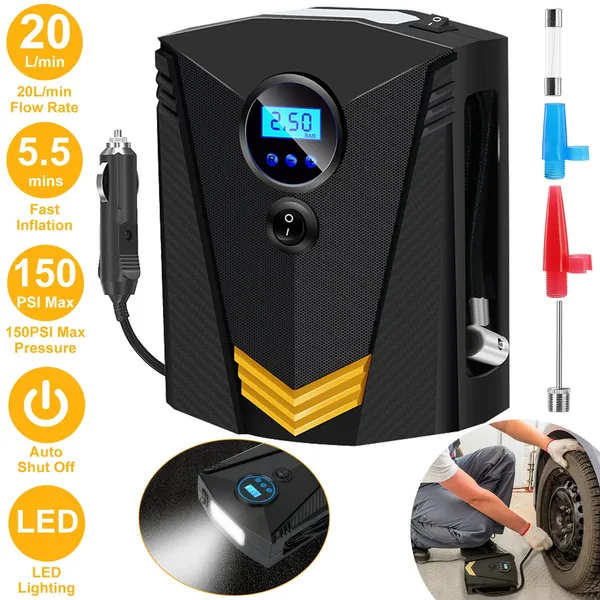 Tire Inflator 12V DC 100W 150PSI Digital Pump W/LCD Display Electric Air Compressor 20L/Min Air Flow$38.99
 View on Mallflare
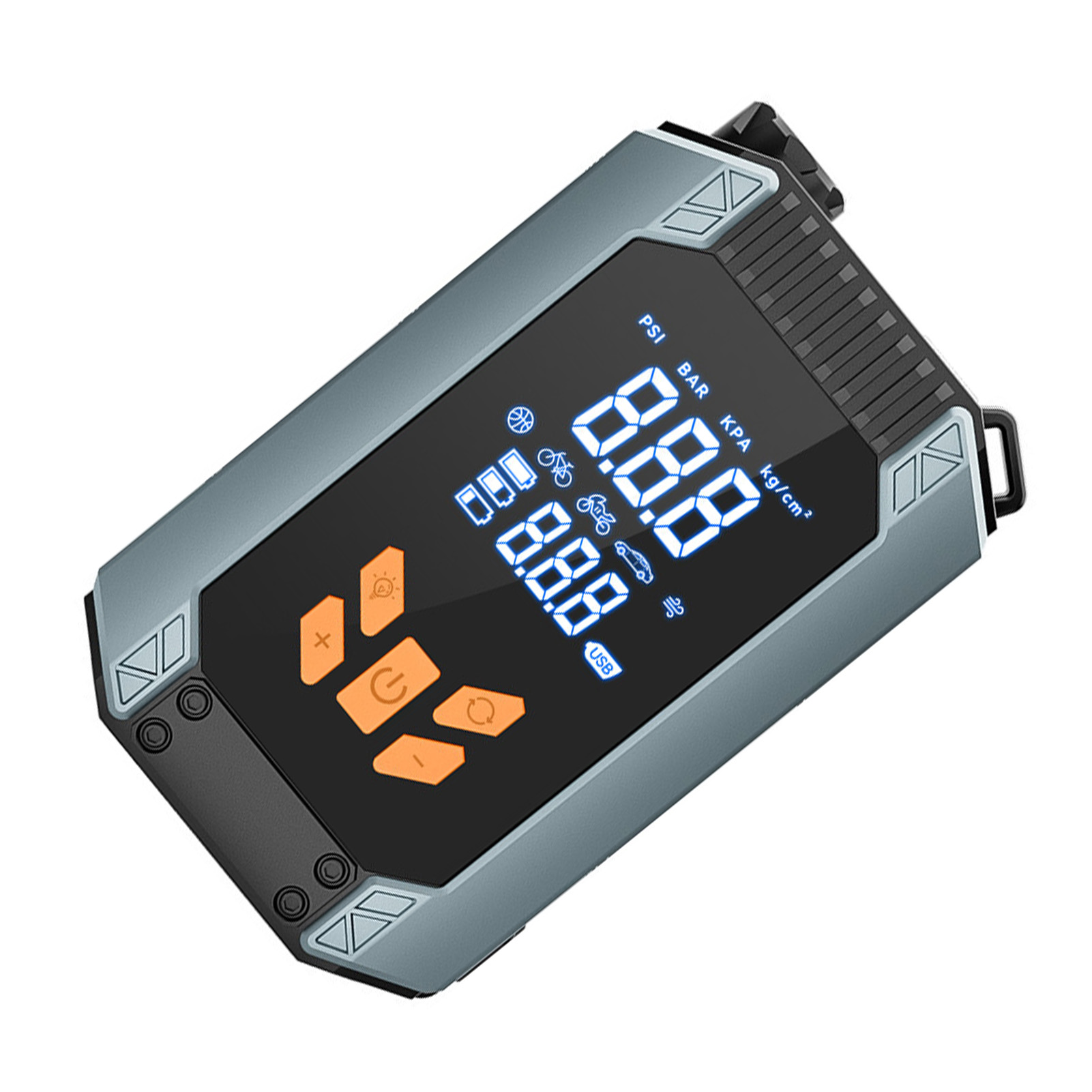 Cordless Tire Inflator 150PSI Auto Shutoff 6000mAh Electric Portable Car Pump With Pressure Gauge LED Light For$41.99View on Mallflare
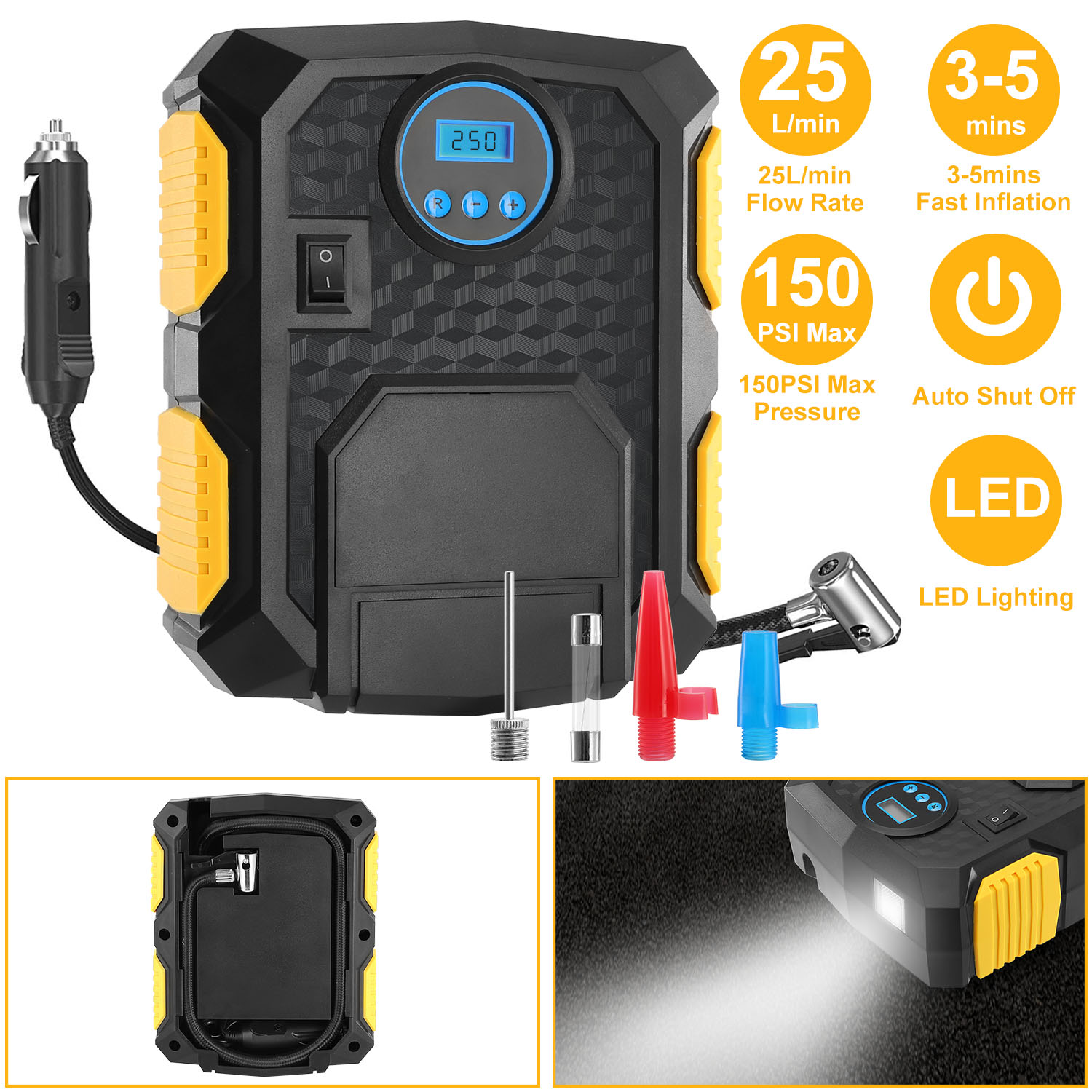 Tire Inflator 12V DC 120W 150PSI With LCD Electric Air Compressor 25L Per Min Large Air Flow$46.99View on Mallflare
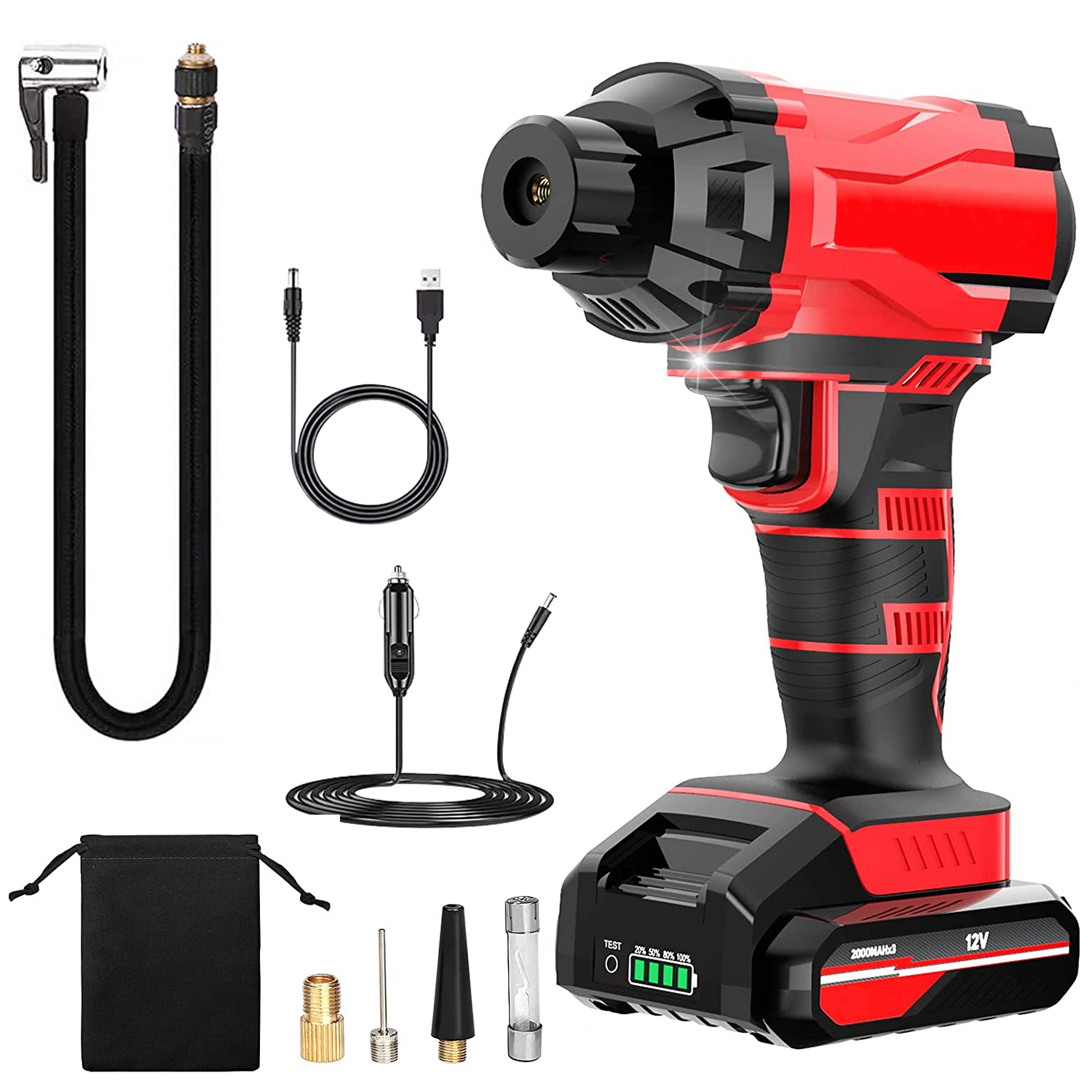 1Pc 150PSI Cordless Car Tire Inflator Rechargeable 2V Portable Electric Air Compressor With LED Light For Car Bike$49.99View on Mallflare
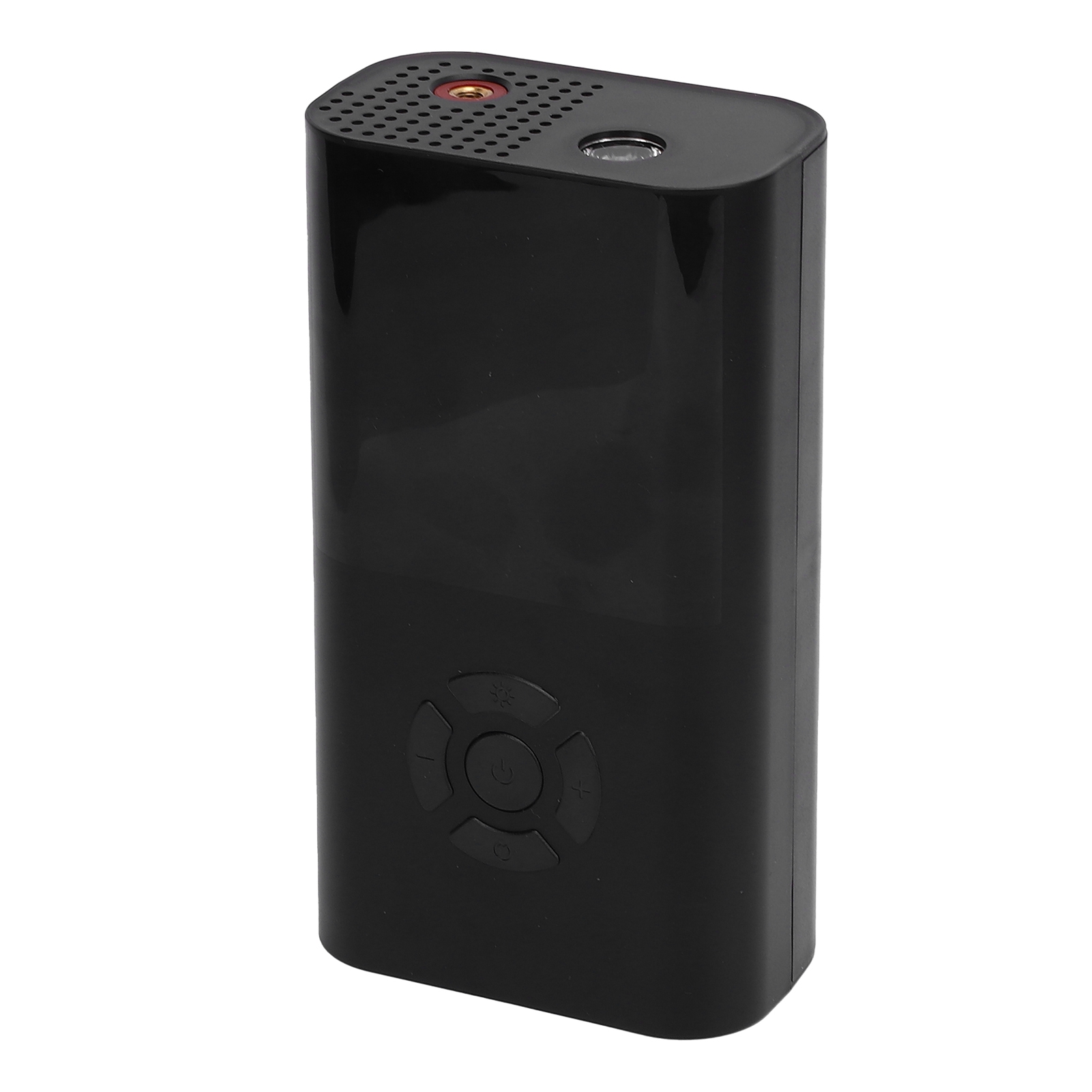 Portable Tire Inflator 5 To 150PSI LCD Display Electric Car Pump With Emergency Starter Digital Pressure Meter For$60.99View on Mallflare
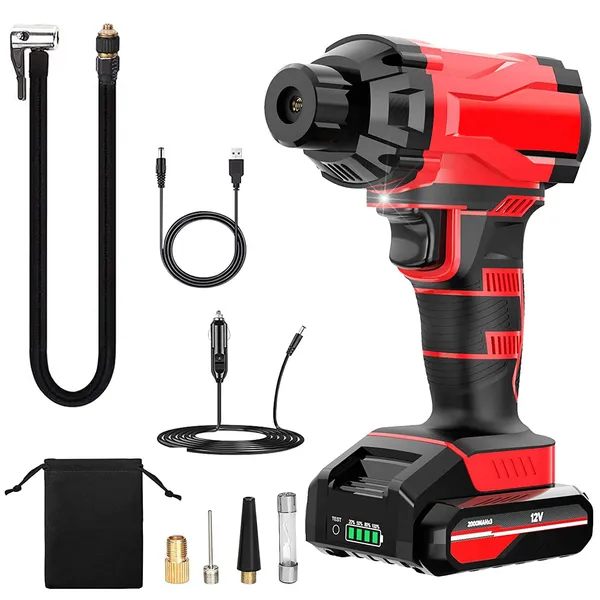 150PSI Cordless Car Tire Pump 6000mAh Rechargeable Inflator 12V Portable Electric Air Compressor With LED Light For Car$76.99View on Mallflare
Highlights
- 12V DC corded units typically draw 100–120W and deliver 20–25 L/min airflow, enough for sustained multi-tire inflation without battery fade.
- Cordless models rely on 6000mAh-class lithium packs and 150 PSI pumps; real-world runtime covers a few passenger tires before recharge, not continuous duty.
- Auto shutoff at a preset PSI and a digital LCD gauge with ±1 PSI accuracy are the two features that prevent over-inflation and repeated manual checks.
- Cylinder and head materials matter: metal-bodied pump heads dissipate heat for longer duty cycles; all-plastic housings suit occasional top-ups only.
Best use cases
- Best fit: corded 12V DC 120W/25 L/min unit for drivers who top up four tires at once or inflate trailer, RV, and SUV tires—skip cordless for this job.
- Best fit: 6000mAh cordless 150 PSI pump with auto shutoff for glovebox carry and quick single-tire top-ups on bikes, cars, and wheelbarrows.
- Wrong fit: a low-wattage plastic-bodied inflator for sustained high-pressure work on LT truck tires—heat buildup shortens motor life; choose a metal-head higher-airflow model.
- Wrong fit: relying solely on a cordless pump for a full four-tire deflation recovery without a 12V charging source—runtime will not cover it reliably.
Buying tips
- Match airflow to tire size: 20 L/min suits passenger car tires; 25 L/min or higher cuts inflation time on SUV and light-truck volumes.
- Confirm the 12V DC plug is a standard cigarette-lighter adapter rated for the unit's wattage—100–120W units need a 15A socket circuit.
- For cordless, check the battery is user-replaceable and the pump specifies auto shutoff at target PSI; sealed non-replaceable packs shorten product life.
- Prefer a digital LCD gauge with preset shutoff over an analog dial; analog gauges drift and force manual pressure checks mid-inflation.
Specs
| Power Source | 12V DC corded vs cordless Li-ion |
|---|---|
| Peak Pressure | 150 PSI typical |
| Airflow | 20–25 L/min |
| Gauge & Shutoff | Digital LCD with auto shutoff |
Related searches
What to check before buying
- Measure your tire's target pressure and volume: passenger cars usually need 30–36 PSI; SUVs and light trucks run higher and reward 25 L/min airflow.
- Verify your vehicle's 12V socket fuse rating (typically 15A) supports a 100–120W corded inflator without blowing.
- For cordless, confirm storage temperature range and plan to recharge the 6000mAh pack monthly—lithium cells self-discharge and degrade if stored empty.
- Check the hose length and chuck type reach your valve stems without an extension, especially on duallies or recessed rims.
FAQ
Data sources: eBay / Amazon listings and product attribute feeds Data updated Nov 15, 2026.
Some links on this page are affiliate links. If you buy after clicking one, we may earn a commission at no extra cost to you. This does not change which products appear here or their order. Affiliate disclosure.