Photos from current listings. Actual item, color, and included accessories may vary.
Tire Inflator Buying Guide
A tire inflator is an emergency air compressor that fills a flat or low tire from a 12V outlet, a built-in battery, or a disposable canister. The core trade-off is airflow volume versus portability: corded 12V units deliver higher CFM for truck and SUV tires, while cordless battery units trade airflow for self-contained convenience. Choose a corded unit with a metal cylinder and at least 150 PSI for heavy vehicles, and a cordless unit with an auto-shutoff gauge for cars, bikes, and sports gear.

At a glance
- Category
- Emergency Tire Tools
- Data updated
- Nov 15, 2026
Current offers
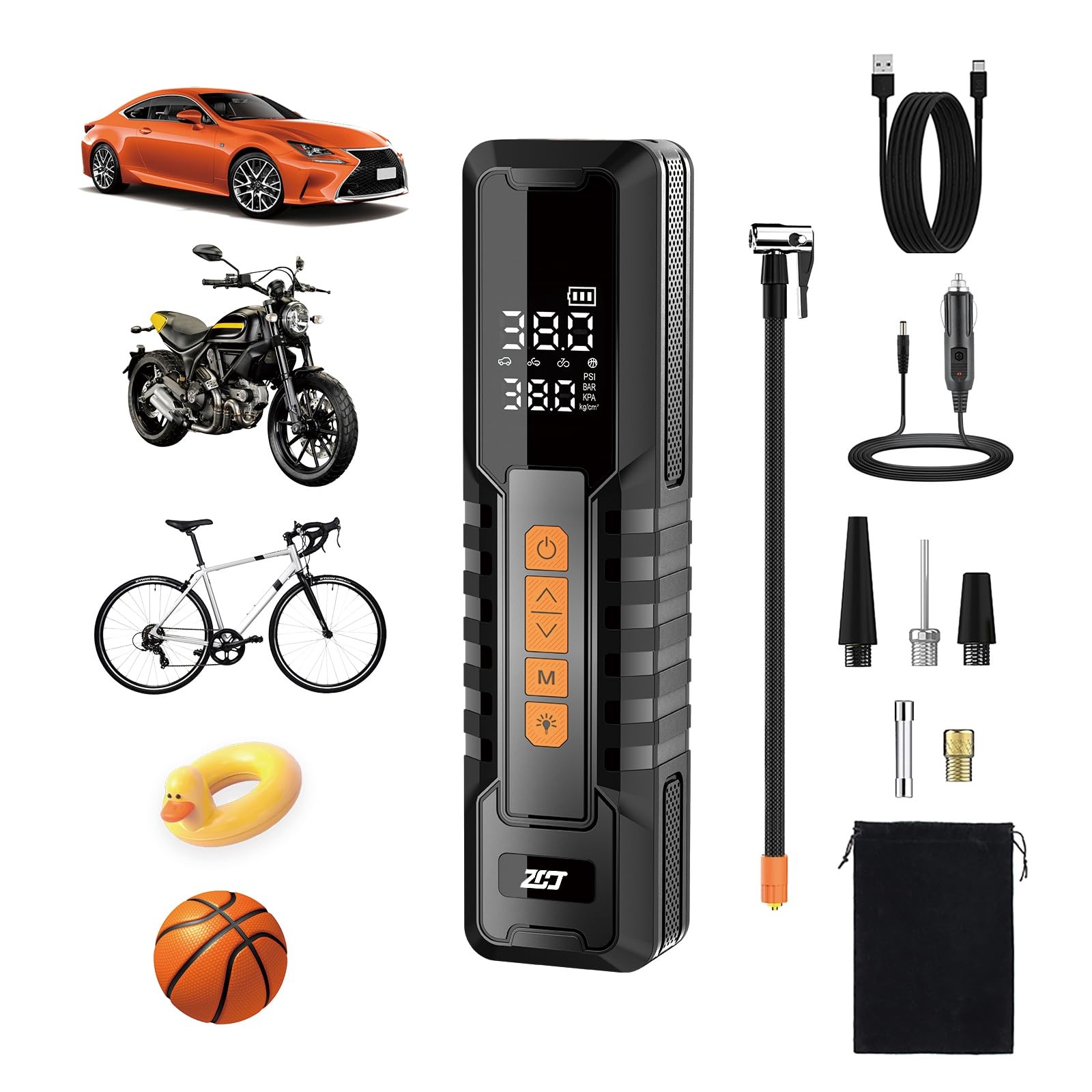 Tire Inflator Portable Air Compressor – Emergency Flat Tire Rescue & Pressure...$12.86
 View on eBay
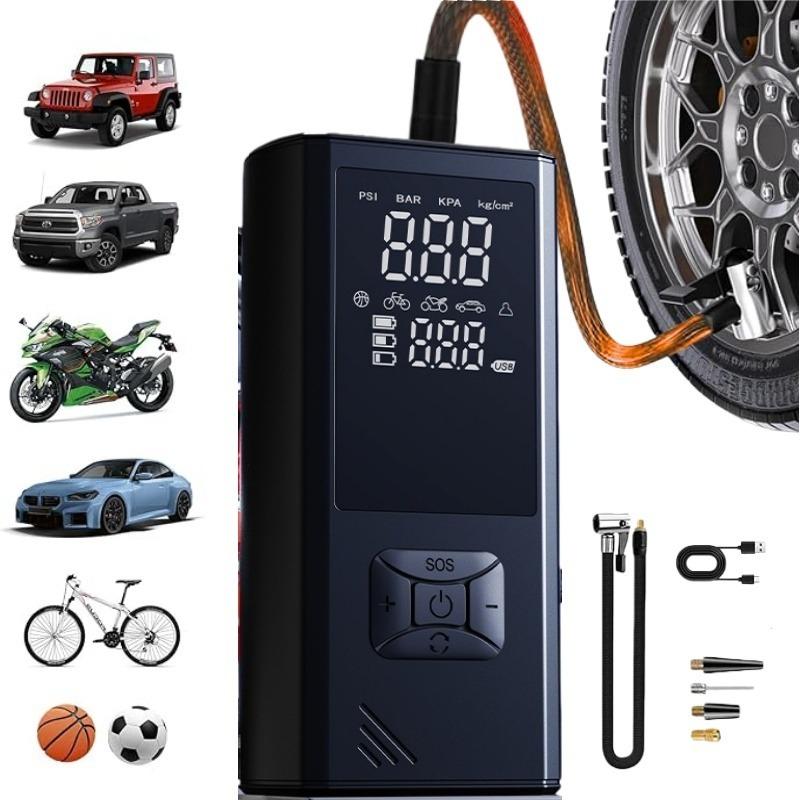 Portable Wireless Car Tire Inflator Suitable For Cars, Motorcycles, Bicycles, And Sports Balls Features Digital Pressure$32.99
 View on Mallflare
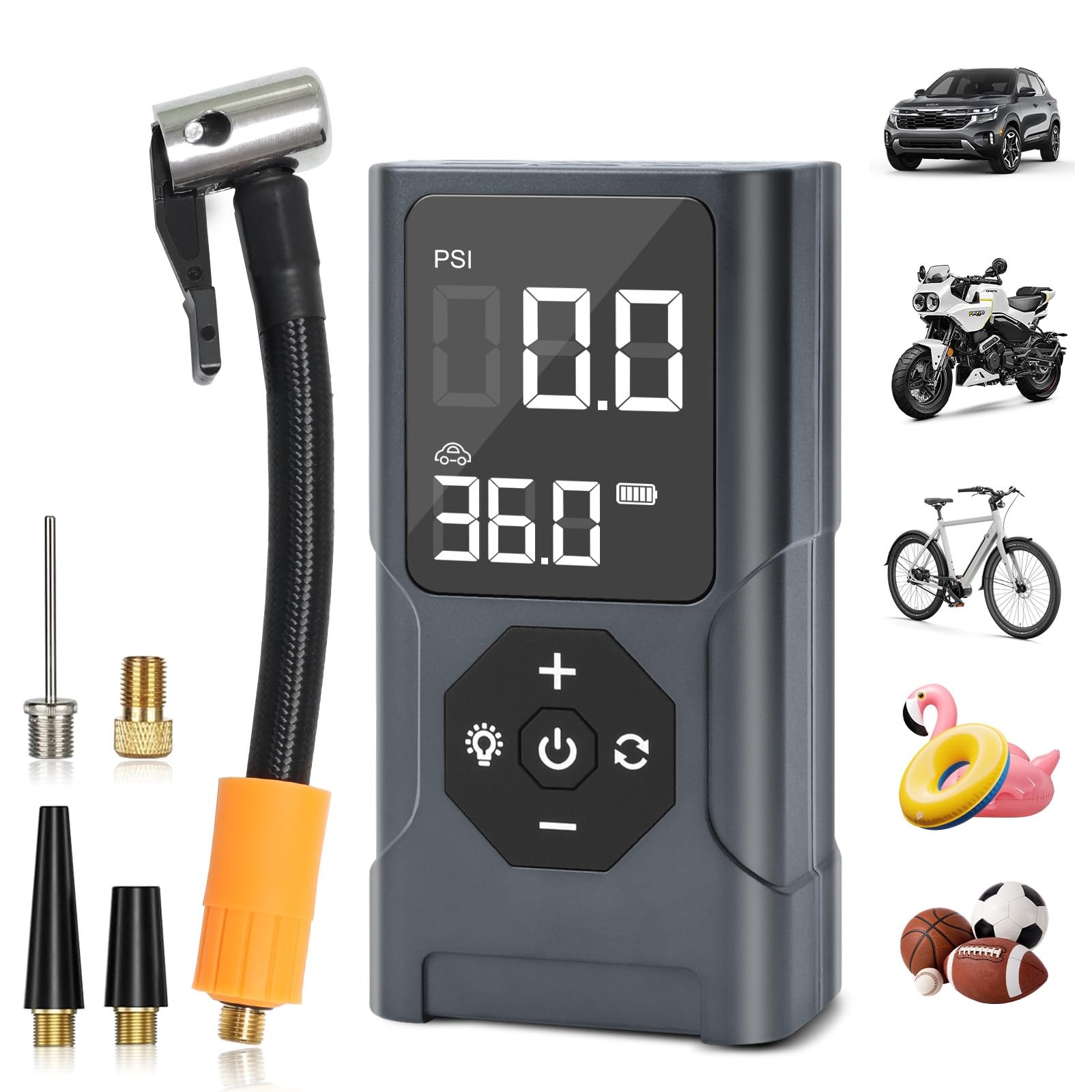 Tire Inflator Portable Air Compressor - Air Pump For Car Tires with Digital P...$15.24View on eBay
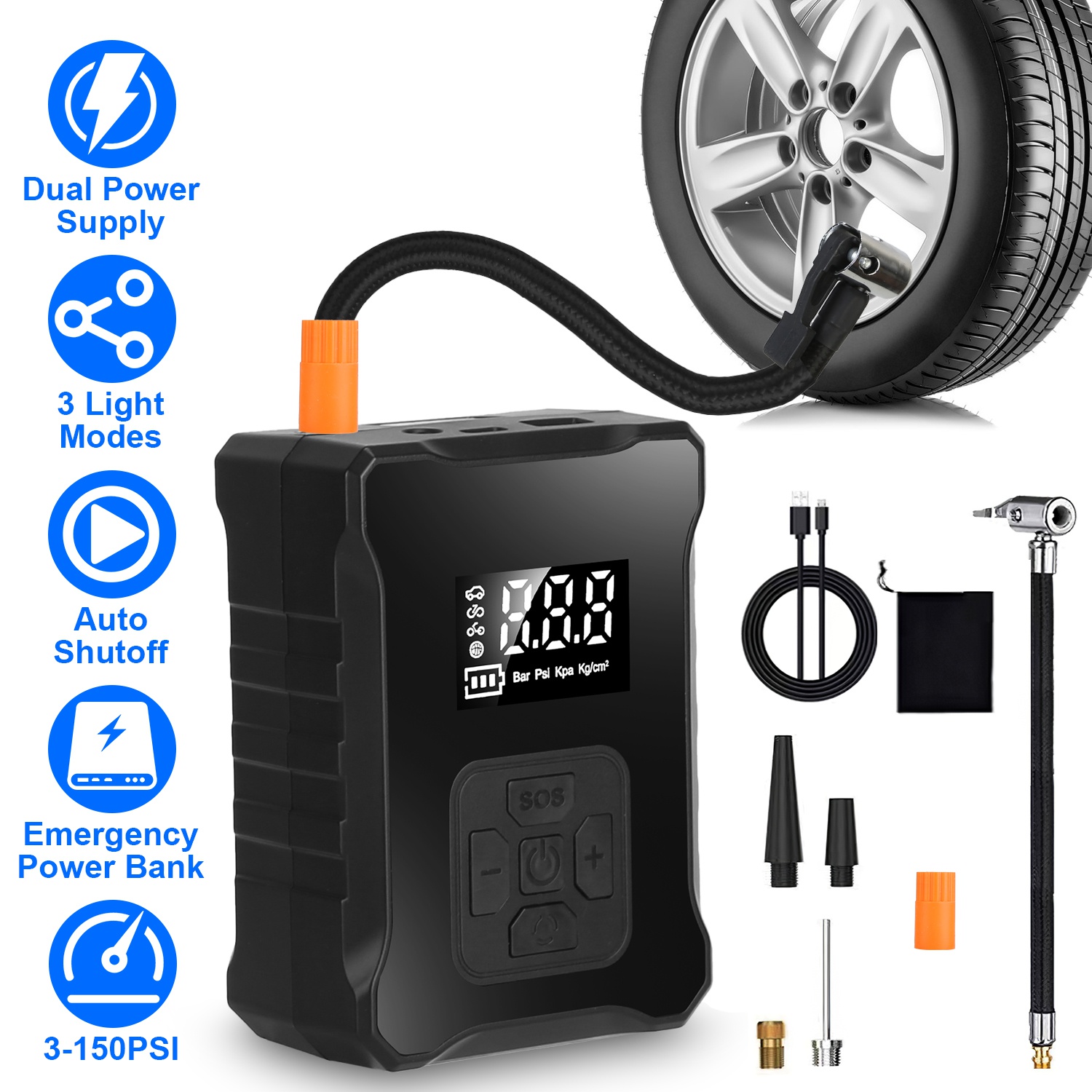 1Pc 150PSI Cordless Tire Inflator Digital Air Compressor With LED Light Emergency Power Bank For Cars Motorcycles$37.99View on Mallflare
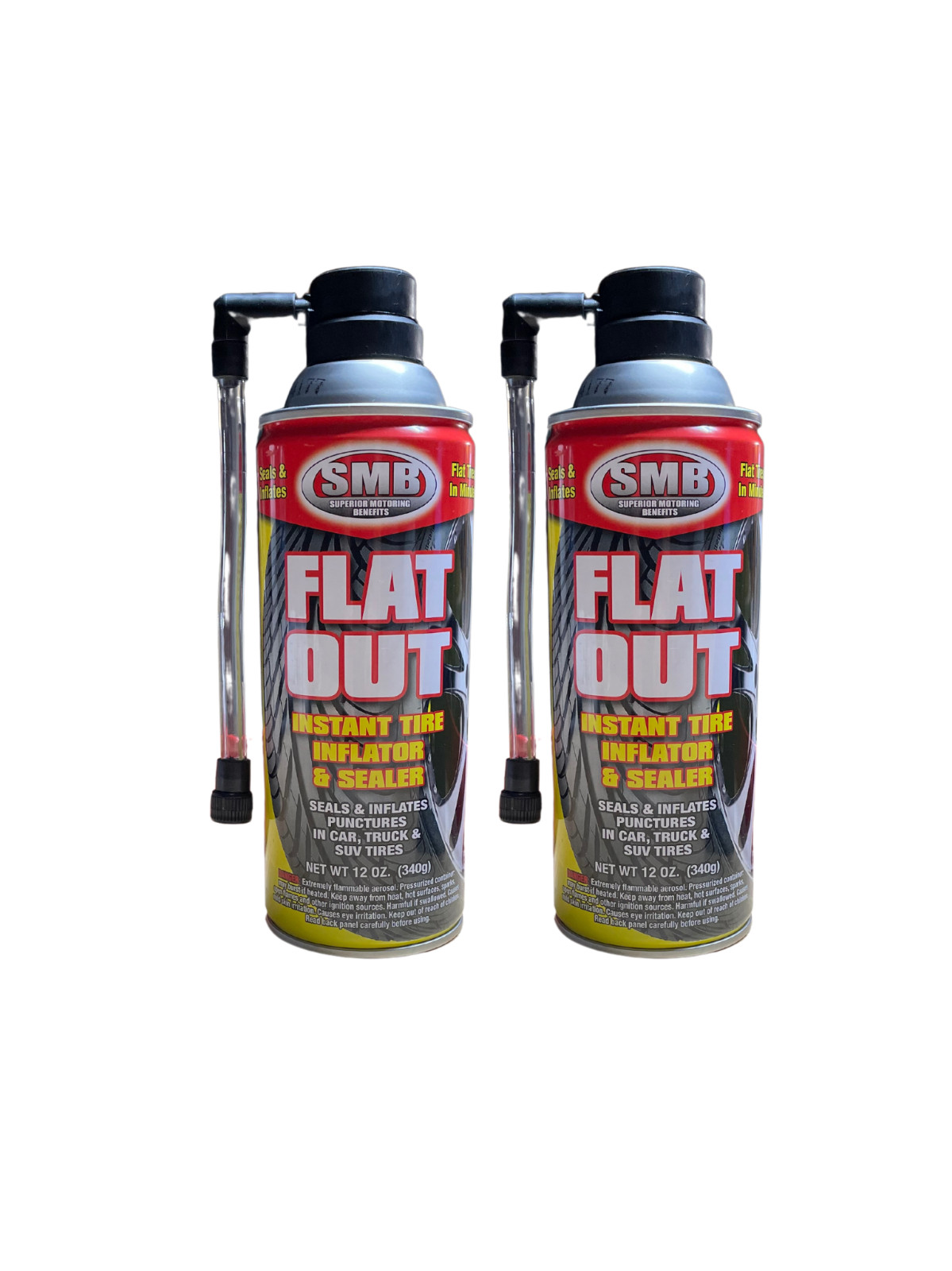 Flat Out Fix a Flat Emergency Tire Inflator and Sealer - (2) 12oz Cans With Hose$16.75View on eBay
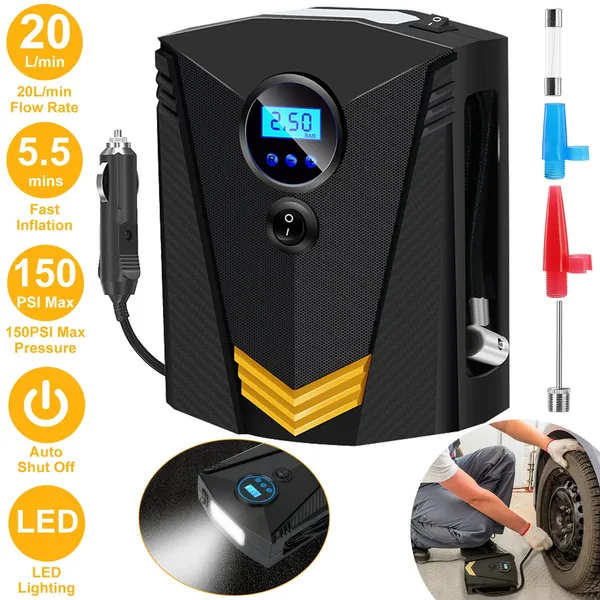 Tire Inflator 12V DC 100W 150PSI Digital Pump W/LCD Display Electric Air Compressor 20L/Min Air Flow$38.99View on Mallflare
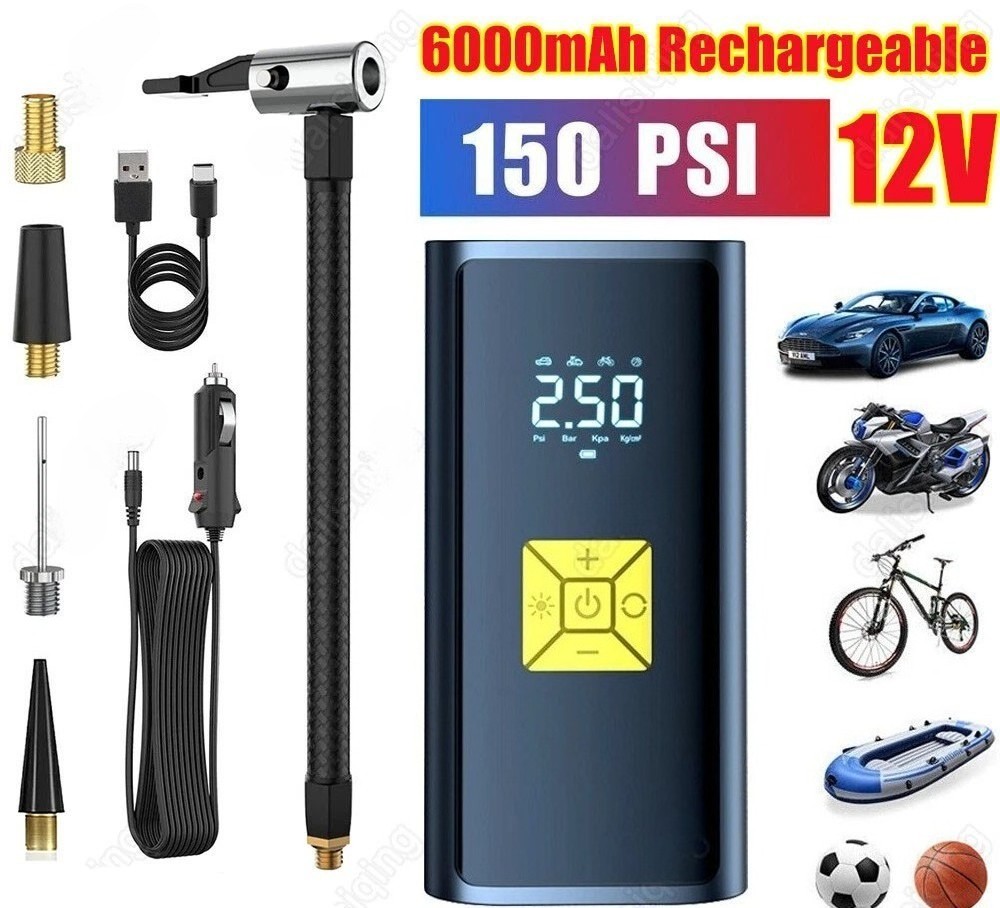 150 PSI Air Compressor Tire Inflator Fits Car Moto Bike Tires Air Pump Cordless$17.99View on eBay
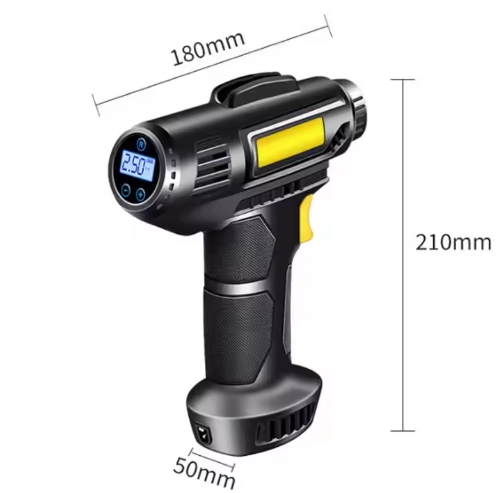 Car Tire Inflator Wireless Intelligent Digital Display Portable Handheld Car Bicycle$40.99View on Mallflare
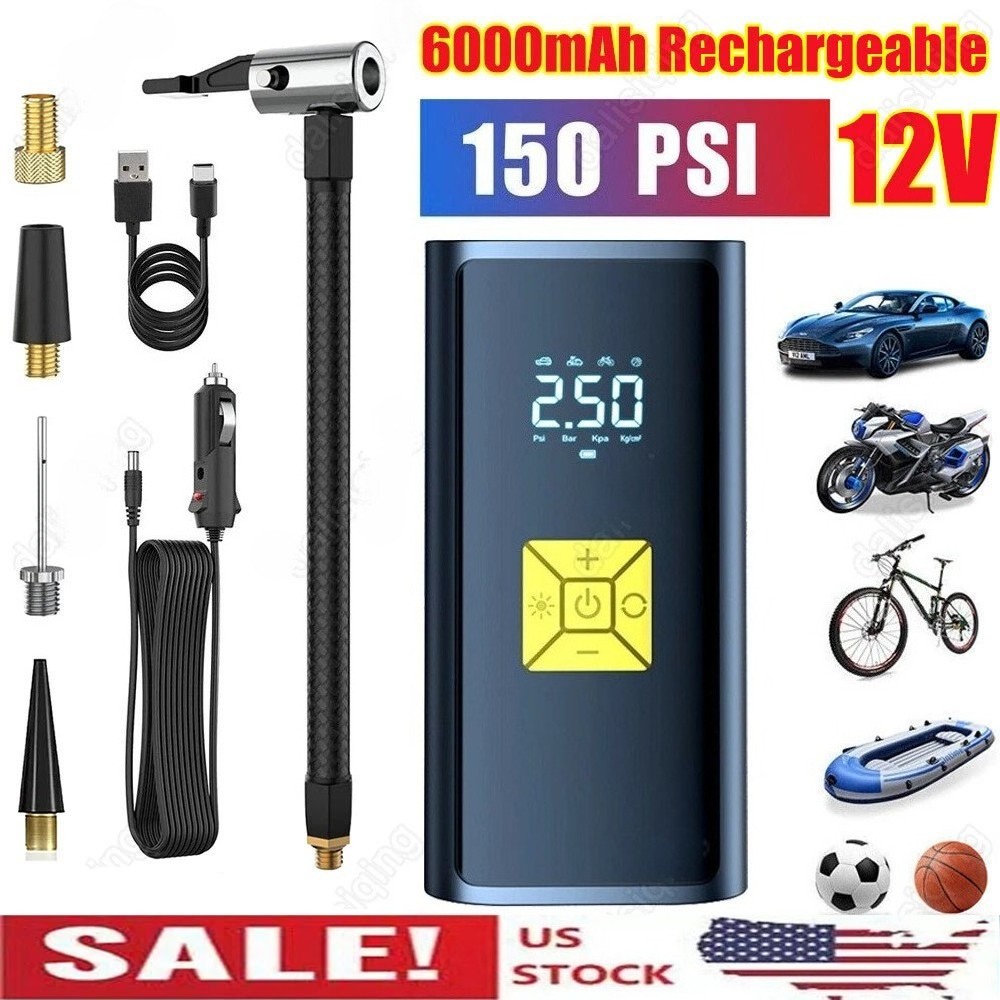 150 PSI Air Compressor Tire Inflator Fits Car Moto Bike Tires Air Pump Cordless$18.69View on eBay
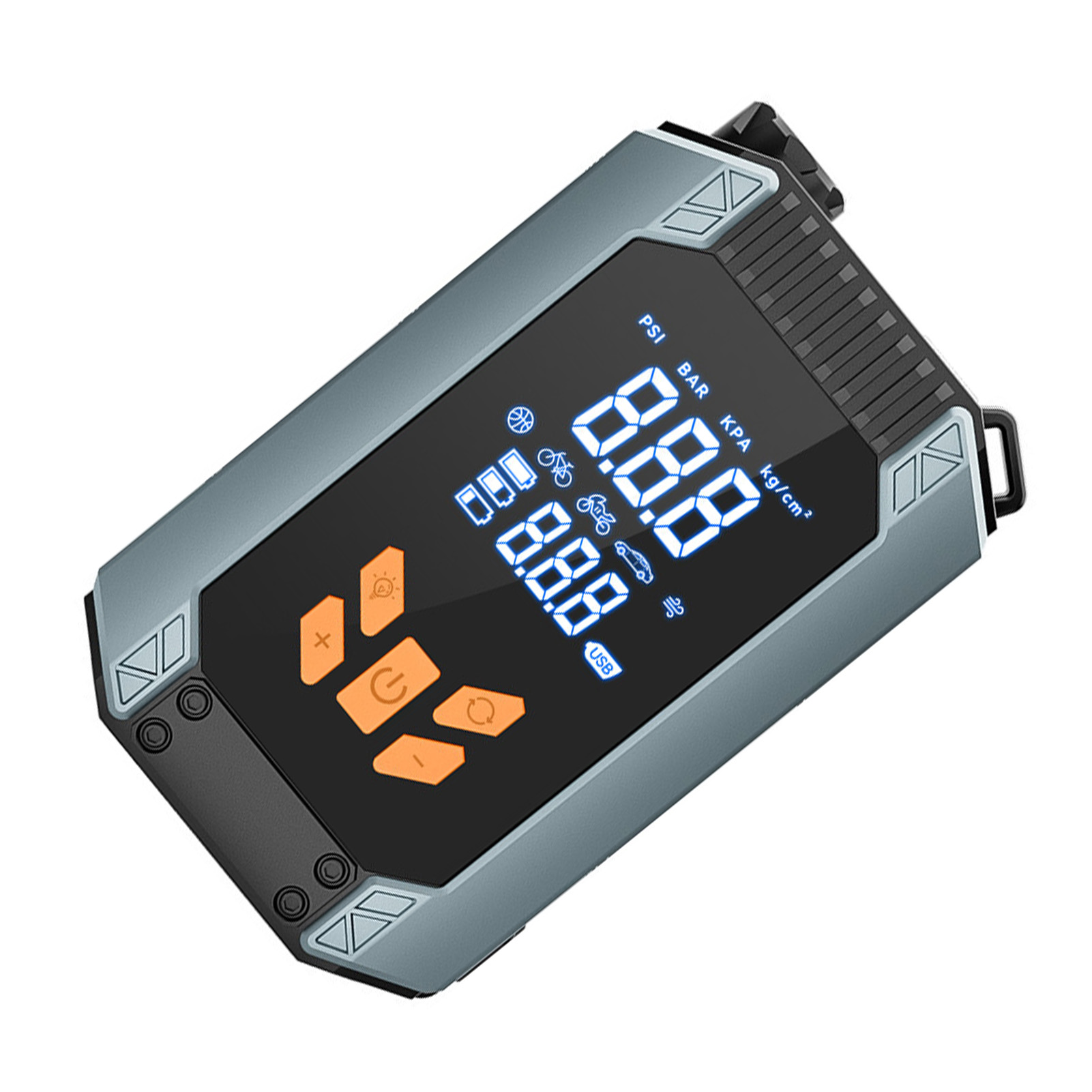 Cordless Tire Inflator 150PSI Auto Shutoff 6000mAh Electric Portable Car Pump With Pressure Gauge LED Light For$41.99View on Mallflare
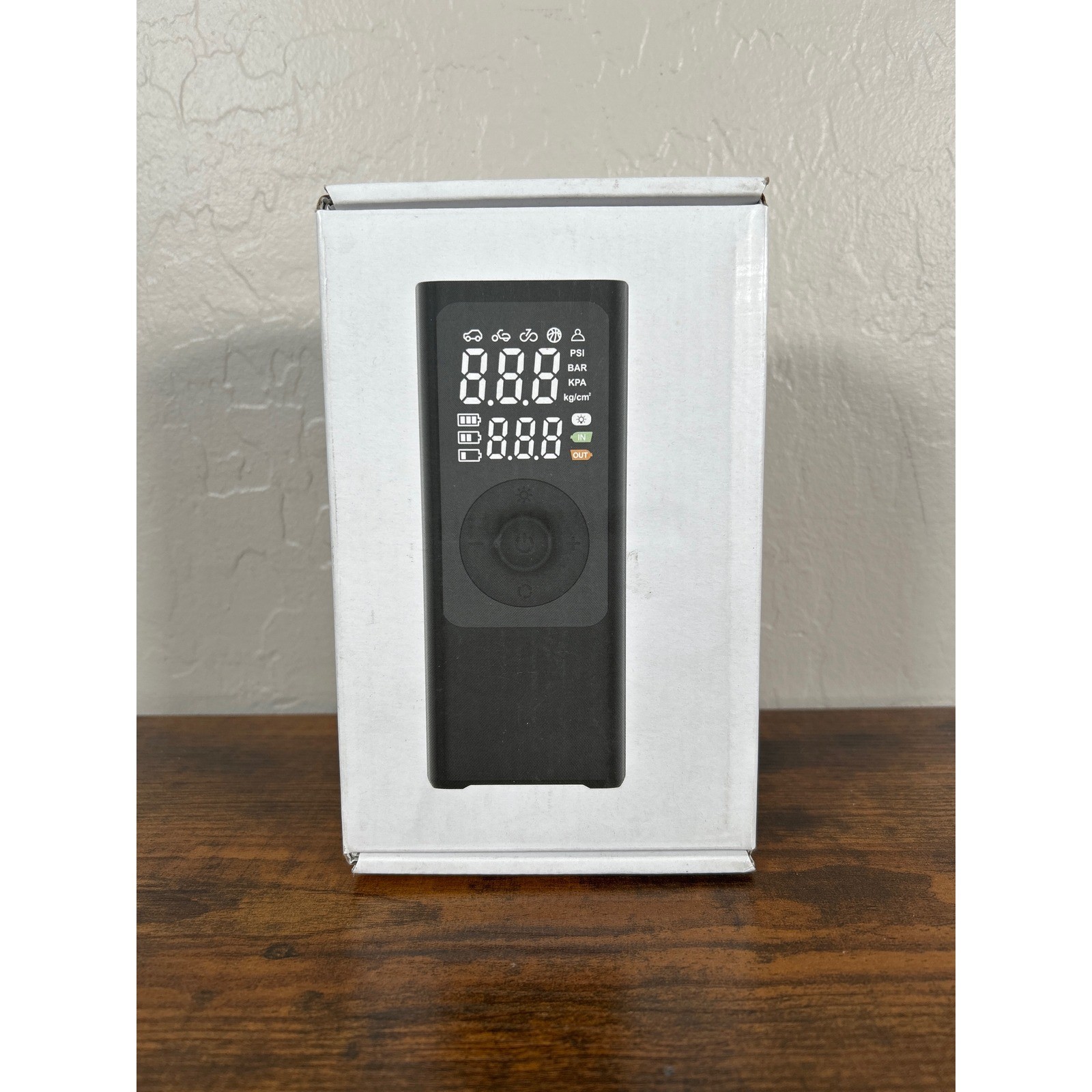 Portable Car Air Pump Digital Tire Inflator 100W CZK-5613 Black Handheld USB$20.00View on eBay
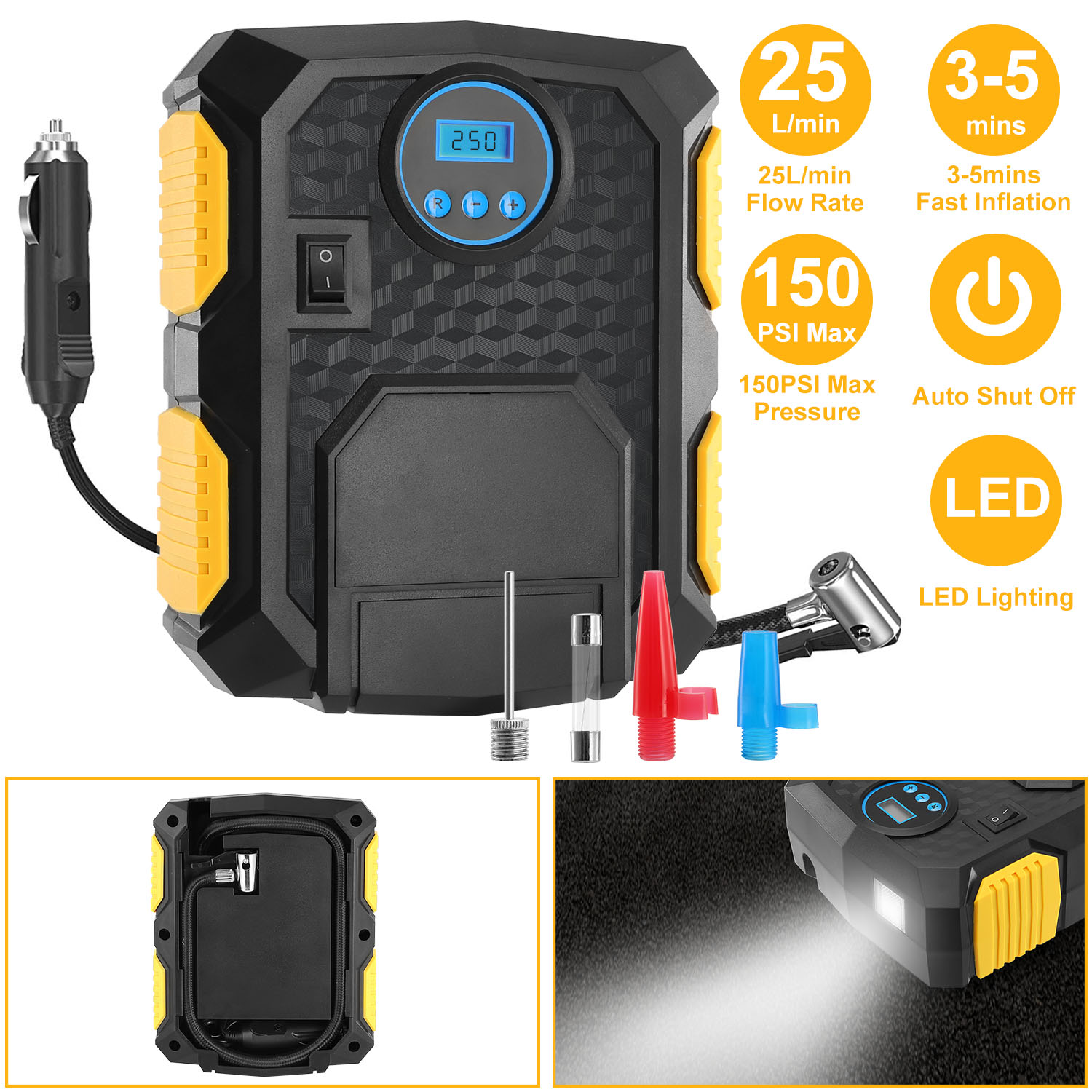 Tire Inflator 12V DC 120W 150PSI With LCD Electric Air Compressor 25L Per Min Large Air Flow$46.99View on Mallflare
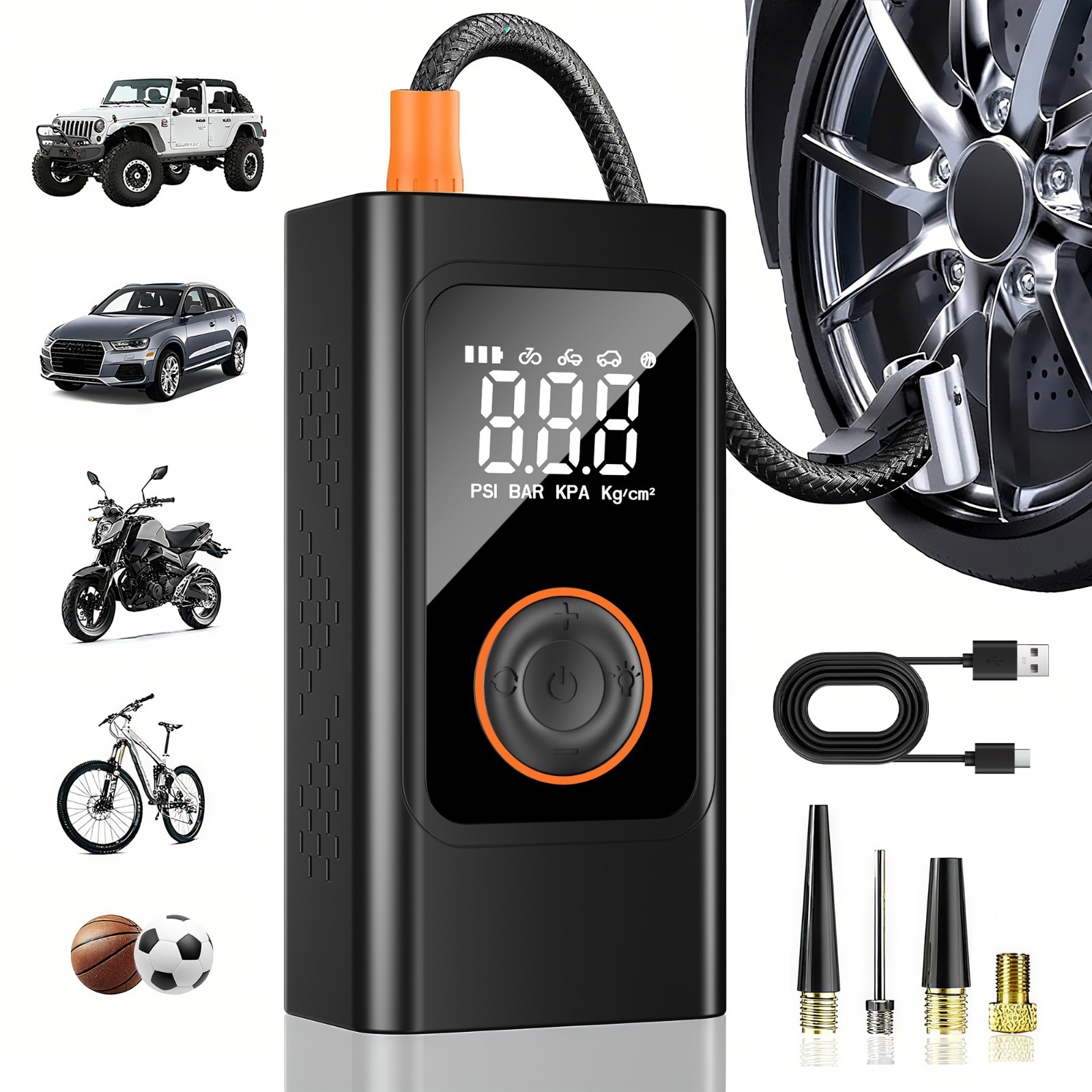 Portable Tire Inflator Air Compressor Pump 150PSI Digital LED Car Emergency 12V$28.32View on eBay
 Portable Tire Inflator Pump 150PSI With Digital Pressure Gauge 6000mAh High Capacity Fast Inflation For Car Motorcycle$47.99View on Mallflare
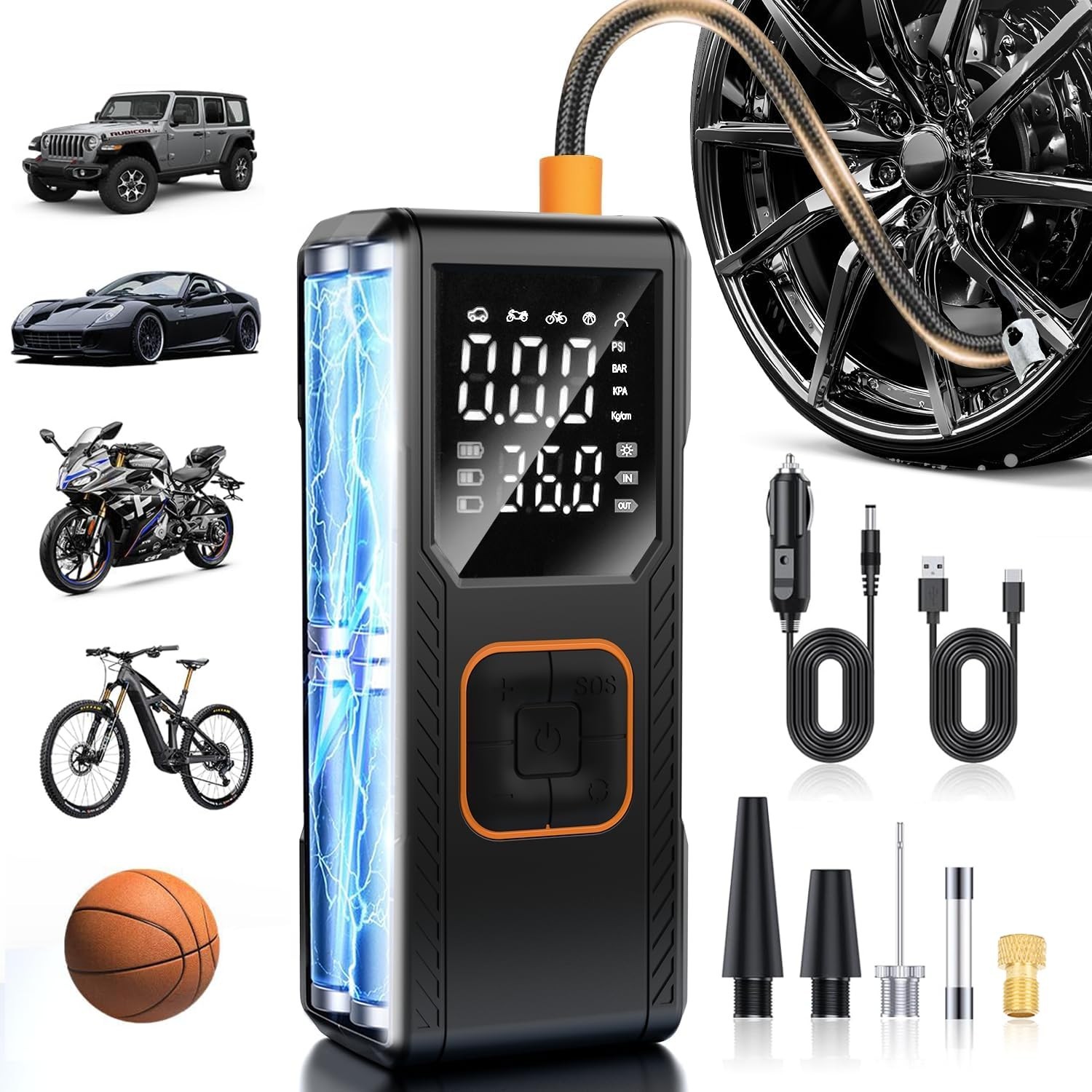 Tire Inflator Portable Air Compressor, 150PSI Cordless Air Pump For Car Tires...$36.08View on eBay
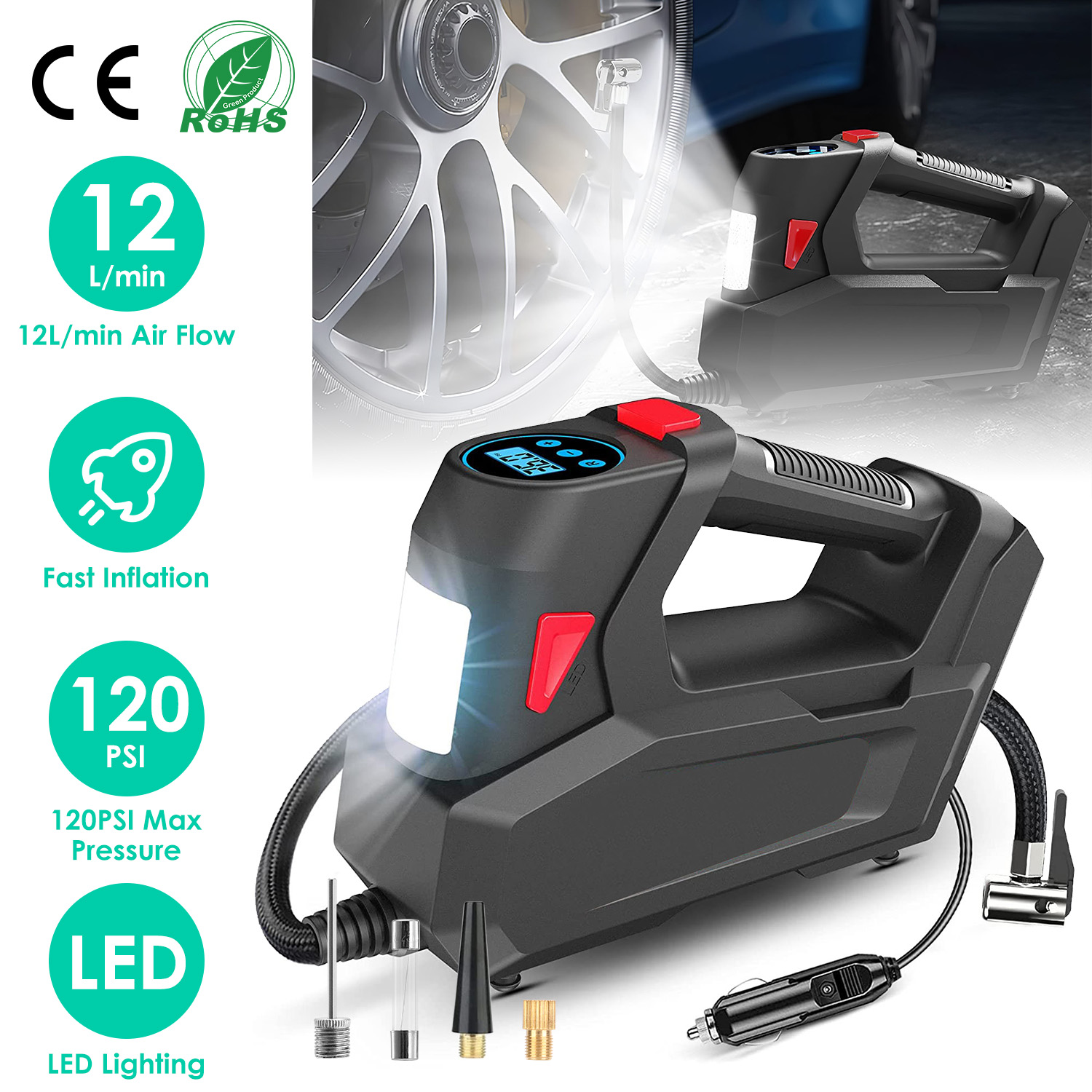 1Pc Portable Tire Inflator 120 PSI Maximum 90W Powered With Digital Display LED Light Inflatable Nozzle Needle Fuse Air$47.99View on Mallflare
 Tire Inflator Portable Air Compressor, 150 PSI Air Pump for Car Tires, Bike T...$39.94View on eBay
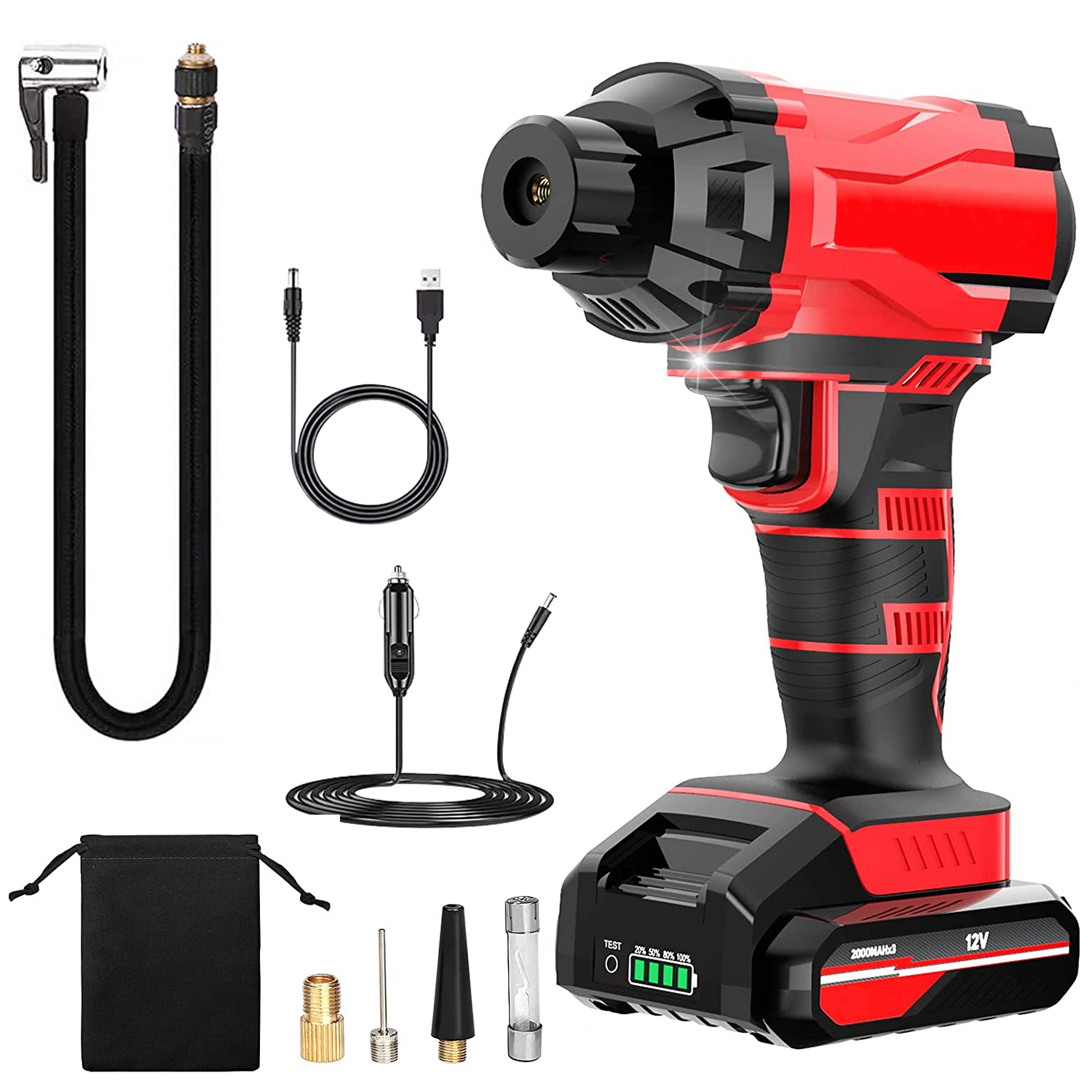 1Pc 150PSI Cordless Car Tire Inflator Rechargeable 2V Portable Electric Air Compressor With LED Light For Car Bike$49.99View on Mallflare
- Tire Inflator Portable Air Compressor, 150 PSI Air Pump for Car Tires, Bike T...$39.99View on eBay
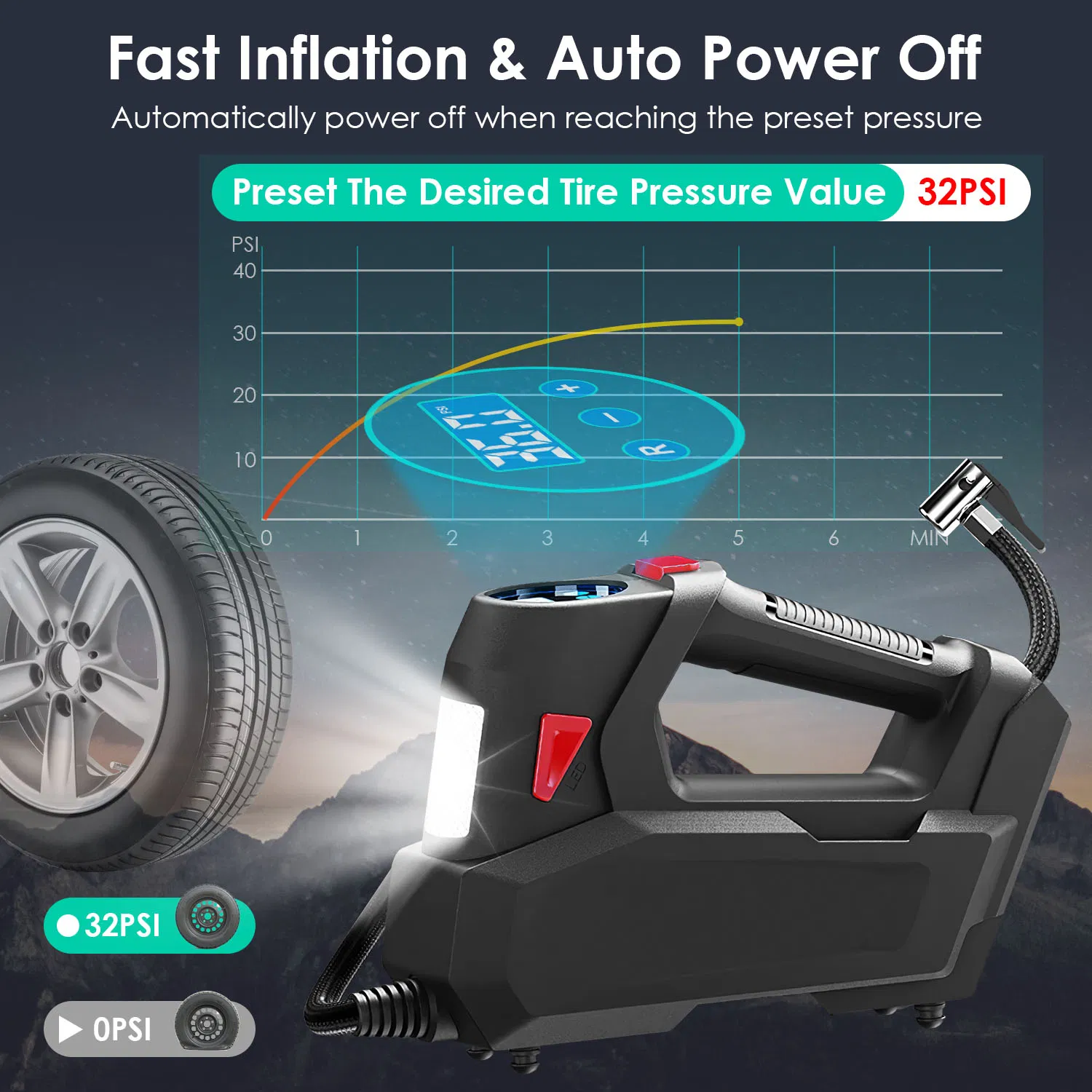 Portable Tire Inflator 120 PSI Maximum 90W Powered Pump with Digital Display LED Light Inflatable Nozzle Needle Fuse Air$53.99View on Mallflare
Highlights
- Corded 12V DC inflators typically deliver 20–35 L/min airflow and run continuously from the vehicle socket; battery units typically max out near 20 L/min and lose pressure as the cell drains.
- A metal or aluminum cylinder with cooling fins handles sustained high-pressure duty; all-plastic pump housings are built for occasional top-offs, not repeated truck-tire fills.
- Digital pressure gauges with auto-shutoff stop the pump at a preset PSI, usually accurate to ±1–2 PSI; analog dial gauges rely on the user watching the needle at the valve.
- 150 PSI is the common maximum working pressure; large truck tires needing 80–110 PSI are better served by a unit rated for continuous duty at that pressure, not a peak-only rating.
Best use cases
- Best fit: compact cars, motorcycles, bicycles, and sports balls — pick a cordless 150 PSI unit with digital auto-shutoff and a built-in LED light; skip bulky dual-cylinder corded pumps.
- Best fit: trucks, SUVs, and trailers running 80+ PSI — pick a corded 12V unit with a metal cylinder, screw-on valve chuck, and long hose; skip battery-only inflators that overheat on sustained fills.
- Best fit: emergency sealing of a punctured tire — carry a 12 oz aerosol inflator/sealer can with hose; skip it for sidewall damage or large tread punctures, where it will not hold.
- Wrong fit: inflating multiple tires in one session or running air tools — a portable inflator cannot deliver the duty cycle; use a workshop compressor with a tank instead.
Buying tips
- Match the pressure rating to the tire, not the car: passenger tires need 30–36 PSI, light truck tires 50–80 PSI, and heavy trailer tires up to 110 PSI — buy a unit rated for continuous duty at your highest target.
- For corded units, confirm a 12V DC plug with at least 10 ft of cable so the pump reaches all four wheels without an extension; battery units should use USB-C or a removable pack for field recharging.
- Choose a screw-on or clip-on valve chuck over a lever chuck for hands-free filling, and check the hose length: under 20 in makes rear-wheel access awkward on larger vehicles.
- Aerosol sealer cans are single-use and typically 12 oz or 16 oz; they seal small tread punctures only and must be replaced after use, and the tire should be professionally inspected afterward.
Specs
| Power Source | 12V DC corded vs rechargeable battery |
|---|---|
| Max Pressure | 100–150 PSI (peak vs continuous) |
| Airflow | 20–35 L/min corded; ~20 L/min battery |
| Cylinder Material | Metal/aluminum vs plastic housing |
Related searches
What to check before buying
- Record your vehicle's recommended cold tire pressure from the door-jamb placard and confirm the inflator's continuous-duty rating meets or exceeds it.
- Measure the distance from your 12V socket to the farthest wheel; add 2 ft of slack and choose a corded unit whose cable meets that length.
- For battery units, confirm the charging port standard (USB-C vs proprietary) and that the battery holds enough charge to complete at least one full tire fill.
- Check valve stem type (Schrader vs Presta) and confirm the inflator includes the matching chuck or adapter for bikes and sports equipment.
FAQ
Data sources: eBay / Amazon listings and product attribute feeds Data updated Nov 15, 2026.
Some links on this page are affiliate links. If you buy after clicking one, we may earn a commission at no extra cost to you. This does not change which products appear here or their order. Affiliate disclosure.