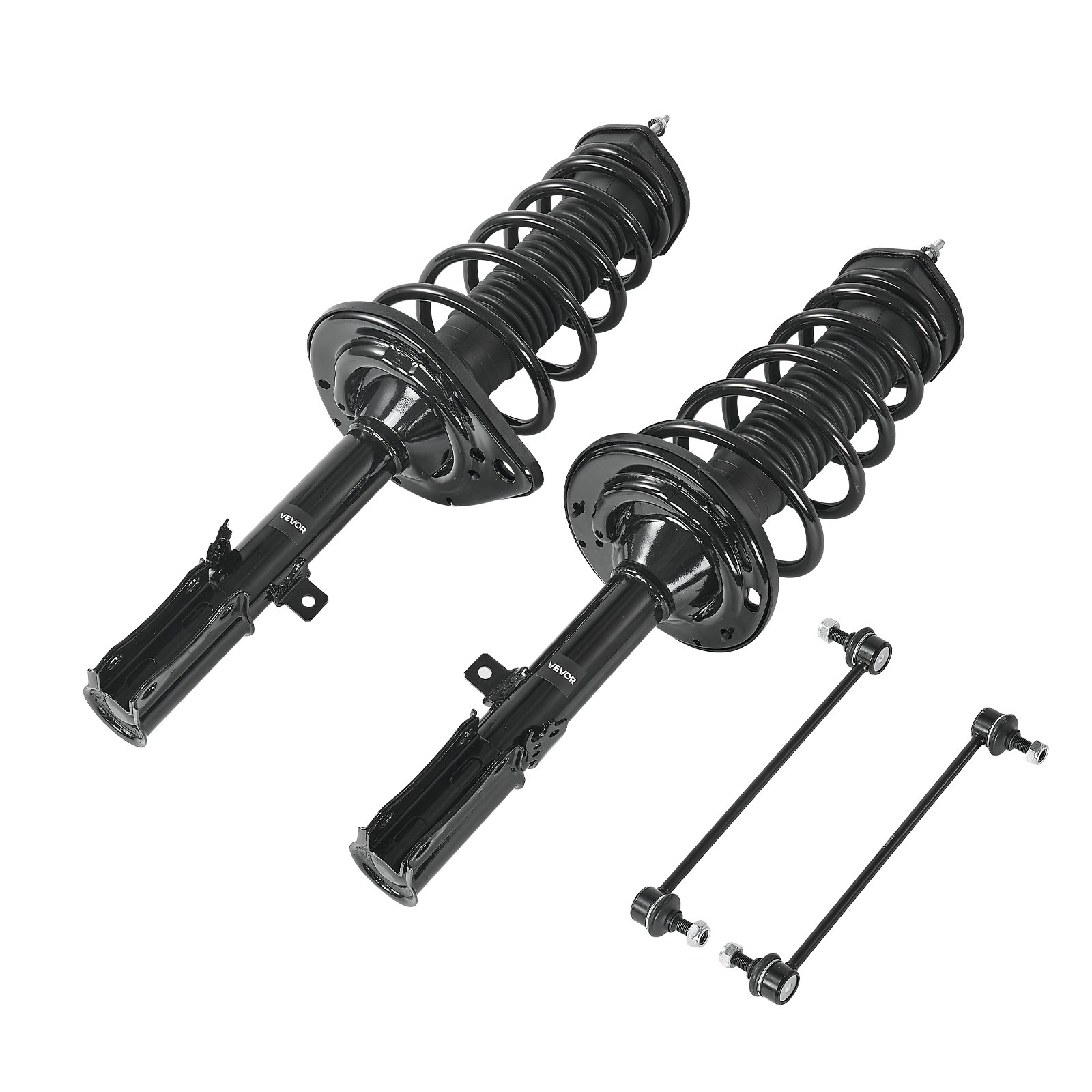

Photos from current listings. Actual item, color, and included accessories may vary.
Toyota Camry Shock Absorber Buying Guide
Camry shock absorbers are the primary wear component controlling ride control, tire contact, and brake stability, and the key decision is matching the correct generation-specific fitment and valving rather than choosing a universal or crossover part. Durable options are application-specific assemblies or twin-tube replacements engineered for the exact chassis code and load rating; compromises are one-size-fits-many listings and quick-struts with generic valving.


At a glance
- Category
- Suspension, Steering & Brake Parts
- Data updated
- Nov 15, 2026
Current offers
Highlights
- Camry spans distinct chassis generations (XV30/XV40/XV50/XV70), and shocks are not interchangeable across them due to different spring perch, clevis, and top-mount geometry.
- Quick-strut assemblies bundle spring, mount, and bearing, cutting installation time but locking buyers into the included spring rate rather than reusing the OEM spring.
- Twin-tube hydraulic shocks are standard on most Camry trims; monotube or gas-charged upgrades improve fade resistance only when the spring and mount match the chassis.
- Rear stabilizer bar links and coil springs are often sold with complete assemblies; mixing an assembly with a reused spring can change ride height and alignment.
Best use cases
- Best fit: replacing worn rear dampers on a 2007-2011 XV40 Camry — use a matched pair of rear assemblies with the correct spring and sway-bar link for that chassis.
- Best fit: a 2018+ XV70 Camry with a leaking front strut — choose a generation-specific strut assembly with the correct top mount and bearing, not an XV40 part.
- Wrong fit: buying a 'Camry and Avalon compatible' assembly without confirming the chassis code — Avalon spring rates and dimensions differ, altering ride height and handling.
- Skip: universal 'fits many models' shocks for a daily-driven Camry; the valving and perch mismatch causes premature wear and poor alignment.
Buying tips
- Match by chassis code (e.g., XV40 for 2007-2011, XV70 for 2018+) and position (front/rear), not just model year, because geometry changes between generations.
- Replace shocks in axle pairs — one worn damper paired with a new one causes uneven damping, tire cupping, and unpredictable braking.
- Choose complete quick-strut assemblies when the original springs and mounts are corroded or worn; choose bare shocks when the OEM spring and mount are sound.
- Confirm the assembly includes the correct stabilizer bar link and coil spring for the trim level, since V6 and hybrid models can carry different spring rates.
Specs
| Chassis Fitment | Generation-specific (XV30/XV40/XV50/XV70) |
|---|---|
| Damper Type | Twin-tube hydraulic vs monotube gas |
| Assembly Type | Bare shock vs complete quick-strut |
| Position Pairing | Front/rear — replace in axle pairs |
Related searches
What to check before buying
- Verify the chassis code on the door jamb or VIN and match it to the shock's stated compatibility before ordering.
- Inspect the existing top mount, bearing, and spring for corrosion; replace them with the assembly if worn.
- Check whether the trim is a hybrid or V6, as spring rate and valving can differ from the base four-cylinder.
- Confirm the assembly includes or reuses the stabilizer bar link and that the mounting hardware matches the vehicle.
FAQ
Data sources: eBay / Amazon listings and product attribute feeds Data updated Nov 15, 2026.
Some links on this page are affiliate links. If you buy after clicking one, we may earn a commission at no extra cost to you. This does not change which products appear here or their order. Affiliate disclosure.