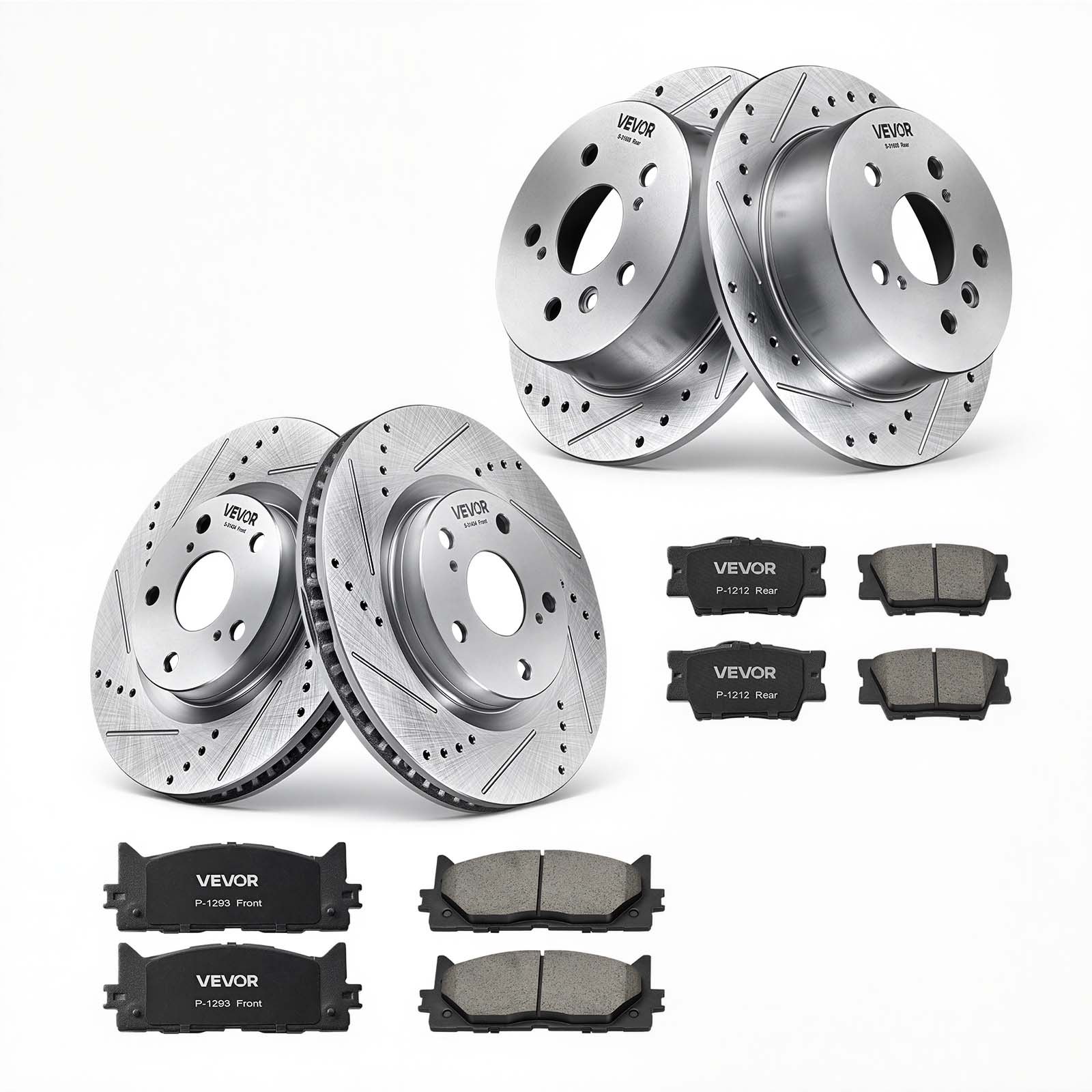

Photos from current listings. Actual item, color, and included accessories may vary.
Brake Pad And Rotor Buying Guide
Brake pads and rotors are the friction pair that converts motion into heat, and their performance hinges on metallurgy and manufacturing tolerances rather than brand noise. The core trade-off is rotor mass and cooling style (blank vs drilled/slotted) versus pad compound aggressiveness (ceramic vs semi-metallic), and the decision rule is simple: match the kit to your vehicle's GVW and driving cycle, and never downgrade rotor thickness or pad friction code below the factory specification.


At a glance
- Category
- Suspension, Steering & Brake Parts
- Data updated
- Nov 15, 2026
Current offers
Highlights
- Rotor construction splits into solid vs vented (and drilled/slotted variants); vented rotors use internal vanes to shed heat, and drilled/slotted versions trade some thermal mass and crack resistance for wet-weather bite and outgassing clearance.
- Pad compounds fall into ceramic (quiet, low dust, moderate fade resistance), semi-metallic (higher bite and heat tolerance, more dust/rotor wear), and organic (budget, low heat capacity); friction codes like FF or GG on the edge stamp define cold and hot friction tiers.
- Coated rotors (geomet, zinc, or e-coat on the hat and vanes) resist corrosion in salt-belt climates, while uncoated rotors rust on the non-friction surfaces within a season and can seize to the hub.
- Hardware matters as much as friction: abutment clips, caliper pin boots, and shims control noise and uneven wear, and kits that omit them shift that cost and labor onto the installer.
Best use cases
- Daily-driven commuter sedan or CUV: choose blank vented rotors with ceramic pads and full hardware; skip drilled/slotted rotors, which add noise and cracking risk with no commuting benefit.
- Towing, mountain descents, or spirited driving: choose semi-metallic pads on vented blanks with higher thermal mass; skip ceramic pads and thin economy rotors that fade and warp under sustained heat.
- Salt-belt or coastal climate: choose coated rotors and stainless abutment hardware; skip uncoated budget rotors that rust-seize at the hub and hat within a year.
- Track or heavy performance use: choose two-piece or high-carbon vented rotors with track-compound pads; skip any drilled rotor and any kit reusing stock calipers without high-temp fluid and lines.
Buying tips
- Buy rotors at or above the factory minimum thickness stamped on the original rotor; economy rotors often start near the discard spec, leaving no resurfacing margin on the next pad change.
- Match pad friction code to use: FF is fine for commuting, GG or higher for towing and performance; a lower hot-friction code than factory is a downgrade regardless of marketing claims.
- Replace pads and rotors as a pair per axle and never mix compounds side-to-side; mismatched friction left-to-right causes pull and uneven ABS behavior.
- Confirm kit contents include abutment clips, pin boots, and shims; a kit without hardware is a partial job that leads to squeal, drag, and premature wear.
Specs
| Rotor Type | Blank / Drilled / Slotted / Drilled+Slotted |
|---|---|
| Pad Compound | Ceramic / Semi-metallic / Organic |
| Friction Code | FF / GG / HH (cold/hot grade) |
| Rotor Coating | Coated hat/vanes vs bare iron |
Related searches
What to check before buying
- Record your vehicle's exact year, model, trim, and brake option (e.g., standard vs heavy-duty brakes); rotor diameter and pad shape differ across trims of the same nameplate.
- Measure the wheel inner clearance and caliper-to-wheel gap before choosing a big-brake or thicker rotor; most stock wheels clear stock-size rotors only.
- Check hub bore and rotor hat height against the factory rotor; a mismatched hat offset misaligns the caliper and can cause rub or unsafe engagement.
- Verify lug pattern, stud length, and torque spec, and confirm the kit's pad wear-sensor connector matches your harness if the vehicle uses electronic wear sensors.
FAQ
Data sources: eBay / Amazon listings and product attribute feeds Data updated Nov 15, 2026.
Some links on this page are affiliate links. If you buy after clicking one, we may earn a commission at no extra cost to you. This does not change which products appear here or their order. Affiliate disclosure.