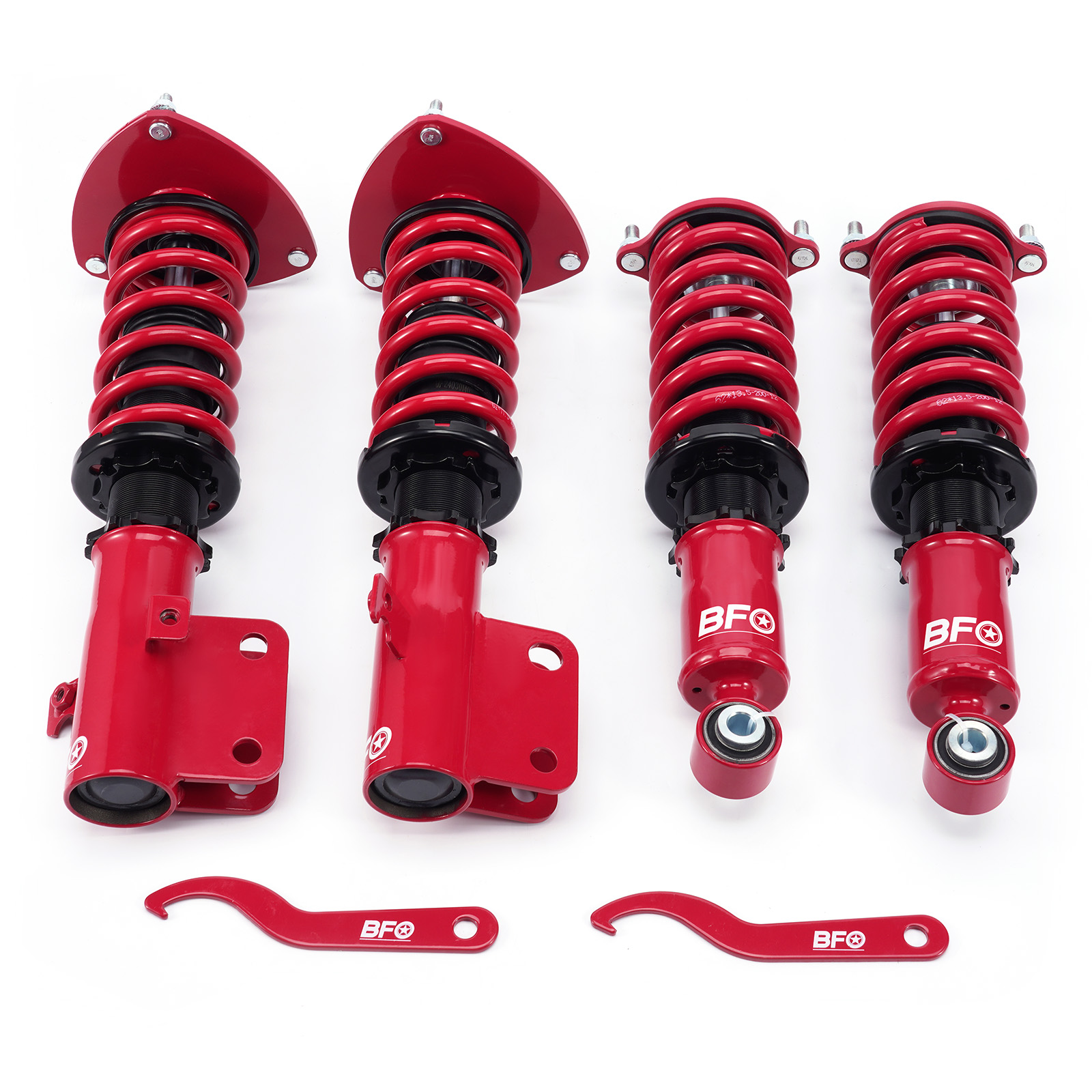

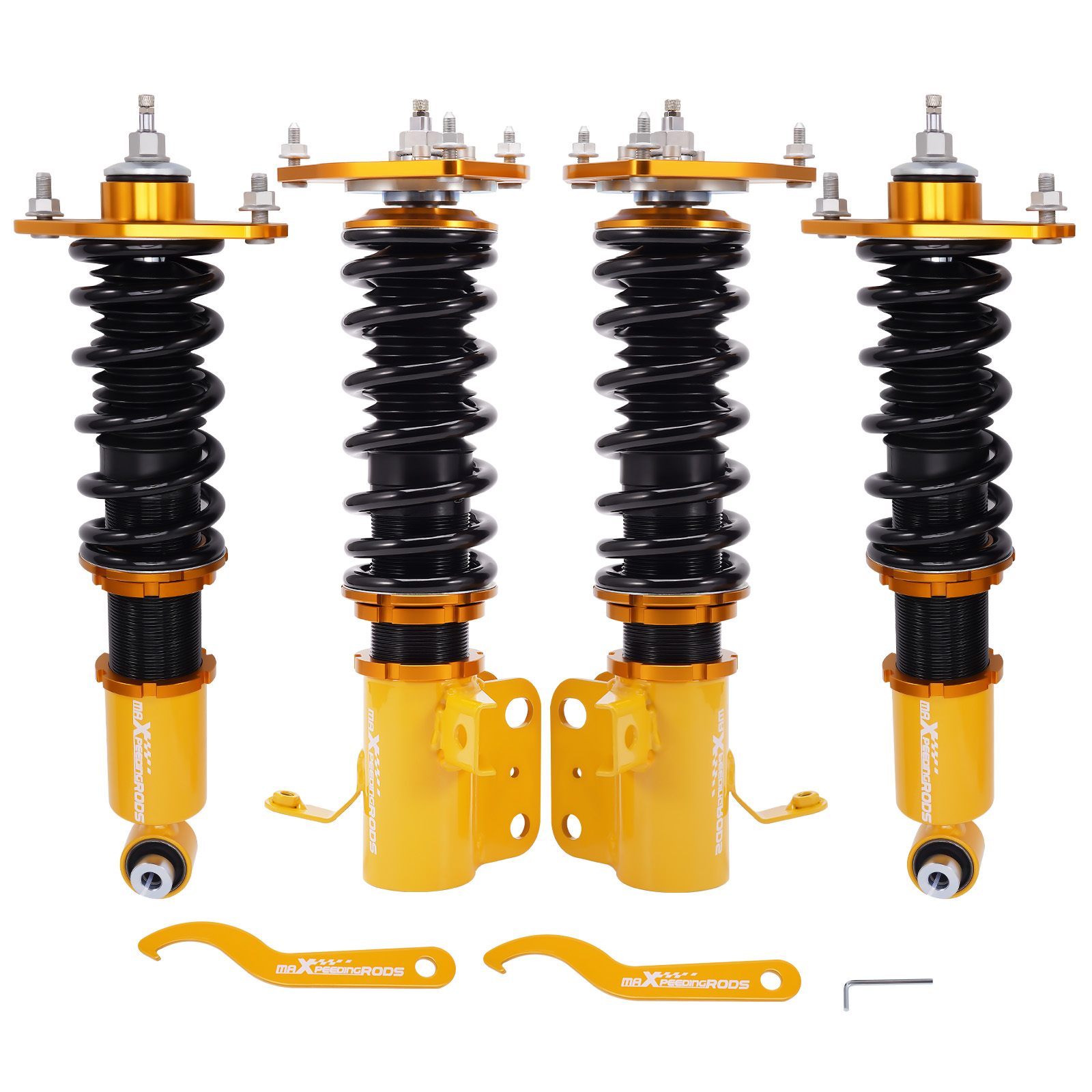
Photos from current listings. Actual item, color, and included accessories may vary.
Subaru Strut Buying Guide
A Subaru strut is the structural damper assembly that locates the wheel, carries spring load, and controls rebound on Legacy, Outback, Forester, Impreza, WRX/STI, and BRZ platforms. The core trade-off is sealed OEM-replacement damping versus adjustable coilover hardware: stock-height sealed struts preserve geometry and ride, while threaded coilovers add height and damping tuning at the cost of rebuild intervals and harsher NVH. The decision rule is simple: buy sealed direct-fit struts for daily driving and stock-height restoration; buy threaded coilovers only when you need deliberate ride-height or damping changes and accept periodic servicing.


At a glance
- Category
- Suspension, Steering & Brake Parts
- Data updated
- Nov 15, 2026
Current offers
Highlights
- Subaru struts are MacPherson-style front assemblies on Legacy/Outback/Forester/Impreza/WRX; rear is multilink on most, strut-type on older platforms — confirm front vs rear before ordering.
- Sealed OEM-replacement struts use twin-tube low-pressure gas damping; performance coilovers typically use monotube high-pressure nitrogen with threaded spring perches and 24-way rebound adjustment.
- Spring rate and free length must match the chassis code (e.g., BL/BP Legacy vs ZN6/ZC6 BRZ); mismatched springs change ride height and alignment beyond factory camber/caster windows.
- Top mounts, bump stops, dust boots, and lower clevis bolt spacing are model-specific; reusing worn mounts or wrong bolt spacing causes clunking and premature damper failure.
Best use cases
- Best fit: daily-driven Legacy/Outback/Forester needing stock ride height and OEM geometry — choose sealed direct-fit struts with new top mounts and bump stops; skip threaded coilovers unless lowering is a firm goal.
- Best fit: BRZ/86 or WRX weekend car where ride height and damping tuning matter — choose threaded coilovers with matched spring rates and camber plates; skip fixed-height lowering springs on tired stock dampers.
- Wrong fit: using Legacy BL/BP coilover kits on later platforms or mixing front strut assemblies with rear multilink shocks — bolt patterns and spring seats differ; buy chassis-specific kits only.
- Wrong fit: expecting coilovers to fix worn bushings, ball joints, or steering rack play — struts control damping and height, not worn suspension joints; replace worn links first.
Buying tips
- Match the chassis code exactly: BL/BP covers 2005–2009 Legacy, ZN6/ZC6 covers 2012–2020 BRZ/86; strut clevis bolt spacing and spring seat diameter differ across these generations.
- For stock replacement, buy complete assembled struts with new top mounts and bump stops; reusing old mounts adds labor and causes repeat clunking within a few thousand miles.
- For coilovers, verify spring rates (typically 6–8 kg/mm front, 4–6 kg/mm rear for street Subarus) and confirm camber plate compatibility with factory strut towers.
- Threaded aluminum or steel bodies need corrosion protection in road-salt climates; monotube coilovers generally outlast twin-tube units under repeated hard damping but require rebuild intervals.
Specs
| Damper Design | Twin-tube sealed vs monotube coilover |
|---|---|
| Height Adjustment | Fixed stock height vs threaded perch |
| Damping Adjustment | Non-adjustable vs 24-way rebound |
| Chassis Fitment | BL/BP Legacy, ZN6/ZC6 BRZ, etc. |
Related searches
What to check before buying
- Confirm chassis code and year range (e.g., BL/BP Legacy 2005–2009, ZN6/ZC6 BRZ 2012–2020) before selecting any strut or coilover kit.
- Measure current ride height and check strut tower condition for rust or deformation; coilover camber plates require clean, straight towers.
- Verify front vs rear position and whether the rear is strut-type or multilink shock — kits often cover front only or front and rear separately.
- Check wheel and tire clearance for lowered ride heights; aggressive drops on wide tires can contact fender liners and strut bodies.
FAQ
Data sources: eBay / Amazon listings and product attribute feeds Data updated Nov 15, 2026.
Some links on this page are affiliate links. If you buy after clicking one, we may earn a commission at no extra cost to you. This does not change which products appear here or their order. Affiliate disclosure.