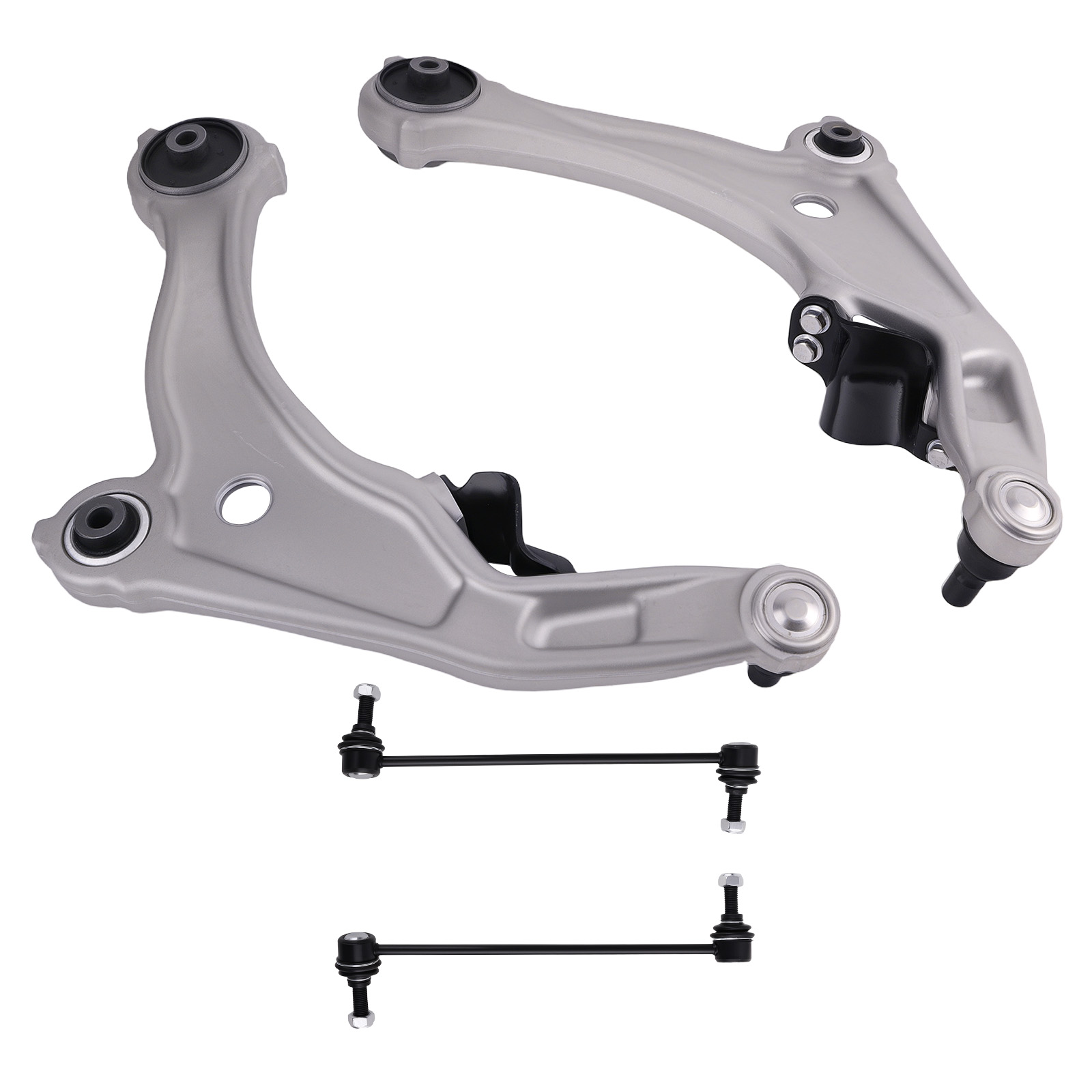

Photos from current listings. Actual item, color, and included accessories may vary.
Nissan Maxima Control Arm Buying Guide
Nissan Maxima control arms connect the front suspension to the chassis, and the key trade-off is stamped steel with rubber bushings versus cast aluminum or forged arms with serviceable ball joints. Buyers should pick the exact generation-specific arm with the correct ball-joint taper and bushing durometer, because a wrong-year arm will fit loosely, ruin alignment, and wear tires rapidly.


At a glance
- Category
- Suspension, Steering & Brake Parts
- Data updated
- Nov 15, 2026
Current offers
Highlights
- Seventh-gen Maxima (2009–2014) uses a front lower control arm with a pressed-in ball joint and rubber bushing; arms are not interchangeable with sixth- or eighth-gen cars.
- Stamped-steel arms dominate OEM fitment; cast-aluminum or forged arms are stiffer and lighter but cost more and may alter ride harshness.
- Rubber bushings absorb road noise; polyurethane bushings last longer and sharpen steering but transmit more vibration.
- A loaded arm includes the ball joint and bushings; a bare arm reuses your existing joint and requires a press for bushing replacement.
Best use cases
- Daily-driven 2009–2014 Maxima with worn bushings: pick a loaded stamped-steel arm with rubber bushings and a sealed ball joint for stock ride and easy bolt-on installation.
- Enthusiast or track-aligned Maxima: choose a forged or cast-aluminum arm with polyurethane bushings and a serviceable ball joint for camber/caster tuning and durability under load.
- Lifted or oversized-wheel Maxima: skip stock-length arms; select an arm with corrected geometry or adjustable length to restore ball-joint angle and prevent bind.
Buying tips
- Match the model year exactly: 2009–2014 Maxima front lower arms differ from 2004–2008 and 2016+ in ball-joint taper and bushing width, so verify the generation before ordering.
- Measure your existing ball-joint stud diameter and taper; a loose fit in the steering knuckle causes clunking and premature wear even if the arm bolts up.
- Choose loaded arms if your ball joints are original; choose bare arms only if you have a hydraulic press and plan to install new bushings and joints yourself.
- Inspect the bushing material: OEM-style rubber lasts roughly 60,000–100,000 miles, while polyurethane outlasts it but adds cabin vibration on rough roads.
Specs
| Arm Material | Stamped steel / cast aluminum / forged |
|---|---|
| Bushing Type | Rubber OE-style vs polyurethane |
| Ball Joint | Loaded sealed vs bare/serviceable |
| Fitment Gen | 7th-gen Maxima 2009–2014 |
Related searches
What to check before buying
- Confirm your Maxima generation and production year (2009–2014 for seventh-gen) against the arm's fitment note before purchase.
- Measure the steering-knuckle ball-joint hole diameter and taper angle; the replacement stud must seat fully without play.
- Check the arm's bushing outer diameter and width match your subframe mounting pockets; oversize bushings will not press in.
- Verify the arm includes or reuses the stabilizer-link mounting tab and ABS sensor bracket if your car is so equipped.
FAQ
Data sources: eBay / Amazon listings and product attribute feeds Data updated Nov 15, 2026.
Some links on this page are affiliate links. If you buy after clicking one, we may earn a commission at no extra cost to you. This does not change which products appear here or their order. Affiliate disclosure.