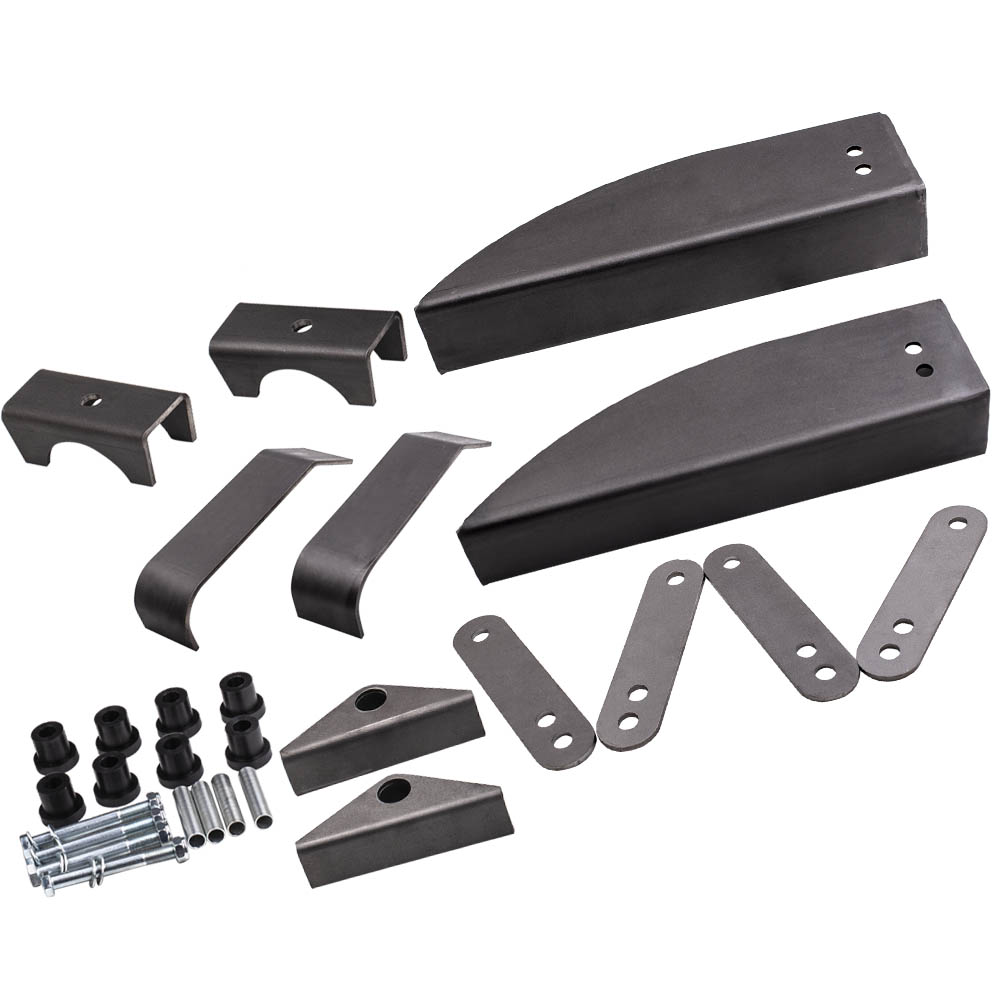

Photos from current listings. Actual item, color, and included accessories may vary.
Leaf Spring Suspension Buying Guide
Leaf spring suspension is a heavy-duty, friction-damped system that uses stacked steel leaves to locate the axle and carry load, prized for simplicity and payload capacity but compromised in ride comfort and articulation versus coil or air setups. The core trade-off is spring rate and material quality: cheap, thin, low-carbon leaves fatigue and sag quickly, while thick, tempered, correctly arched leaves last decades. The decision rule is simple: buy springs rated for your actual axle load with a known steel grade and published free-arch and load specs; skip any spring that lists no capacity, no leaf count, or no material standard.


At a glance
- Category
- Suspension, Steering & Brake Parts
- Data updated
- Nov 15, 2026
Current offers
Highlights
- Leaf count and thickness set spring rate: 4-6 thin leaves ride softer; 7-10 thick leaves carry more payload but stiffen unloaded ride.
- Steel grade matters: 5160 chrome-silicon or 6150 tempered steel resists fatigue; low-carbon or unlisted steel sags under load.
- Free arch and eye-to-eye length must match the original within 1/4 inch or shackle angle and pinion angle will be wrong.
- Mounting style dictates fit: pocket-style relocation brackets (e.g., 1955-1957 Chevrolet Bel Air) require frame pocket welding or bolting, not stock hanger reuse.
Best use cases
- Best fit: hauling/towing or off-road load carrying—pick a 7-10 leaf, 5160 steel pack rated at or above your gross axle weight; skip thin 4-leaf passenger packs.
- Best fit: restoration of 1955-1957 Chevrolet Bel Air/210/150 with worn rear springs—use a direct-fit relocation pocket set only if the frame pockets are intact; skip universal add-a-leaf kits.
- Wrong fit: daily-driven light truck seeking soft ride—leaf springs will ride harsh unloaded; skip high-leaf-count packs and consider parabolic or coil conversion instead.
- Wrong fit: lowered street car—stock arch leaf springs raise ride height; skip them and use lowering blocks or a properly de-arched custom pack.
Buying tips
- Measure eye-to-eye length along the flat, loaded spring and match within 1/4 inch; also record free arch (camber) to avoid ride height and pinion-angle changes.
- Match leaf count and thickness to use: 4-6 leaves at 1/4-5/16 inch for ride; 7+ leaves at 3/8 inch or thicker for payload and towing.
- Specify steel: 5160 or 6150 tempered is the durability standard; reject springs with no steel grade or that use plain carbon steel.
- Buy new U-bolts, shackles, and bushings with any spring swap—reusing stretched U-bolts or worn bushings causes clunks, misalignment, and premature leaf failure.
Specs
| Leaf Count | 4-6 ride / 7-10 payload |
|---|---|
| Leaf Thickness | 1/4-3/8 in (6-10 mm) |
| Steel Grade | 5160 / 6150 tempered |
| Mount Style | Stock hanger vs relocation pocket |
Related searches
What to check before buying
- Measure your existing spring eye-to-eye length, free arch, leaf width, and center-bolt location before ordering any replacement or relocation set.
- Confirm frame mounting: pocket-style relocation sets need specific frame pocket geometry and often welding; verify your frame rails are rust-free and square.
- Check axle tube diameter and U-bolt size (common 2.75-3.25 inch) so new U-bolts and plates fit your axle.
- Verify bushing and shackle fit: eye bore diameter (often 9/16 or 5/8 inch) and shackle length must match your hangers.
FAQ
Data sources: eBay / Amazon listings and product attribute feeds Data updated Nov 15, 2026.
Some links on this page are affiliate links. If you buy after clicking one, we may earn a commission at no extra cost to you. This does not change which products appear here or their order. Affiliate disclosure.