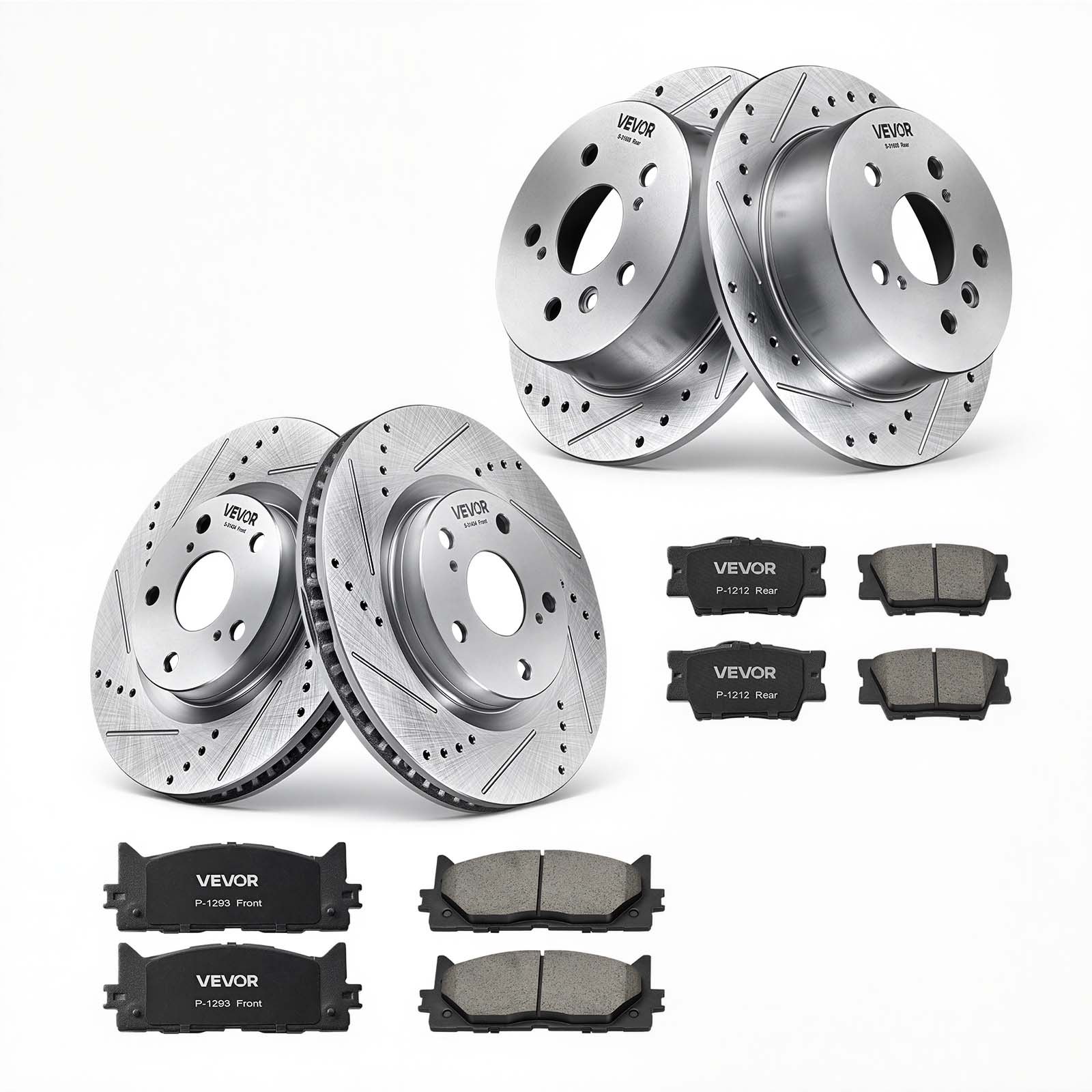

Photos from current listings. Actual item, color, and included accessories may vary.
Front Brake Pad Buying Guide
Front brake pads are the primary friction component that clamps the rotor to stop your vehicle, and the core trade-off is friction compound: ceramic for quiet, low-dust daily driving versus semi-metallic for heavier loads and heat resistance. Choose by matching pad compound to your driving cycle and confirming exact fitment by vehicle generation, not by generic make/model claims.


At a glance
- Category
- Suspension, Steering & Brake Parts
- Data updated
- Nov 15, 2026
Current offers
Highlights
- Ceramic compounds run quieter and produce less wheel dust but can fade earlier under repeated hard stops; semi-metallic pads trade some noise and dust for higher heat tolerance and towing capability.
- Pad backing plates with shims and chamfered edges reduce vibration-induced squeal; premium tiers add OE-style multilayer shims and abutment hardware clips.
- Drilled and slotted rotors improve wet-weather bite and gas evacuation but accelerate pad wear versus plain rotors, so pad compound must match rotor surface type.
- Fitment is generation-specific: 2012-2017 Camry, 2013-2018 Avalon, and ES 350/300h share platform pads, but trim and brake package differences (e.g., sport vs base) can change pad shape.
Best use cases
- Daily commuter in stop-and-go traffic: choose ceramic pads on plain or slotted rotors for low dust and quiet operation; skip semi-metallic unless you regularly tow.
- Mountain driving or heavy payloads: choose semi-metallic pads rated for higher sustained temperatures; skip low-dust ceramic economy tiers that fade under repeated hard braking.
- Full brake job on a 2012-2017 Camry or 2013-2018 Avalon/ES: choose a pad-and-rotor kit matched to that generation; skip universal 'fits most Toyota' pads that ignore trim-level brake differences.
Buying tips
- Verify pad shape by vehicle year, model, and trim—not just make—because the same nameplate can carry different caliper brackets across generations.
- Match compound to rotor: ceramic pads pair best with plain or slotted rotors; semi-metallic pads handle drilled rotors and high heat without excessive wear.
- Replace pads in axle pairs and inspect rotor thickness against the stamped minimum; pads alone on worn rotors cause uneven bedding and noise.
- Look for included abutment hardware and shims—premium kits supply them, while budget tiers often reuse corroded original clips.
Specs
| Pad Compound | Ceramic / Semi-metallic / Organic |
|---|---|
| Rotor Style | Plain / Slotted / Drilled & Slotted |
| Hardware Included | Shims + abutment clips (premium) |
| Fitment Basis | Year / model / trim-specific |
Related searches
What to check before buying
- Confirm your exact vehicle generation and trim (e.g., 2012-2017 Camry vs 2018+), since pad shape changes at generation boundaries.
- Measure rotor thickness and compare to the minimum stamped on the rotor hat; below spec requires rotor replacement, not just pads.
- Check wheel clearance if upgrading to larger rotors or calipers—many big-brake kits require larger-diameter wheels.
- Inspect caliper pistons and slide pins for corrosion; seized hardware ruins new pads regardless of compound quality.
FAQ
Data sources: eBay / Amazon listings and product attribute feeds Data updated Nov 15, 2026.
Some links on this page are affiliate links. If you buy after clicking one, we may earn a commission at no extra cost to you. This does not change which products appear here or their order. Affiliate disclosure.