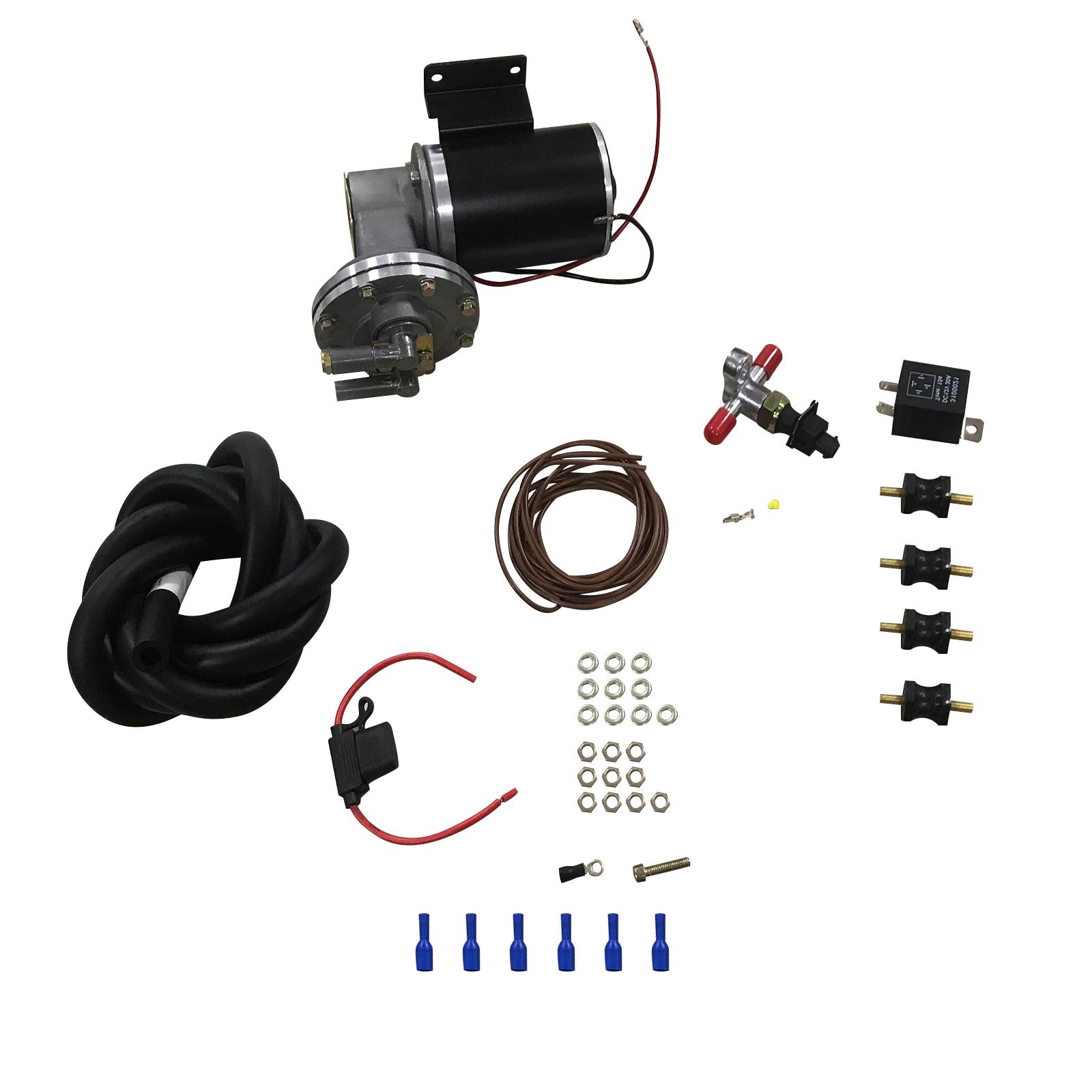

Photos from current listings. Actual item, color, and included accessories may vary.
Electric Brake Booster Buying Guide
An electric brake booster replaces engine-vacuum assist with a 12V electric pump or electro-mechanical unit, delivering consistent pedal feel in EVs, diesels, and performance builds. The core trade-off is vacuum-dependent vs. vacuum-independent assist, where pump duty cycle and reservoir volume determine reliability. Buy a dedicated 12V booster kit with a sealed pump and check-valve for your master-cylinder bore; skip generic vacuum-pump retrofits that lack a reservoir or thermal cutoff.


At a glance
- Category
- Suspension, Steering & Brake Parts
- Data updated
- Nov 15, 2026
Current offers
Highlights
- Electric vacuum pump kits use a 12V DC diaphragm or vane pump drawing 10-25A; pumps rated for continuous duty (100% duty cycle) last far longer than intermittent 30-50% duty units.
- An integrated vacuum reservoir (typically 0.5-1.0 L) and one-way check valve are mandatory — without them, pedal assist fades on the first hard stop after pump cutoff.
- Electro-mechanical boosters (e.g., iBooster-style) are sealed, vacuum-free units that require a pedal-travel sensor and CAN/analog signal to the master cylinder — not a drop-in for a vacuum-boosted car.
- Mounting hardware must match the booster's bolt pattern and firewall stud spacing; 12V kits with 18-22 inHg vacuum ratings suit most passenger-car brake boosters.
Best use cases
- Best fit: EV or diesel swap with no manifold vacuum — choose a 12V electric vacuum pump kit with reservoir and check valve sized to your booster's 18-22 inHg requirement.
- Best fit: Cammed or turbo gasoline engine with low idle vacuum — add a continuous-duty pump with a 1.0 L reservoir to stabilize pedal feel at idle and during boost.
- Wrong fit: Modern car with a functioning engine-driven vacuum pump — a retrofit electric pump adds wiring, relay, and dash-switch complexity for no pedal gain.
- Wrong fit: Full electro-mechanical iBooster conversion on a vacuum-era car — this requires pedal sensor, brake ECU integration, and custom lines, not a bolt-on pump kit.
Buying tips
- Match pump vacuum rating to your booster: passenger-car boosters typically need 18-22 inHg; confirm the kit's rated vacuum at 12V, not peak marketing figures.
- Choose continuous-duty (100%) pumps for daily drivers; intermittent-duty pumps are acceptable only for occasional-use builds with a large reservoir.
- Verify the kit includes a relay, fuse, check valve, and reservoir — missing check valves cause assist loss on the first brake application after pump shutoff.
- For electro-mechanical boosters, confirm signal compatibility (analog vs. CAN) and that the unit includes a pedal-travel sensor and master-cylinder adapter.
Specs
| Assist Type | 12V vacuum pump vs electro-mechanical |
|---|---|
| Duty Cycle | Continuous 100% vs intermittent 30-50% |
| Vacuum Rating | 18-22 inHg (passenger-car booster) |
| Kit Contents | Pump, relay, fuse, check valve, reservoir |
Related searches
What to check before buying
- Measure booster-to-firewall bolt spacing and master-cylinder bore diameter before ordering any mounting hardware kit.
- Confirm the vehicle's charging system delivers 12V at 15-25A continuous for the pump without dimming lights or tripping the alternator.
- Check firewall clearance and hose routing for the reservoir and pump — the pump body typically needs 6-8 inches of free depth.
- For swaps, verify brake-line fitting thread (metric bubble vs. inverted flare) matches the new master cylinder and proportioning valve.
FAQ
Data sources: eBay / Amazon listings and product attribute feeds Data updated Nov 15, 2026.
Some links on this page are affiliate links. If you buy after clicking one, we may earn a commission at no extra cost to you. This does not change which products appear here or their order. Affiliate disclosure.