Photos from current listings. Actual item, color, and included accessories may vary.
Disc Brake Conversion Kit Buying Guide
A disc brake conversion kit replaces factory drum brakes with calipers and rotors, trading cost and complexity for shorter stopping distances and fade resistance. The main decision is whether to use a bolt-on spindle/axle-specific kit with a matched master cylinder and proportioning valve, or a generic kit with mismatched hydraulic ratios. Durable kits use machined brackets, name-brand calipers, and correctly sized boosters; compromises rely on welded adapters or undersized master cylinders.


At a glance
- Category
- Suspension, Steering & Brake Parts
- Data updated
- Nov 15, 2026
Current offers
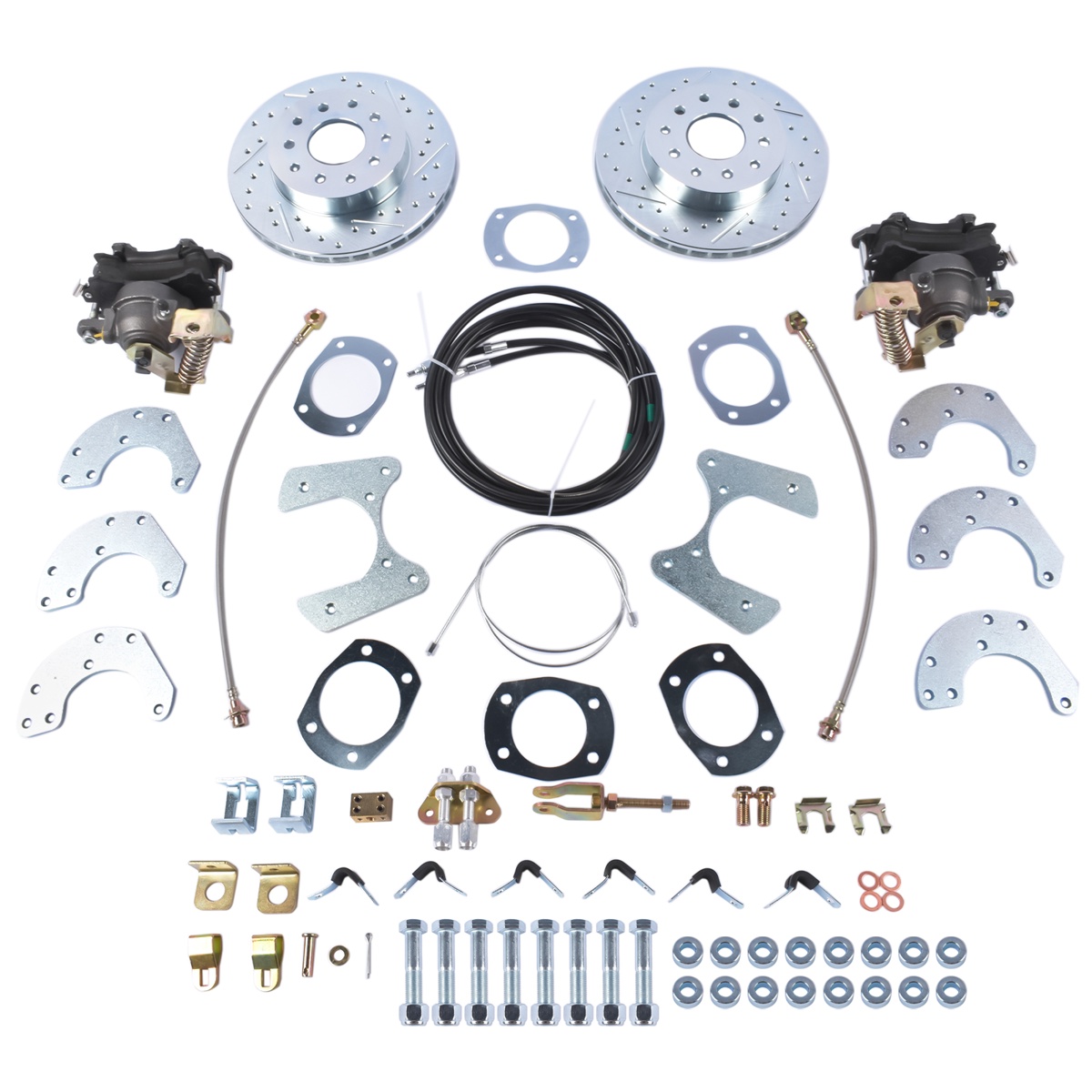 DBK9 Complete Rear-End Bolt-On Disc Brake Conversion Kit for Ford 8 Inch or 9 Small Bearing$598.99
 View on Mallflare
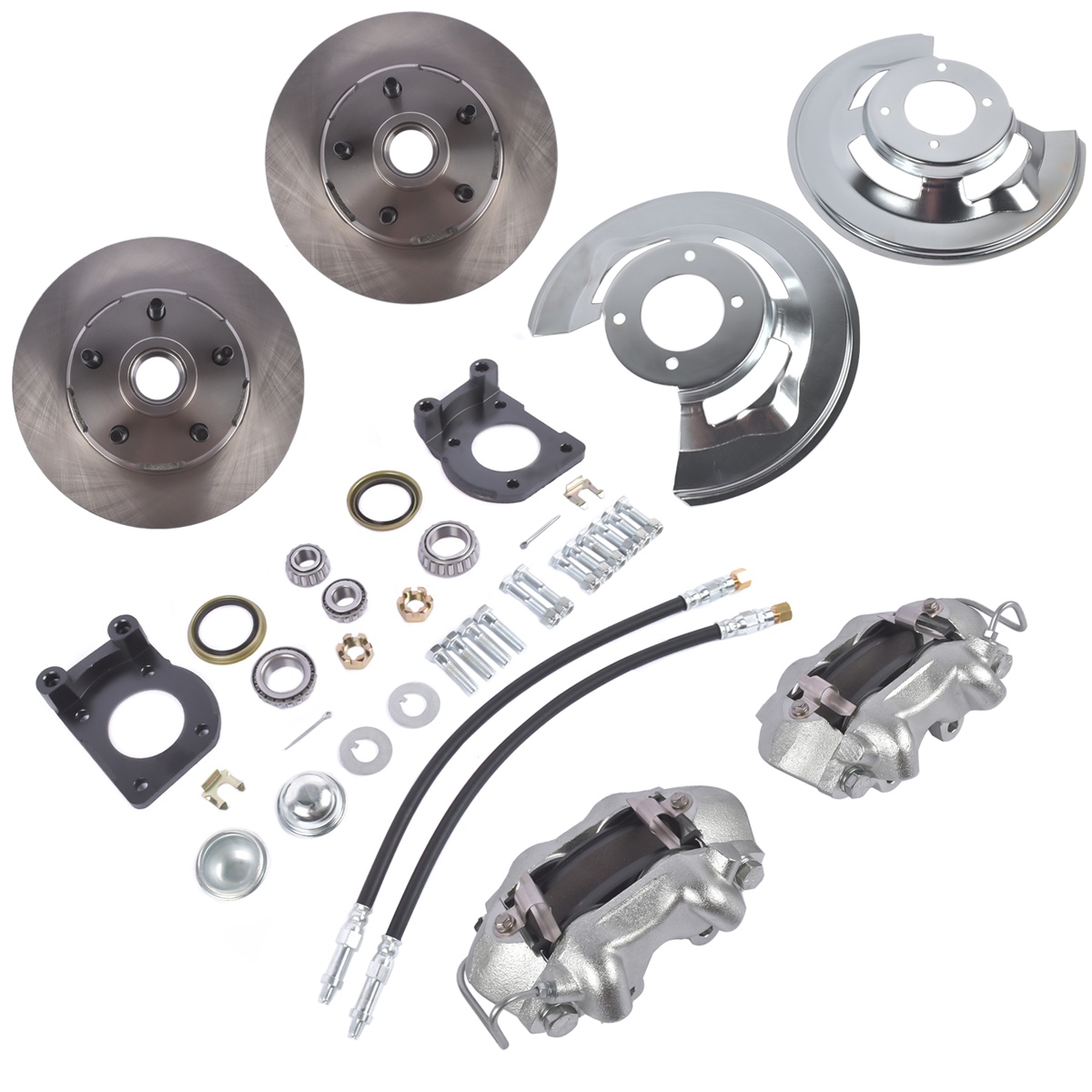 Power Complete Front Disc Brake Conversion Kit V-8 4 Piston Replacement for 1964 1965 1966 1967 Ford Mustang$673.99View on Mallflare
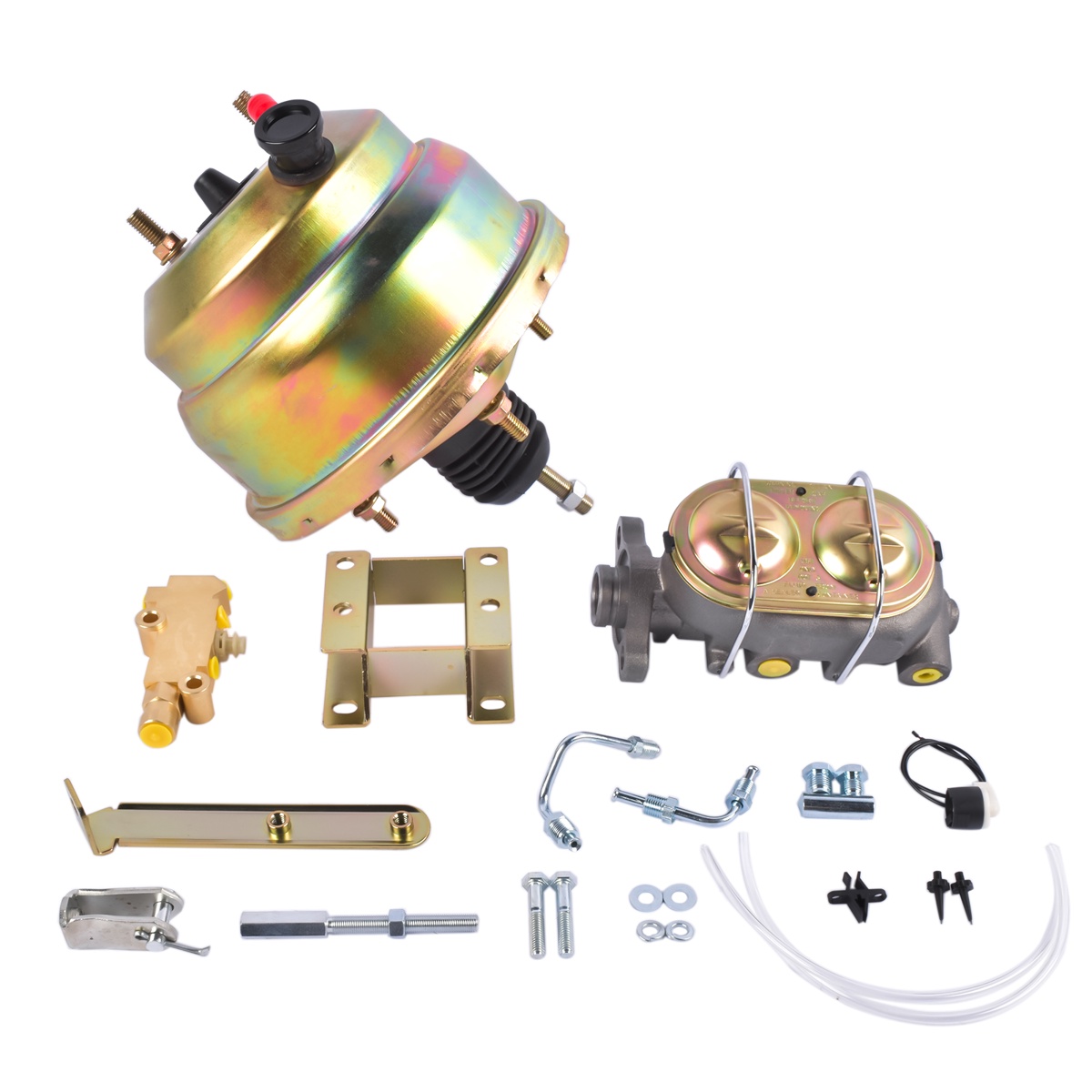 Front Power Disc Brake Conversion 8 Inch Dual Booster Fit for Chevrolet Bel Air 1955-1957 One-Fifty Series Two-Ten$260.99View on Mallflare
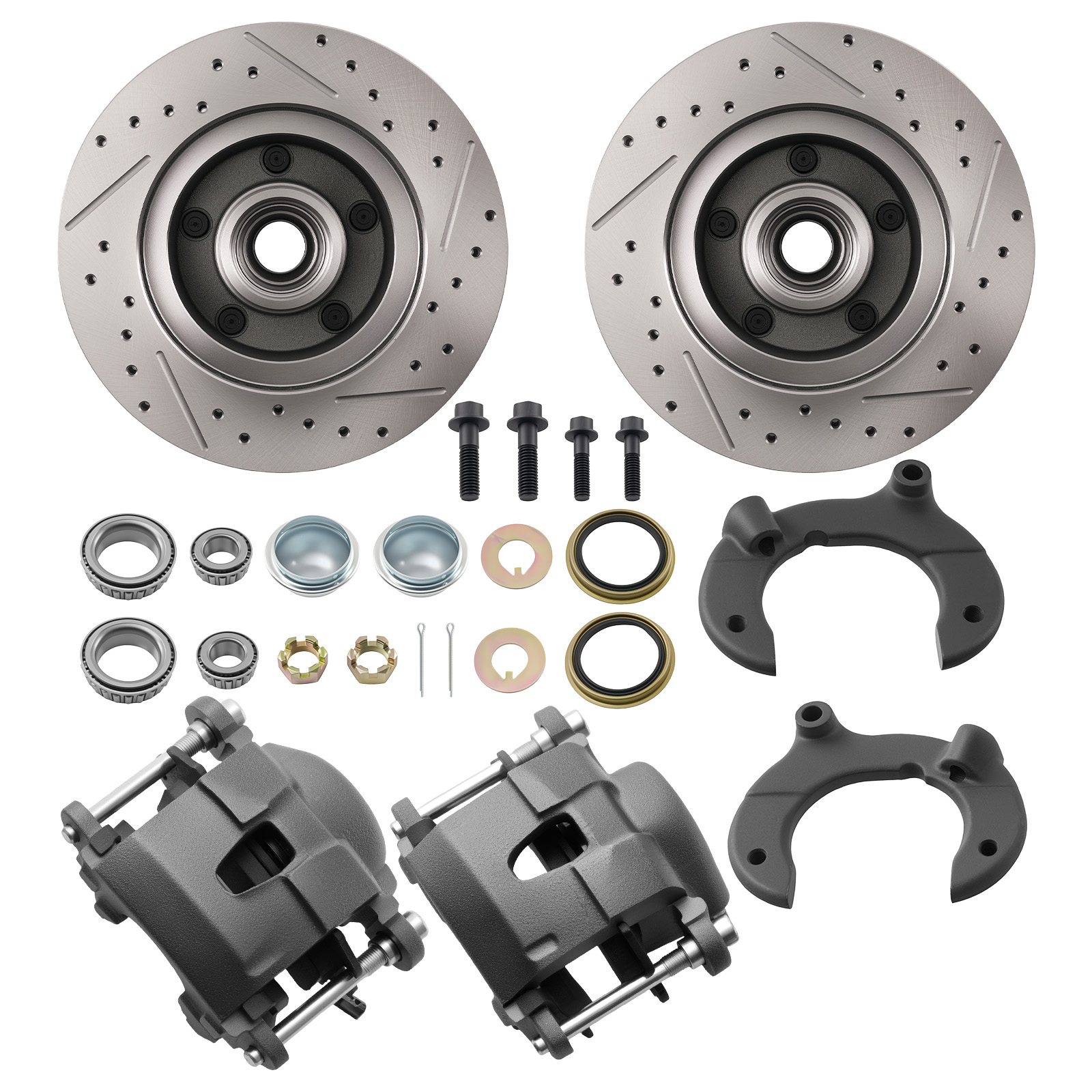 11" Slotted Front Disc Brake Conversion fit for Ford Mustang II 1974-78 5 x 4.5"$480.99View on Mallflare
Highlights
- Bolt-on kits replace the entire spindle or rear axle flange (e.g., Ford 8-inch/9-inch small-bearing), while bracket kits reuse the original spindle and use adapters—bolt-on is more rigid but model-specific.
- Rotor diameter and thickness determine heat capacity: 11-inch vented rotors suit front kits for 5x4.5" patterns, while solid 10-inch rotors are for rear or light-duty use.
- Master cylinder bore and booster size must match caliper piston area; a 1-inch bore with a dual 8-inch booster is common for V-8 front kits, while 7-inch boosters suit lighter cars.
- Caliper piston count (4-piston fixed vs 2-piston floating) changes pedal feel and wheel clearance; 4-piston calipers demand more fluid volume and larger master cylinders.
Best use cases
- Best fit: classic Ford Mustang (1964-1967) or Mustang II (1974-78) with 5x4.5" wheels — choose a front kit with 11-inch vented rotors, 4-piston calipers, and a matched dual 8-inch booster. Skip generic bracket kits that reuse worn spindles.
- Best fit: Ford 8-inch or 9-inch small-bearing rear axles — choose a bolt-on rear kit with parking brake provision and 10-11 inch solid rotors. Skip universal rear kits that require axle flange machining.
- Best fit: 1955-1957 Chevrolet Bel Air/One-Fifty with 8-inch dual booster — choose a complete front power kit with pedal linkage and proportioning valve. Skip kits without a booster if the car retains manual drums.
- Wrong fit: vehicles with ABS or traction control — conversion kits bypass wheel-speed sensors and require custom wiring; only use kits with retained sensor mounts or avoid on ABS-equipped cars.
Buying tips
- Match wheel bolt pattern and backspacing: 5x4.5" is common for Ford/Mopar, 5x4.75" for GM; measure wheel diameter — most 4-piston 11-inch kits require 15-inch or larger wheels.
- Verify master cylinder bore: 1-inch bore suits 4-piston calipers, 7/8-inch suits 2-piston floating; mismatch causes long pedal travel or excessive effort.
- Check rotor thickness: vented rotors are typically 1-inch or thicker, solid rear rotors 0.5-inch; below minimum thickness they must be replaced, not machined.
- Confirm kit completeness: a true bolt-on includes spindles or axle brackets, calipers, pads, rotors, hoses, master cylinder, booster, proportioning valve, and bearings — missing parts add significant cost.
Specs
| Rotor Type | Vented front / solid rear, 10-12 in |
|---|---|
| Caliper Pistons | 2-piston floating / 4-piston fixed |
| Master Cylinder Bore | 7/8-1 in (match caliper area) |
| Booster Size | 7-8 in dual diaphragm |
Related searches
What to check before buying
- Measure wheel diameter and backspacing: 14-inch wheels typically clear only 10-inch solid rotors; 15-inch or larger needed for 11-inch vented rotors with 4-piston calipers.
- Check brake line and hose routing: conversion kits often require new hard lines and flexible hoses; confirm the kit includes correct fittings and lengths.
- Verify pedal ratio and firewall space: power kits need a booster that clears the firewall and master cylinder; manual kits require a pedal ratio of 6:1 or higher.
FAQ
Data sources: eBay / Amazon listings and product attribute feeds Data updated Nov 15, 2026.
Some links on this page are affiliate links. If you buy after clicking one, we may earn a commission at no extra cost to you. This does not change which products appear here or their order. Affiliate disclosure.