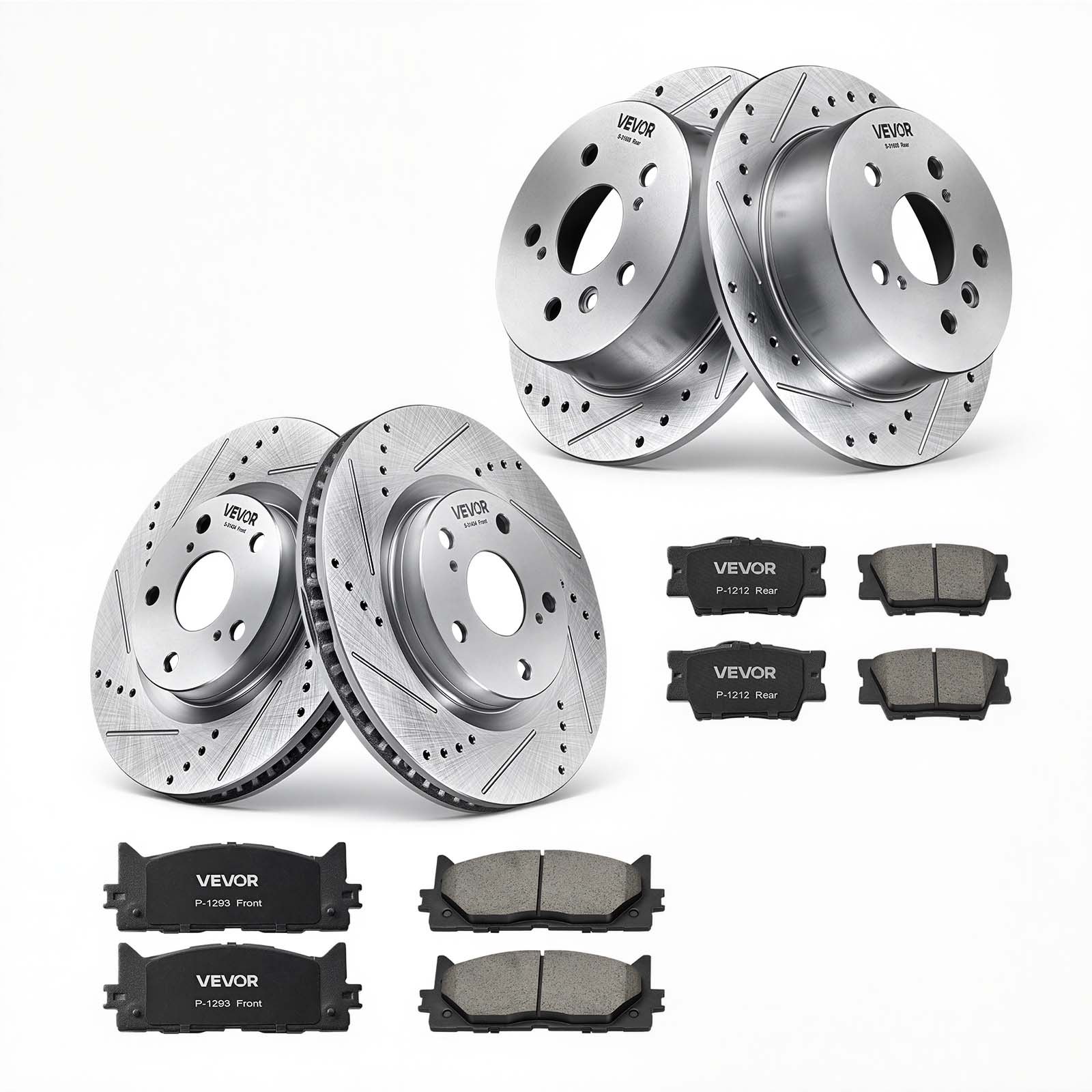

Photos from current listings. Actual item, color, and included accessories may vary.
Brake Pad Buying Guide
Brake pads are the friction material that clamps against rotors to stop your car, and the core trade-off is friction compound vs. heat tolerance: ceramic pads run quiet and clean but fade under heavy loads, while semi-metallic pads bite harder when hot at the cost of dust and noise. The decision rule is simple—match pad compound to how you actually drive and verify the pad's fitment code against your exact caliper bracket before buying, because a pad that doesn't seat perfectly is a safety compromise, not a bargain.


At a glance
- Category
- Suspension, Steering & Brake Parts
- Data updated
- Nov 15, 2026
Current offers
Highlights
- Ceramic compounds (NAO) trade initial bite for low dust and near-silent operation; they suit daily commuters but can fade above roughly 600°F rotor temps.
- Semi-metallic pads use 30-65% steel/copper fiber for stronger hot stopping and better heat cycling, making them the default for towing, mountain descents, and performance use.
- Pad backing plates vary from 3-5 mm painted steel to rubber-coated or stainless shimmed plates; shimmed or coated plates reduce squeal and corrosion seizure in the bracket.
- Fitment is defined by the pad's physical profile (often an FMSI number) and thickness—typically 15-20 mm new friction material—not by vehicle model year alone, so a "Camry kit" may not cover every trim or caliper.
Best use cases
- Daily commuting in a sedan or crossover: pick a ceramic or low-dust NAO pad with a shimmed backing plate—skip track-oriented semi-metallic compounds that dust wheels and squeal cold.
- Towing a trailer or regularly descending long grades: choose a semi-metallic or hybrid pad rated for high heat and pair it with fresh rotors—avoid pure ceramic pads that can glaze and fade.
- Spirited driving or occasional autocross: select a performance street compound with a higher MOT (maximum operating temperature) and bed them in properly—skip budget white-box pads with unknown friction ratings.
- If your rotors are scored, below minimum thickness, or warped: buy a pad-and-rotor kit together rather than pads alone, since new pads cannot fix a bad rotor surface.
Buying tips
- Match the pad to the rotor: new pads need a rotor surface within spec (typically no more than 0.002-0.004 in. runout and above minimum thickness stamped on the rotor hat).
- Verify fitment by FMSI/part number and caliper type, not by model year—same-generation vehicles often use different pad shapes across trims and brake packages.
- For heavy loads or mountain use, choose a pad with a higher temperature rating and semi-metallic content; ceramic's quiet/low-dust advantage disappears once it overheats.
- Budget kits that bundle pads and drilled/slotted rotors are fine for stock replacement, but cross-drilled rotors can crack under repeated hard track use—solid or slotted rotors are more durable for severe duty.
Specs
| Pad Compound | Ceramic / Semi-metallic / Organic |
|---|---|
| Friction Temp Rating | ~600°F daily to 1000°F+ performance |
| Pad Thickness (new) | 15-20 mm friction material |
| Backing Plate | Shimmed / Coated / Plain steel |
Related searches
What to check before buying
- Measure rotor thickness with a micrometer and compare to the minimum stamped on the rotor; if at or below minimum, replace rotors with the pads.
- Confirm wheel/caliper clearance—some big-brake or performance calipers require specific pad thickness and backing-plate profiles that generic kits won't fit.
- Check brake fluid condition and plan a flush if it's dark or older than 2-3 years, since new pads push fluid back into the system.
- Inspect caliper slide pins and hardware; seized pins cause uneven pad wear and can ruin a new pad set regardless of compound quality.
FAQ
Data sources: eBay / Amazon listings and product attribute feeds Data updated Nov 15, 2026.
Some links on this page are affiliate links. If you buy after clicking one, we may earn a commission at no extra cost to you. This does not change which products appear here or their order. Affiliate disclosure.