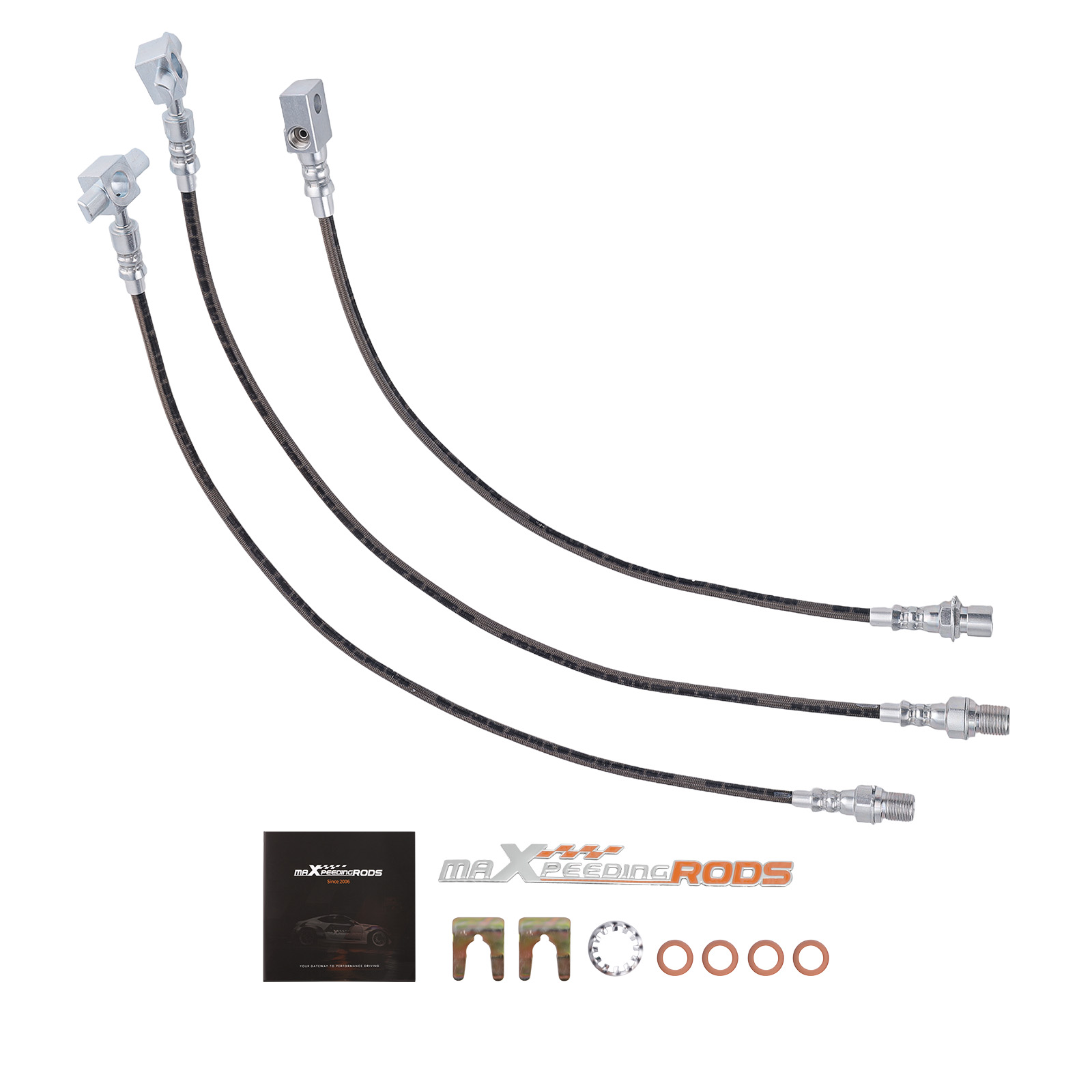

Photos from current listings. Actual item, color, and included accessories may vary.
Brake Line And Fitting Buying Guide
Brake lines and fittings are the sealed hydraulic pathways that transfer pedal force to the calipers, and their failure mode is corrosion, abrasion, or improper flare seating—not normal wear. The core trade-off is mild steel (OEM-style, cheap, rust-prone) versus stainless steel or copper-nickel alloy (corrosion-proof, formable, higher cost). The decision rule: buy pre-bent stainless or CuNi lines with correct flare types and pressure ratings for any vehicle you plan to keep; reject generic bulk tubing without spec'd wall thickness or DOT-compliant fittings.


At a glance
- Category
- Suspension, Steering & Brake Parts
- Data updated
- Nov 15, 2026
Current offers
Highlights
- Stainless steel braided PTFE lines (DOT-approved) resist expansion under pressure and outlast rubber; look for stainless braid over PTFE core with crimped zinc-plated fittings.
- Copper-nickel (CuNi) 90/10 alloy lines bend and flare easily, never rust, and meet SAE J1650; ideal for daily drivers and rust-belt vehicles.
- Flare type is critical: ISO bubble flares for most imports, SAE 45-degree double flares for domestic, and DIN ball flares for European—mismatched flares leak.
- Line diameter must match OEM: 3/16-inch (4.75mm) is standard for passenger cars; 1/4-inch for trucks/heavy-duty; larger lines reduce pedal firmness.
Best use cases
- Best fit: rust-belt daily driver or restoration—choose pre-bent CuNi or stainless kit with new fittings; skip generic mild-steel bulk rolls that will corrode within seasons.
- Best fit: lifted truck or off-road build—use stainless braided flexible lines at suspension joints and extended-length hard lines; skip stock-length rubber hoses that stretch and crack.
- Best fit: race or performance car—stainless braided PTFE lines with AN fittings for pedal feel and heat resistance; skip copper-nickel hard lines only if full AN plumbing is required by rules.
Buying tips
- Measure existing line OD and fitting thread (3/8-24, M10x1.0, etc.) before ordering; 3/16-inch line with 3/8-24 fittings is the most common passenger-car spec.
- For lifted vehicles, add 2–4 inches to flexible line length and use extended hard lines; a 4-inch lift typically requires +2-inch longer hoses to avoid stretching at full droop.
- Select DOT-approved stainless braided lines (labeled FMVSS 106) for street use; non-DOT braided lines lack crush washers and may fail inspection.
- Pre-bent stainless kits cost more but eliminate flaring errors; bulk CuNi lines require a quality flaring tool (37-degree or 45-degree as needed) and proper tube nuts.
Specs
| Line Material | Stainless / CuNi / Mild Steel |
|---|---|
| Flare Type | SAE / ISO / DIN |
| Line Diameter | 3/16" / 1/4" / 6mm |
| DOT Approval | FMVSS 106 (braided) |
Related searches
What to check before buying
- Confirm vehicle make, model, year, and ABS/brake system type—line routing differs between disc/drum and ABS-equipped models.
- Verify fitting thread sizes and flare type at master cylinder, proportioning valve, and calipers before purchase.
- Check clearance for lifted or lowered suspension: measure full droop and compression to ensure flexible lines don't bind or kink.
- Ensure replacement lines are compatible with brake fluid type (DOT 3/4/5.1 glycol vs DOT 5 silicone) and do not use silicone fluid with ABS.
FAQ
Data sources: eBay / Amazon listings and product attribute feeds Data updated Nov 15, 2026.
Some links on this page are affiliate links. If you buy after clicking one, we may earn a commission at no extra cost to you. This does not change which products appear here or their order. Affiliate disclosure.