Photos from current listings. Actual item, color, and included accessories may vary.
Portable Power Inverter Buying Guide
A portable power inverter converts 12V DC from a car's cigarette socket or battery into 120V AC for laptops, tools, and small appliances. The core trade-off is output type and wiring: modified sine wave is cheap but stresses motors and chargers, while pure sine wave plus thick gauge battery cables is what makes a unit durable for continuous loads. The decision rule: match honest continuous wattage to your load and connect via battery clamps for anything above roughly 150W rather than trusting a 12V plug.


At a glance
- Category
- Car Power
- Data updated
- Nov 15, 2026
Current offers
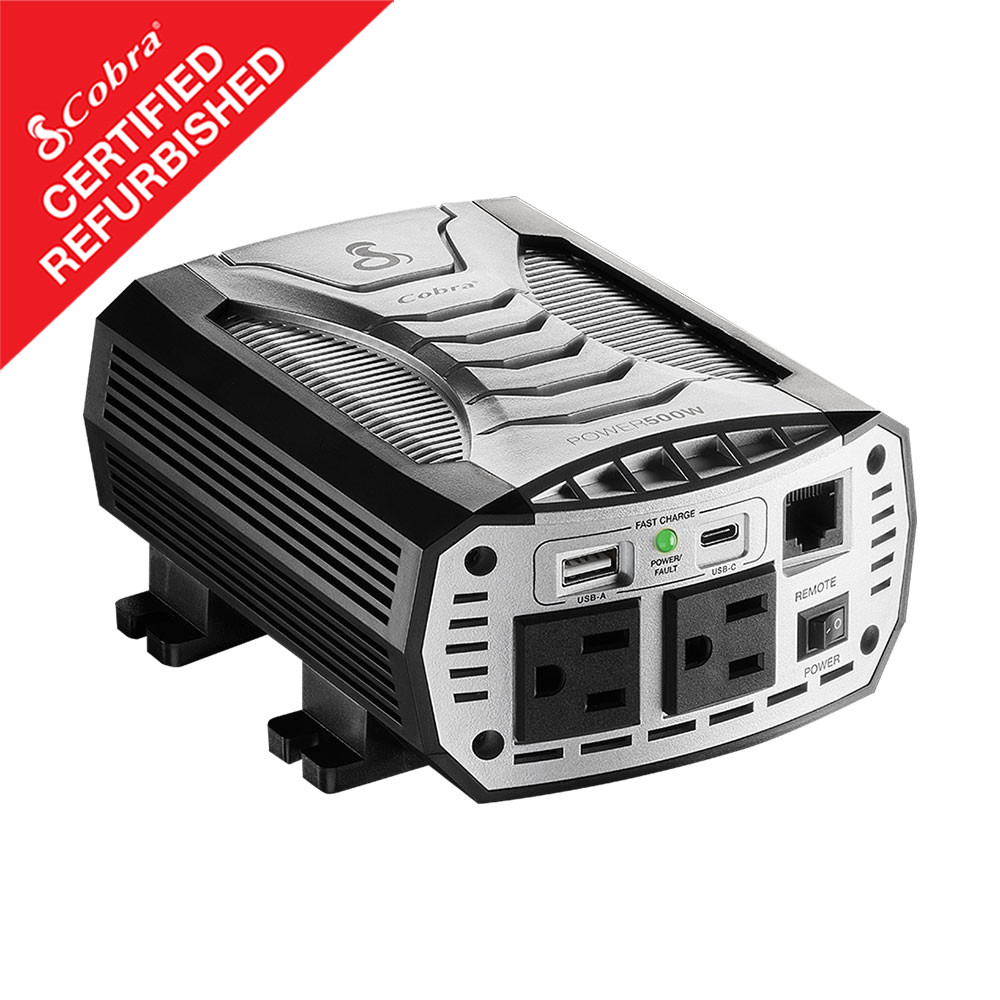 Cobra Power 500W Power Inverter Portable Car Charger Certified Refurbished$24.99
 View on eBay
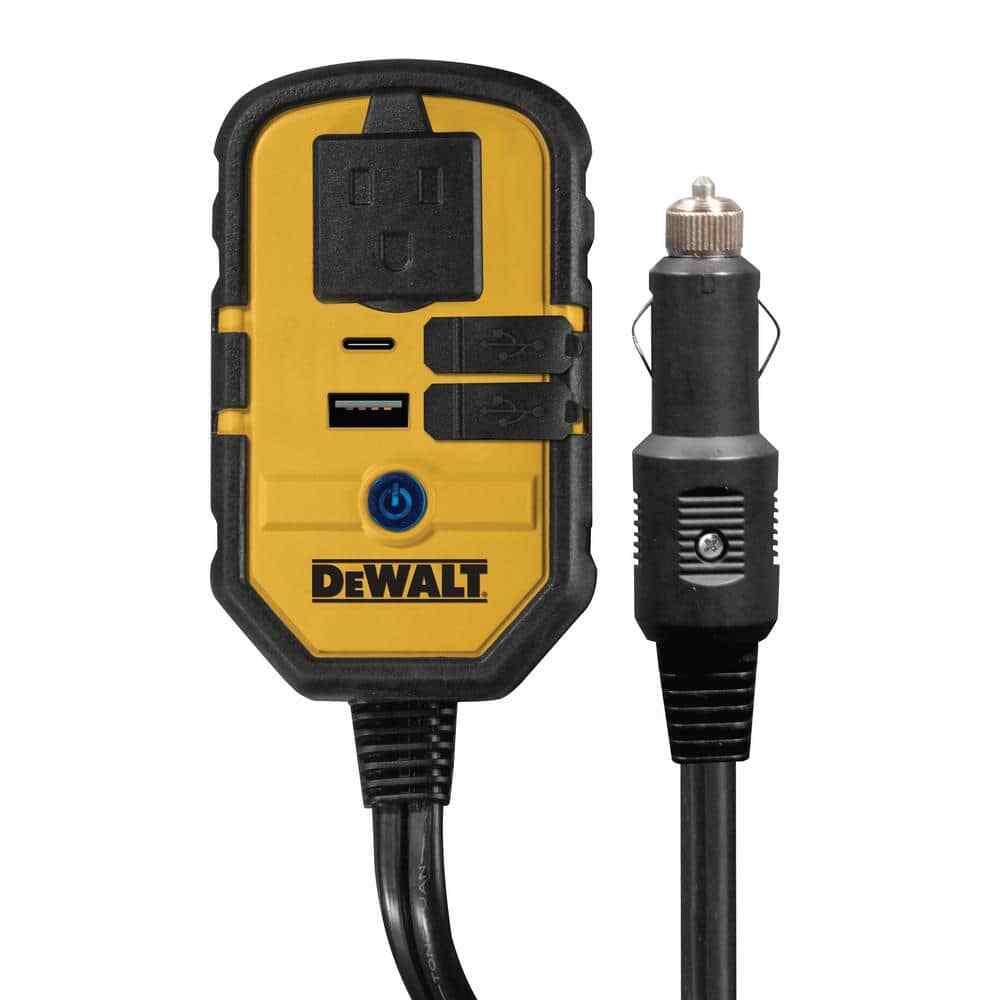 DEWALT 140-Watt Portable Car Power Inverter with Dual USB Ports$29.99View on eBay
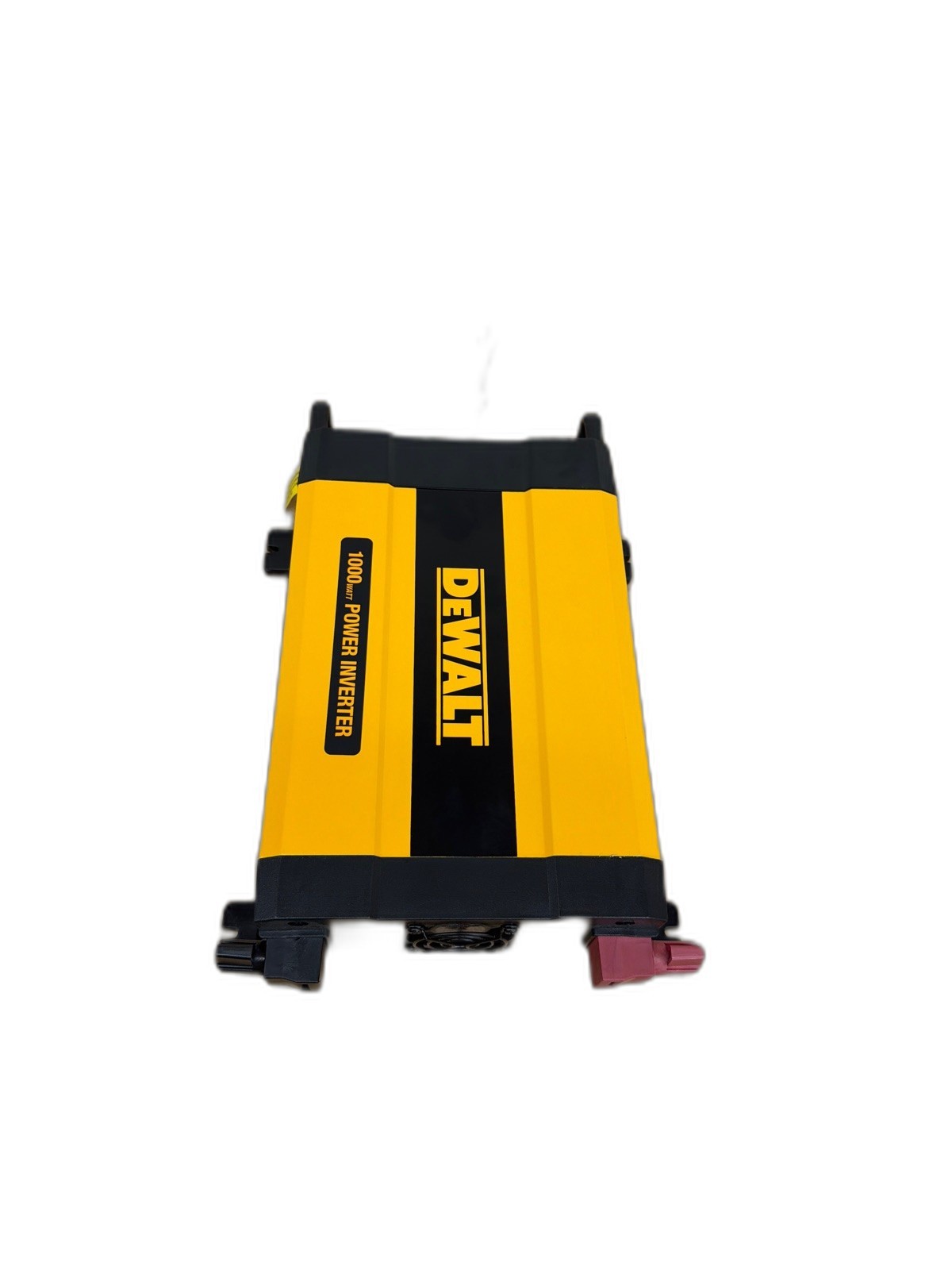 DEWALT 1000-Watt Portable Car Power Inverter NO ACCESSORIES$59.99View on eBay
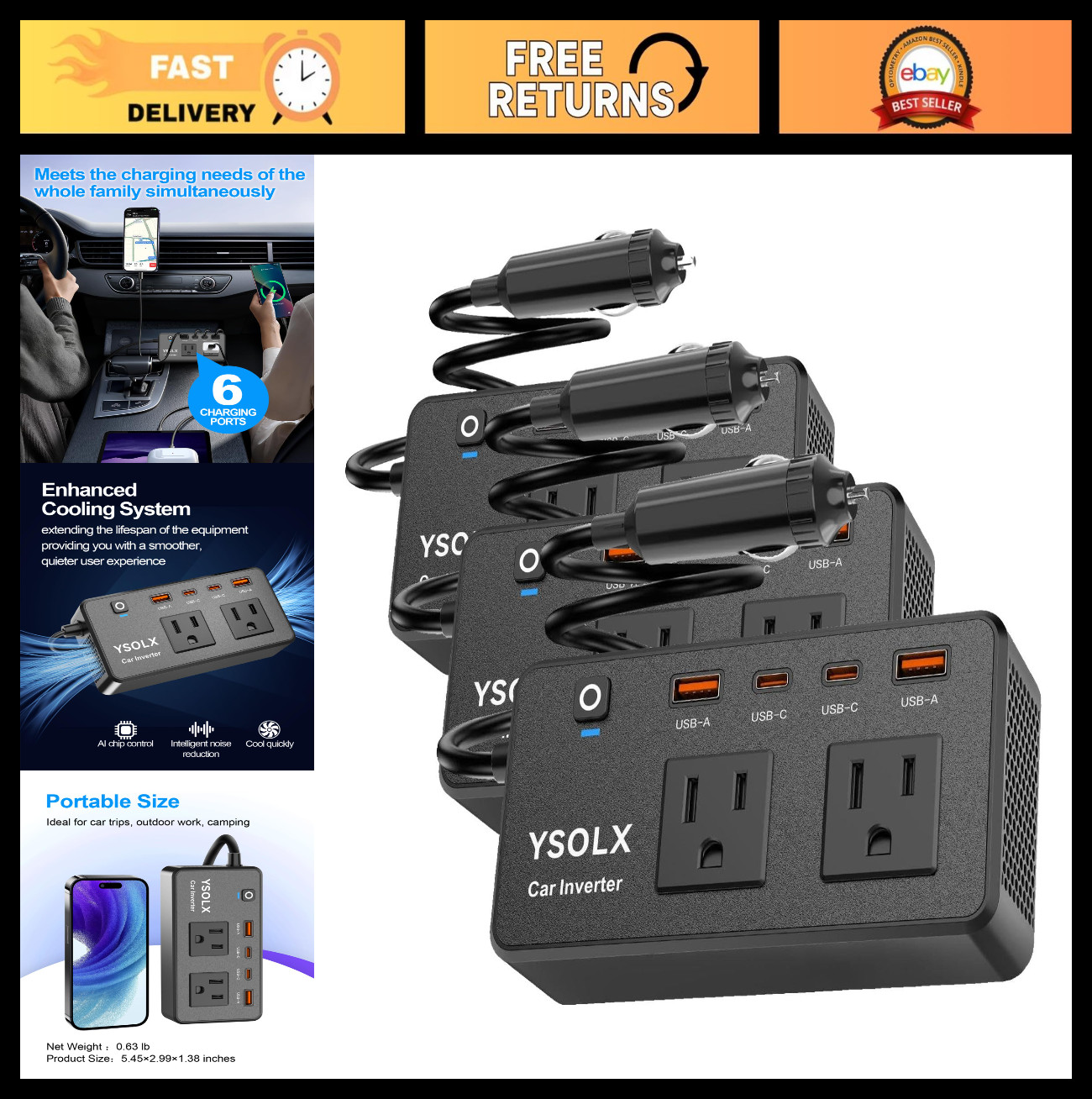 300W Portable Car Power Inverter Charger - 3-Pack Vehicle Accessories$169.99View on eBay
Highlights
- Continuous wattage, not peak wattage, is the real rating—a 1000W unit peaking at 2000W still only sustains about 1000W for minutes at a time before thermal shutdown.
- Pure sine wave output (clean 60Hz AC) reliably runs motorized appliances, variable-speed tools, and sensitive chargers; modified sine wave causes overheating and buzzing in those loads.
- Cigarette lighter sockets are fused around 15A, capping practical draw near 150-180W; above that you must use battery clamps with 8-10 AWG cable or hardwired leads.
- Idle draw, cooling fans, and aluminum heatsink mass determine whether a unit can run continuously without derating—strong heatsinks with thermal shutdown are the durability marker.
Best use cases
- Best fit: charging laptops, phones, drones, and camera batteries on road trips—a 300-500W modified sine wave unit on the 12V socket is sufficient and inexpensive.
- Best fit: running circular saws, pumps, or fridges from a vehicle battery—choose a 1000W+ pure sine wave unit with included battery clamps and low-voltage cutoff.
- Wrong fit: powering a home fridge or space heater overnight from a car inverter—continuous high draw will drain and damage the starting battery; use a portable power station instead.
- Skip: 3-pack accessory inverter bundles when you need real output—low-wattage plug-in pucks are fine for USB devices but cannot sustain tools or appliances.
Buying tips
- Add up continuous watts of everything running at once, then buy an inverter rated at least 20-25% above that total; peak wattage only covers motor startup surges for seconds.
- Choose pure sine wave for anything with a motor, compressor, or sensitive electronics; modified sine wave is acceptable only for resistive loads like lamps and simple chargers.
- Plan wiring by load: up to 150W is fine on the 12V socket, 150-500W needs a direct fused connection, and 1000W+ requires short 8 AWG or thicker clamp cables to the battery.
- Check low-voltage cutoff and thermal shutdown specs—quality units cut off near 10.5V to protect the battery and resume automatically after cooling.
Specs
| Output Waveform | Pure sine vs modified sine |
|---|---|
| Continuous Power | 150W / 300-500W / 1000W+ |
| Input Connection | 12V socket vs battery clamps |
| Safety Cutoff | Low-voltage + thermal shutdown |
Related searches
What to check before buying
- Measure your vehicle's 12V socket fuse rating (typically 15A) to confirm small loads stay safely under its limit.
- Confirm the battery clamp cable gauge and length can reach your battery terminals without stretching across the engine bay.
- Verify the inverter's output is 120V/60Hz for US/Canada use and that its plug type matches your devices.
- Ensure ventilation space around the unit—inverters reject heat through fans and heatsinks and need open air, not a sealed console.
FAQ
Data sources: eBay / Amazon listings and product attribute feeds Data updated Nov 15, 2026.
Some links on this page are affiliate links. If you buy after clicking one, we may earn a commission at no extra cost to you. This does not change which products appear here or their order. Affiliate disclosure.