Photos from current listings. Actual item, color, and included accessories may vary.
Portable Battery Jumper Buying Guide
A portable battery jumper is a lithium-ion power bank with high-discharge leads and clamps that cranks a dead 12V car battery without a second vehicle. The core trade-off is peak amps versus capacity and safety electronics: inflated peak ratings on cheap packs hide weak cells, while quality units publish true cranking amps, reverse-polarity protection, and temperature-rated cells. The decision rule: buy by engine displacement and cold-climate temperature, not by the biggest amperage number on the box.


At a glance
- Category
- Car Power
- Data updated
- Nov 15, 2026
Current offers
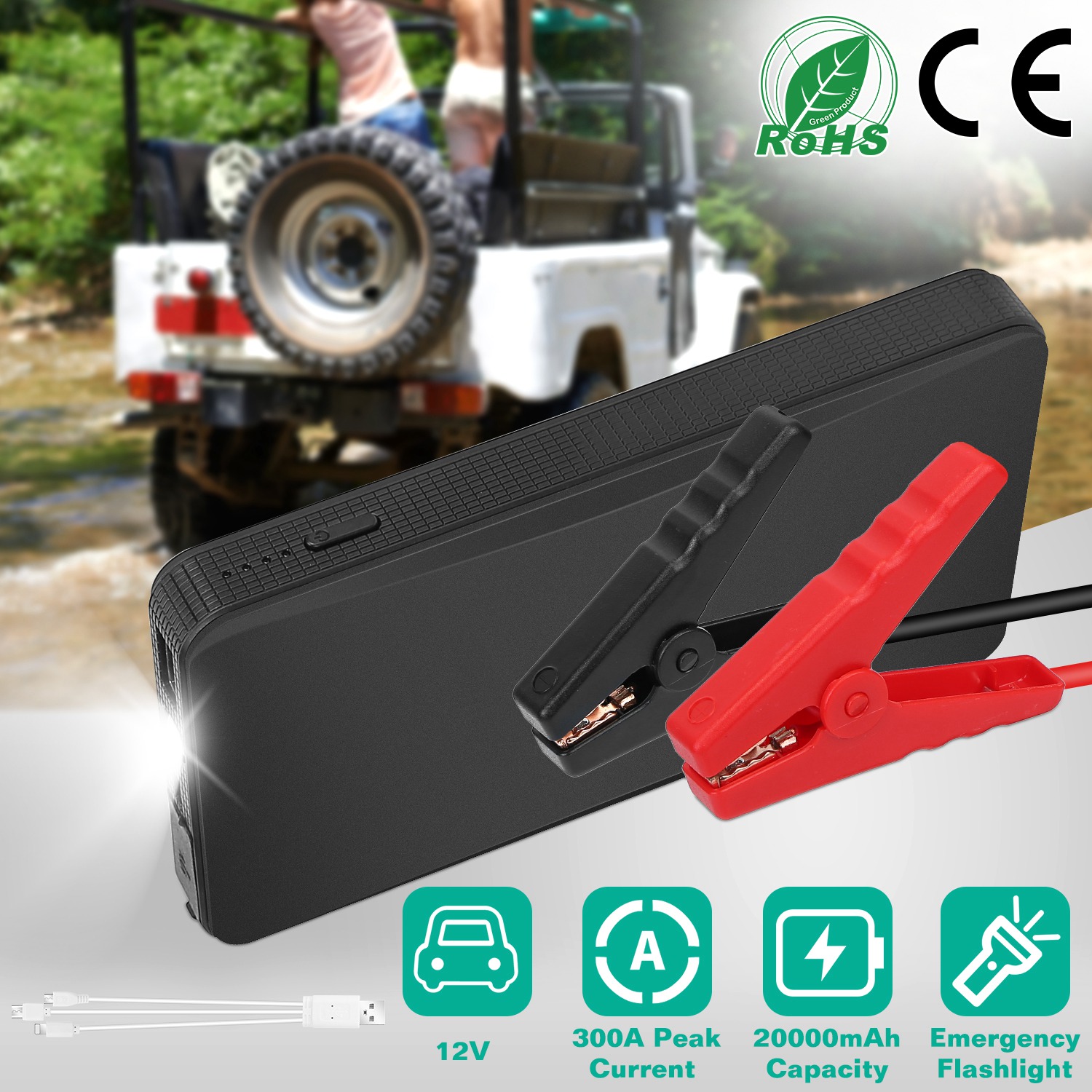 12V Car Jumper Starter 400A Peak 20000mAh Battery Charger Power Bank Portable Booster With 3 Flashlight Modes$39.99
 View on Mallflare
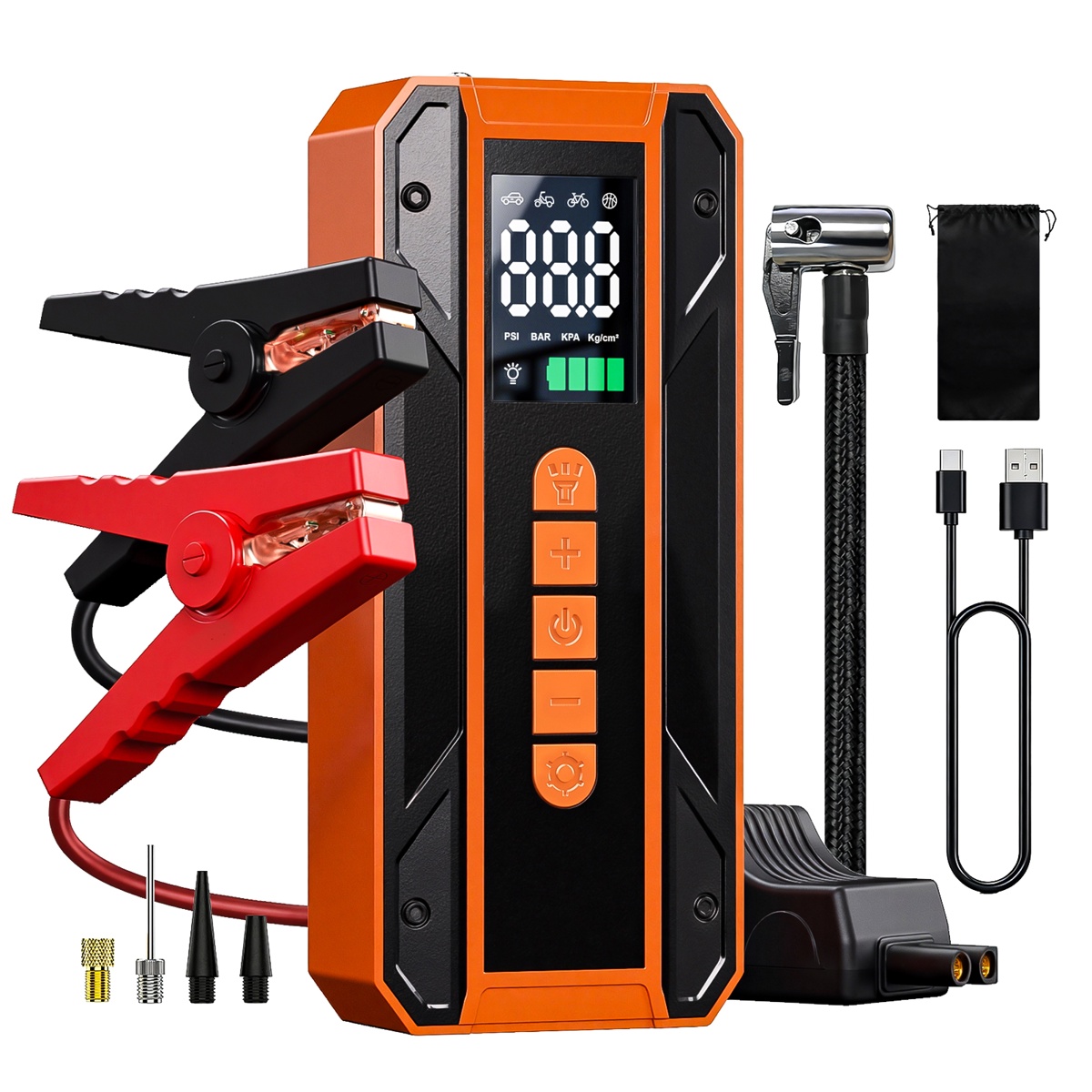 Air Pump Car Jumper Starter Portable Battery Pack With 150PSI Tire Inflator, 12V Box For Car Charger Booster LCD$62.99View on Mallflare
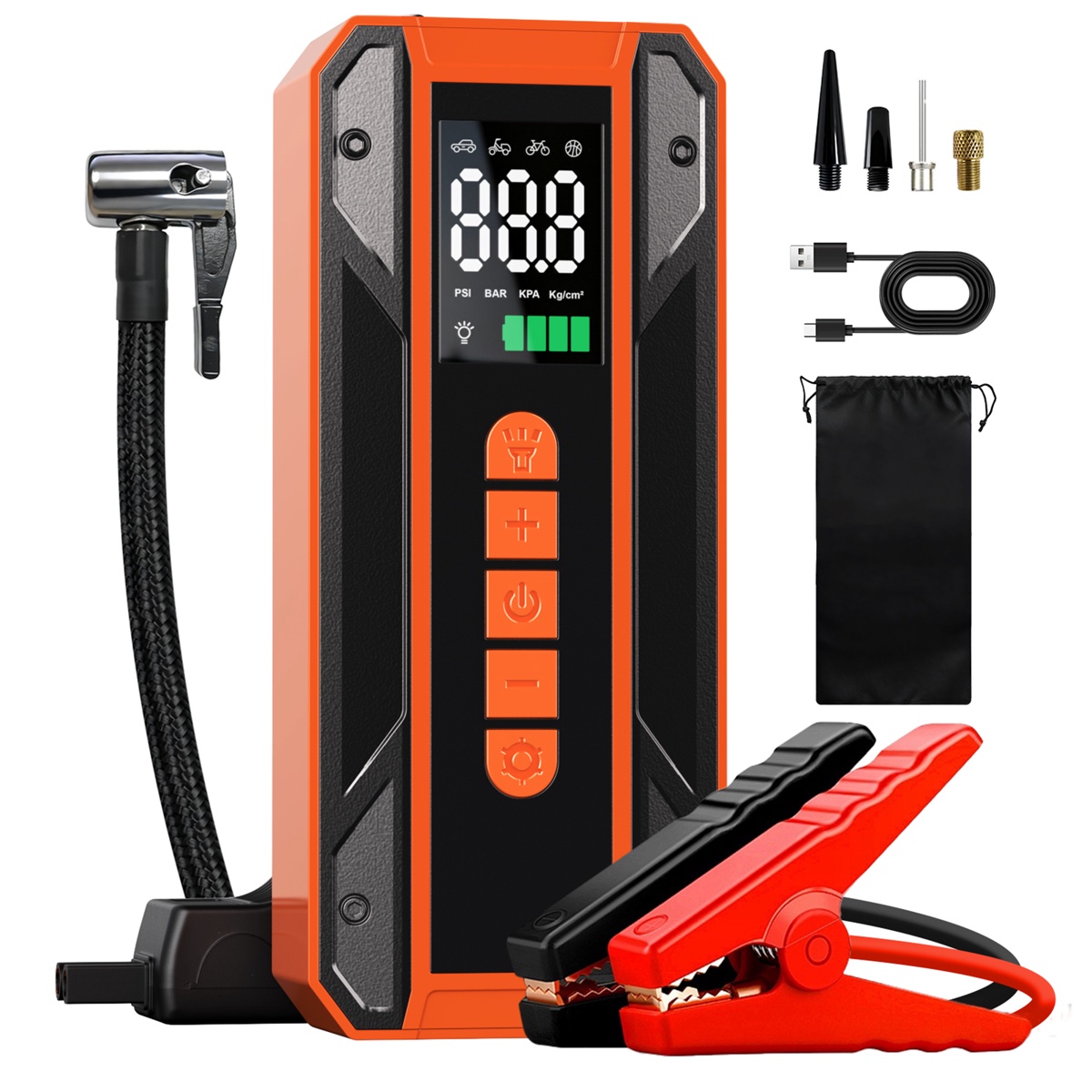 Car Jumper Starter Portable Battery Pack With 150PSI Tire Inflator, Jump Air Compressor,12V Box For Car Charger Booster LCD Display, 3-Mode Emergency Flashlight$68.99View on Mallflare
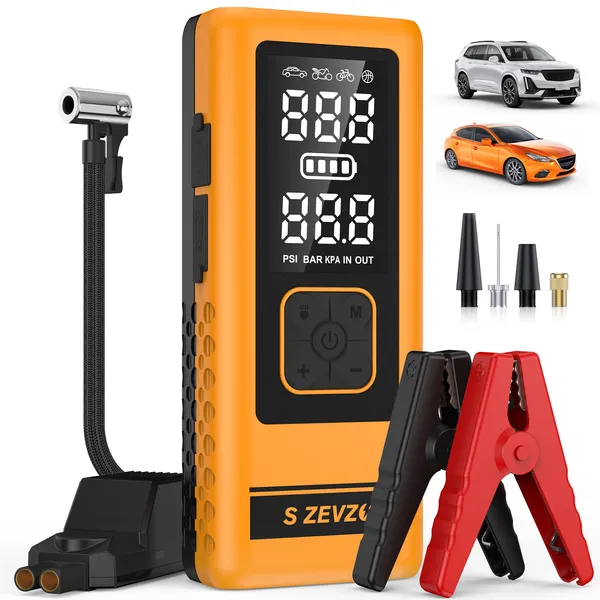 S ZEVZO 2 In 1 4000A Car Jump Starter With Air Compressor Air Inflator Portable Car Battery Charger Jumper Box$85.99View on Mallflare
Highlights
- Peak amps are a marketing figure; continuous cranking amps and cable gauge (6-8 AWG minimum for 400A-class) determine whether the pack actually turns a cold engine.
- Lithium jump packs use high-discharge Li-ion or LiFePO4 cells; LiFePO4 tolerates heat and deep discharge better but is heavier and costs more than standard Li-ion.
- Reverse-polarity and over-current protection are mandatory: a quality unit refuses to energize clamped leads instead of blowing its internal fuse or the car's main fuse.
- Integrated 150 PSI inflators and USB-C PD output are convenience tiers; they add bulk but replace a separate tire pump and phone charger in the glovebox.
Best use cases
- Best fit: a 4-cylinder sedan or compact crossover in a mild climate — a 400A peak / 10,000-20,000mAh pack with 6-8 AWG cables starts it reliably and fits a glovebox.
- Best fit: a V6 or small V8 in freezing winters — step up to a 1000-2000A peak pack with larger cells and thicker cables; 400A-class units will struggle below 0°C.
- Best fit: road-trip and emergency kits — choose a model with 150 PSI inflator, USB-C PD charging, and a 3-mode flashlight to consolidate tire, phone, and visibility needs.
- Wrong fit: diesel trucks and large-displacement V8s — skip compact 400A packs entirely; they lack the cranking current and will leave you stranded.
Buying tips
- Match peak amps to engine size: 400A for up to ~2.0L gasoline, 1000A for ~3.0-4.0L, 2000A+ for V8s and light diesel; derate by 30-40% below -10°C.
- Check cable gauge and clamp quality: 6-8 AWG copper cables with firm, fully insulated clamps; thin 10 AWG aluminum cables heat up and drop voltage under load.
- Insist on reverse-polarity protection, over-discharge cutoff, and a hard-shell case; these electronics prevent the most common jump-start failure and battery damage.
- Prefer USB-C PD input/output over micro-USB; it recharges the pack in 2-4 hours instead of 6-8 and doubles as a fast phone charger.
Specs
| Peak Amps | 400A / 1000A / 2000A+ by engine size |
|---|---|
| Battery Chemistry | Li-ion vs LiFePO4 high-discharge |
| Cable & Clamp | 6-8 AWG copper, insulated clamps |
| Safety Electronics | Reverse-polarity + over-discharge cutoff |
Related searches
What to check before buying
- Confirm your engine displacement, fuel type, and the coldest temperature the car will face; size peak amps with a 30-40% cold derate.
- Verify the pack's clamp cable length reaches both battery terminals in your engine bay without stretching, especially on side-terminal batteries.
- Check that the pack recharges from USB-C PD (not only micro-USB) and holds charge for 6-12 months between top-ups.
- Measure glovebox or under-seat storage; inflator-equipped units are bulkier and may not fit compact compartments.
FAQ
Data sources: eBay / Amazon listings and product attribute feeds Data updated Nov 15, 2026.
Some links on this page are affiliate links. If you buy after clicking one, we may earn a commission at no extra cost to you. This does not change which products appear here or their order. Affiliate disclosure.