Photos from current listings. Actual item, color, and included accessories may vary.
Modified Sine Wave Inverter Buying Guide
A modified sine wave inverter converts 12V DC battery power to household AC with a stepped square-wave output that is cheap to build but electrically harsh. The core trade-off is cost versus waveform quality: modified sine runs resistive loads fine but can overheat, buzz, or fail on motors, compressors, and sensitive electronics. Buy a modified sine unit only for simple resistive or universal-motor loads, and step up to pure sine for anything with a compressor, transformer, or microprocessor.

At a glance
- Category
- Car Power
- Data updated
- Nov 15, 2026
Current offers
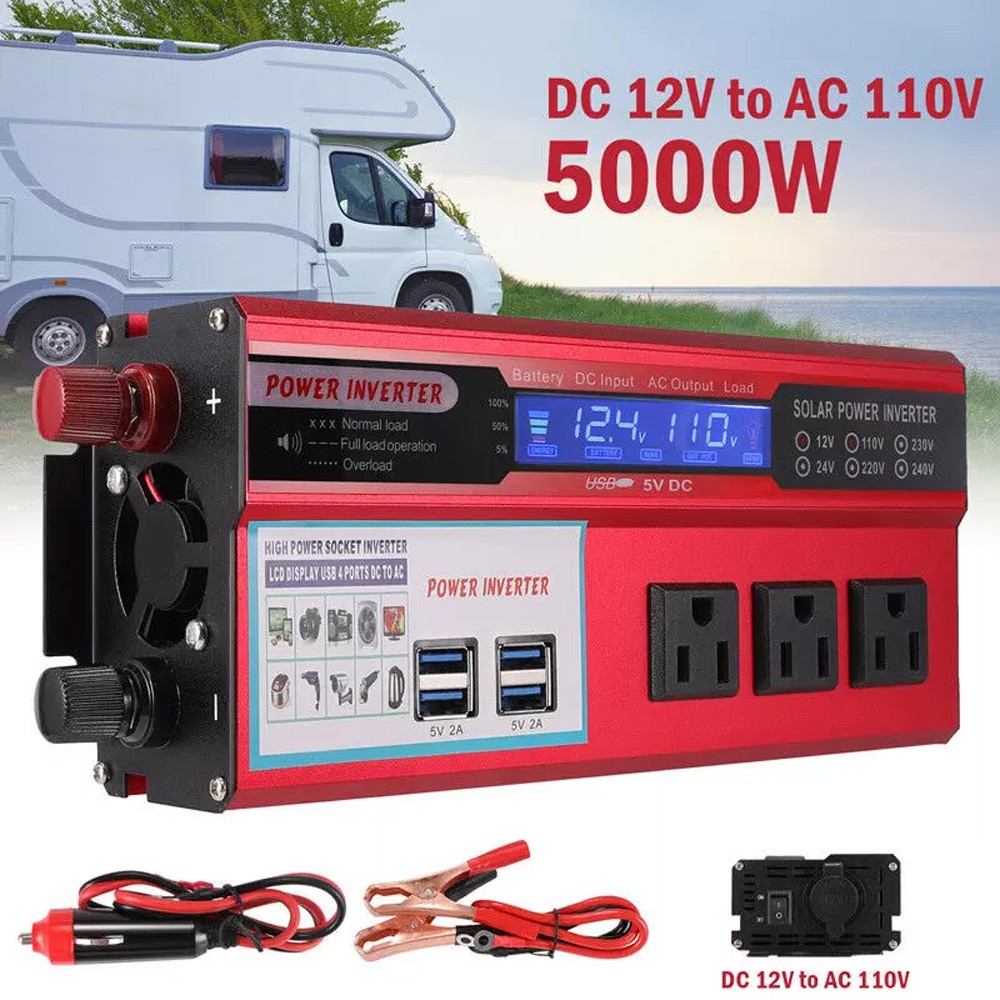 Car Power Inverter DC 12V To AC 110V modified Sine Wave Solar Converter 4 USB$29.99
 View on eBay
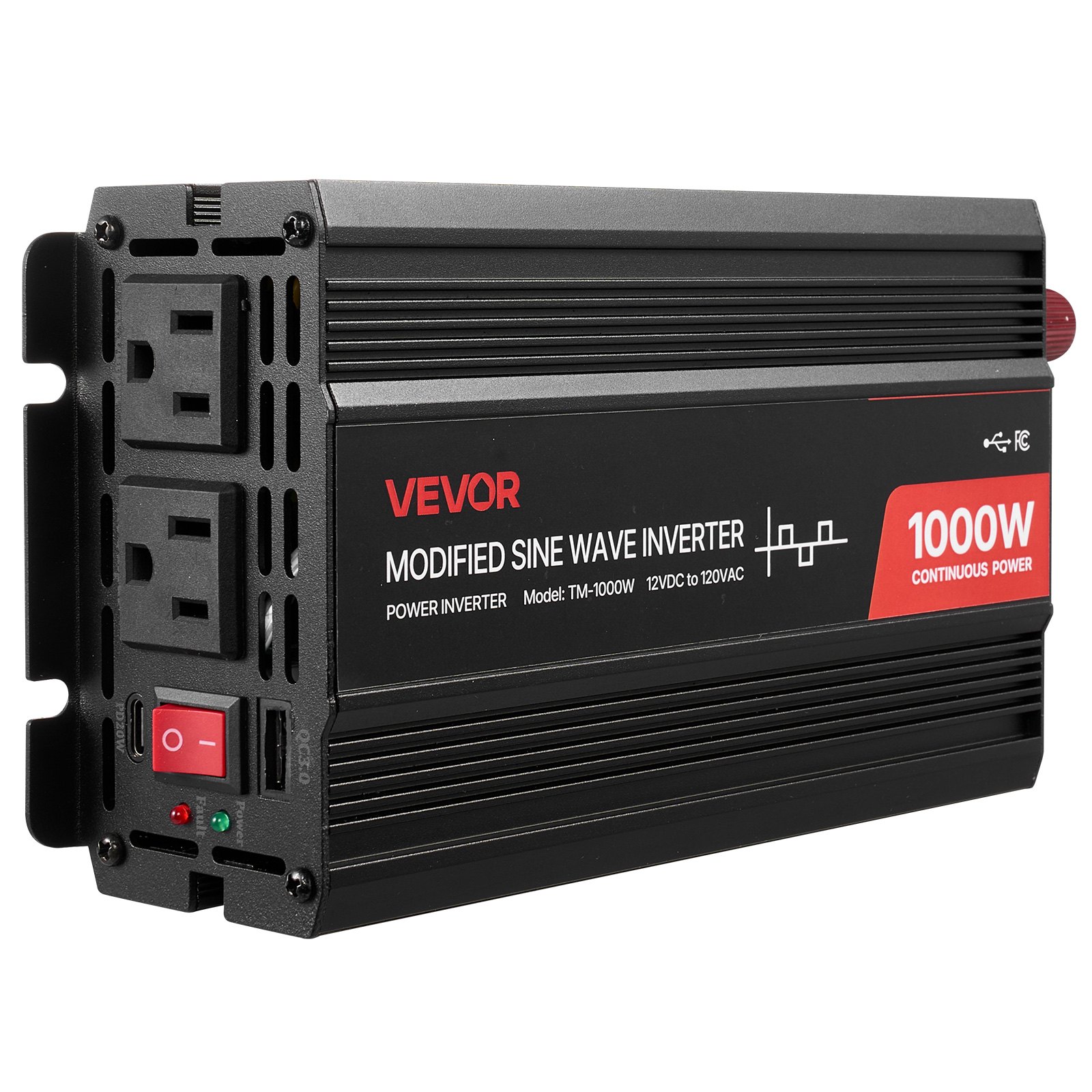 1000W Power Inverter, 12V DC To 120V AC Modified Sine Wave Car Charger Converter With USB & Type-C Port, 2 AC Outlets,$80.99
 View on Mallflare
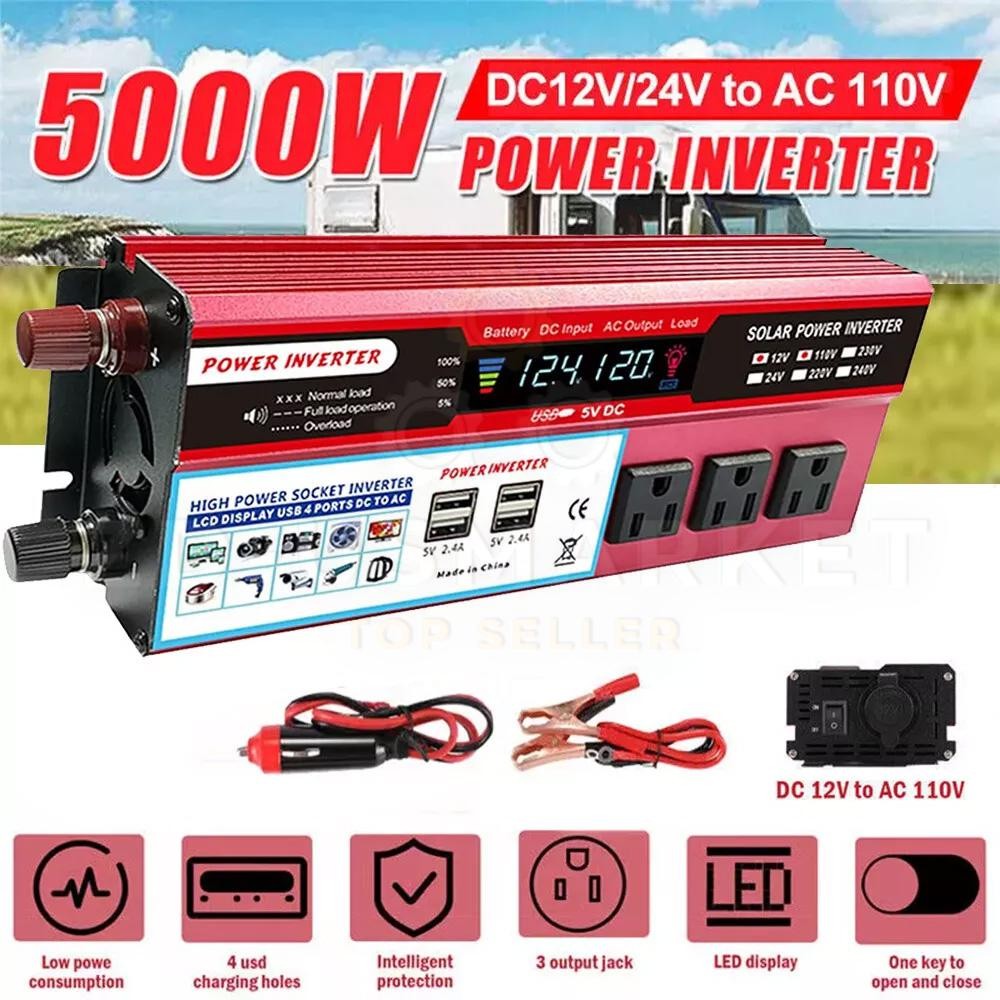 5000W Car Power Inverter DC 12V To AC 110V modified Sine Wave Solar Converter$29.99View on eBay
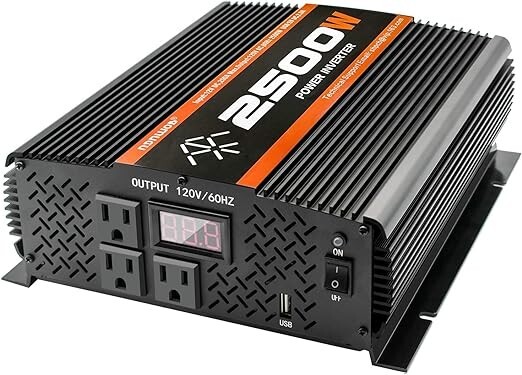 2500W inverter 12V to110V /120V Modified Sine Wave Car Inverter Truck RV$135.00View on eBay
Highlights
- Modified sine output is a stepped square wave with roughly 40% total harmonic distortion versus under 3% for pure sine, causing heat and hum in inductive loads.
- Continuous rating is the real limit; advertised peak wattage (often 2x continuous) is only for sub-second motor surges, not sustained draw.
- 12V input at 1000W continuous draws about 90A, so DC cables must be short, thick (4–2 AWG), and fused within 18 inches of the battery.
- USB and Type-C ports are usually 5V/2.4A or 18W PD taps off the DC bus, not the AC inverter stage, and won't add meaningful capacity.
Best use cases
- Best fit: phone/laptop charging, LED lighting, and resistive heaters on a car, truck, or RV — pick a 300–1000W modified sine model with a fused 12V plug.
- Best fit: power tools with universal brushed motors (drills, saws) — choose a continuous rating at least 2x the tool's nameplate amps to absorb startup surge.
- Wrong fit: CPAP machines, fridges, freezers, laser printers, and audio gear — these need pure sine, so skip modified sine entirely.
- Wrong fit: hardwired or high-draw 240V appliances and anything with a compressor — a 2500W+ modified sine unit will still buzz and overheat the motor.
Buying tips
- Match continuous wattage to load, not peak: a 1000W continuous unit handles a 900W resistive load but only about a 450W motor because of surge and derating.
- Size DC cable by current: 1000W at 12V needs 4 AWG for runs under 6 ft; 2000W+ needs 2/0 AWG or a forced-air-cooled unit with short runs.
- Buy only units with a replaceable blade fuse or DC breaker on the input and a grounded AC outlet; unfused 5000W claims in a cigarette-lighter plug are physically impossible.
- Prefer 12V input for cars and light trucks; 24V input halves current and is the correct choice for RV house banks and solar setups over 1500W.
Specs
| Waveform | Modified sine (stepped square) |
|---|---|
| Input Voltage | 12V DC (24V for larger banks) |
| Continuous vs Peak | Continuous = 50–60% of peak |
| Typical THD | 35–45% THD vs <3% pure sine |
Related searches
What to check before buying
- Measure your battery bank voltage (12V vs 24V) and confirm the inverter input matches before buying.
- Verify the 12V outlet or battery cable can supply the continuous current: cigarette plugs max out around 150–180W, so hardwire above that.
- Check the AC plug standard (NEMA 5-15R for North America) and confirm the unit has a true grounded outlet, not just 2-pin.
- Plan ventilation clearance of at least 2 inches around the heatsink and keep the unit out of sealed compartments; modified sine units run hotter than pure sine.
FAQ
Data sources: eBay / Amazon listings and product attribute feeds Data updated Nov 15, 2026.
Some links on this page are affiliate links. If you buy after clicking one, we may earn a commission at no extra cost to you. This does not change which products appear here or their order. Affiliate disclosure.