Photos from current listings. Actual item, color, and included accessories may vary.
DC AC Inverter Buying Guide
A DC-AC inverter converts your vehicle's 12V or 24V battery power into household AC, letting you run laptops, tools, and appliances on the road. The core trade-off is waveform purity versus cost: modified sine wave units are cheaper but can buzz, overheat, or damage sensitive electronics, while pure sine wave units deliver clean grid-quality power at a premium. The decision rule is simple: if you're powering anything with a motor, compressor, or microprocessor you care about, buy pure sine wave at a realistic continuous rating; if you only need to charge phones and run simple resistive loads, a modified sine wave unit is acceptable.

At a glance
- Category
- Car Power
- Data updated
- Nov 15, 2026
Current offers
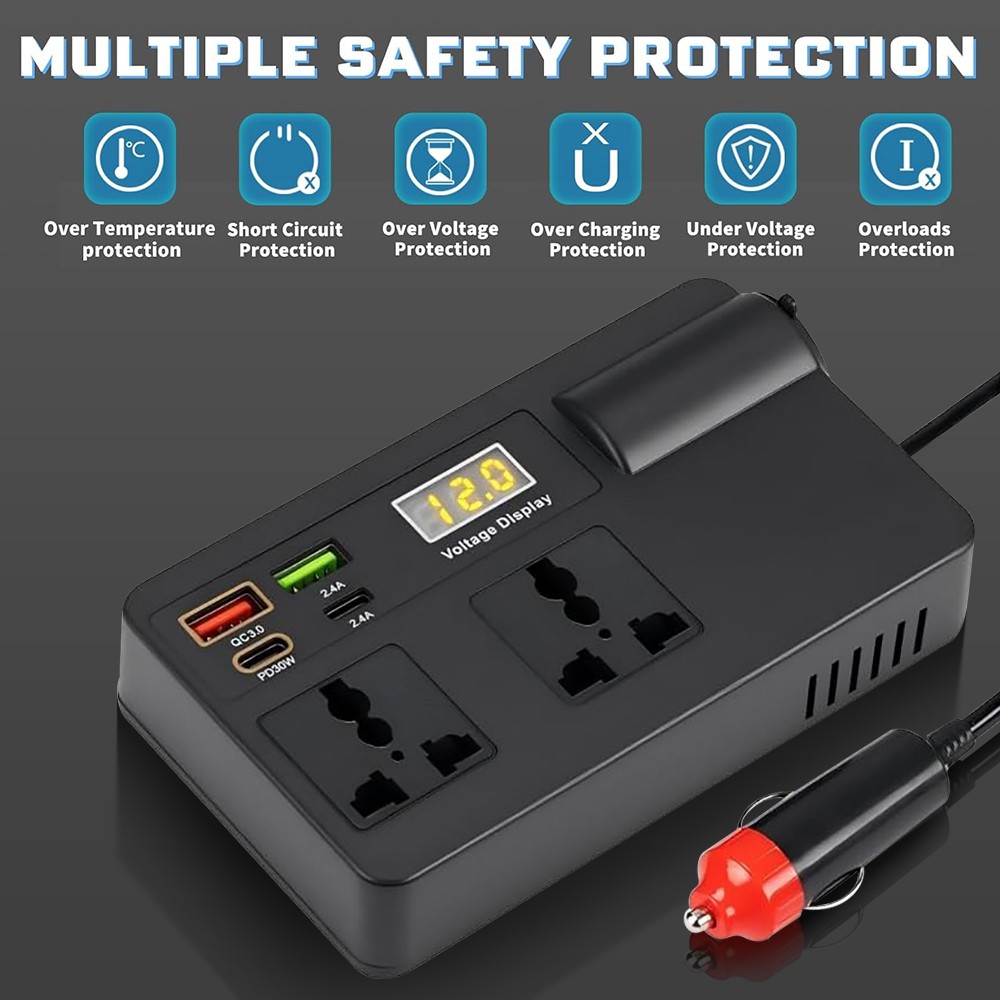 Car Auto 200W Power Inverter DC 12V 24V to AC 110V 240V Converter With 2 USB$15.99
 View on eBay
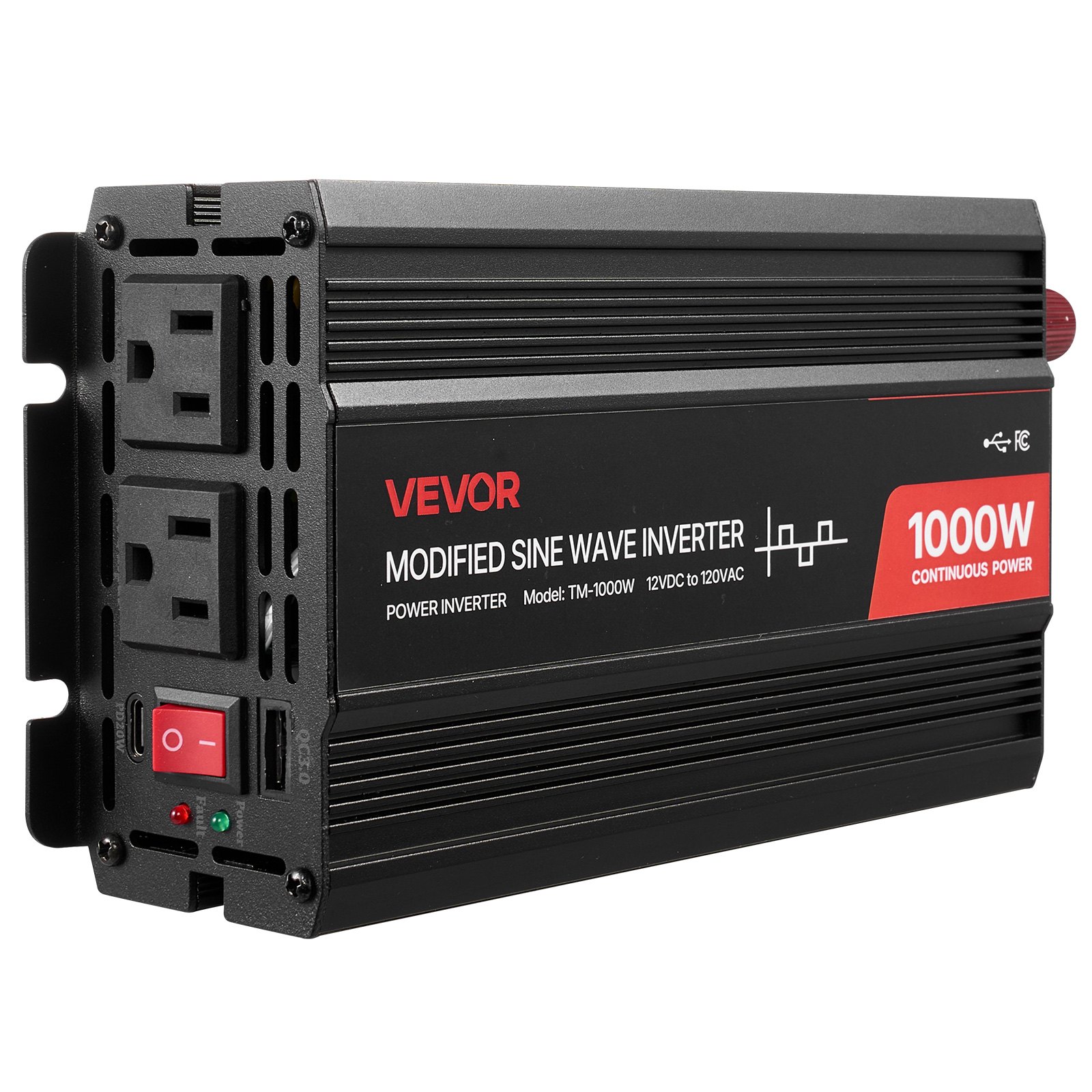 1000W Power Inverter, 12V DC To 120V AC Modified Sine Wave Car Charger Converter With USB & Type-C Port, 2 AC Outlets,$80.99
 View on Mallflare
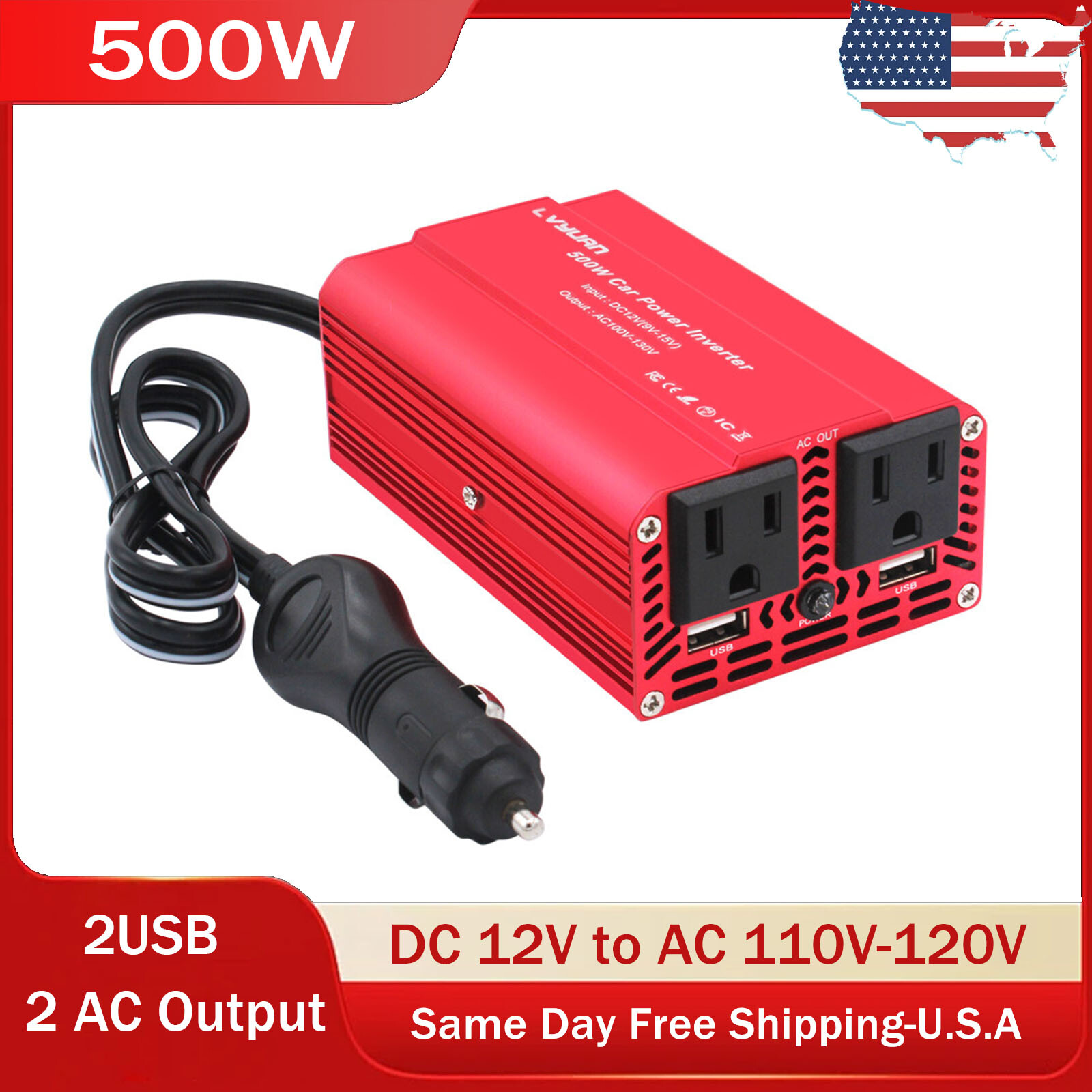 500W Car Power Inverter DC 12V to AC 110V 120V Converter With 2USB 2Sockets Red$24.99View on eBay
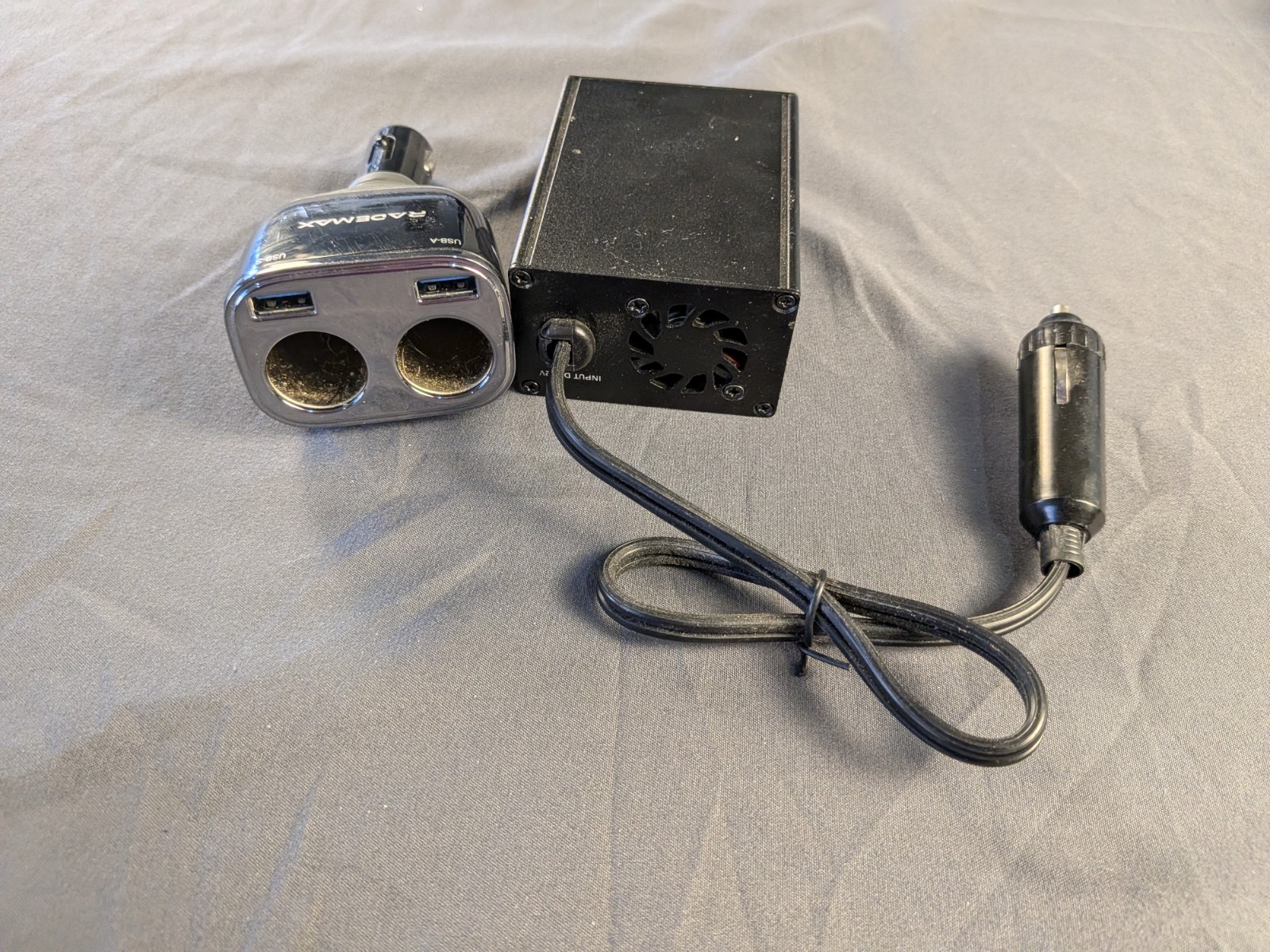 Lot of 2 Car Power Accessories: 150W DC to AC Power Inverter & Rademax Dual...$24.99View on eBay
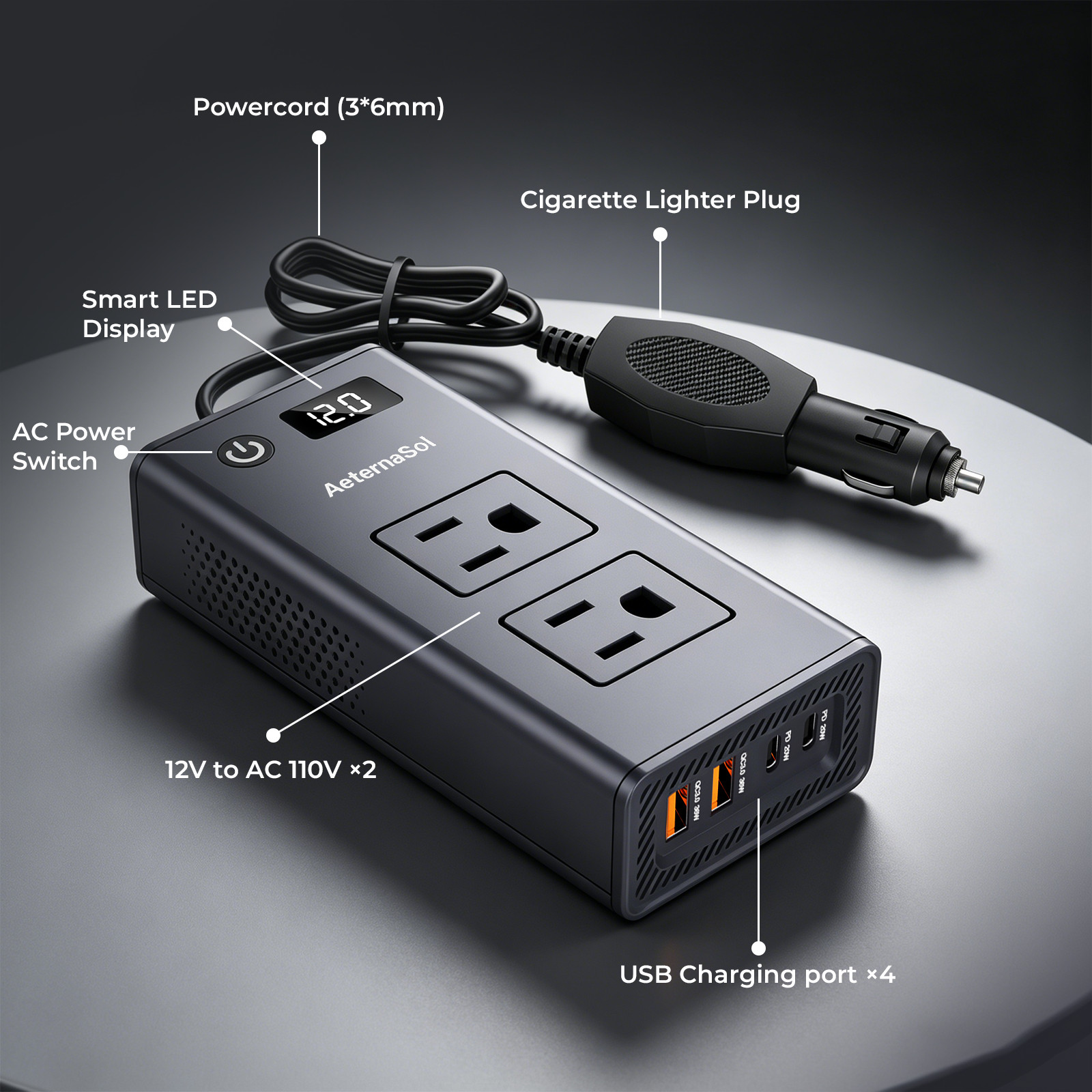 200W Car Power Inverter DC 12V to 110V AC Plug Adapter Outlet Converter USB 36W$25.99View on eBay
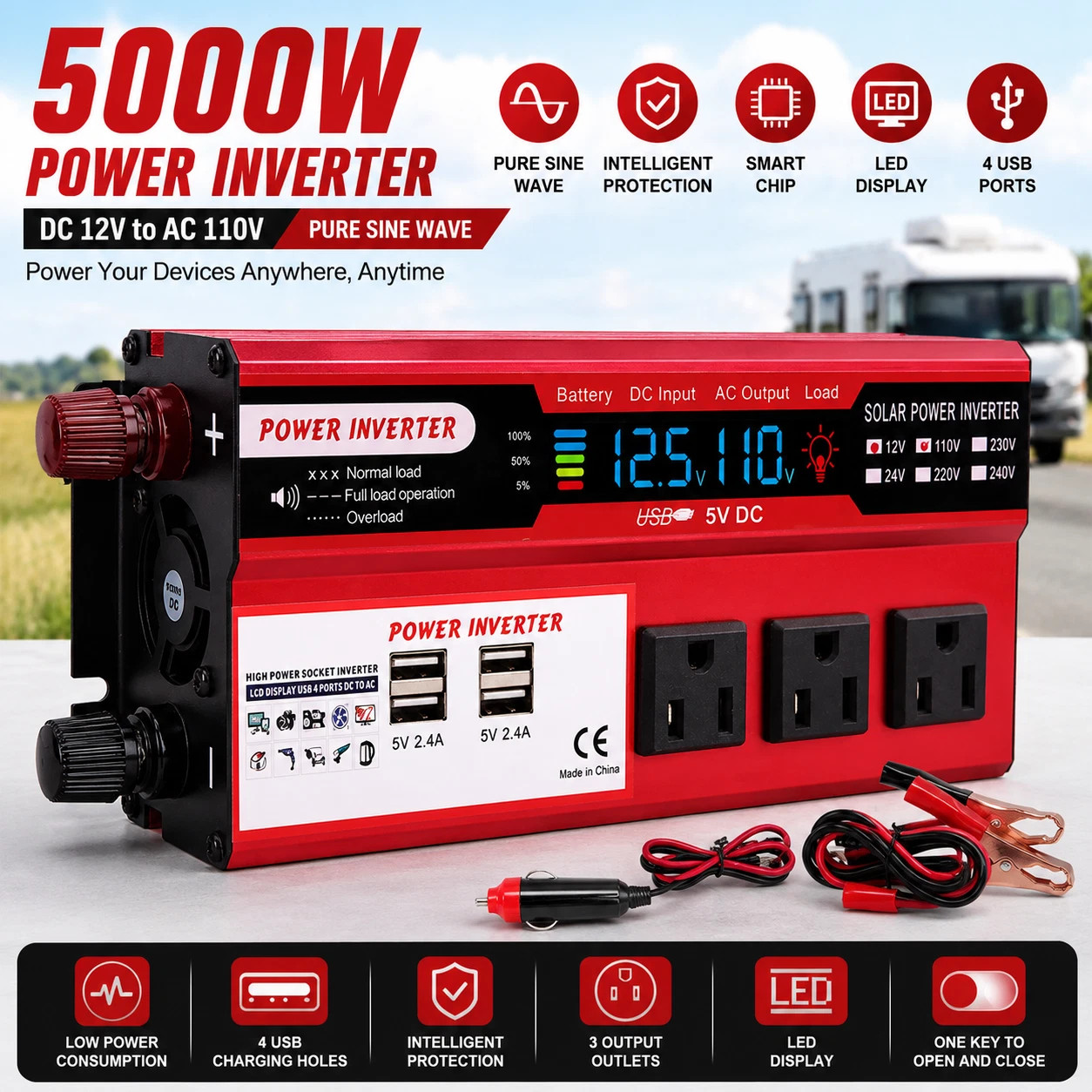 5000W Car Power Inverter DC 12V To AC 110V Pure Sine Wave Solar 4 USB Converter$26.99View on eBay
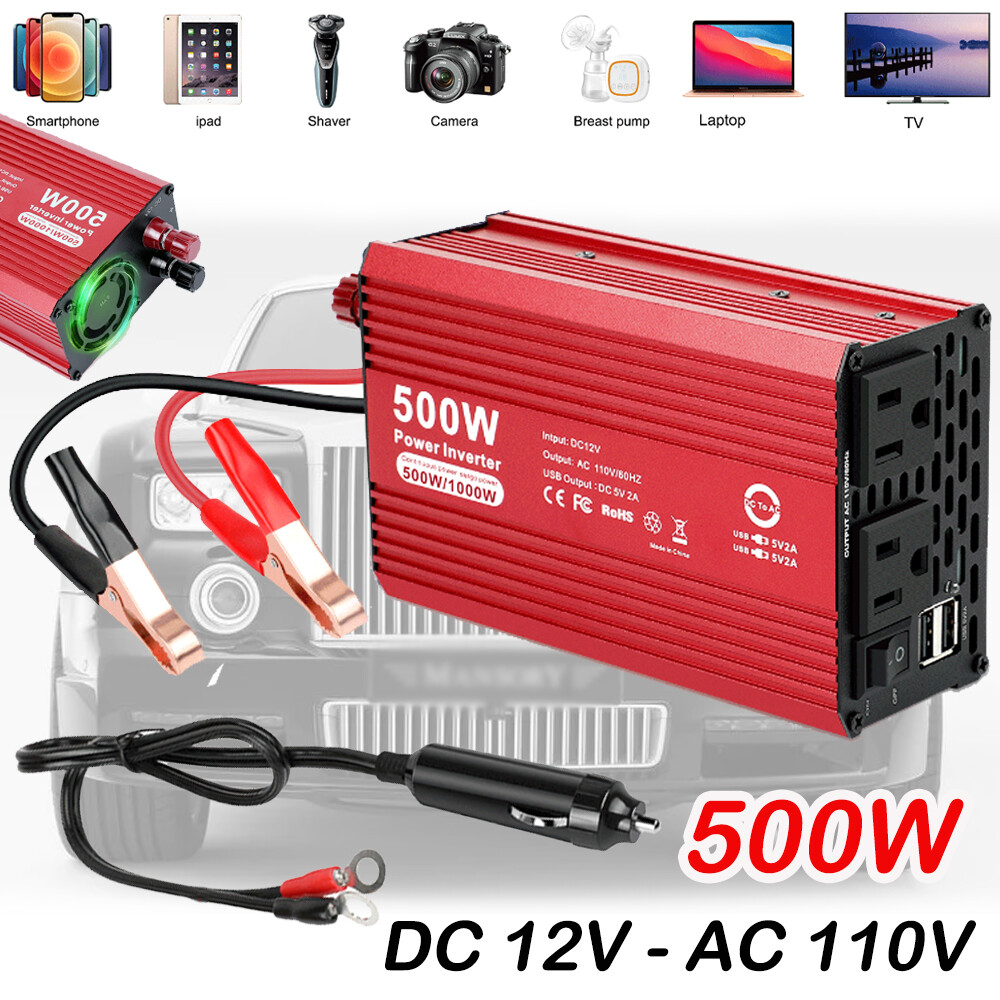 500W Car Power Inverter DC 12V To AC 110V 120V Adapter Converter 2 USB 2 AC$28.59View on eBay
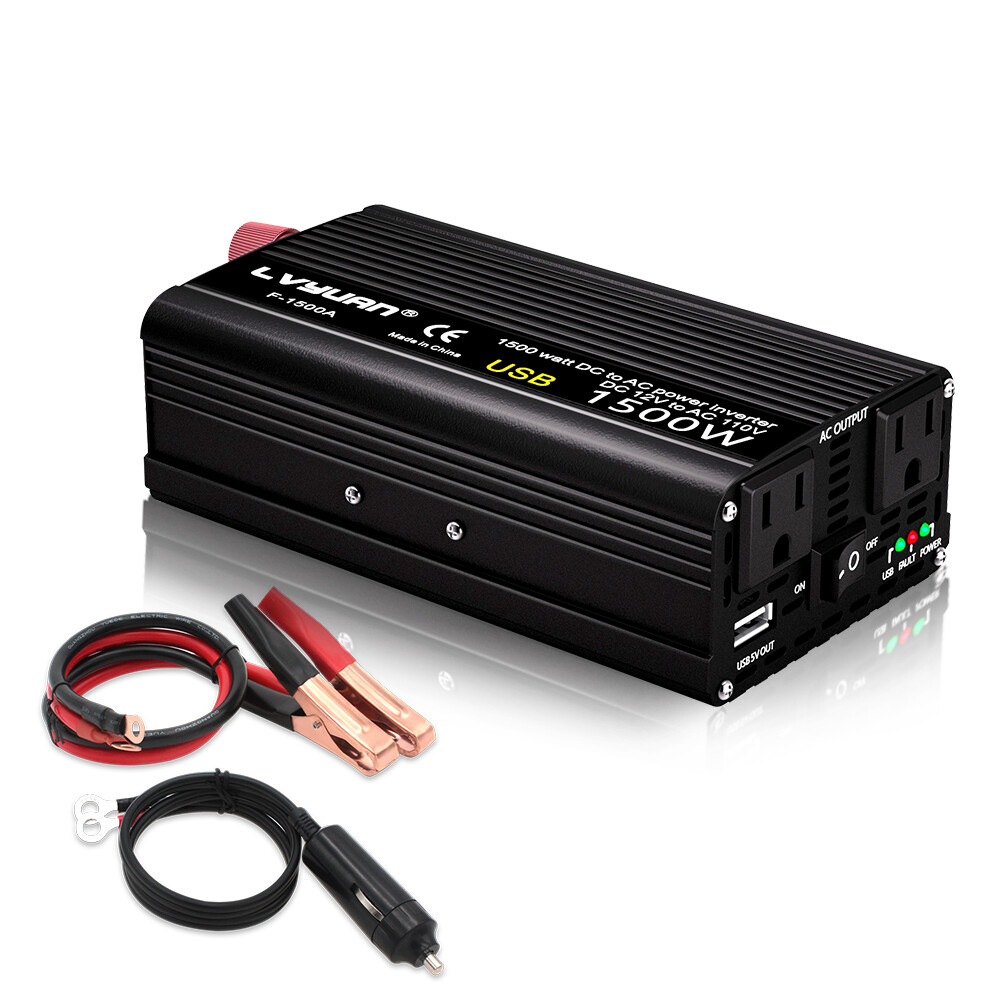 1500W Power Inverter 12V DC to 110V AC Converter Dual Outlets Car Charger Port$29.69View on eBay
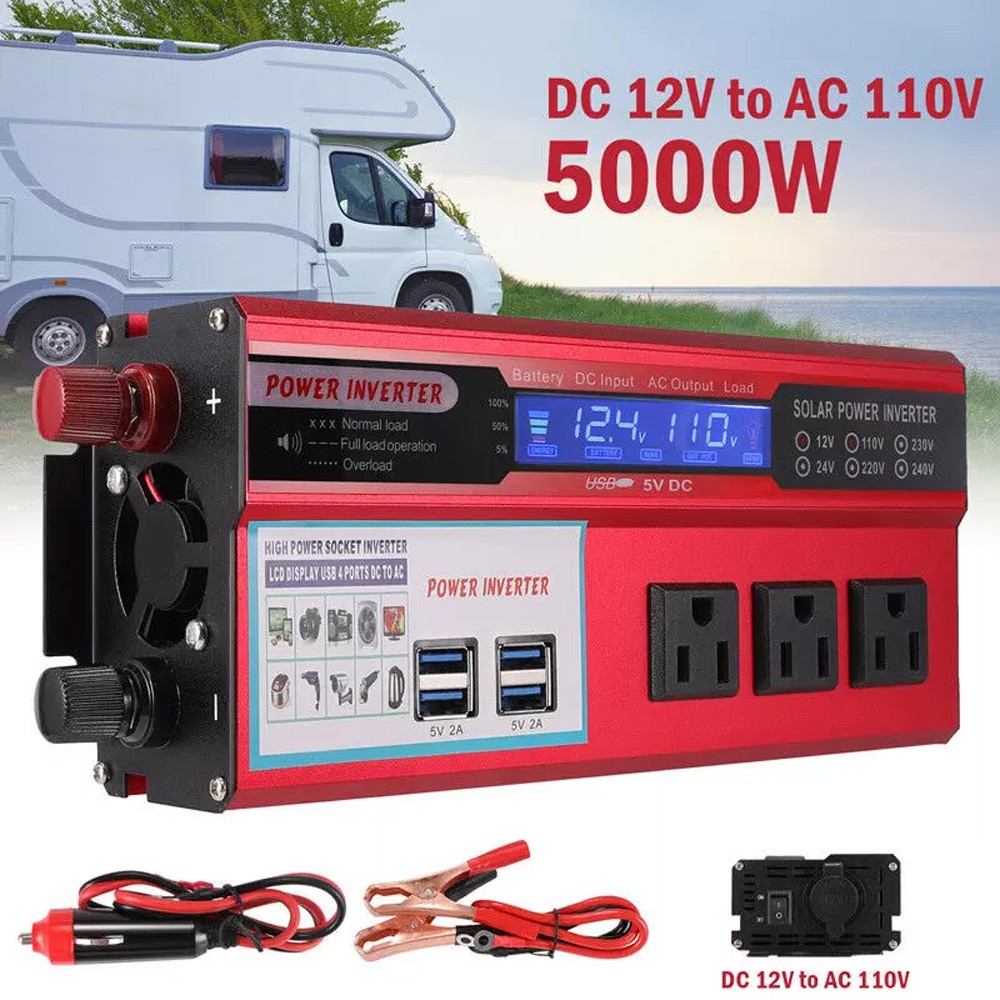 Car Power Inverter DC 12V To AC 110V modified Sine Wave Solar Converter 4 USB$29.99View on eBay
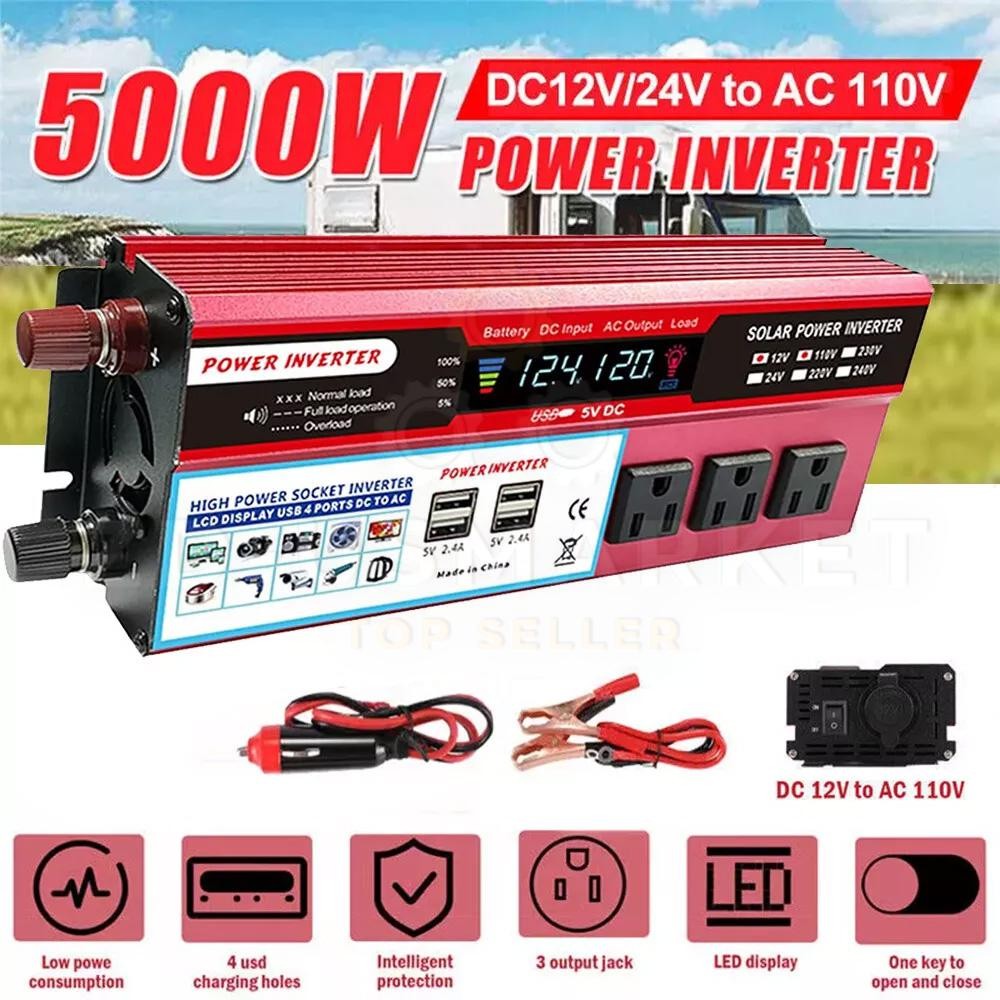 5000W Car Power Inverter DC 12V To AC 110V modified Sine Wave Solar Converter$29.99View on eBay
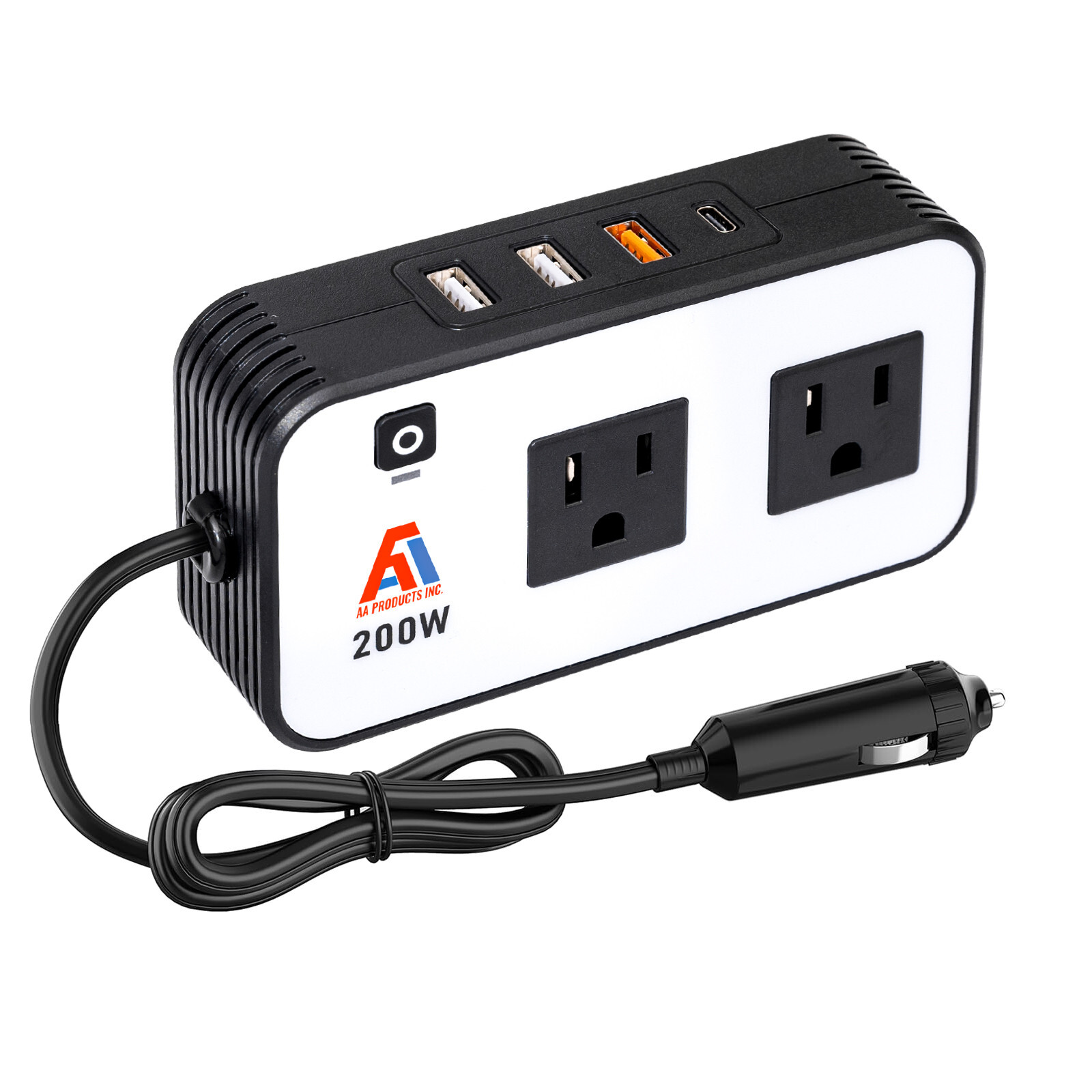 AA Products P-SH-Power Inverter 12V DC to 110V AC 200W Car Charger Adapter$30.90View on eBay
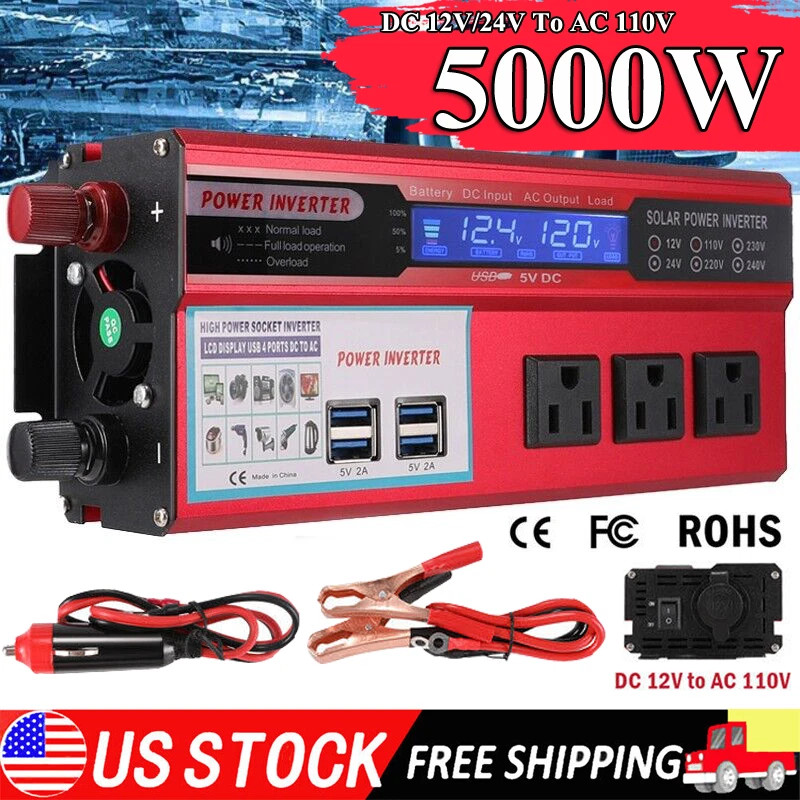 Pure Sine Wave Solar Converter 5000W Car Power Inverter DC 12V To AC 110V 4 USB$31.31View on eBay
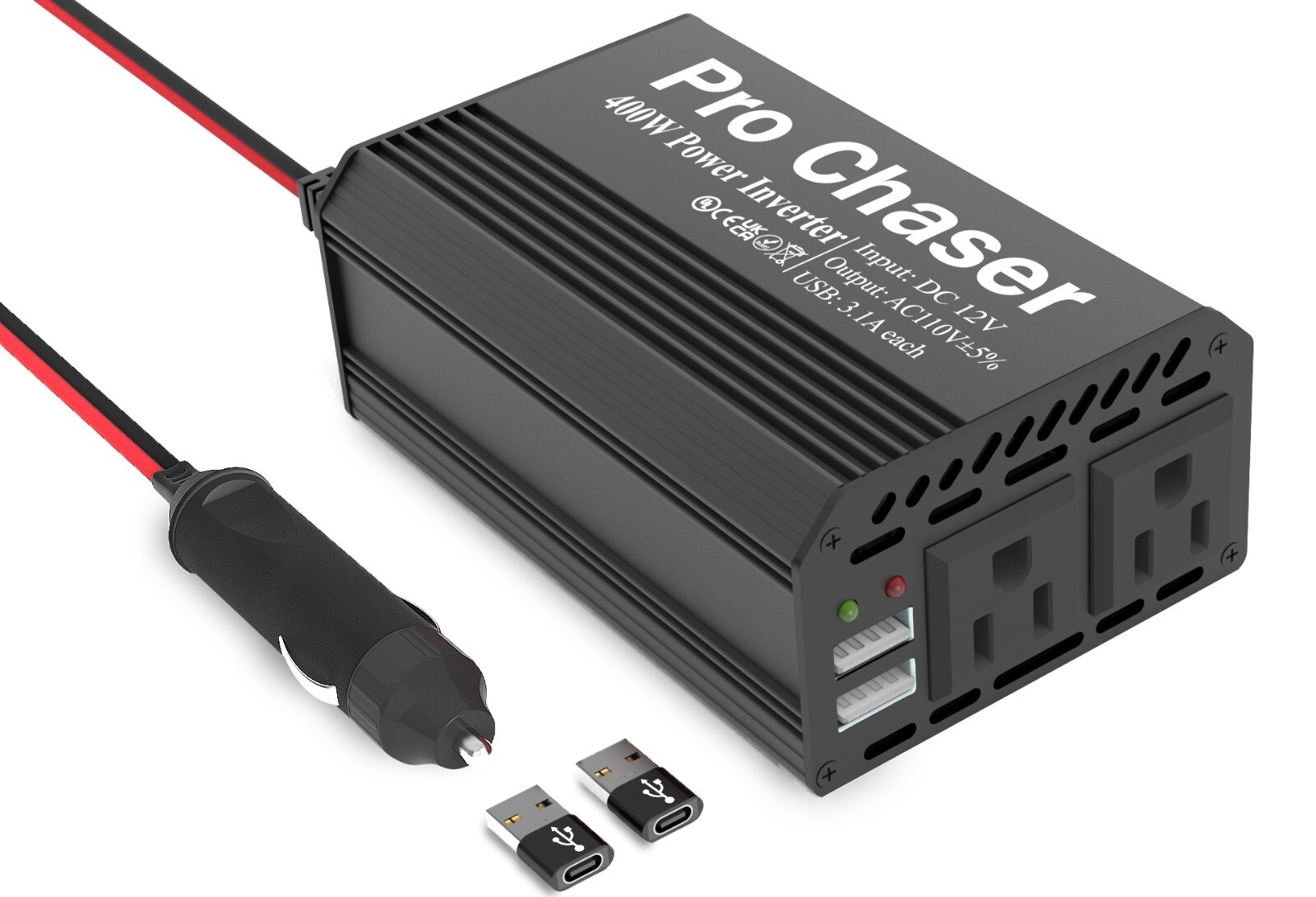 400W Power Inverters for Vehicles DC 12v to 110v AC Car Converter w/ USB-C$32.98View on eBay
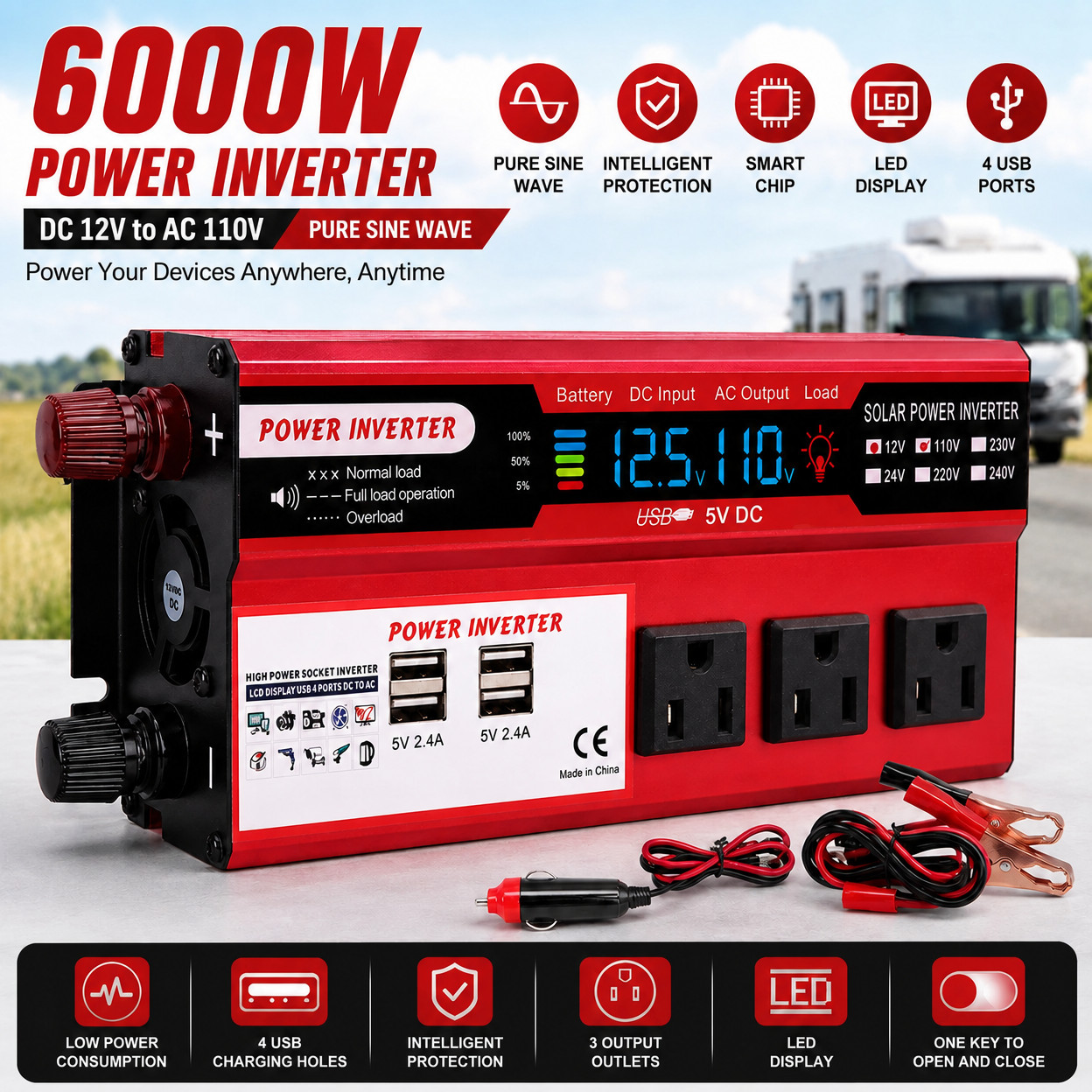 6000W Car Power Inverter DC 12V To AC 110V Pure Sine Wave Solar Converter 4 USB$34.34View on eBay
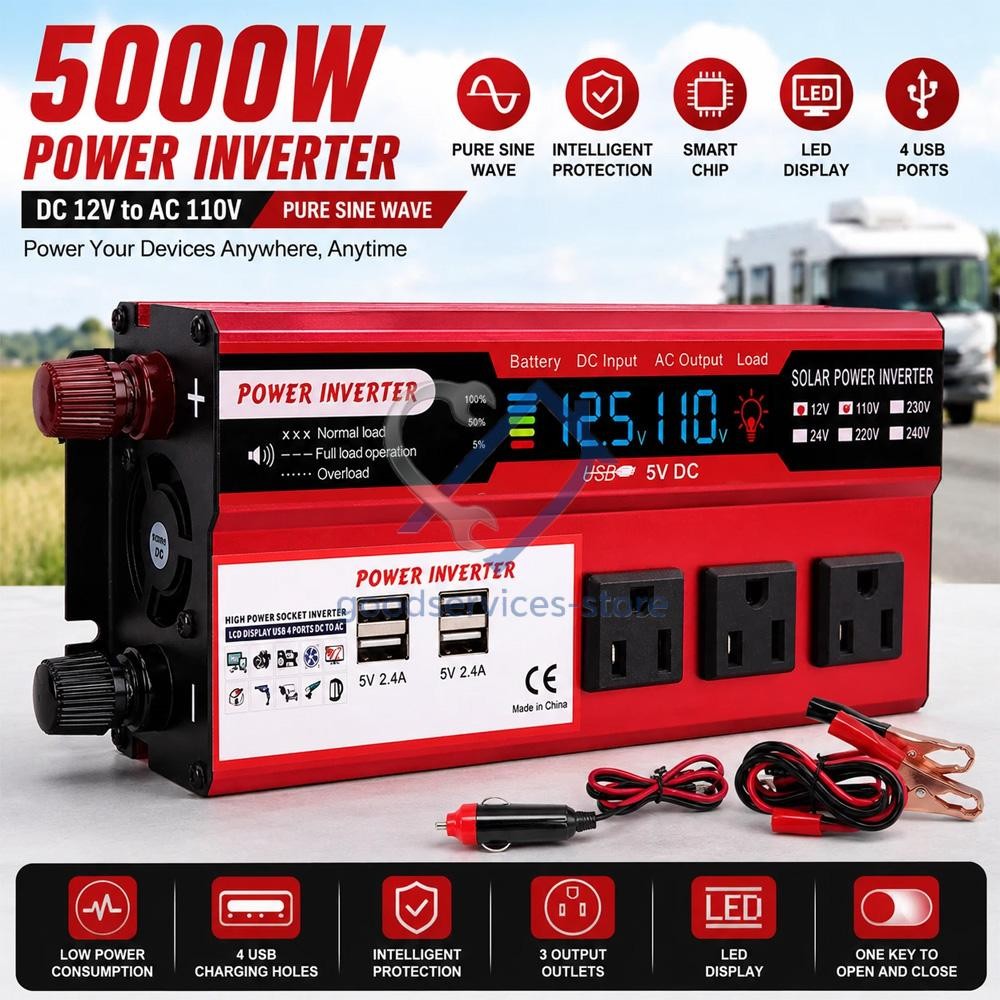 Car Power Inverter 5000W DC 12V To AC 110V Pure Sine Wave Solar Converter 4 USB$36.99View on eBay
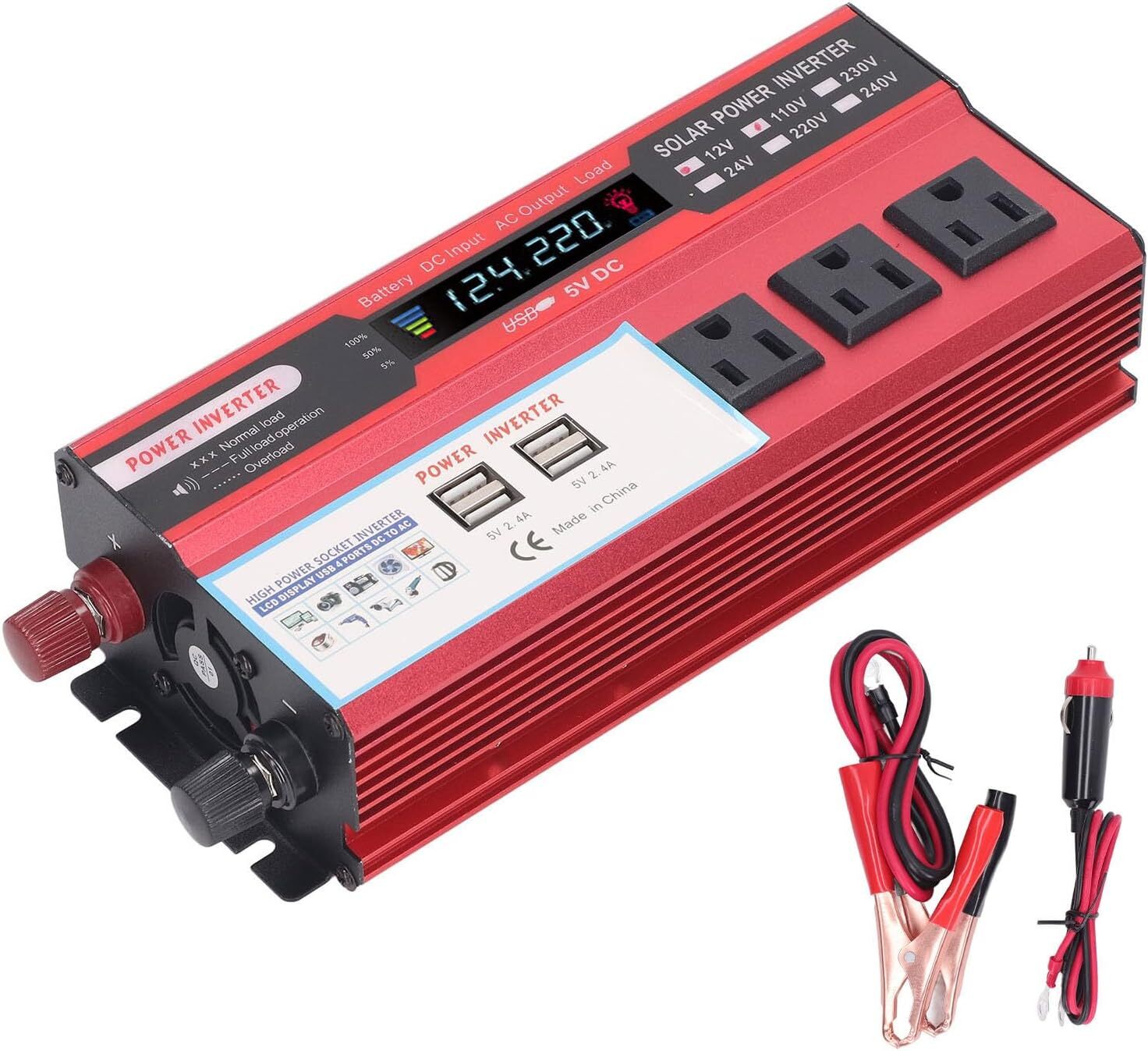 5000W Car Power Inverter DC 12V To AC 110V Pure Sine Wave Solar Converter LCD$37.99View on eBay
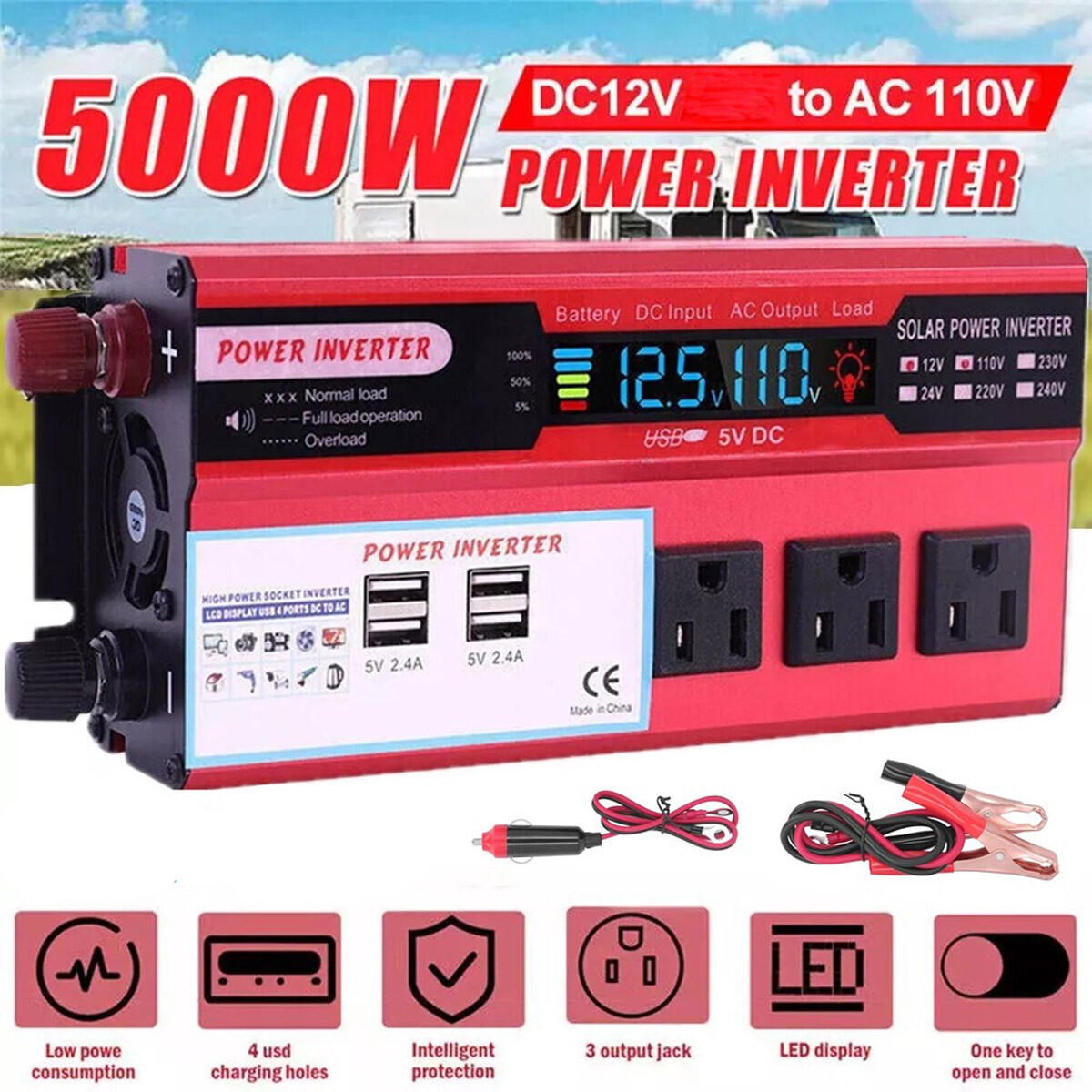 Car Power Inverter 5000W DC 12V To AC 110V Pure Sine Wave Solar Converter 4 USB$39.30View on eBay
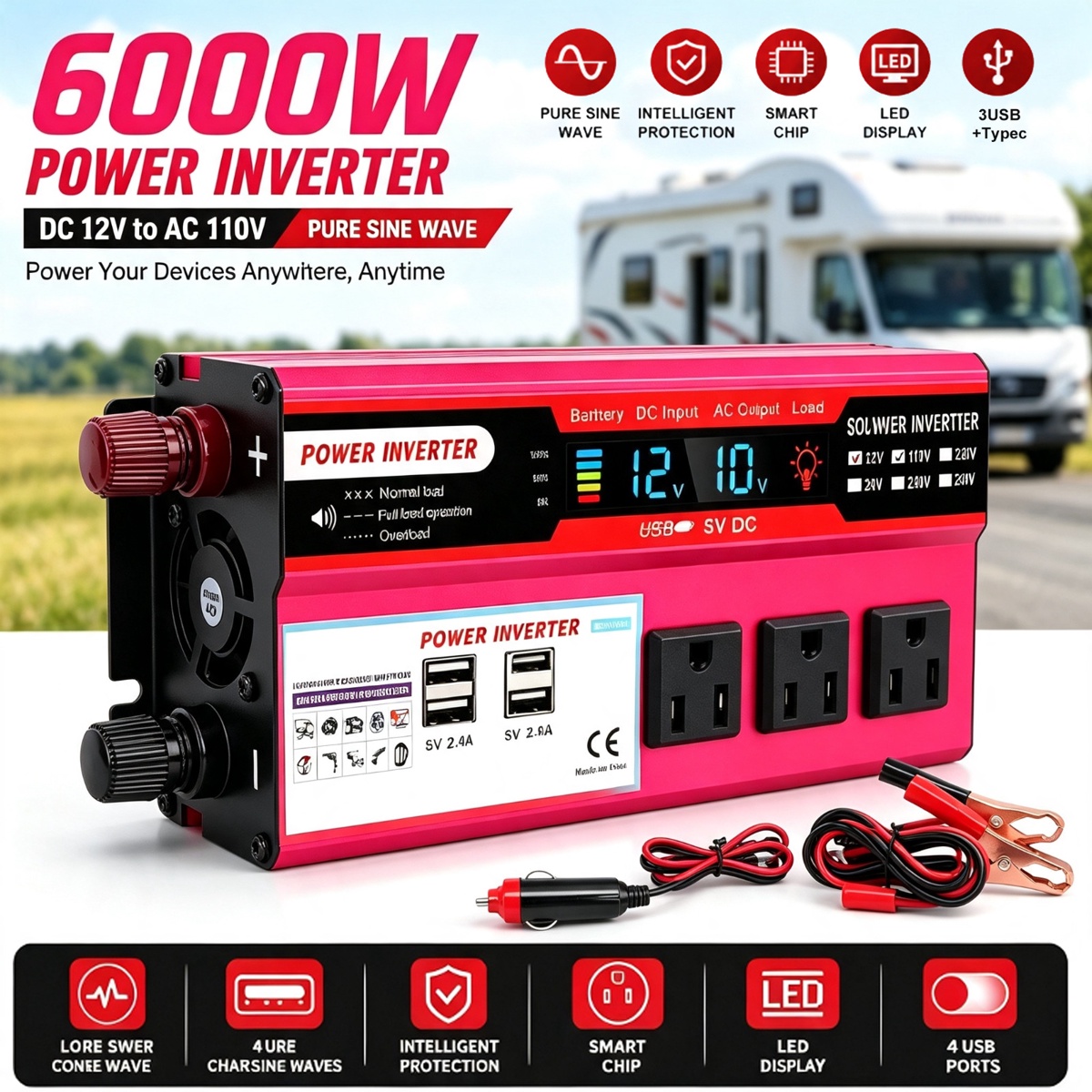 6000W Car Power Inverter DC 12V To AC 110V Pure Sine Wave Solar Converter USB$39.89View on eBay
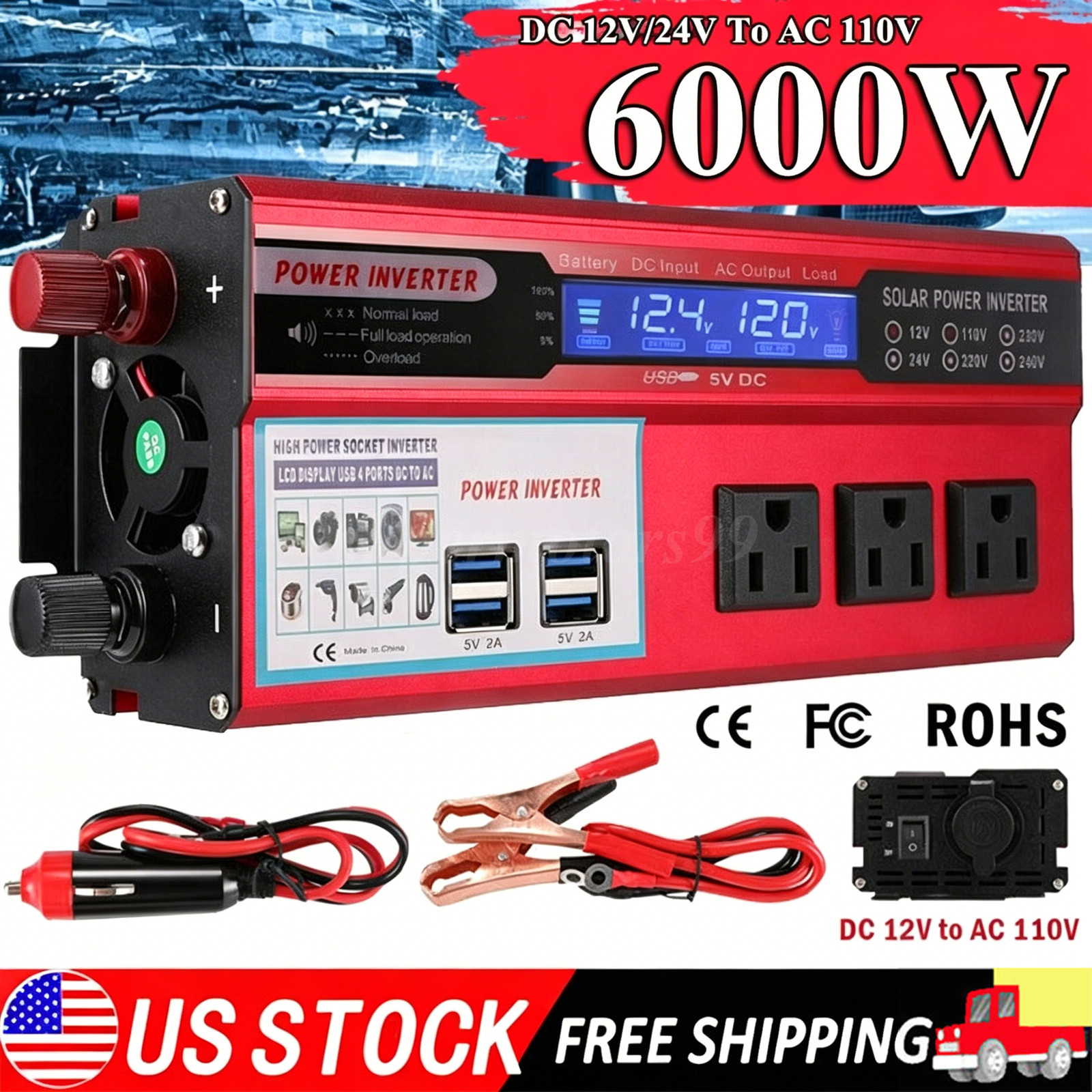 Pure Sine Wave Solar Converter 6000W Car Power Inverter DC 12V To AC 110V 4 USB$39.99View on eBay
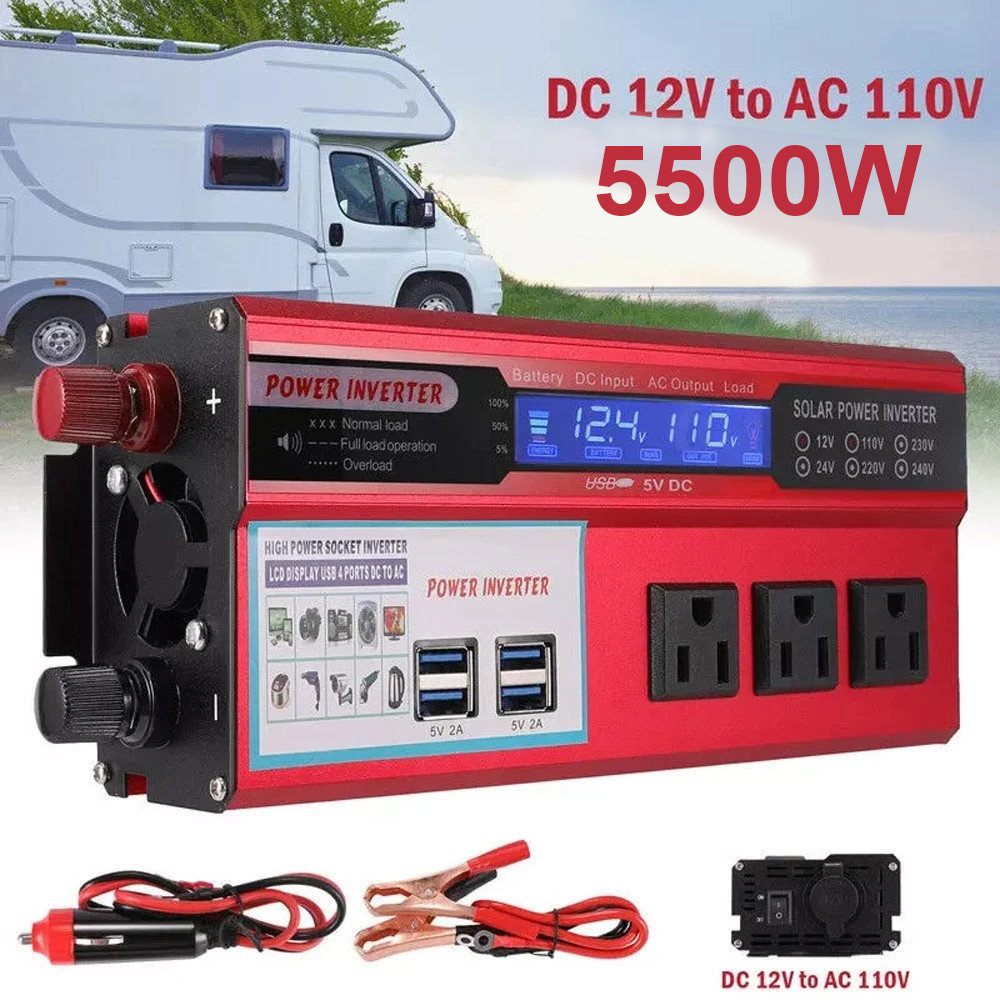 Car Power Inverter 5500W DC 12V To AC 110V Pure Sine Wave Solar Converter 4 USB$39.99View on eBay
Highlights
- Pure sine wave output (<3% THD) runs variable-speed motors, compressors, and audio gear cleanly; modified sine wave (step-approximated) can cause overheating, buzzing, and efficiency loss in those loads.
- Continuous wattage is the real limit — surge ratings (often double) last only seconds, so size the inverter continuous rating to cover all simultaneous loads, not just the largest one.
- A 12V DC input at 1000W continuous draws roughly 85-95A, requiring 4-6 AWG copper cabling and a 100-125A fuse; 24V systems halve the current and allow thinner wiring.
- Aluminum alloy heatsink bodies with fan cooling are standard; units lacking thermal shutdown, over-voltage, and reverse-polarity protection are the first to fail under sustained load.
Best use cases
- Best fit: road-trip charging and laptop power (under 300W continuous) — a compact modified sine wave 200-500W unit with USB ports is sufficient and space-efficient.
- Best fit: powering CPAP machines, refrigerators, or power tools from a vehicle or solar battery bank — choose pure sine wave at 1000W+ continuous with hardwired terminals, not a cigarette-lighter plug.
- Wrong fit: running a 5000W-labeled inverter from a standard 12V cigarette lighter — that circuit is typically fused at 15-20A (180-240W), so high-wattage units must be clamped directly to the battery with heavy cable.
- Wrong fit: powering laser printers, medical devices, or surge-sensitive electronics on modified sine wave — the stepped waveform can cause faults; skip modified units entirely for these loads.
Buying tips
- Size by continuous watts: add the running watts of every device you'll power at once, then add 20-30% headroom; ignore peak/surge marketing numbers as your sizing basis.
- Match DC input to your system: 12V inverters suit cars and single-battery setups; 24V units are for dual-battery or solar banks and require matching battery configuration.
- Choose pure sine wave if any load has a motor, compressor, or sensitive electronics; modified sine wave is only for resistive loads (heaters, incandescent lights) and simple chargers.
- Plan for wiring: inverters above ~300W need direct battery connection with appropriately gauged copper cable and an inline fuse; cigarette-lighter plugs cap practical output near 150-200W.
Specs
| Waveform Type | Pure sine vs modified sine wave |
|---|---|
| Continuous Wattage | 150W-5000W (size by continuous) |
| DC Input Voltage | 12V car / 24V dual-battery systems |
| AC Output Standard | 110-120V NEMA or 220-240V EU |
Related searches
What to check before buying
- Measure your vehicle's cigarette-lighter circuit fuse rating (typically 15-20A) to confirm the maximum wattage you can safely draw from that outlet.
- Confirm battery bank voltage (12V vs 24V) and reserve capacity — a 1000W load can drain a standard car battery in under an hour with the engine off.
- Verify outlet type: North American 110-120V NEMA 5-15 vs European 220-240V Schuko/UK, matching your appliances' plug standard.
- Check installation space and ventilation — heatsink units need several inches of clearance and should not be enclosed where fan exhaust recirculates.
FAQ
Data sources: eBay / Amazon listings and product attribute feeds Data updated Nov 15, 2026.
Some links on this page are affiliate links. If you buy after clicking one, we may earn a commission at no extra cost to you. This does not change which products appear here or their order. Affiliate disclosure.