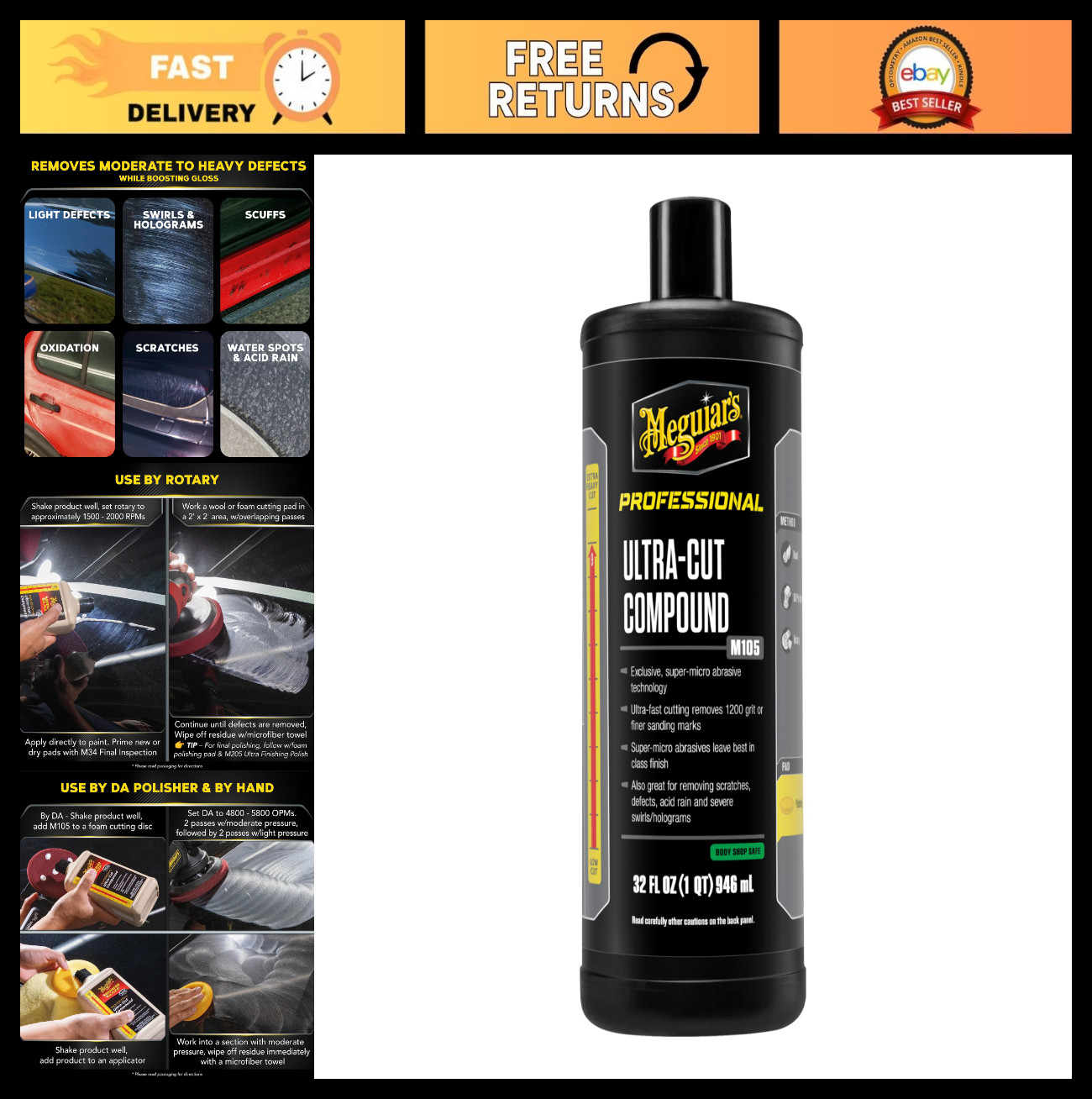

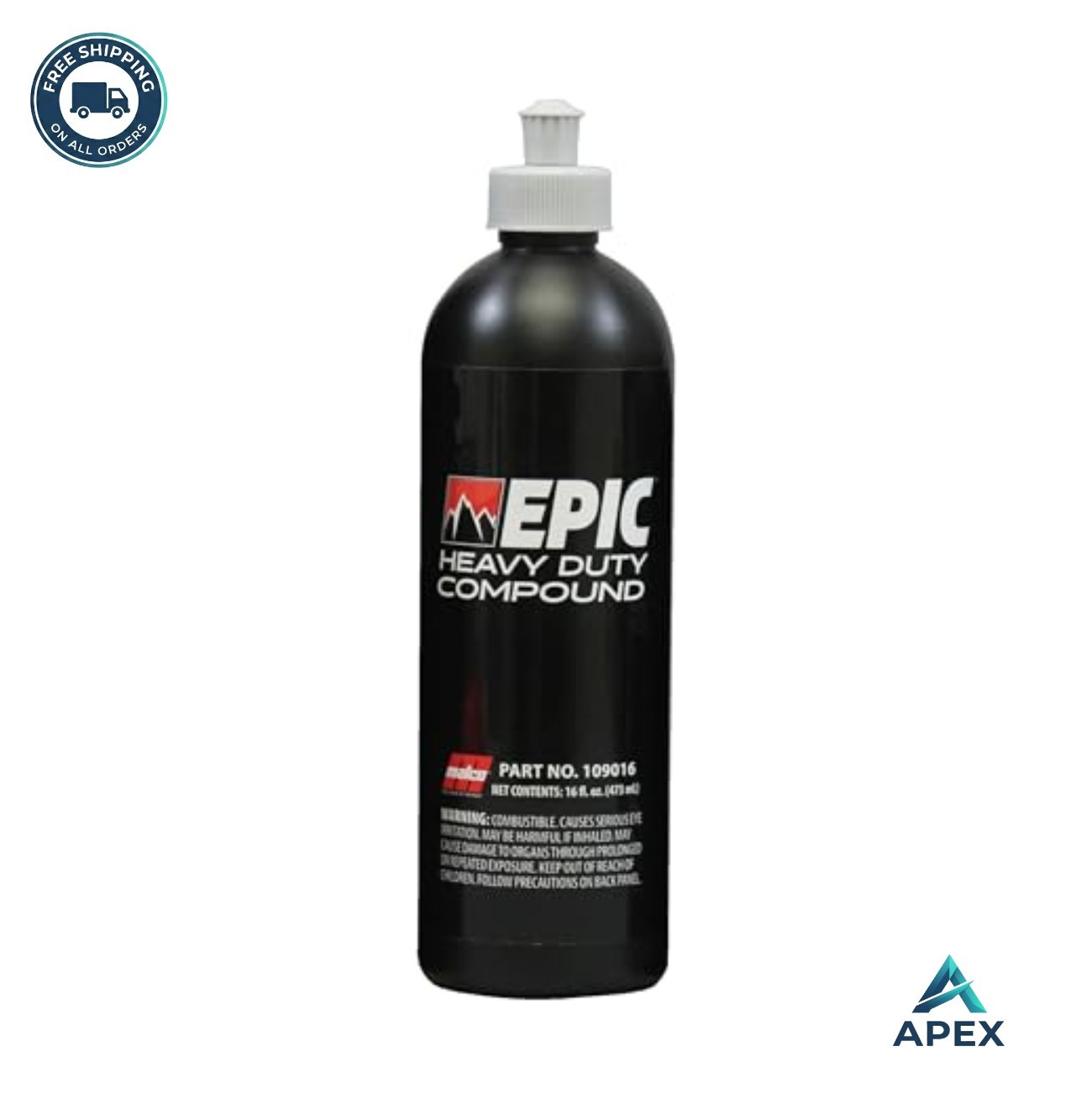
Photos from current listings. Actual item, color, and included accessories may vary.
Car Polishing Compound Buying Guide
Car polishing compound is an abrasive paste that removes oxidation, swirl marks, and sanding scratches before waxing or coating. The core trade-off is cut rate versus finish quality: aggressive heavy-cut compounds erase P1500 scratches fast but leave haze, while fine polishes restore gloss but remove little material. The decision rule is to match compound aggressiveness to your paint's hardest defect and pad type, and only step down to a finer grade once defects are gone.


At a glance
- Category
- Car Polishers & Compounds
- Data updated
- Nov 15, 2026
Current offers
Highlights
- Aggressiveness is graded by abrasive type and cut level: heavy-cut compounds use coarse aluminum oxide or silica to remove P1200–P1500 sand scratches, while finishing polishes use diminishing micro-abrasives for gloss.
- Diminishing vs. non-diminishing abrasives determine cycle time: diminishing abrasives break down during the buffing cycle and finish finer, while non-diminishing (SMAT) abrasives stay consistent and require separate grades.
- Liquid vs. paste format affects work time: liquids spread evenly and suit dual-action orbitals, while pastes stay on the pad longer and are favored for rotary heavy cutting.
- Pad pairing is not optional: a heavy-cut compound on a wool or microfiber cutting pad delivers maximum defect removal, but the same compound on a foam finishing pad leaves micromarring and wasted effort.
Best use cases
- Best fit: a car with moderate swirl marks and light oxidation needs a one-step medium-cut compound on a foam polishing pad, then a sealant—skip heavy-cut pastes that remove clear coat unnecessarily.
- Best fit: fresh P1500 wet-sanded panels require a heavy-cut compound on a microfiber or wool pad first, followed by a fine polish on foam; do not attempt a finishing polish alone on sand scratches.
- Wrong fit: a daily driver with only wash-induced micro-marring should skip heavy compounds and use a fine finishing polish—aggressive abrasives on thin factory clear coat risk burn-through.
- Wrong fit: hand application with a heavy-cut compound on a scratch-prone single-stage paint will leave uneven haze and take hours; use a dual-action polisher with a medium-cut compound instead.
Buying tips
- Match cut grade to defect depth: choose heavy-cut for P1200–P1500 sand scratches, medium-cut for swirls and oxidation, and fine polish for haze and gloss restoration.
- Check abrasive technology: diminishing-abrasive compounds finish finer per cycle and suit beginners on dual-action polishers; non-diminishing (SMAT) compounds require a defined multi-step sequence.
- Size the bottle to your workload: a 16 oz bottle covers roughly one full vehicle with 4–6 pads; 32 oz sizes suit multi-car or repeated correction work before reordering.
- Pair compound with pad aggressiveness: heavy-cut compound + wool/microfiber pad for cutting, medium compound + cutting foam, fine polish + finishing foam—never cross-pair aggressive compound with soft finishing pads.
Specs
| Cut Grade | Heavy / Medium / Fine polish |
|---|---|
| Abrasive Type | Diminishing vs non-diminishing (SMAT) |
| Format | Liquid / Paste / Spray |
| Pad Pairing | Wool / Microfiber / Foam |
Related searches
What to check before buying
- Confirm your clear coat thickness or paint type: factory clear coats tolerate 2–3 heavy-cut passes, while single-stage or repainted panels need medium-cut only.
- Verify you own a dual-action or rotary polisher with the correct backing plate diameter—hand application cannot replicate machine cut rates on heavy compounds.
- Check pad inventory: at least two cutting pads and two finishing pads per vehicle prevent heat buildup and compound caking during a full correction.
- Confirm climate and workspace: work between 60–80°F in shaded, dust-free conditions; cold compound stiffens and hot panels flash-dry, reducing work time.
FAQ
Data sources: eBay / Amazon listings and product attribute feeds Data updated Nov 15, 2026.
Some links on this page are affiliate links. If you buy after clicking one, we may earn a commission at no extra cost to you. This does not change which products appear here or their order. Affiliate disclosure.