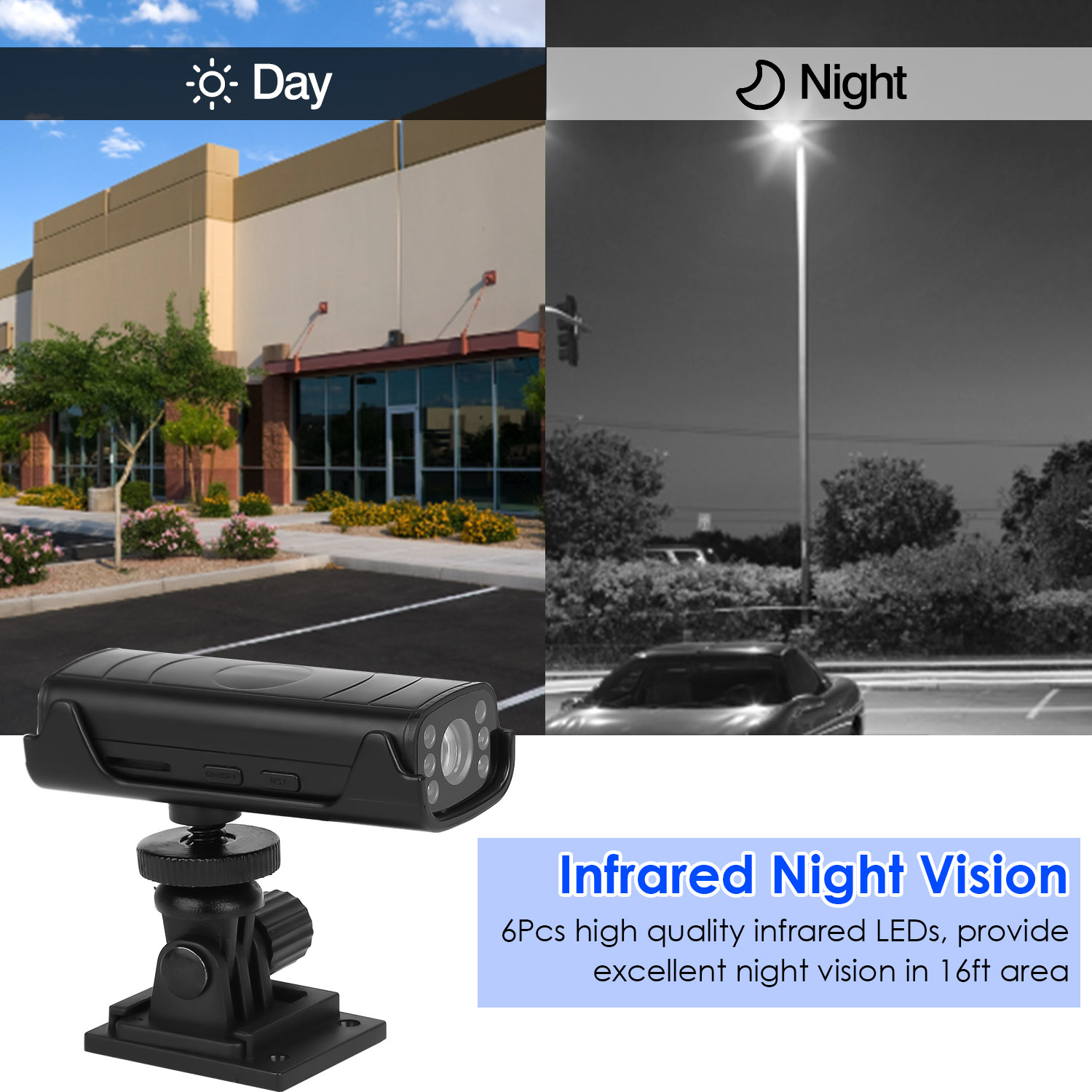

Photos from current listings. Actual item, color, and included accessories may vary.
Wireless Vehicle Camera Buying Guide
Wireless vehicle cameras replace a long video cable with a local radio link between a battery- or vehicle-powered camera and a dash or mirror monitor. The core trade-off is convenience versus signal integrity: analog 2.4 GHz kits are cheap but interference-prone, while digital FHSS/5 GHz systems and solar or wired-power cameras cost more and stay stable. Buy a digital link with a rated line-of-sight range at least double your vehicle length plus trailer, and skip analog kits for anything longer than a car.


At a glance
- Category
- Car Electronics
- Data updated
- Nov 16, 2026
Current offers
Highlights
- Transmission: analog 2.4 GHz vs digital FHSS; digital hopping resists Wi-Fi and Bluetooth interference and is the minimum for trailers and RVs.
- Power architecture: rechargeable magnetic/suction camera (hours per charge) vs solar top-up vs hardwired to reverse lamp for always-on power.
- Sensor and night vision: CMOS sensor with IR LEDs gives usable low-light image; check IP67 or higher for exterior mounting.
- Monitor link: dedicated wireless monitor vs phone Wi-Fi app; dedicated monitors pair instantly and avoid dropping the link when the phone switches networks.
Best use cases
- Best fit: trailer or RV owner — pick a digital FHSS kit with a repeater or extended-range antenna rated well beyond total rig length, not a basic analog car kit.
- Best fit: daily driver adding a temporary backup camera — a rechargeable magnetic-base camera with a 4.3-5 inch dash monitor installs in minutes and moves between vehicles.
- Wrong fit: commercial fleet needing continuous recording — wireless backup kits are live-view only; choose a wired dash camera with parking-mode recording instead.
- Wrong fit: long-bed pickup towing a long trailer with a metal-walled cargo box — RF-blocking metal and distance demand a wired camera or a repeater-equipped digital system.
Buying tips
- Range rule: choose a kit rated at least 2x your camera-to-monitor distance; ratings are line-of-sight, and vehicle bodies cut effective range by roughly half.
- Power rule: rechargeable cameras need removal for charging every few days; hardwire to the reverse lamp for automatic trigger, or pick solar if the camera stays mounted outdoors.
- Display rule: 4.3-5 inch monitors suit cars; 7 inch and larger suit RVs and trucks where the screen sits farther from the driver.
- Pairing rule: digital kits pair a camera to a monitor one-to-one or one-to-four; confirm the monitor supports the number of cameras you plan to add before buying.
Specs
| Transmission | Digital FHSS vs analog 2.4 GHz |
|---|---|
| Camera Power | Rechargeable / solar / 12V hardwire |
| Weather Rating | IP67 or higher for exterior |
| Monitor Size | 4.3-5 in car / 7 in+ RV |
Related searches
What to check before buying
- Measure camera-to-monitor distance including trailer length; compare against the kit's line-of-sight range rating, not its marketing headline.
- Check mounting surface: metal body panels accept magnetic bases; plastic bumpers, glass, and RV fiberglass need adhesive or screw mounts.
- Confirm voltage: 12V/24V compatibility for RVs and trucks; USB-rechargeable cameras need a 5V source or periodic indoor charging.
- Verify monitor mounting space and power: dash suction, windshield adhesive, or mirror-clip, plus a 12V socket or hardwire harness.
FAQ
Data sources: eBay / Amazon listings and product attribute feeds Data updated Nov 16, 2026.
Some links on this page are affiliate links. If you buy after clicking one, we may earn a commission at no extra cost to you. This does not change which products appear here or their order. Affiliate disclosure.