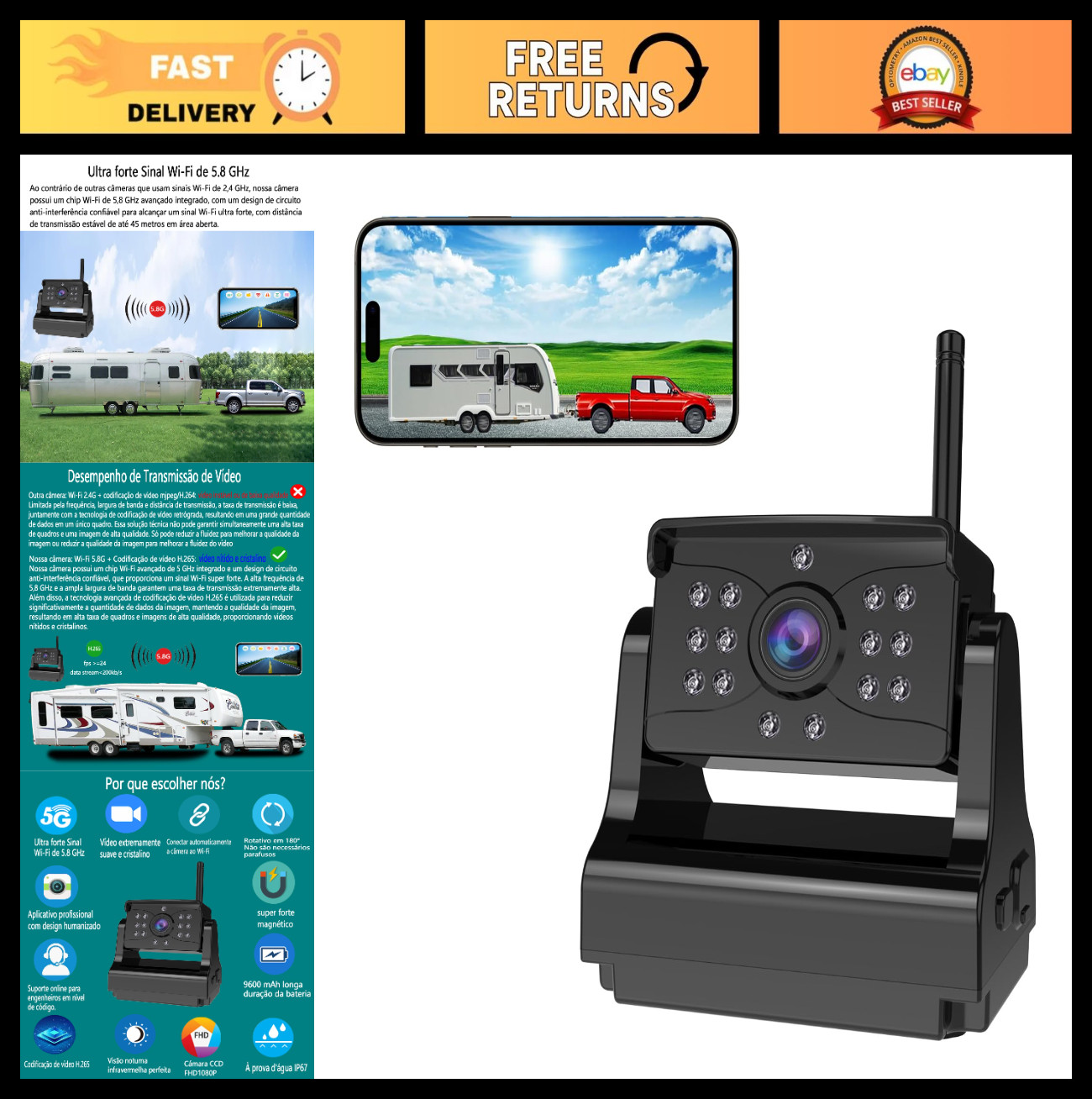

Photos from current listings. Actual item, color, and included accessories may vary.
Wireless Magnetic Backup Camera Buying Guide
A wireless magnetic backup camera pairs a battery-powered camera with a magnetic mount and a Wi-Fi or 2.4 GHz wireless link to a dash or windshield monitor, eliminating the need to fish video cable through the vehicle. The core trade-off is mounting security and power autonomy versus image latency and night clarity: strong neodymium magnets plus a large Li-ion cell add bulk, while smaller magnets and low-capacity cells risk detachment and frequent recharging. Buy durable options by confirming a neodymium N52-grade magnet base with a mechanical safety tether, a battery of at least 3000 mAh or a solar top-up, and a 2.4 GHz or 5 GHz link rated for at least 30 ft of unobstructed range.


At a glance
- Category
- Car Electronics
- Data updated
- Nov 16, 2026
Current offers
Highlights
- Magnetic holding force scales with magnet grade: N52 neodymium discs deliver roughly 2-3x the pull of common N35 ferrite-backed pads, so specify N52 and a steel mounting plate, not bare paint.
- Battery runtime is governed by cell capacity and trigger mode: a 3000-5000 mAh Li-ion pack supports 30-60 days of standby with motion-triggered recording, while always-on live view drains the same cell in hours.
- Wireless link architecture matters: 2.4 GHz FHSS links tolerate parking-lot interference better than single-channel Wi-Fi, while 5 GHz Wi-Fi gives sharper near-field video at the cost of shorter range and weaker wall penetration.
- Night performance is set by sensor and IR hardware: a Sony IMX-series or STARVIS sensor with 6-8 IR LEDs and IP68 sealing holds usable color/low-light detail, whereas IP65 or 4-LED units wash out beyond about 15 ft.
Best use cases
- Best fit: trailers, RVs, horse boxes, and tow-behind rigs where you move the camera between vehicles — pick an N52 magnetic base with a safety tether and a 5000 mAh or solar-assisted battery.
- Best fit: daily-driver hatchbacks, vans, and trucks needing a temporary or lease-safe install — choose a 2.4 GHz FHSS kit with a dash/windshield monitor and motion-triggered standby to preserve battery.
- Wrong fit: buyers wanting always-on live rearview while driving — skip battery magnetic units and install a wired or vehicle-powered camera, because continuous streaming drains the cell in hours and adds latency.
- Wrong fit: off-road or high-vibration mounting on plastic bumpers or aluminum bodies — skip magnet-only mounts unless a steel plate and mechanical tether are included, since bare plastic and aluminum give no magnetic hold.
Buying tips
- Size the battery to your trigger pattern: 3000-5000 mAh supports roughly 30-60 days of motion-triggered standby; if you need continuous live view, budget for a vehicle-powered or solar-charged unit instead.
- Match monitor and camera link: a 2.4 GHz FHSS system with at least 30 ft range suits trailers and long vehicles, while 5 GHz Wi-Fi gives sharper near-field video but drops off past about 20-30 ft or through metal bulkheads.
- Demand N52 neodymium magnets with a steel mounting plate and a safety tether; N35 or ferrite pads and magnet-only contact on painted plastic are the common failure point at highway speed.
- Confirm IP68 sealing and a sensor with at least 6 IR LEDs for night use; IP65 housings and 4-LED arrays are fair-weather units that fog or wash out in rain and low light.
Specs
| Magnet Grade | N52 neodymium + steel plate |
|---|---|
| Battery Capacity | 3000-5000 mAh Li-ion / solar |
| Wireless Link | 2.4 GHz FHSS vs 5 GHz Wi-Fi |
| Night Rating | IP68, 6-8 IR LEDs, STARVIS-class |
Related searches
What to check before buying
- Measure your mounting surface: the magnet needs a flat steel area at least as wide as the base plate (typically 60-80 mm); plastic bumpers and aluminum bodies require the included steel plate or a bracket.
- Check monitor power and placement: dash or windshield monitors run on 12 V accessory sockets or USB-C, so confirm your socket count and whether the monitor blocks a sun visor or airbag zone.
- Verify vehicle voltage and plug standard: passenger cars use 12 V DC negative-ground sockets, while heavy trucks and RVs may be 24 V — choose a kit with a 12/24 V-compatible adapter.
- Plan recharge access: magnetic battery cameras must be removed or plugged in to charge, so confirm the camera is reachable by hand or includes a quick-release mount for off-vehicle charging.
FAQ
Data sources: eBay / Amazon listings and product attribute feeds Data updated Nov 16, 2026.
Some links on this page are affiliate links. If you buy after clicking one, we may earn a commission at no extra cost to you. This does not change which products appear here or their order. Affiliate disclosure.