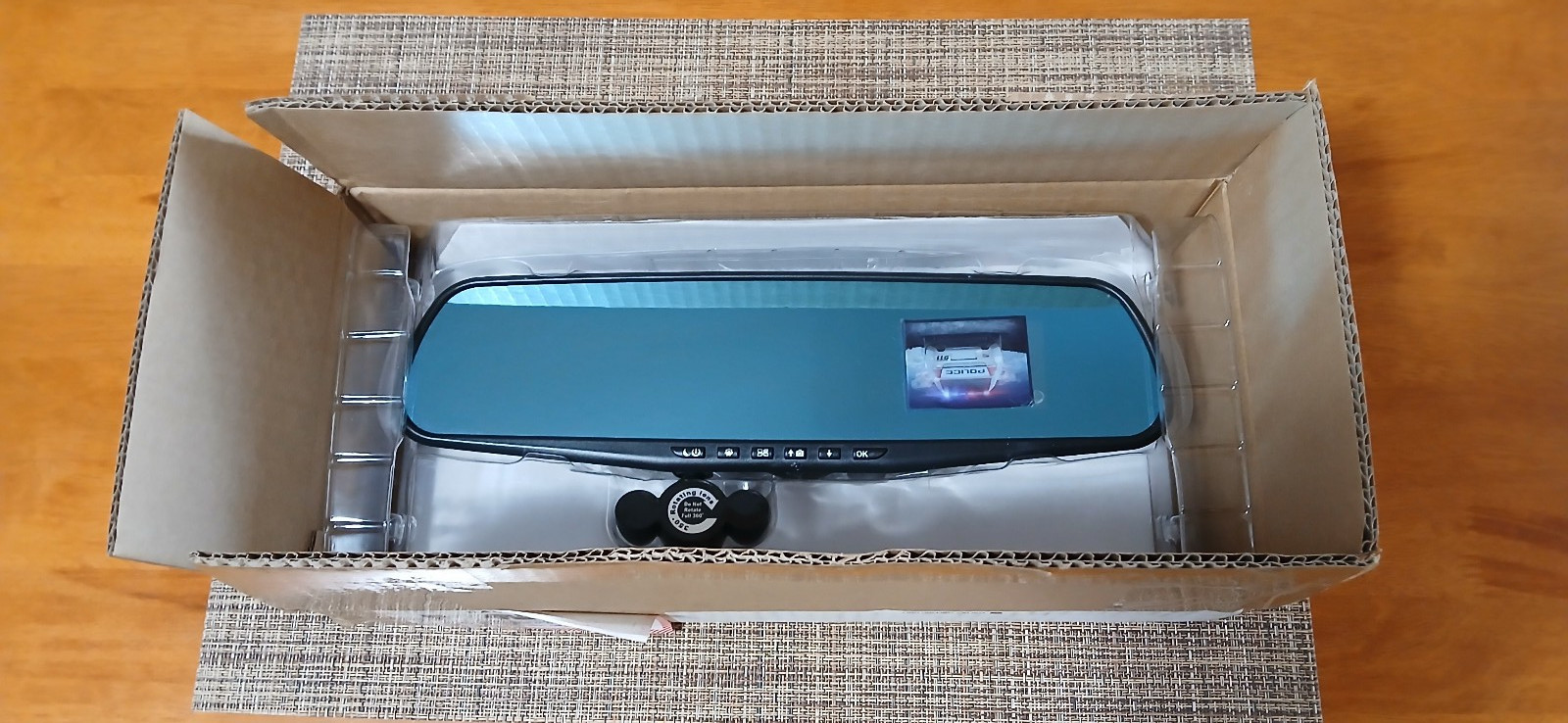

Photos from current listings. Actual item, color, and included accessories may vary.
Rear Dashcam Buying Guide
A rear dashcam is a dedicated camera that records the road behind your vehicle, either as a standalone unit or as the rear channel of a dual-channel system. The core trade-off is between a mirror-integrated display that replaces your rearview mirror and a compact standalone camera that mounts on the glass—each affects installation, visibility, and recording reliability. Choose a rear camera with at least 1080p resolution, a wide dynamic range sensor, and a supercapacitor rather than a lithium battery for heat durability; avoid low-resolution, battery-powered units that fail in summer heat.


At a glance
- Category
- Car Electronics
- Data updated
- Nov 16, 2026
Current offers
Highlights
- Mirror-integrated rear dashcams replace the rearview mirror and often include a front camera; standalone rear cameras mount separately and require a power source and video cable to the front unit.
- Supercapacitor power is standard for heat resistance in parked cars; lithium-ion batteries degrade quickly above 60°C and are a common failure point in rear dashcams.
- Rear camera resolution of 1080p at 30fps is the practical minimum for reading license plates; 2K or 4K rear channels improve detail but increase storage and processing demands.
- Dual-channel systems use either a single front unit with a rear camera connected by cable (most common) or two independent cameras synchronized by Wi-Fi; cable systems are more reliable for continuous recording.
Best use cases
- Best fit: daily commuters and rideshare drivers who need evidence in rear-end collisions—choose a dual-channel system with a 1080p rear camera, supercapacitor, and hardwire kit for parking mode.
- Best fit: drivers who want a clean install without a separate screen—pick a mirror-integrated dashcam with a rear camera input and auto-dimming, but confirm the mirror bracket fits your vehicle's mount.
- Wrong fit: buyers expecting to add a rear camera to an existing front-only dashcam—most front units lack rear camera inputs; you need a compatible dual-channel system or a standalone rear camera with its own power.
- Skip: cheap battery-powered rear cameras with adhesive mounts for hot climates; adhesive fails and batteries swell. Choose supercapacitor models with 3M VHB tape or screw mounts.
Buying tips
- Check the rear camera cable length: most kits include 6–10 meters (20–33 ft); measure from the front unit to the rear glass along your chosen route—SUVs and hatchbacks often need the longer cable.
- Verify the rear camera's field of view: 140–170 degrees covers multiple lanes; wider angles distort distance, so 150–160 degrees is the practical sweet spot for plate readability.
- Match the rear camera to the front unit's brand and model—rear cameras are often proprietary; a universal rear camera with a 4-pin connector may not work with your front dashcam.
- For parking mode, confirm the hardwire kit's voltage cutoff (11.8V–12.4V) and that the rear camera remains powered; some dual-channel systems only record the rear camera when the front is active.
Specs
| Rear Resolution | 1080p min / 2K-4K upgrade |
|---|---|
| Power Type | Supercapacitor vs Li-ion |
| Mount Type | Adhesive / Screw / Mirror-integrated |
| Cable Length | 6-10 m (20-33 ft) typical |
Related searches
What to check before buying
- Measure your rear glass mounting area: standalone rear cameras need a flat, clean surface at least 10 cm x 5 cm; mirror-integrated units require the mirror bracket pattern to match your car's windshield button.
- Confirm your vehicle's fuse box location and type (ATO, mini, micro2) for a hardwire kit; rear dashcams with parking mode need constant and accessory power fuses.
- Check storage: 1080p rear recording uses about 100 MB per minute; a 64 GB card holds roughly 8–10 hours before loop overwrite—choose a high-endurance microSD rated for dashcam use.
- Verify climate limits: supercapacitor dashcams typically operate from -20°C to 70°C; lithium battery models may fail above 60°C, so avoid battery-powered rear cameras in hot climates.
FAQ
Data sources: eBay / Amazon listings and product attribute feeds Data updated Nov 16, 2026.
Some links on this page are affiliate links. If you buy after clicking one, we may earn a commission at no extra cost to you. This does not change which products appear here or their order. Affiliate disclosure.