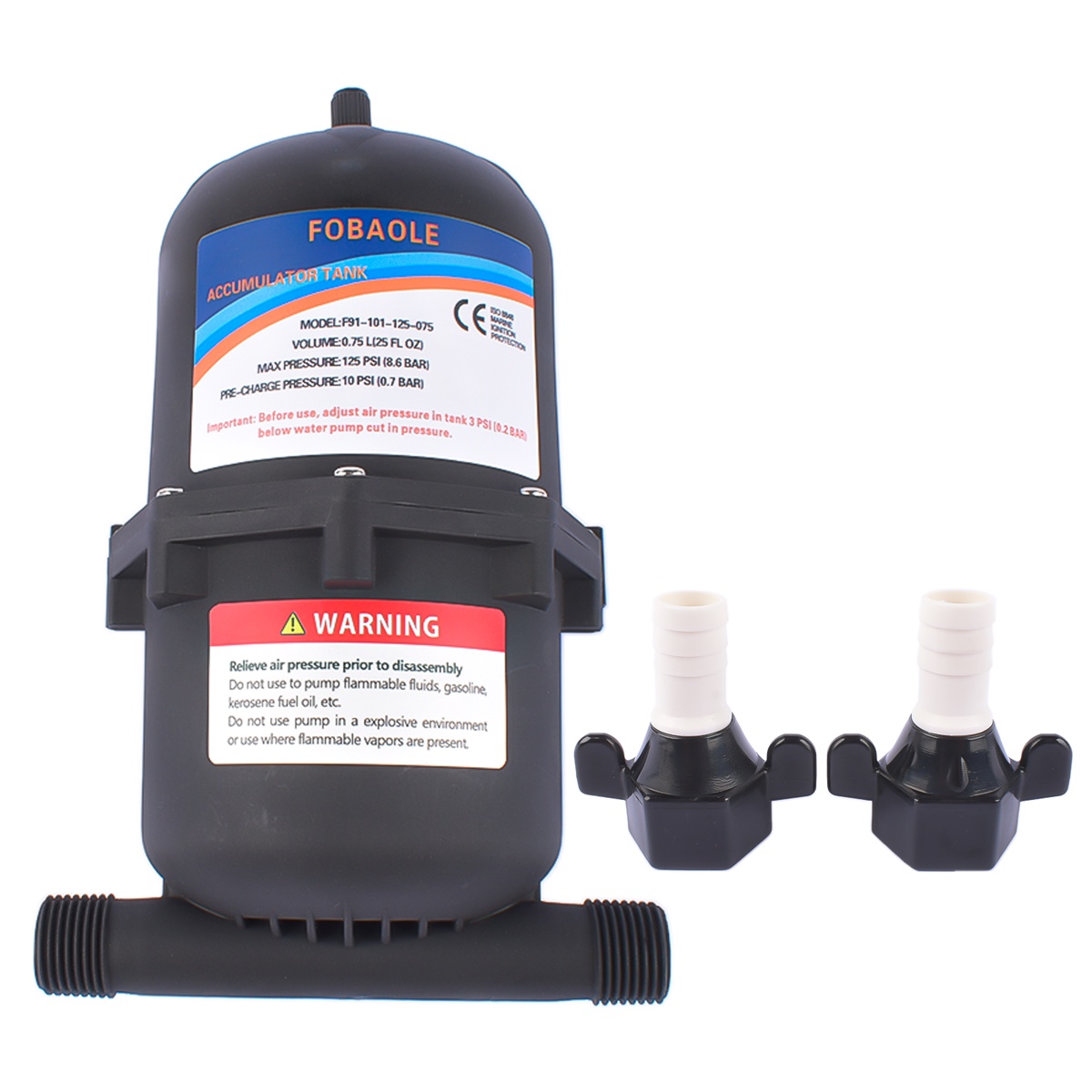

Photos from current listings. Actual item, color, and included accessories may vary.
Rv Water Tank With Pump Buying Guide
An RV water tank with pump is a complete onboard water storage and pressurization system for boondocking, overlanding, and off-grid trailers. The primary trade-off is between tank material/construction and pump architecture: food-grade poly tanks paired with demand pumps deliver reliable, quiet, freeze-resistant performance, while budget setups often cut corners on bladder quality and pressure ratings. The clear decision rule is to size the tank to your daily consumption plus a reserve, then match a pump whose pressure and flow ratings exceed your fixture requirements.


At a glance
- Category
- RV Water & Plumbing
- Data updated
- Nov 15, 2026
Current offers
Highlights
- Tank material grades are the top durability factor: food-grade polyethylene (HDPE) is the standard for potable water, while ABS tanks are lighter but can crack under UV and freeze cycles
- Pump architecture decides noise and longevity: demand pumps with bypass or variable-speed motors deliver constant pressure and run quieter than basic on/off pressure-switch pumps
- Accumulator tanks with an internal bladder (e.g., 0.75L, 125 psi rated) smooth pump cycling and reduce water hammer, extending pump life across all tank sizes
- Usable capacity is never full nominal capacity: standard draw is roughly 80-85% of tank volume before the pickup tube loses prime, so size up by at least 20%
Best use cases
- Boondocking for 2-4 people: pick a 30-50 gallon food-grade poly tank with a 3-5 GPM demand pump and a 0.75L bladder accumulator; skip small 10-15 gallon tanks that force daily refills
- Weekend trailer trips with hookups: a 20-30 gallon tank and a basic 2-3 GPM pump is sufficient; skip oversized 60+ gallon tanks that add tongue weight and fill time
- Cold-climate or four-season use: select tanks rated for freeze expansion and mount the pump inside a heated compartment; skip exterior-mounted pumps that trap water and crack
- Retrofit or replacement installs: match the pump's pressure rating to the existing plumbing and fixtures (typically 40-60 psi) and add an accumulator if the pump short-cycles
Buying tips
- Size the tank at 5-10 gallons per person per day for conservative use, then add 20% reserve for pickup-tube loss and freeze margin
- Match pump flow to fixture count: 2-3 GPM for a single sink and shower, 3-5 GPM for two simultaneous fixtures or an outdoor shower
- Choose food-grade HDPE or LLDPE tanks with molded fittings over ABS; confirm wall thickness and UV stabilization for exterior mounting
- Add a 0.5-1L bladder accumulator rated to at least 125 psi to reduce pump cycling, noise, and pressure spikes on any demand-pump system
Specs
| Tank Material | Food-grade HDPE vs ABS |
|---|---|
| Pump Flow Rate | 2-3 GPM vs 3-5 GPM demand |
| Pump Pressure | 40-60 psi typical RV range |
| Accumulator Rating | 0.5-1L bladder, 125 psi |
Related searches
What to check before buying
- Measure the mounting bay: tank dimensions must clear frame rails, wheel wells, and compartment doors with room for straps and fittings
- Confirm electrical supply: most demand pumps draw 5-10 amps at 12V DC, so verify fuse and wire gauge match the pump's rating
- Check plumbing compatibility: tank outlets and pump inlets typically use 1/2-inch NPT or barbed fittings; confirm thread type and hose size before assembly
- Assess freeze exposure: mount tanks and pumps inside insulated or heated spaces, or select freeze-rated components for sub-zero climates
FAQ
Data sources: eBay / Amazon listings and product attribute feeds Data updated Nov 15, 2026.
Some links on this page are affiliate links. If you buy after clicking one, we may earn a commission at no extra cost to you. This does not change which products appear here or their order. Affiliate disclosure.