Photos from current listings. Actual item, color, and included accessories may vary.
Diesel Heater Buying Guide
Diesel air heaters are stand-alone combustion heaters that burn diesel to heat RV interiors without relying on the engine, and the core trade-off is between all-in-one kits (fast install, smaller tank) and component-based builds (larger tank, custom mounting). Durable options use genuine ceramic glow plugs, stainless or aluminum heat exchangers, and proper CO safety controls; cheap compromises skimp on glow plug quality and altitude compensation.


At a glance
- Category
- RV Ventilation & Heating
- Data updated
- Nov 15, 2026
Current offers
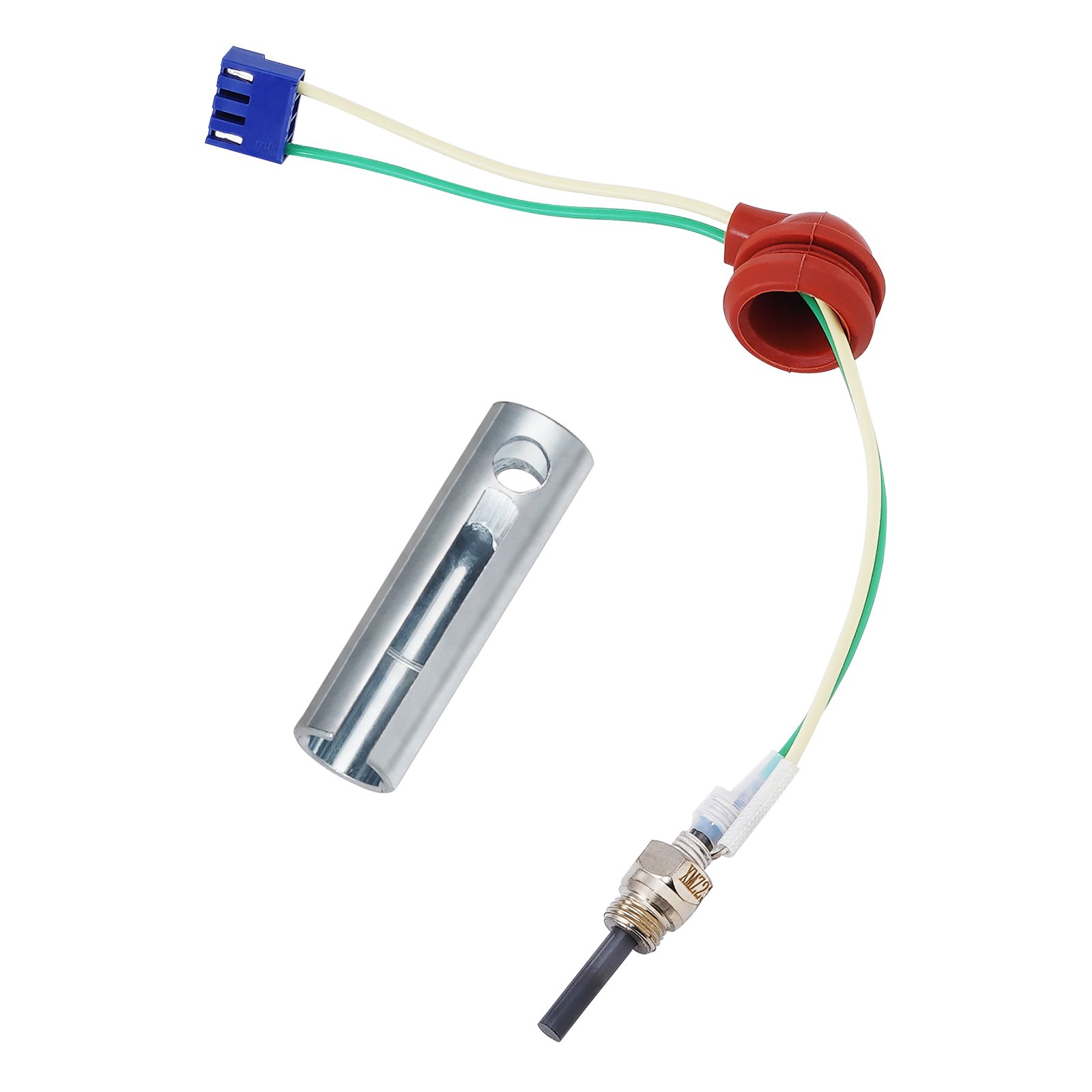 Diesel Heater Glow Plug Kit, Ceramic Repair Kit, Air Parking Part With Removal Fitting Tool, Rebuild Kit For 2KW/5KW/8KW Replacement$22.99
 View on Mallflare
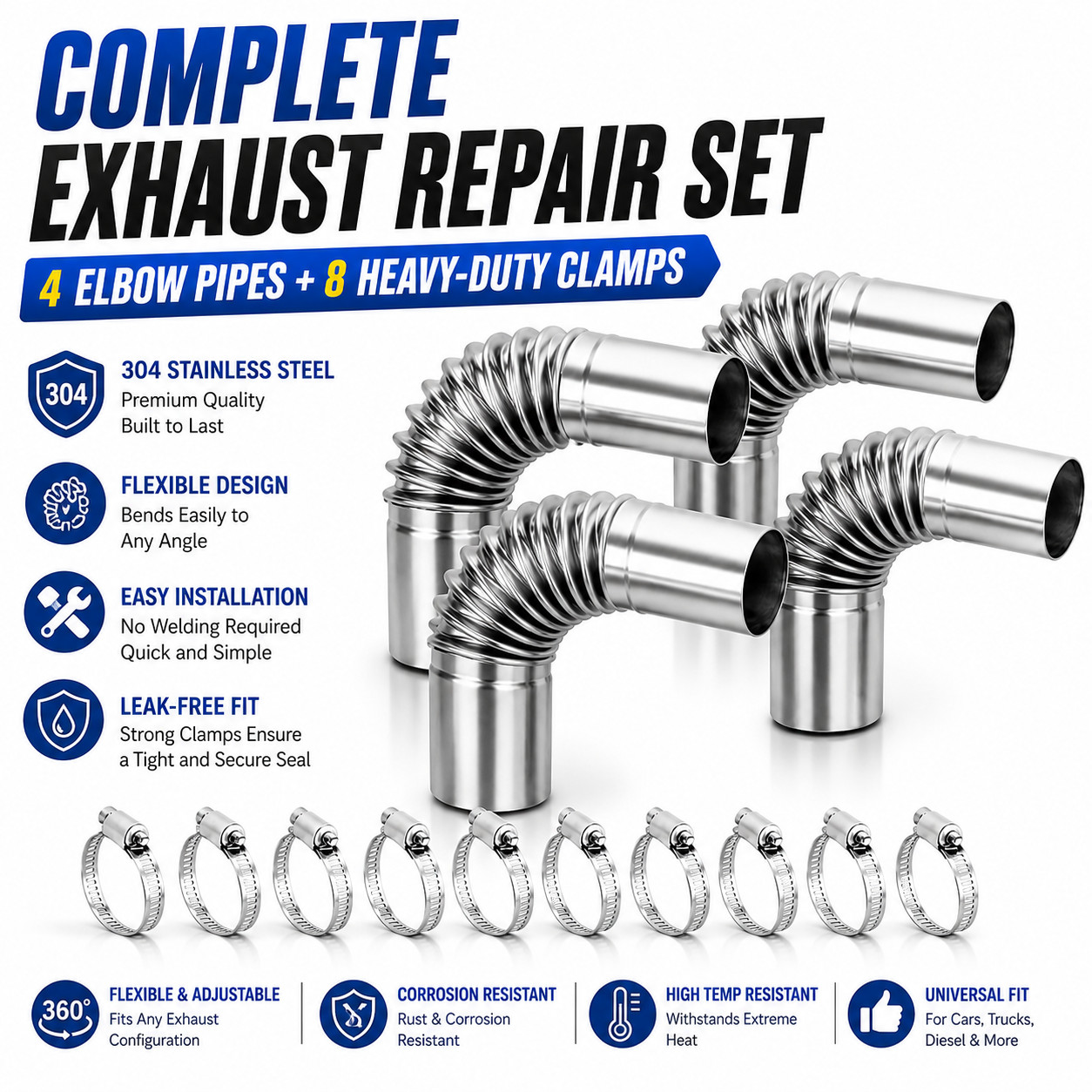 24mm -Diesel Heater Exhaust Pipe Tube Elbow Connector Webasto Eberspacher 4PCS$30.99View on Mallflare
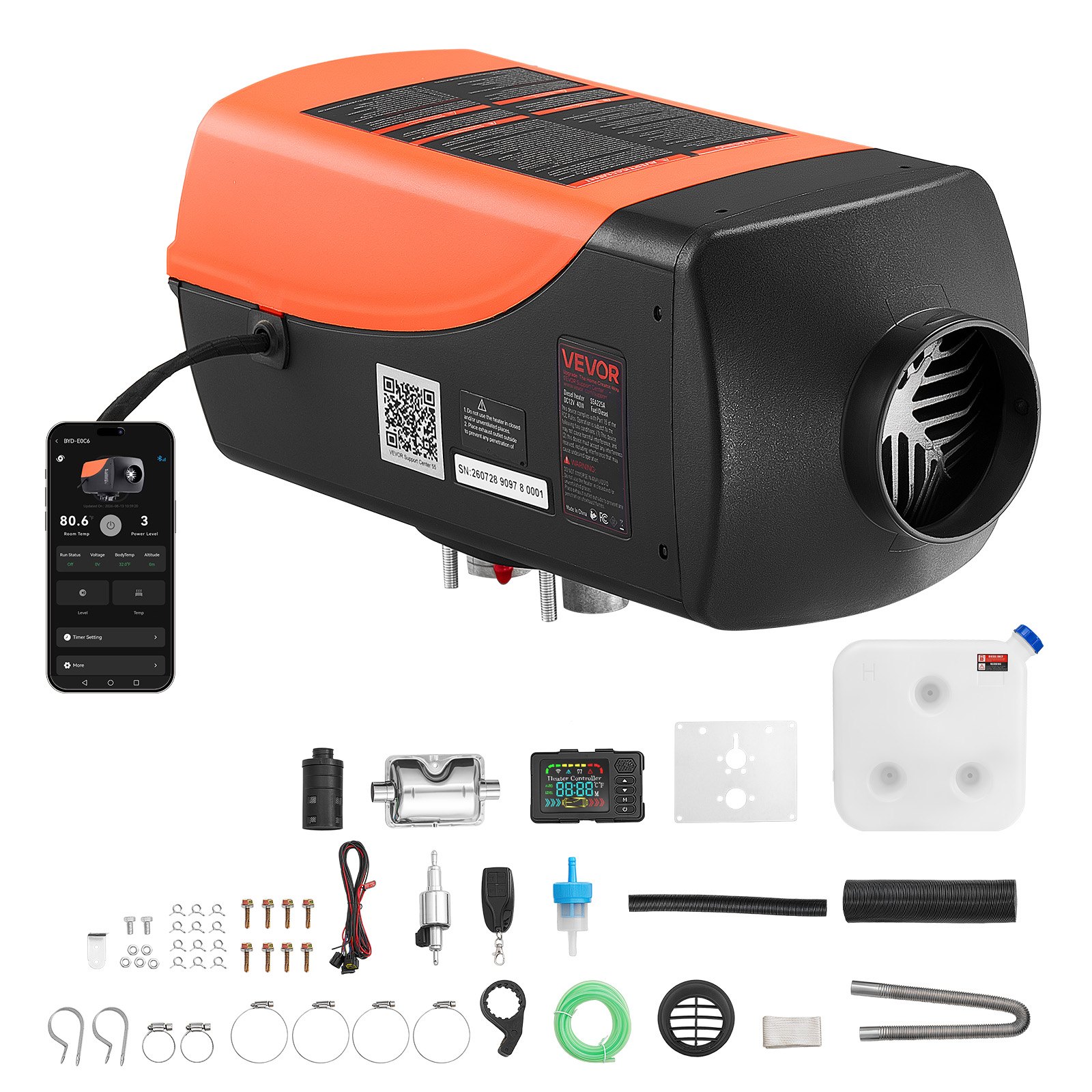 Diesel Heater DC 12V 10 L/2.6 Gal Fast Heating Air For Various Vehicles, Large Fuel Tank, with Bluetooth App Control, Remote and LCD Panel, Automatic Altitude Compensation$134.99View on Mallflare
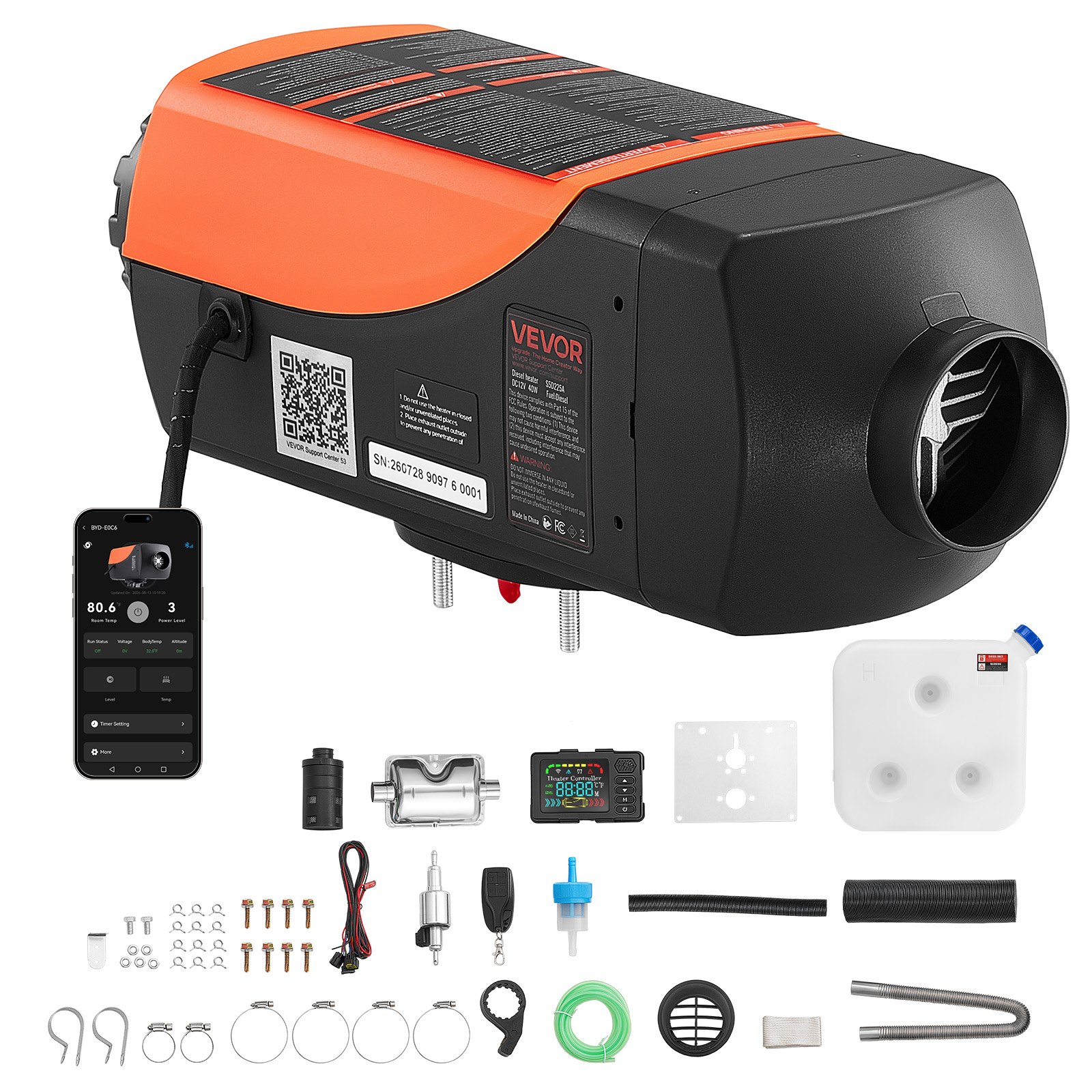 Diesel Heater DC 12V 10 L/2.6 Gal Large Fuel Tank Air For Various Vehicles, Fast Heating, with Bluetooth App Control, Remote and LCD Panel, Automatic Altitude Compensation$134.99View on Mallflare
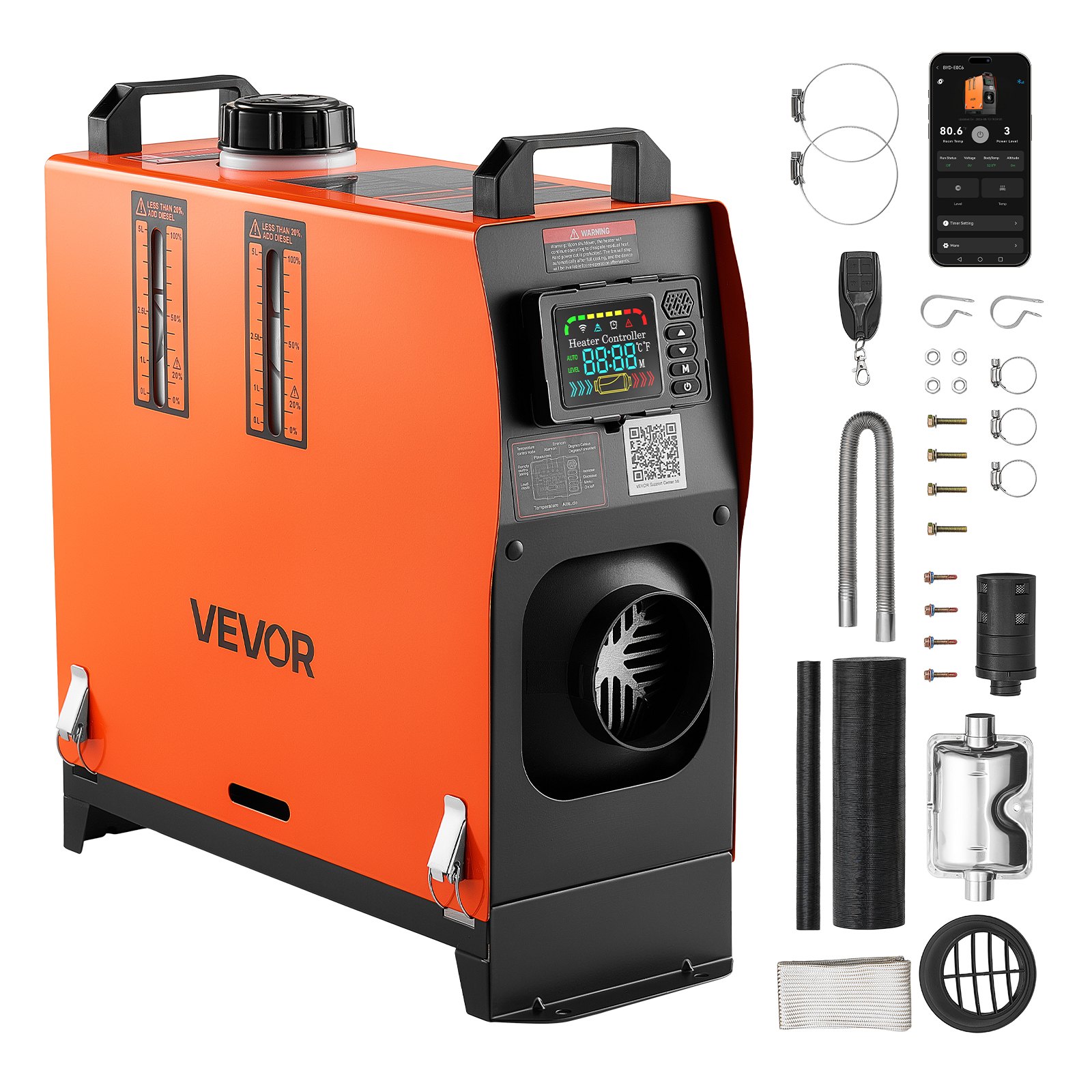 Diesel Heater DC 12V All-in-One 5 L/1.3 Gal Tank Air For Various Vehicles, Fast Heating with Bluetooth App Control, Remote and LCD Panel, Automatic Altitude Compensation$144.99View on Mallflare
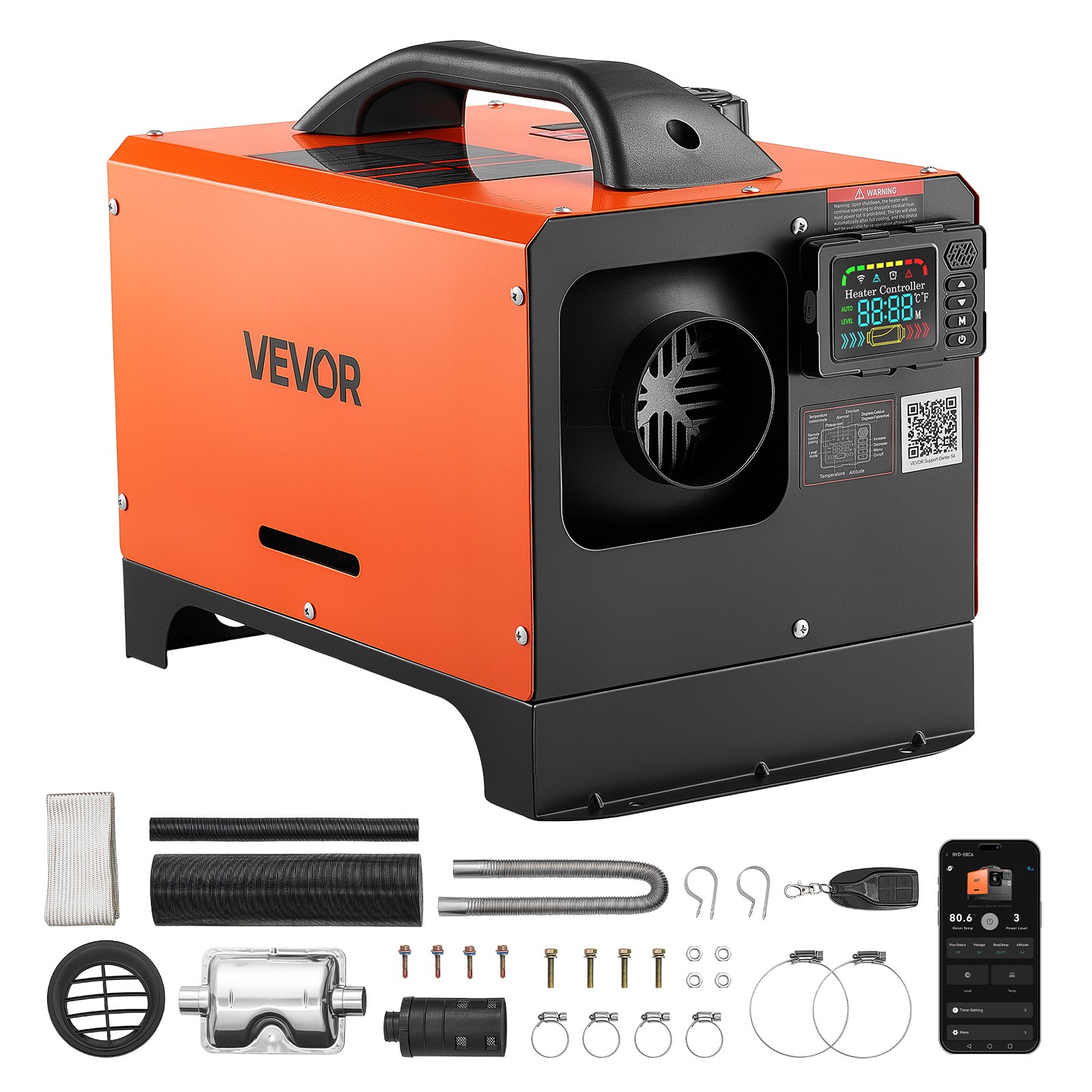 Diesel Heater DC 12 V All-in-One Fast Heating Air For Vehicles, with Bluetooth App Control, Remote and LCD Panel, Automatic Altitude Compensation, 5 L/1.3 Gal Tank$145.99View on Mallflare
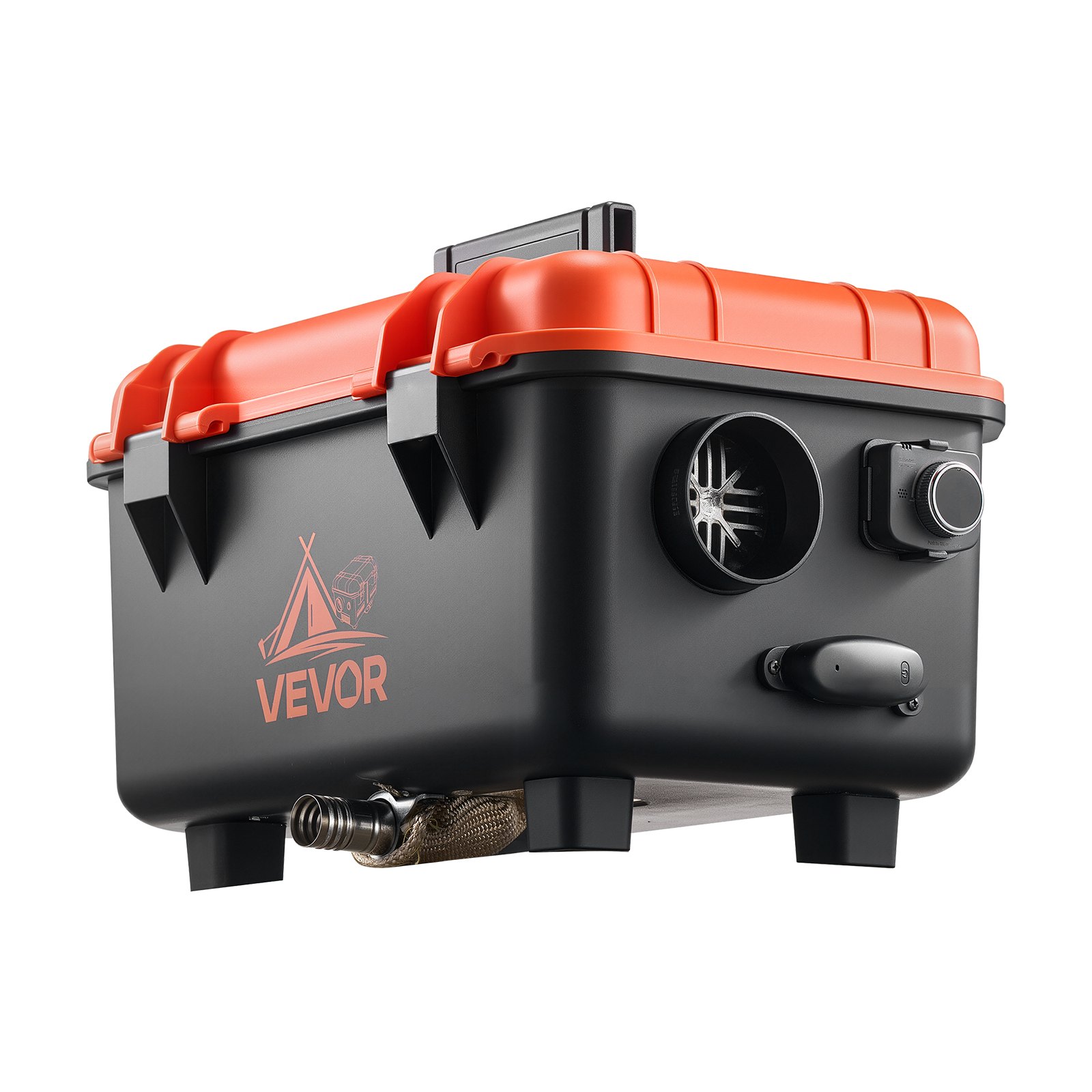 Diesel Heater Portable Air 8KW DC 12V/24V All In One 1.1 Gal$167.99View on Mallflare
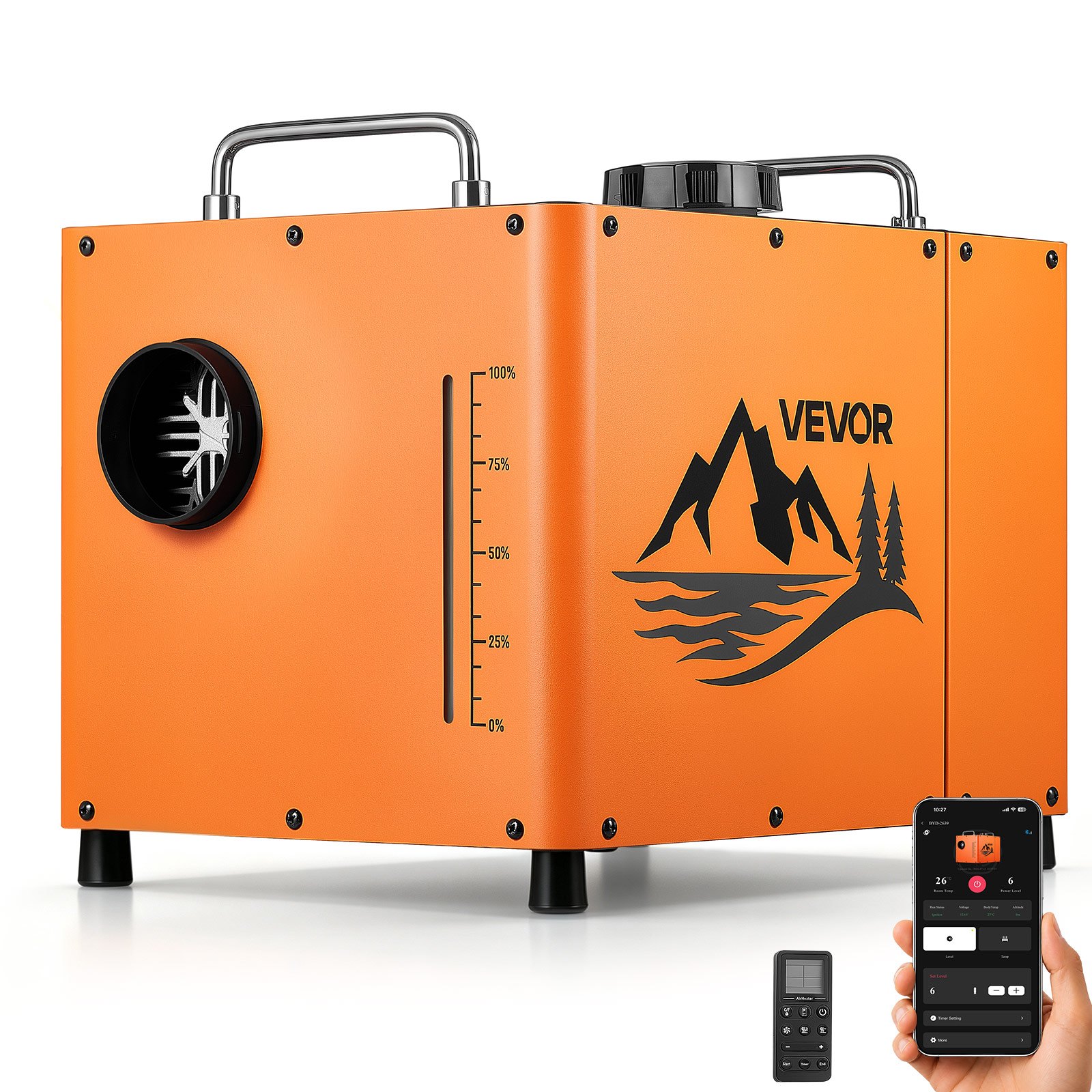 Diesel Heater DC 12-24V 1.85 Gal / 7 L Fuel Tank Air For Outdoor Camping, Aluminum Element Fast Heating, with Bluetooth App Control, Remote and LCD Panel, CO Alarm$250.99View on Mallflare
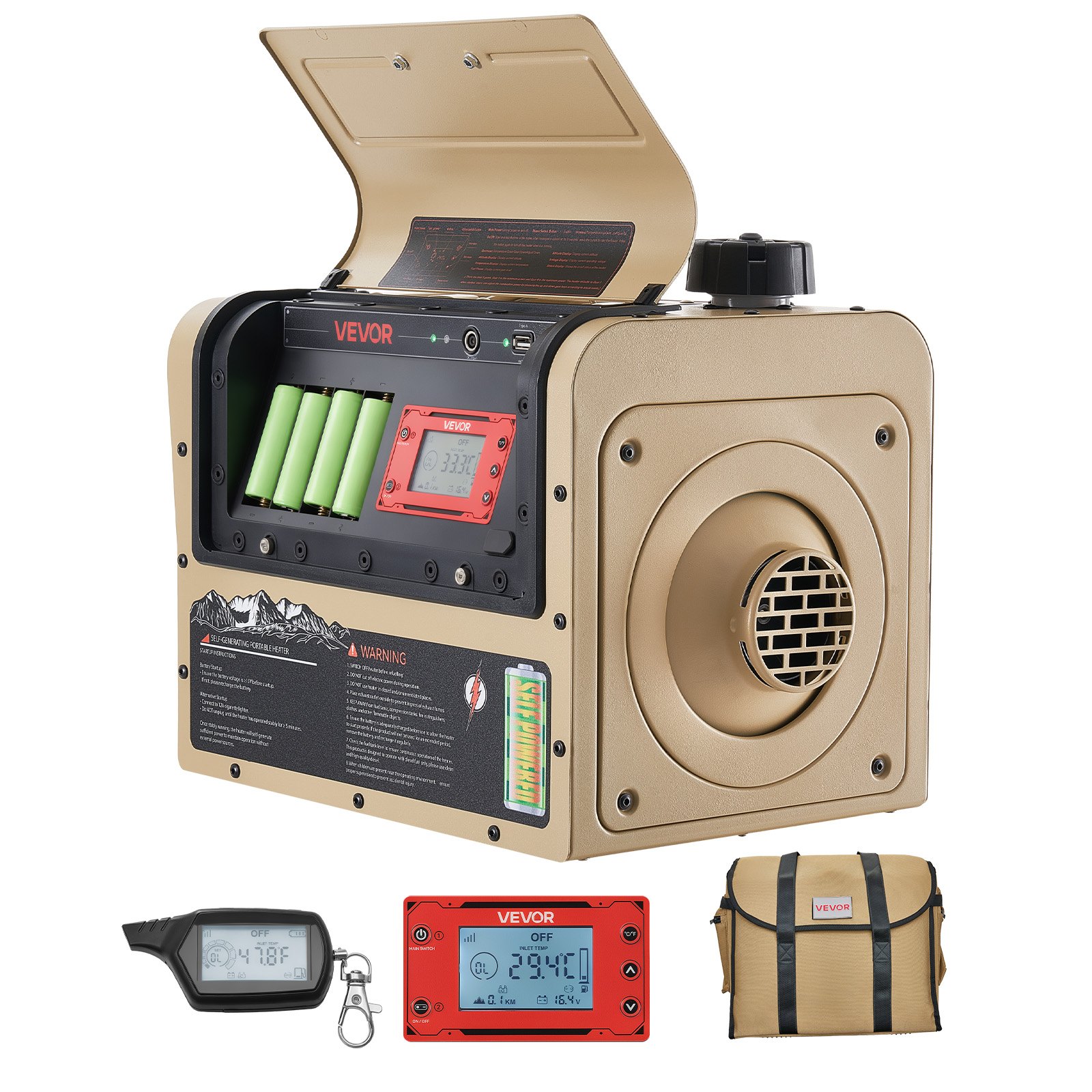 Self-Powered Diesel Heater 1 Gal / 3.8 L Fuel Tank Air For Camping, Tents, Vehicles, and Outdoor Use, Fast Heating, Self-Generating Portable Power Station, USB Output, Low Noise$993.99View on Mallflare
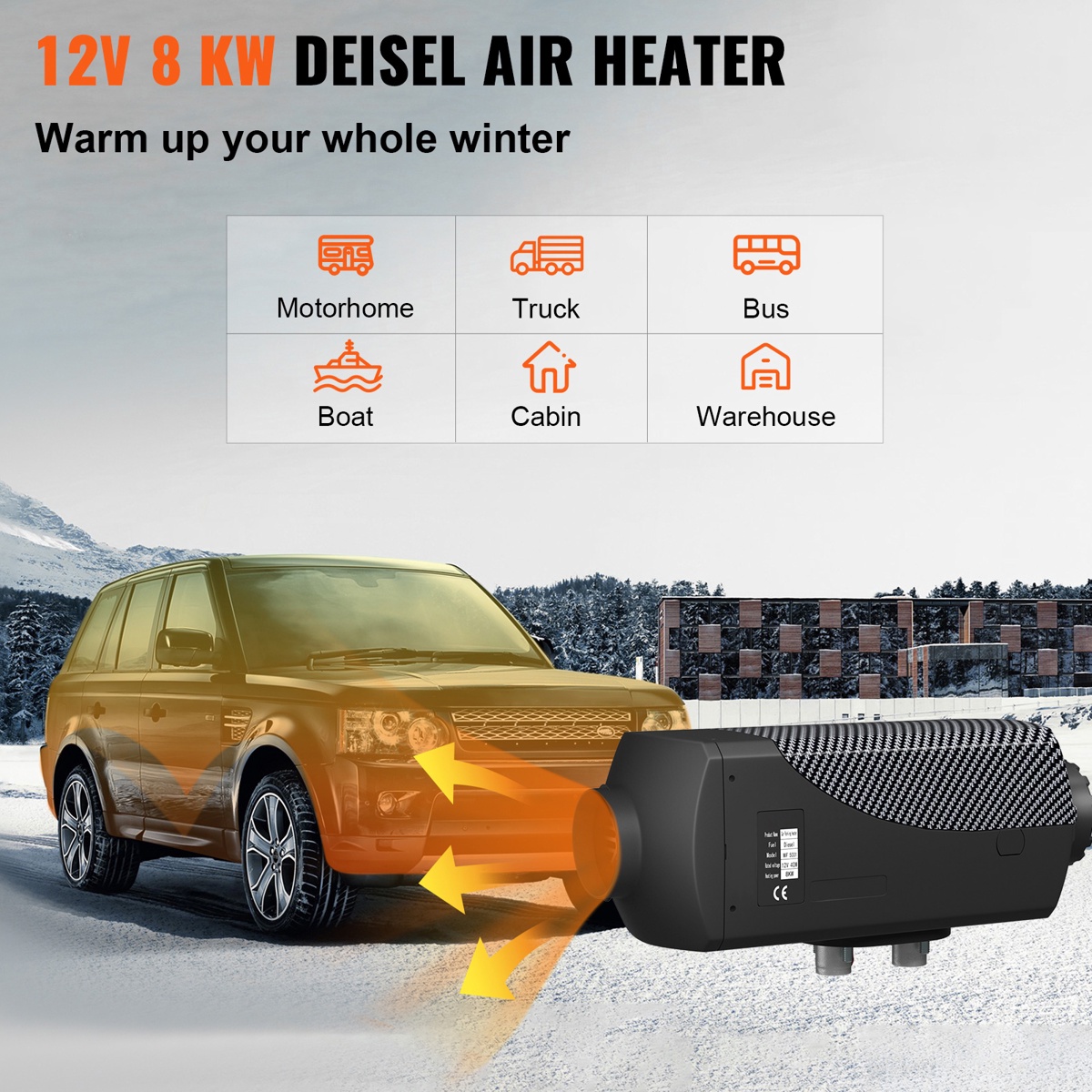 VEVOR 8KW Diesel Air Heater Muffler 12V Remote Control Parking With LCD Switch For Car Trucks Motor-home Boat And Bus$97.99View on Mallflare
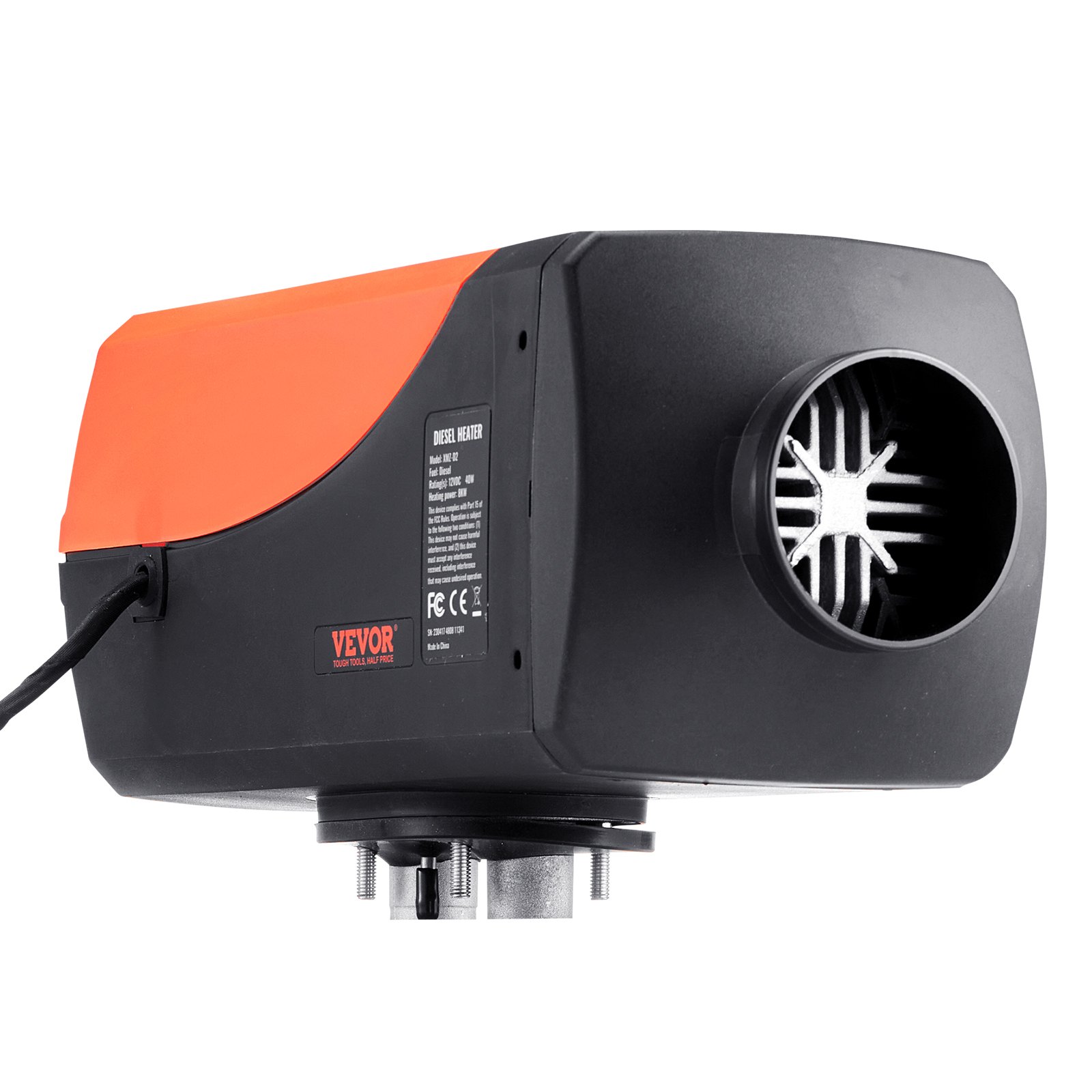 Bluetooth App Control Diesel Air Heater, 12V 8KW With Automatic Altitude Adjustment, Remote And LCD, Parking For RV Trailer Camper Van Boat$118.99View on Mallflare
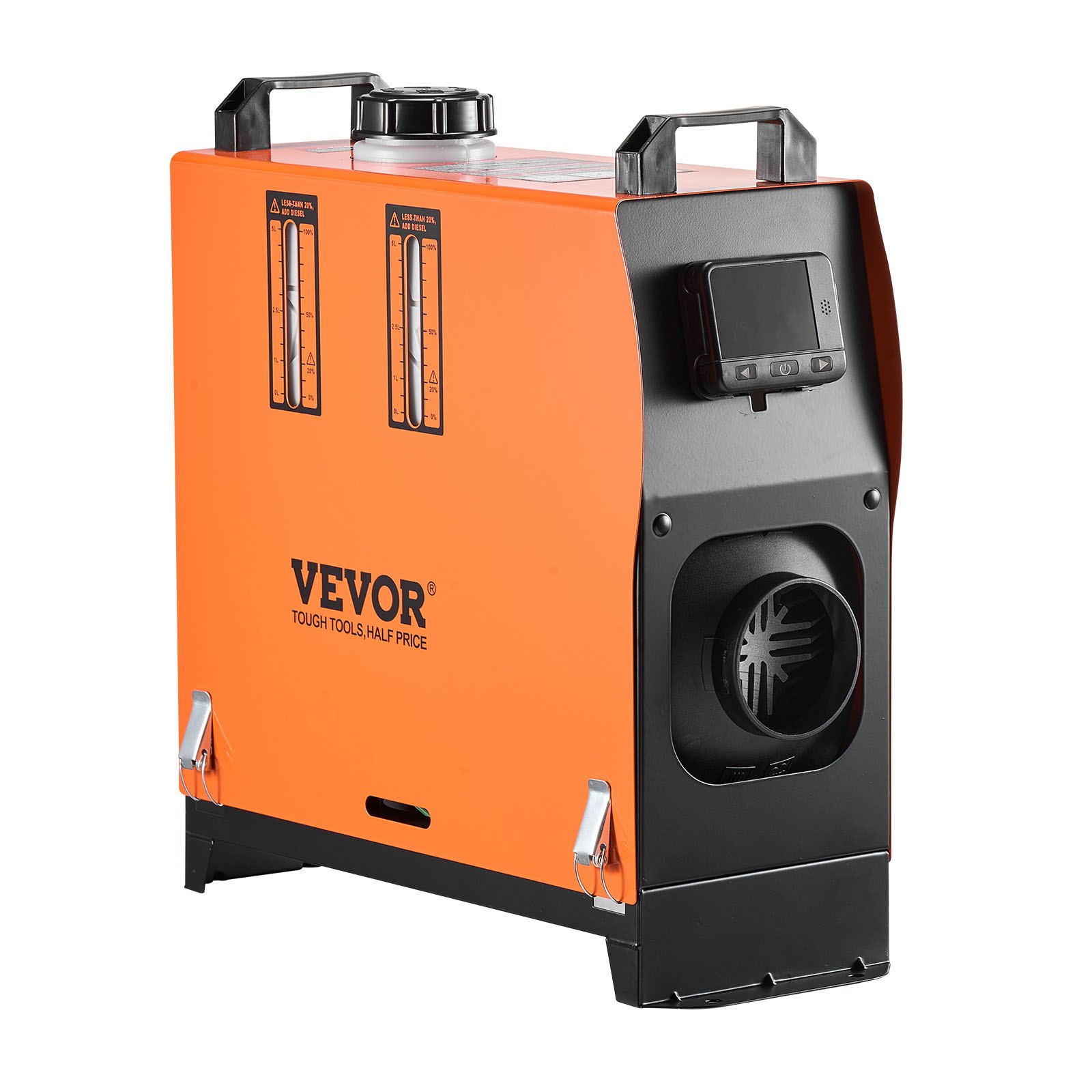 Diesel Air Heater, 8 KW DC12-24V, Fast Heating Parking With Remote Control And Color Digital Display, Low Noise, Voice$128.99View on Mallflare
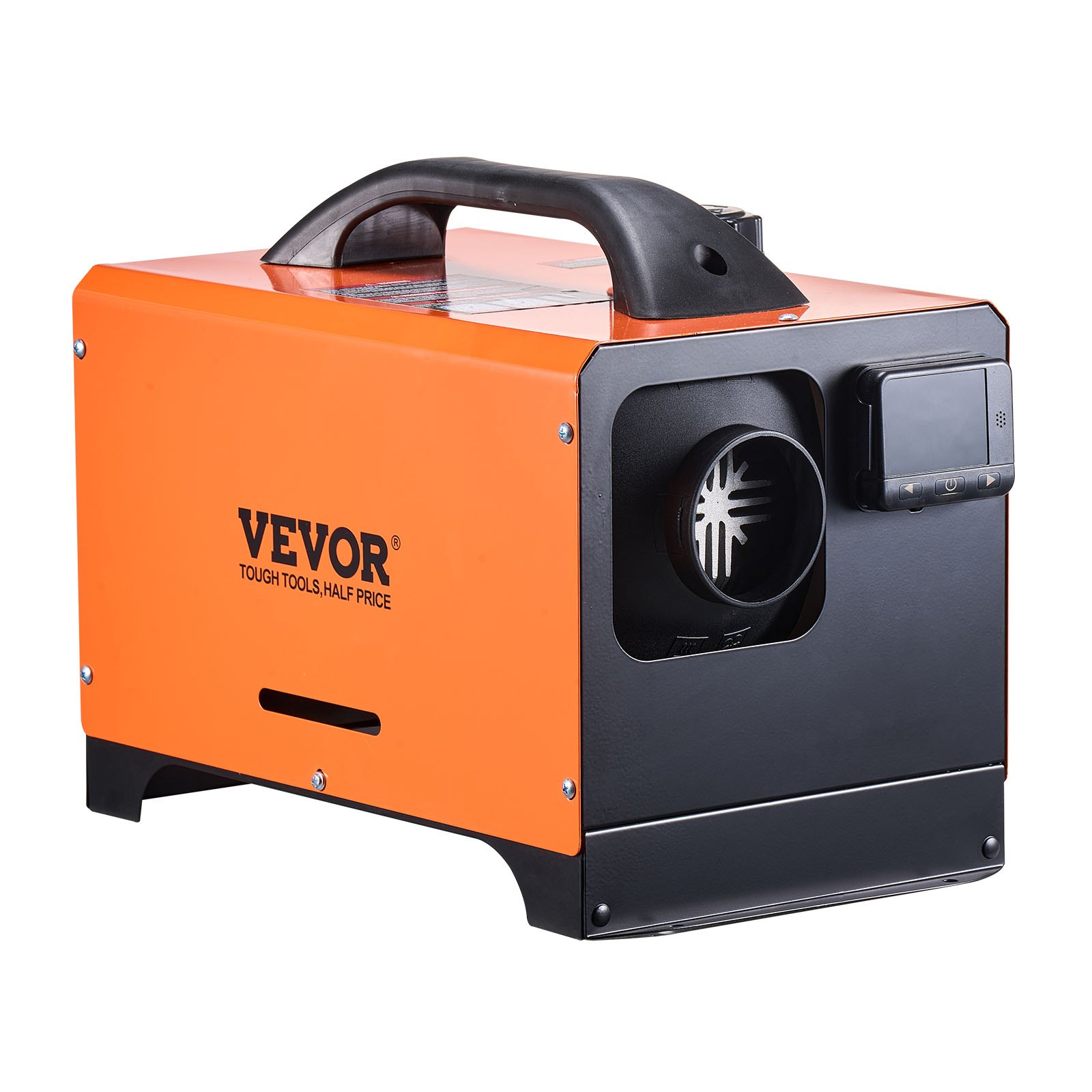 Diesel Air Heater, 8 KW DC12-24V, Fast Heating Parking With Remote Control And Square Color Digital Display, Low Noise,$128.99View on Mallflare
Highlights
- Power tiers are 2kW, 5kW, and 8kW; 2kW suits well-insulated small vans, 5kW fits most Class B/C RVs, and 8kW is for large spaces or extreme cold.
- All-in-one units integrate tank, pump, and heater in one housing; component kits separate them for custom tank placement and larger fuel capacity.
- Ceramic glow plugs last longer and ignite more reliably than metal-element plugs, especially below freezing; kits include removal tools for servicing.
- Automatic altitude compensation adjusts fuel-air mixture above roughly 1,500 m; without it, heaters soot up and flame out at elevation.
Best use cases
- Choose a 5kW all-in-one with 5L tank for a Class B campervan where space is tight and a single unit mounts under a seat; skip 8kW, which short-cycles and soots in small spaces.
- Choose an 8kW component kit with 10L tank for a large Class C RV or extreme cold; skip all-in-one because the bigger tank and separate pump allow flexible mounting.
- Choose a 2kW unit for a well-insulated truck cab or small trailer; skip 5kW+ because oversized heaters cycle on-off, wasting fuel and wearing glow plugs.
Buying tips
- Match kW to volume: about 1kW per 10-12 m³ of well-insulated space; add 30-50% for uninsulated or single-glazed RVs.
- Fuel burn is roughly 0.1-0.3 L/h for 2kW and 0.2-0.6 L/h for 5-8kW; a 10L tank gives 15-40 hours, a 5L tank 7-20 hours.
- Require a CO alarm and an exhaust routed outside with a downward slope; never draw combustion air from the living space.
- For altitudes above 1,500 m, only buy a unit with automatic altitude compensation or a manual high-altitude mode.
Specs
| Power Output | 2kW / 5kW / 8kW tiers |
|---|---|
| Install Format | All-in-one vs component kit |
| Fuel Tank | 1.1-2.6 gal (5-10 L) |
| Altitude Mode | Auto compensation vs manual |
Related searches
What to check before buying
- Measure mounting space: all-in-one 5kW units need roughly 40 x 30 x 30 cm plus clearance for intake and exhaust.
- Confirm 12V DC power with at least 10A available; 8kW units draw 8-12A at startup, 24V models need a 24V bank.
- Plan exhaust and combustion-air routing through a wall or floor with a downward slope and a minimum 30 cm clearance from windows and doors.
- Verify the kit includes a fuel tank, fuel pump, exhaust silencer, ducting, controller, and mounting hardware; missing parts add cost and delay.
FAQ
Data sources: eBay / Amazon listings and product attribute feeds Data updated Nov 15, 2026.
Some links on this page are affiliate links. If you buy after clicking one, we may earn a commission at no extra cost to you. This does not change which products appear here or their order. Affiliate disclosure.