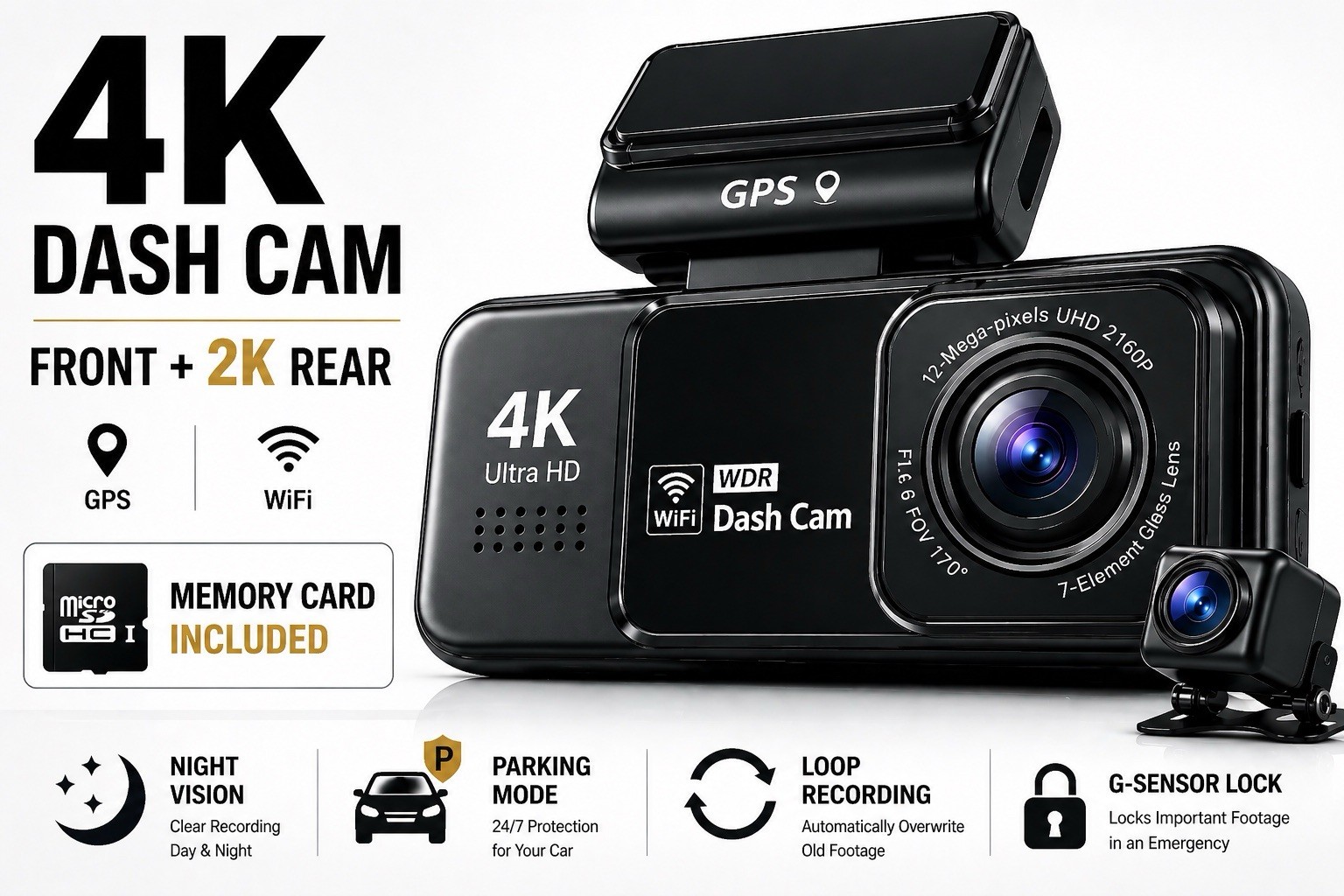

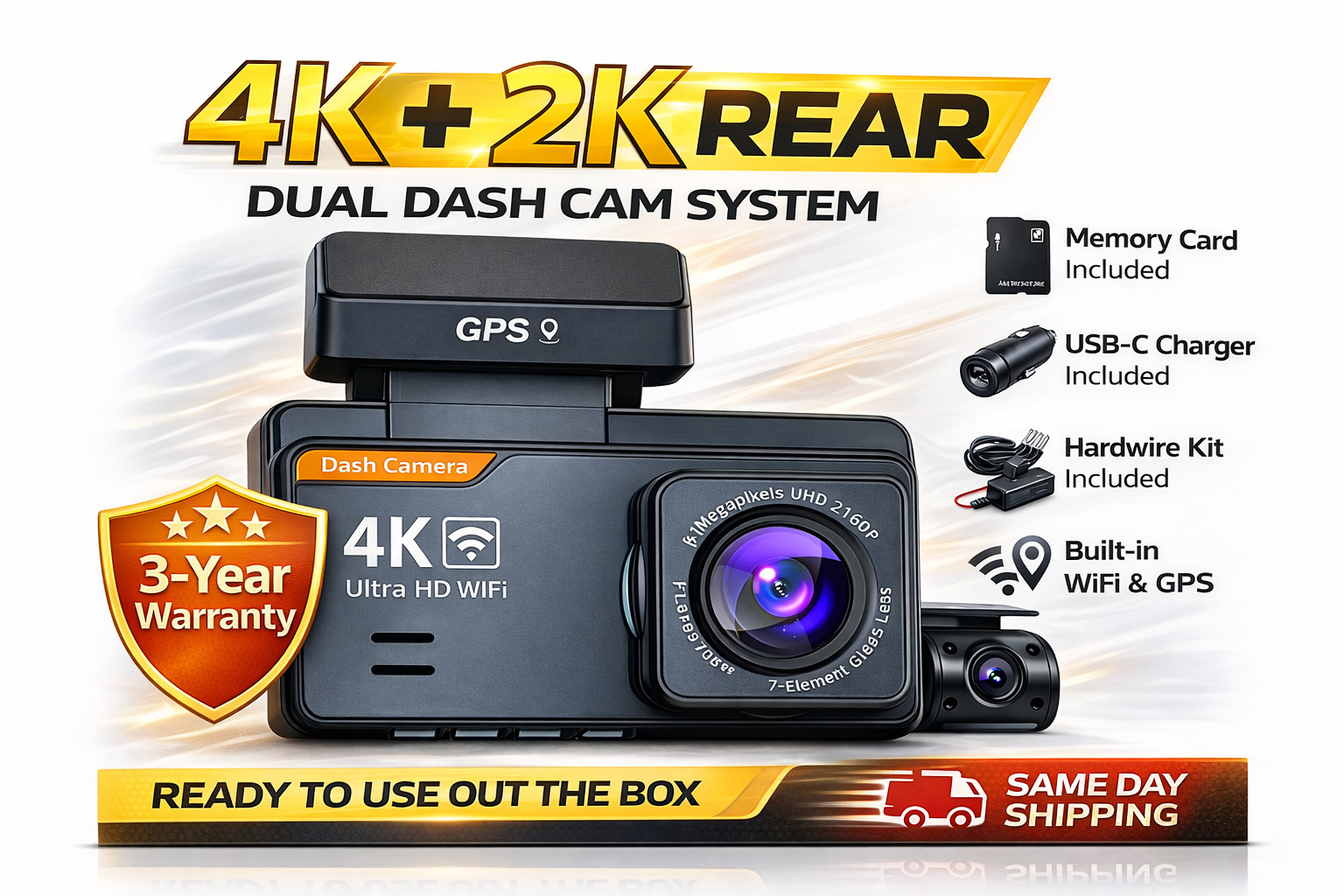
Photos from current listings. Actual item, color, and included accessories may vary.
TekDep00 4K Dash Buying Guide
A 4K dash cam is a dual-channel recording system where sensor size, processor, and memory architecture determine whether footage stays legible in low light and heat. The core trade-off is between high-resolution front capture and sustained reliability—cheap 4K models often drop to 1080p rear channels and overheat in summer. Buy a 4K front/2K rear system with capacitor power, GPS, and a high-endurance card; skip any cam that lists '4K' without specifying rear resolution or power type.


At a glance
- Brand
- Not synced yet
- Model
- Not synced yet
- MPN
- Not synced yet
- Category
- Dash Cams
- Status
- Offers available
- Data updated
- Nov 15, 2026
Current offers
Highlights
- Front 4K (3840x2160) requires a large sensor like Sony STARVIS or OmniVision OS05A10; small sensors produce noisy night footage regardless of resolution.
- Rear channel resolution is often 1080p on budget 4K cams; a true 2K rear (2560x1440) needs a separate processor lane and higher bitrate.
- Supercapacitors tolerate 70°C+ dash temperatures for years; lithium-ion batteries swell and fail within 1-2 summers in parked cars.
- Hardwire kits with low-voltage cutoff (11.6V/12V) enable parking mode without draining the car battery; GPS adds speed and coordinate stamps for insurance claims.
Best use cases
- Best fit: rideshare or fleet drivers needing front 4K plate capture plus rear 2K coverage—choose the hardwire-kit bundle for 24/7 parking surveillance.
- Best fit: hot-climate drivers (southern US, desert) who park outdoors—pick supercapacitor models and avoid battery-powered cams entirely.
- Wrong fit: buyers wanting cloud upload or LTE live view—these 4K dual-cam units record locally to microSD and offer WiFi only for file transfer.
- Wrong fit: rear-window-heavy vehicles (vans, trucks with cargo barriers)—verify the rear cable length (typically 6-8m) reaches the back glass before buying.
Buying tips
- Match microSD to workload: use a high-endurance U3/V30 card (64-256GB); standard cards fail within months under continuous 4K write cycles.
- Check rear camera spec explicitly: '2K rear' means 2560x1440; if the listing only says 'rear cam included,' assume 1080p and verify resolution in the spec table.
- For parking mode, confirm the hardwire kit includes a low-voltage cutoff box; direct 12V taps without cutoff will drain the battery overnight.
- WiFi is for clip download, not live streaming—expect 2.4GHz transfer speeds of 2-5 MB/s; 5GHz support speeds up large 4K file pulls.
Specs
| Front Resolution | 4K 3840x2160 (sensor-dependent) |
|---|---|
| Rear Channel | 2K 2560x1440 vs 1080p |
| Power Type | Supercapacitor vs lithium battery |
| Parking Mode | Hardwire kit + low-voltage cutoff |
Alternatives to compare
Related searches
What to check before buying
- Measure windshield space behind the mirror: the front unit plus mount needs roughly 10cm clearance and must not intrude on the driver's sightline.
- Confirm your fuse box type (ATO/mini/micro) to match the hardwire kit's fuse taps; most kits include ATO and mini only.
- Check rear glass angle: hatchbacks and steeply raked rear windows may need a wedge mount or adhesive pad to aim the rear cam level.
- Verify microSD card is formatted to FAT32 (for cards ≤32GB) or exFAT (64GB+) before first use; the cam will not record otherwise.
FAQ
Data sources: eBay / Amazon listings and product attribute feeds Data updated Nov 15, 2026.
Some links on this page are affiliate links. If you buy after clicking one, we may earn a commission at no extra cost to you. This does not change which products appear here or their order. Affiliate disclosure.