Choosing overland mobile power & solar starts with a format decision: do you need an RV-oriented panel kit for battery charging, or a portable power station that brings stored electricity to camp? The Go Power! Overlander 200w Solar Kit #83294 and the 2400W 1843Wh Portable Power Station Solar Charger Generator for Camping Travel address those needs differently, so the right pick depends more on your setup than on wattage alone.
Quick verdict
Choose the Go Power! Overlander 200w Solar Kit #83294 when your priority is an RV solar charging package with panel hardware. Choose the 2400W 1843Wh Portable Power Station Solar Charger Generator for Camping Travel when you want a portable power-station format for camping, travel, appliances, and devices. Neither is a direct substitute for the other: one is centered on solar charging components, while the other is centered on stored power.
At-a-glance comparison
| Product | Listed price | Core format |
|---|---|---|
| Go Power Overlander 200W | USD 599.00 | RV solar charging kit |
| 2400W 1843Wh Power Station | USD 451.50 | Portable power station for camping and travel |
Where each product wins
Go Power Overlander 200W
Go Power wins when the project is specifically an RV solar charging setup. The description names a 200-watt module and a 30-amp controller, making the package clearly oriented toward battery charging from solar input. It is the more natural fit for shoppers who want the solar hardware itself rather than a separate stored-energy unit.
2400W 1843Wh Power Station
The 2400W power station wins for camping and travel situations where power needs to move with the trip. Its description directly mentions household appliances and devices, indoors or outdoors, which gives it a clearer fit for general camp power than an RV solar kit. Its power-station format also avoids making the solar panel package the center of the decision.
Product notes
Go Power! Overlander 200w Solar Kit #83294. Solar Panel For Rv
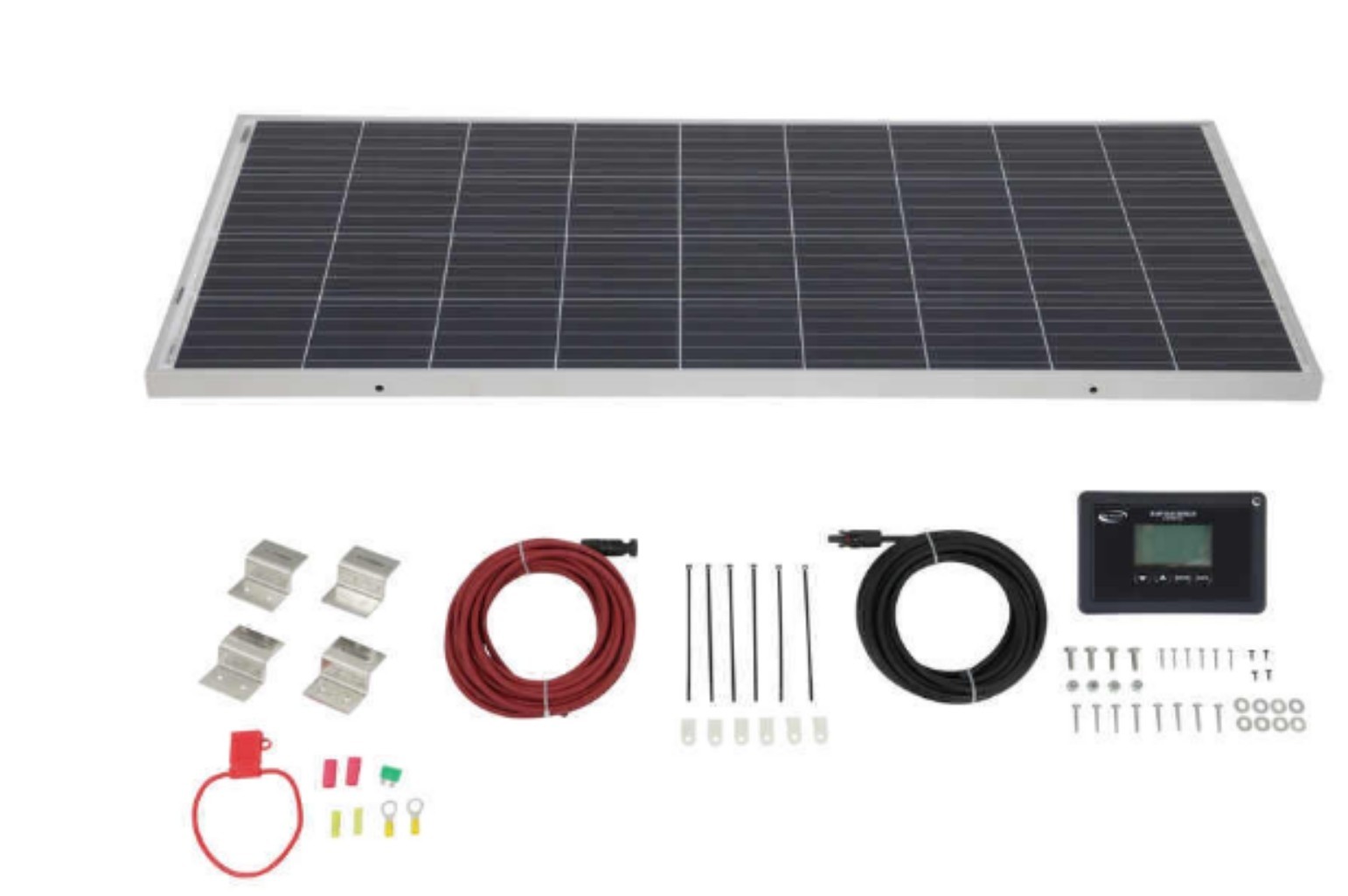
The Go Power! Overlander 200w Solar Kit #83294 is a focused choice for an RV solar project where included accessories matter. Alongside the monocrystalline panel, it names two 25-foot solar cables, mounting hardware, and a Bluetooth-ready PWM digital controller rated at 30 amps. Those inclusions make the package more than a bare panel. The main limitation is its physical footprint: the panel is listed at 59.1 x 26.3 x 1.57 inches, a dimension set worth accounting for when planning an RV setup. The product also carries a California Prop 65 warning, which is another consideration when comparing equipment labels. Its panel output is specified as 200 watts and 9.6 amps, useful planning figures without implying suitability for every battery arrangement.
2400W 1843Wh Portable Power Station Solar Charger Generator for Camping Travel
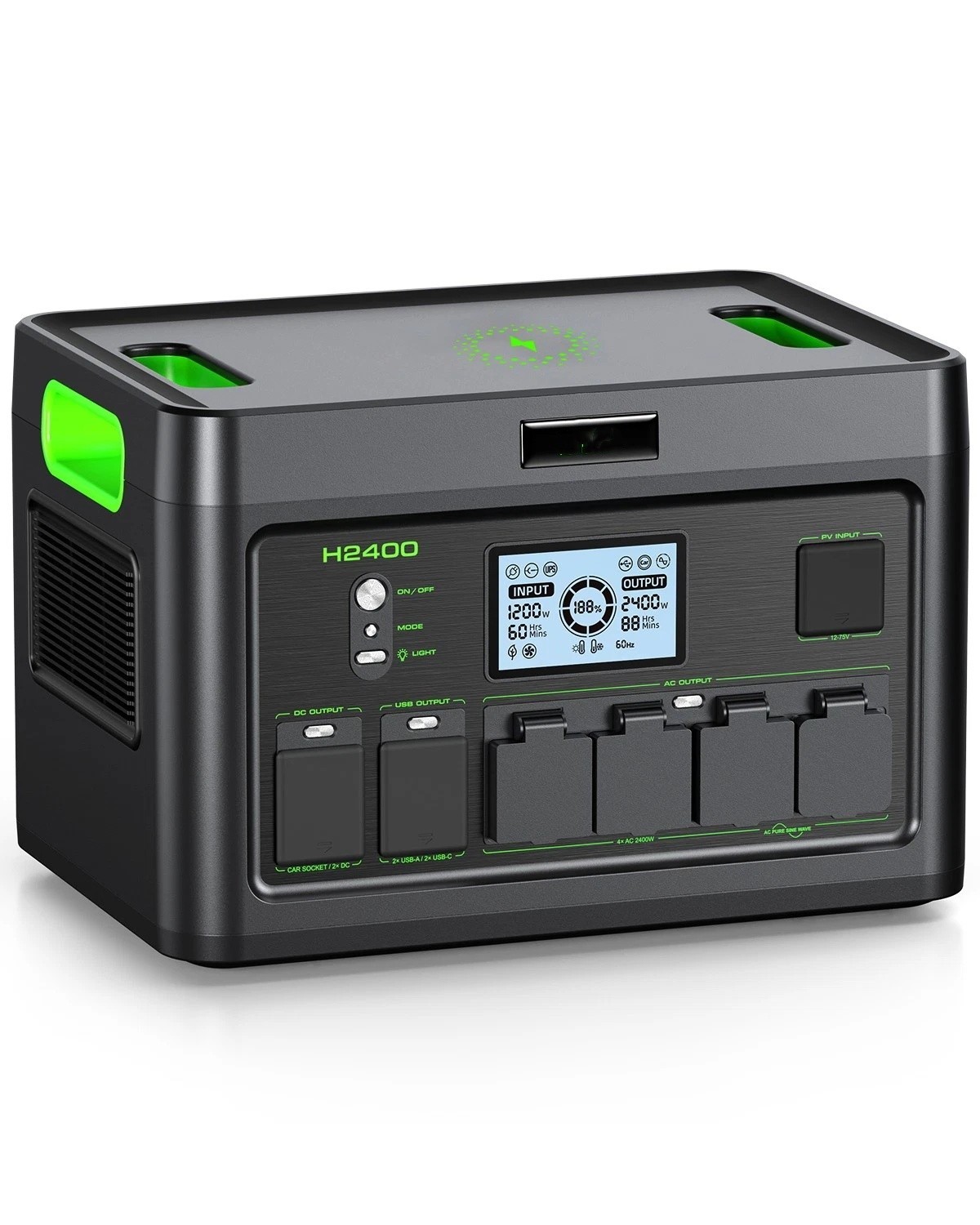
The 2400W 1843Wh Portable Power Station Solar Charger Generator for Camping Travel is shaped around stored electricity for camping and travel. Its description gives a 2400W rating and 1843.2Wh capacity, and it specifically mentions household appliances and devices. It also states AC charging in 1.6 to 2 hours, a practical differentiator for shoppers planning recharge time between outings. The clearest limitation is transport: the listed weight is 30KG, so the word portable should be considered alongside the actual carry burden. The title emphasizes a solar charger and generator, while the clearest operating detail describes AC charging. Shoppers prioritizing the Go Power kit's named panel, controller, cables, and mounting hardware are comparing a different equipment package.
Final choice by use case
- For an RV solar charging project: Choose the Go Power! Overlander 200w Solar Kit #83294, whose title and description are built around RV solar charging.
- For camping or travel with stored power: Choose the 2400W 1843Wh Portable Power Station Solar Charger Generator for Camping Travel, whose title and description target that use directly.
- If the listed price spread is decisive: The portable station is USD 451.50 versus USD 599.00 for the Go Power kit, a $147.50 difference. Pick the format first, then use that spread as the tie-breaker.