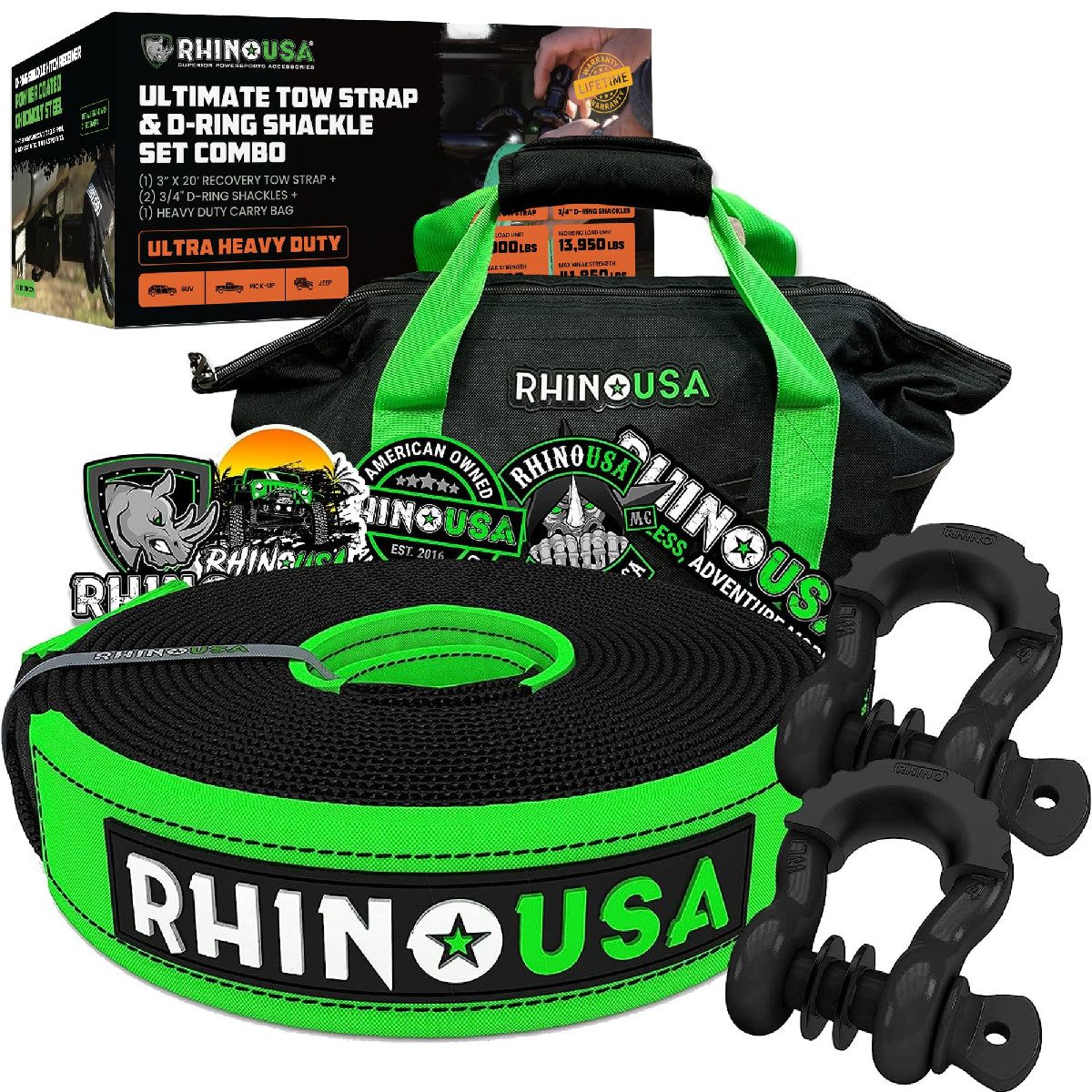

Photos from current listings. Actual item, color, and included accessories may vary.
Vehicle Recovery Gear Buying Guide
Vehicle recovery gear is the traction, pulling, and anchoring equipment that gets a stuck or disabled vehicle moving again without damaging the chassis or injuring bystanders. The core trade-off is between rated strength and safe energy management: recovery gear either carries a certified working load limit with controlled stretch and damping, or it relies on unrated hardware that can snap and become a projectile. The decision rule: buy only products with an explicit Working Load Limit and matching attachment hardware; skip any combo with no WLL, no rating standard, or a tow strap sold as a recovery strap.


At a glance
- Category
- Vehicle Recovery Gear
- Data updated
- Nov 16, 2026
Current offers
Highlights
- Recovery straps are engineered to stretch (typically 20-30% elongation) and store energy for a rolling pull; tow straps are static and can shock-load and break rigging.
- Kinetic recovery ropes use nylon with a specified elongation and energy-absorption rating; snatch straps and kinetic ropes are the correct tool for momentum-assisted extraction.
- Rated hardware matters more than strap thickness: shackles should be forged and marked with a WLL (commonly 3/4 in bow shackle at 4.75 t), and tree savers should be wide webbing to protect bark and spread load.
- Winch capacity should be at least 1.5x the loaded vehicle weight; synthetic line is lighter and safer if it fails, while steel cable resists abrasion but stores dangerous energy.
Best use cases
- Mud, sand, and snow self-recovery: pick a kinetic recovery rope or snatch strap rated above vehicle weight plus two forged shackles and a tree saver; skip static tow straps for dynamic pulls.
- Winch-equipped rigs: match a winch rated at 1.5x loaded weight with a dampener, gloves, and a snatch block for double-line pulls; skip undersized winches and bare-cable kits.
- Towing a disabled vehicle on pavement: use a rated tow strap or chain with a WLL above the towed weight and a proper hitch; skip kinetic ropes for flat, controlled towing.
- Casual off-roaders who rarely leave graded roads: a basic traction board and rated strap set is enough; skip full winch kits and high-stretch ropes that add cost without use.
Buying tips
- Match strap or rope minimum breaking strength to at least 2-3x the loaded vehicle weight, and never exceed the marked WLL during use.
- Choose nylon for stretch and energy absorption in dynamic recoveries; choose polyester for low-stretch static towing and winch extension lines.
- Size shackles to the strap eye and bumper mount: a 3/4 in screw-pin bow shackle fits most 2-3 in strap eyes and rates around 4.75 t.
- For winches, use 1.5x loaded weight as the minimum; add a snatch block to double line pull and halve effective load on the winch.
Specs
| Strap Type | Kinetic recovery vs static tow |
|---|---|
| Min Breaking Strength | 2-3x loaded vehicle weight |
| Shackle Rating | Forged, marked WLL (3/4 in ~4.75 t) |
| Winch Capacity Rule | 1.5x loaded vehicle weight minimum |
Related searches
What to check before buying
- Confirm your vehicle's loaded weight (curb weight plus passengers, gear, and fuel) before choosing strap, rope, or winch ratings.
- Measure bumper recovery points and hitch receiver size so shackles and straps fit without adapters.
- Check that recovery points are rated and frame-mounted; unibody hooks and cosmetic loops are not recovery-rated.
- Verify climate and terrain: synthetic rope resists rot but degrades with UV and abrasion; steel cable needs gloves and careful handling.
FAQ
Data sources: eBay / Amazon listings and product attribute feeds Data updated Nov 16, 2026.
Some links on this page are affiliate links. If you buy after clicking one, we may earn a commission at no extra cost to you. This does not change which products appear here or their order. Affiliate disclosure.