Photos from current listings. Actual item, color, and included accessories may vary.
Electric Boat Winch Buying Guide
An electric boat winch is a powered drum winch used to haul boats onto trailers, davits, or dry-stack racks, replacing manual cranking with a DC motor and gear reduction. The primary trade-off is pulling capacity versus line speed and duty cycle: single-speed low-amp units are slow but gentle on wiring, while high-capacity two-speed units demand heavy cable and dual batteries. The decision rule is to buy a winch rated at least 1.5x your loaded boat-and-trailer weight with a brake and waterproof enclosure, and skip any unit rated below your gross load or lacking a mechanical brake.


At a glance
- Category
- Vehicle Recovery Gear
- Data updated
- Nov 16, 2026
Current offers
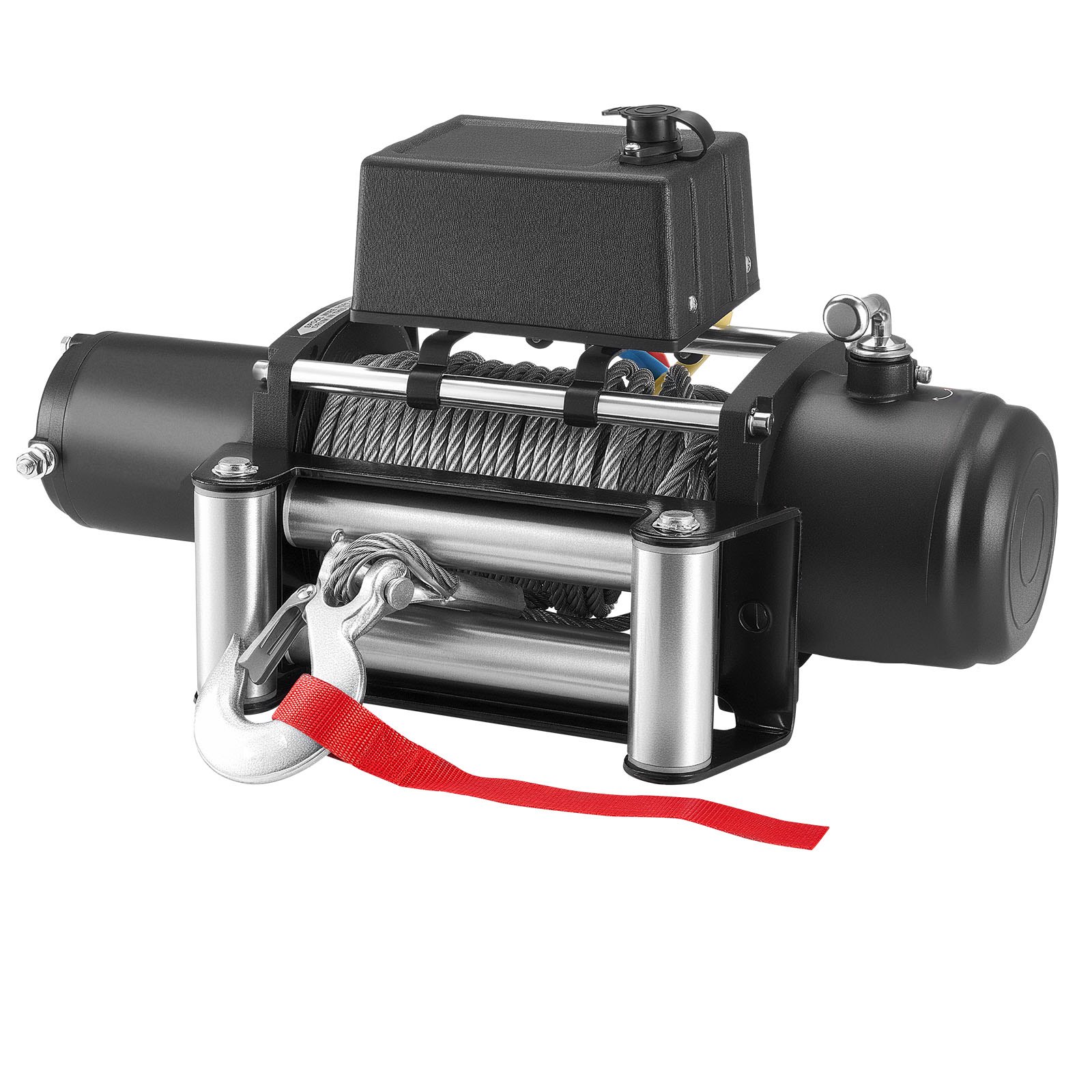 Electric Winch, 10000 Lbs Load Capacity, 12V DC Truck With Φ21/64 In X 65 Ft Steel Rope, Wireless & Wired Remote Control, IP55 Waterproof For Towing SUV Jeep Trailer Boat Off-Road Vehicle$300.99
 View on Mallflare
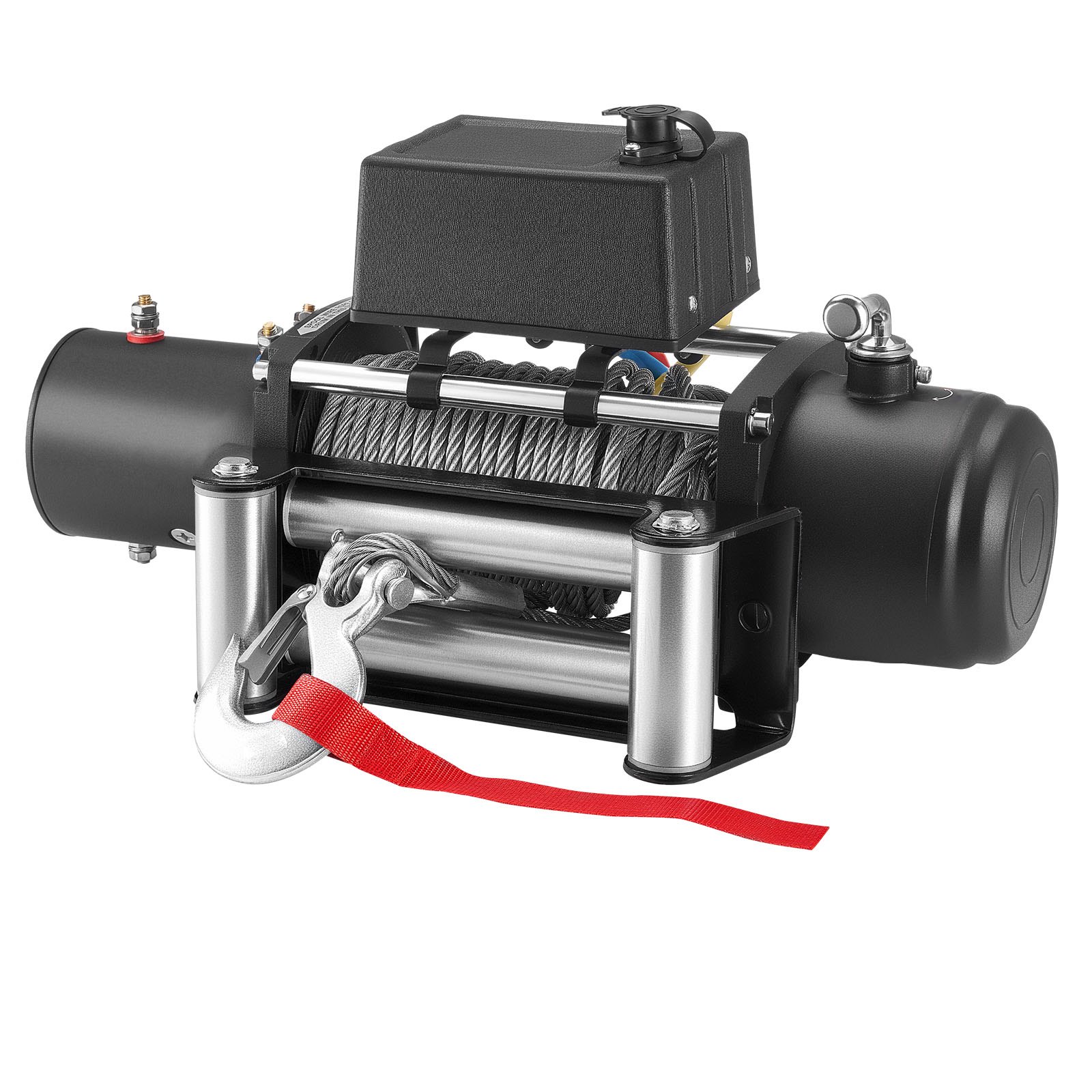 Electric Winch, 12000 Lbs Load Capacity, 12V DC Truck With Φ7/20 In X 85 Ft Steel Rope, Wireless & Wired Remote Control, Suitable For Towing SUV Jeep Trailer Boat Off-Road Vehicle$310.99View on Mallflare
Highlights
- Drum winch gearing is either single-speed planetary (simple, slower line speed) or two-speed planetary (high-torque low-speed plus fast free-spool retrieval); two-speed units dominate for boats over 3,000 lb.
- Duty cycle is the hidden spec: intermittent-rated winches (typically 5-10% duty) overheat on repeated launches; marine trailer winches should be rated for at least 10% duty at full load.
- Waterproofing grades separate trailer winches from hoist winches: IP67 or sealed marine housings survive splash and rain, while open-frame utility winches corrode at the motor brush and solenoid.
- Automatic mechanical brakes (load-holding) are mandatory for boat trailer winches; friction-only or dynamic braking lets the drum back-drive on a ramp and is unsafe for wet-boat launch/retrieve.
Best use cases
- Best fit: trailer launch/retrieve for boats 16-24 ft—pick a 3,500-5,000 lb rated two-speed winch with IP67 sealing, synthetic rope, and a wireless remote so you can guide the boat while operating.
- Best fit: davit or dry-stack lifting of inflatables and small skiffs—choose a compact 2,000-3,500 lb electric winch with a sealed solenoid and stainless hardware, mounted vertically to clear the davit arm.
- Wrong fit: saltwater mooring or permanent dock installs—skip standard trailer winches and select a fully sealed, marinized hoist with stainless fasteners and a remote-mounted control box.
- Wrong fit: boats over 6,000 lb loaded—skip single-speed 12V utility winches entirely and move to a two-speed 12V/24V marine winch with a 20%+ duty rating and heavy-gauge wiring.
Buying tips
- Capacity math: add boat dry weight + fuel (6 lb/gal gasoline, 8.3 lb/gal water) + motor + gear + trailer tongue load; then multiply by 1.5 for ramp friction and safety margin before matching to winch rating.
- Voltage and wiring: 12V winches draw high amps at load—use the manufacturer's minimum cable gauge (often 2-6 AWG) and keep the run under 10 ft from battery to winch; 24V systems halve current draw on heavy pulls.
- Rope vs cable: synthetic rope is lighter, safer on breakage, and doesn't kink, but needs a abrasion sleeve at the fairlead; galvanized steel cable resists UV but stores energy and requires gloves and a damper.
- Brake and clutch: confirm an automatic load-holding brake plus a free-spool clutch for easy line pull-out; a winch without free-spool forces you to power-out the line, draining the battery and wearing the motor.
Specs
| Drive Gearing | Single-speed vs two-speed planetary |
|---|---|
| Rated Line Pull | 2,000-12,000 lb class |
| Ingress Protection | IP54 utility vs IP67 marine |
| Brake Type | Automatic mechanical load-holding |
Related searches
What to check before buying
- Measure your boat's loaded weight (scale or trailer-tongue calculation) and confirm the winch rated line pull exceeds 1.5x that figure at the drum's first layer.
- Verify trailer winch-post and fairlead geometry: drum width and mounting bolt pattern must fit the post, and the fairlead must align with the boat's bow eye to avoid side-loading.
- Check power source: confirm battery bank voltage (12V or 24V), alternator output, and cable routing distance; add a circuit breaker or fuse within 12 in. of the battery positive terminal.
- Confirm environmental sealing: IP67 or marine-grade housing and stainless fasteners for saltwater or wet launch ramps; standard IP54 utility winches are for dry, covered use only.
FAQ
Data sources: eBay / Amazon listings and product attribute feeds Data updated Nov 16, 2026.
Some links on this page are affiliate links. If you buy after clicking one, we may earn a commission at no extra cost to you. This does not change which products appear here or their order. Affiliate disclosure.