Photos from current listings. Actual item, color, and included accessories may vary.
Electric Winch With Remote Buying Guide
Electric winches with remote control combine a series-wound or permanent-magnet DC motor, a planetary gearset, and a synthetic or steel line into a recovery tool you operate from outside the vehicle. The primary trade-off is pulling capacity versus line speed and current draw: higher-rated winches pull harder but demand upgraded electrical systems, while lower-rated units are lighter and easier on stock alternators. The clear rule: buy a winch rated at least 1.5 times your vehicle's gross vehicle weight, with a synthetic line for safety and a wired-plus-wireless remote for control flexibility.

At a glance
- Category
- Vehicle Recovery Gear
- Data updated
- Nov 16, 2026
Current offers
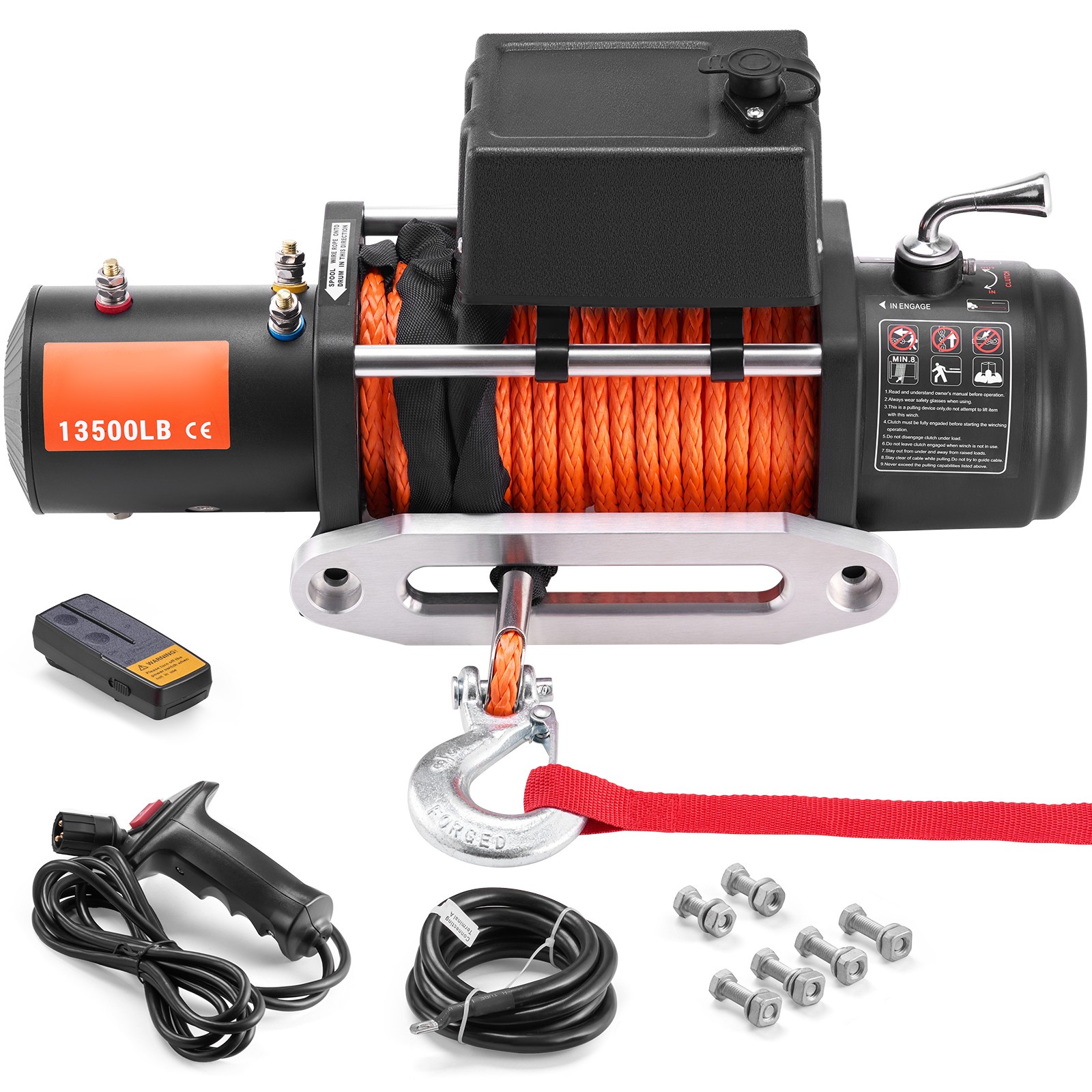 Uimoso Electric Winch 13500LBS Synthetic Cable Truck Trailer Towing Off-Road 4WD$234.99
 View on eBay
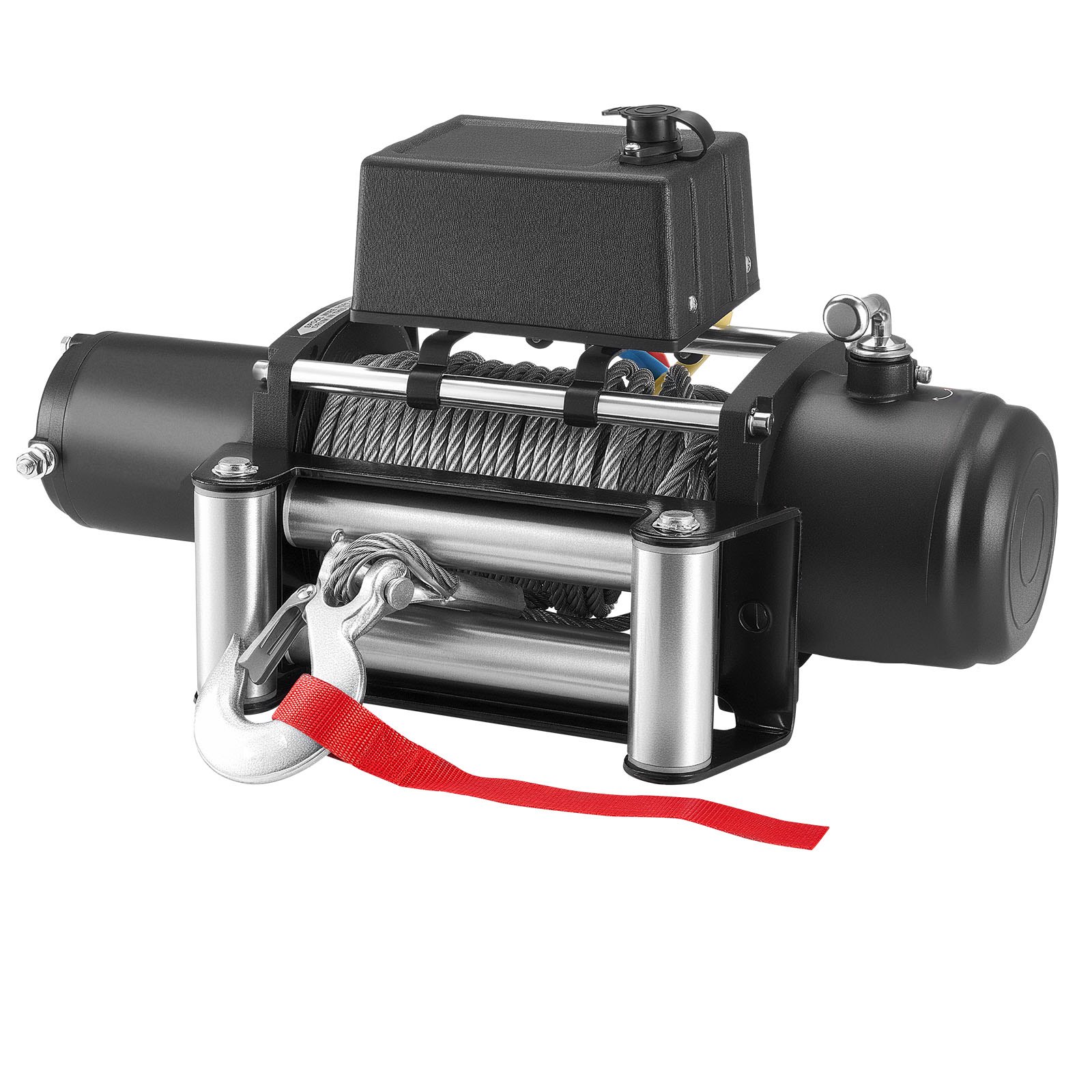 Electric Winch, 10000 Lbs Load Capacity, 12V DC Truck With Φ21/64 In X 65 Ft Steel Rope, Wireless & Wired Remote Control, IP55 Waterproof For Towing SUV Jeep Trailer Boat Off-Road Vehicle$300.99
 View on Mallflare
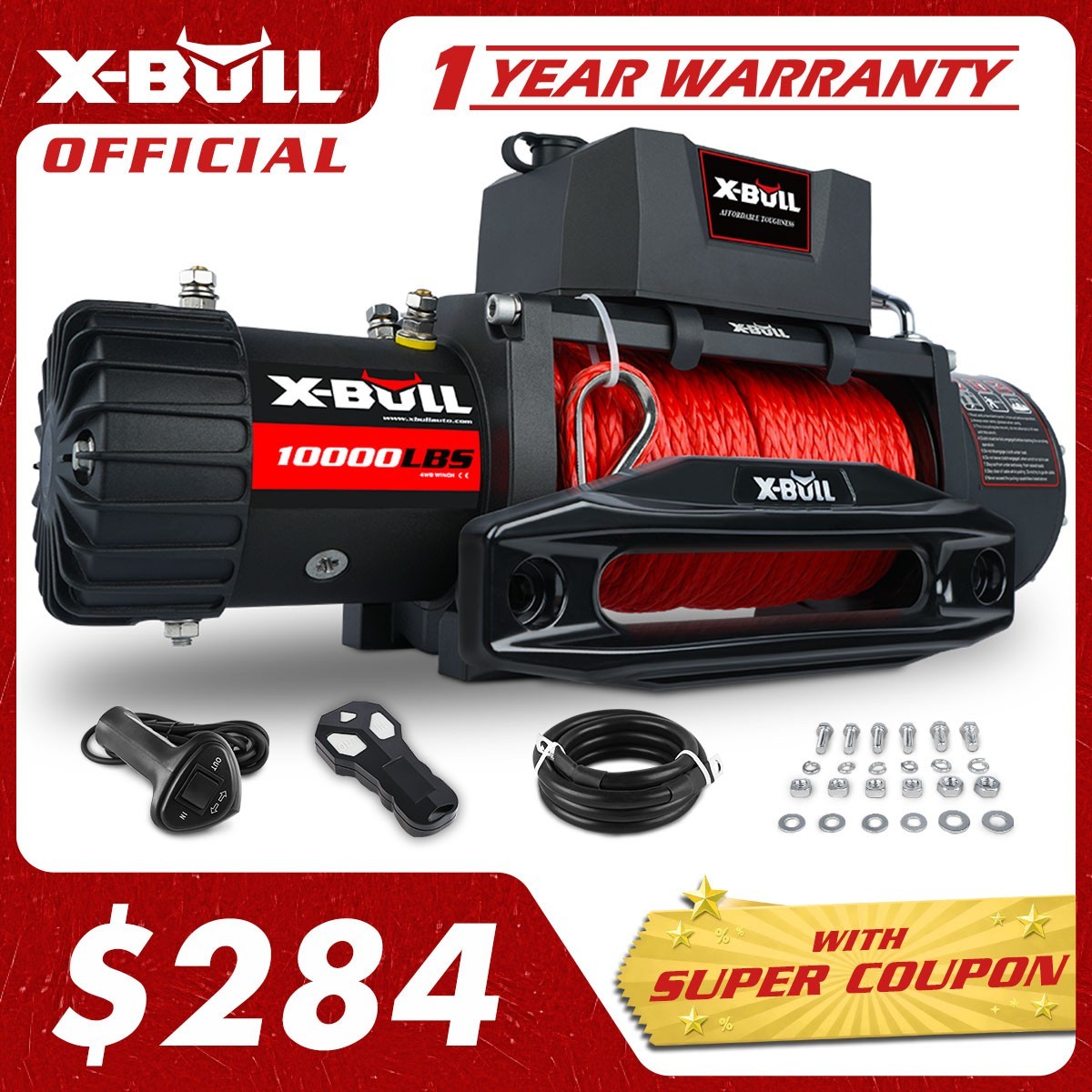 X-BULL Electric Winch 12V 10000LBS Synthetic Rope Off-Road Towing Truck 4WD Jeep$299.90View on eBay
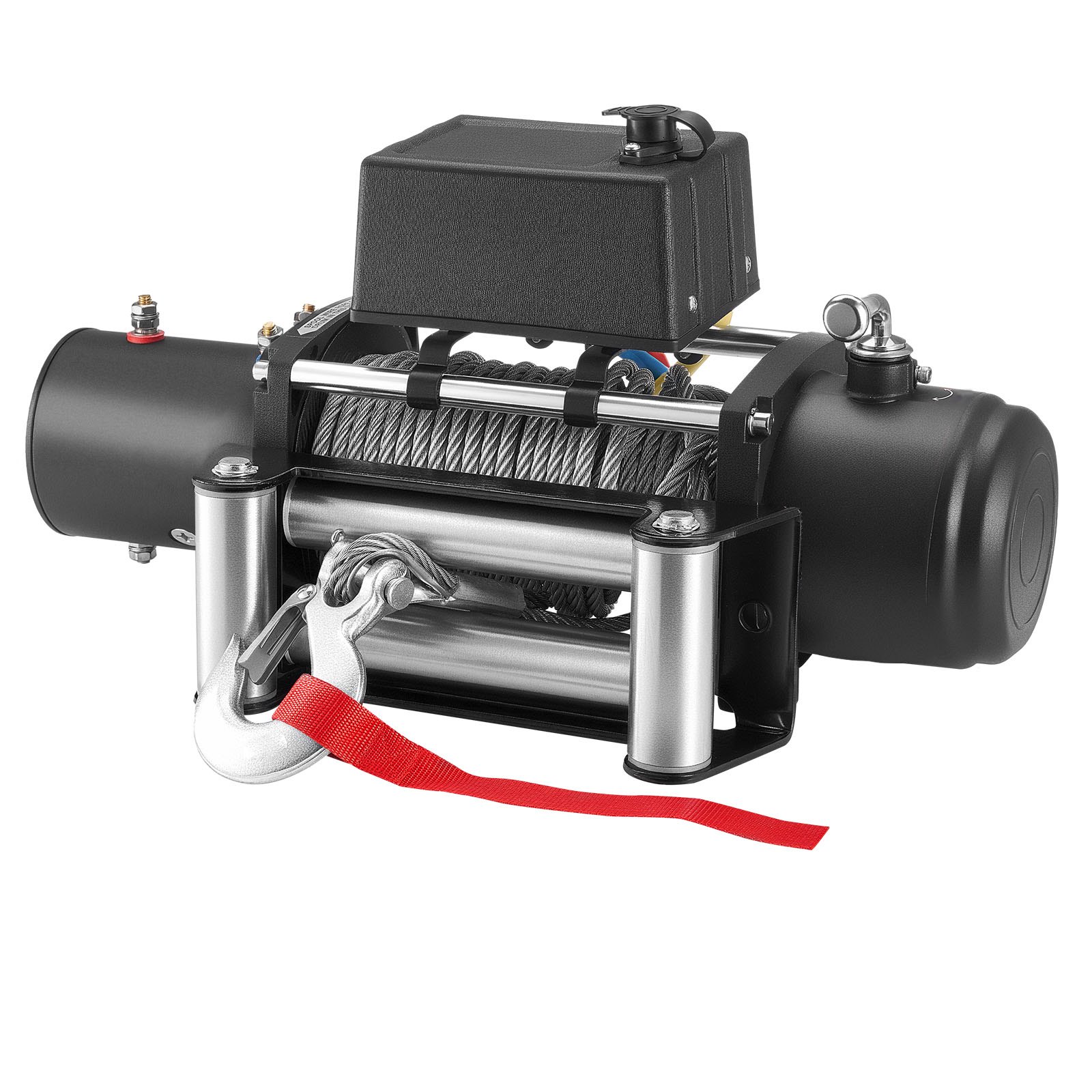 Electric Winch, 12000 Lbs Load Capacity, 12V DC Truck With Φ7/20 In X 85 Ft Steel Rope, Wireless & Wired Remote Control, Suitable For Towing SUV Jeep Trailer Boat Off-Road Vehicle$310.99View on Mallflare
Highlights
- Pulling capacity classes are 8,000–13,500 lb; a 10,000 lb winch suits mid-size SUVs and trucks up to ~6,500 lb GVW, while 13,500 lb handles full-size diesel trucks.
- Synthetic rope (often 3/8-inch, 80–100 ft) is lighter and safer than steel cable but requires abrasion protection; steel cable resists heat and rock rash but stores energy if it snaps.
- Series-wound motors deliver high torque and fast line speed under load but draw heavy current (often 300–450 A at full pull), requiring a high-output alternator and heavy-gauge wiring.
- Planetary gear ratios around 150:1–265:1 determine line speed versus pulling force; three-stage planetary gearsets are standard for durability in 10,000 lb-plus winches.
Best use cases
- Best fit: a 10,000 lb synthetic-rope winch with wireless remote for a mid-size SUV or half-ton truck used for occasional off-road recovery and trailer loading; skip 13,500 lb units unless you routinely recover full-size diesel trucks.
- Best fit: a 13,500 lb winch with steel cable for a full-size heavy-duty truck or commercial rig where abrasion resistance matters more than weight; skip synthetic rope if you frequently winch over sharp rocks.
- Best fit: an 8,000 lb winch for a UTV, side-by-side, or compact trailer; skip full-size truck winches because the added weight and current draw overload small electrical systems.
- Wrong fit: buying a winch rated below 1.5x vehicle GVW for emergency recovery; an undersized winch will stall or burn out under a dead-pull load, and no remote feature compensates for insufficient capacity.
Buying tips
- Size by math: multiply your vehicle's gross vehicle weight by 1.5; a 5,000 lb vehicle needs at least a 7,500 lb winch, so round up to the 8,000–10,000 lb class.
- Choose synthetic rope for safety and weight savings; choose steel cable only if you winch over sharp rock or in high-heat environments where synthetic fibers degrade.
- Confirm the remote type: wired remotes are simple and reliable; wireless remotes add convenience but need a paired receiver and fresh batteries; many winches include both.
- Match electrical demands: a 10,000 lb winch can draw 300+ A at full load, so verify your alternator output and use at least 2-gauge wiring for runs over 10 feet.
Specs
| Pulling Capacity | 8,000–13,500 lb classes |
|---|---|
| Line Type | Synthetic rope vs steel cable |
| Motor & Gear | Series-wound / planetary 150:1–265:1 |
| Remote Type | Wired, wireless, or both |
Related searches
What to check before buying
- Measure your bumper or winch plate mounting bolt pattern (commonly 10 x 4.5 inches or 4.5 x 6.5 inches) and confirm the winch footprint matches before buying.
- Check your vehicle's alternator output and battery capacity; a winch drawing 300–450 A requires a high-output alternator or dual-battery setup for repeated pulls.
- Verify fairlead compatibility: synthetic rope needs an aluminum hawse fairlead; steel cable needs a roller fairlead to prevent wear and binding.
- Confirm remote range and power: wireless remotes typically operate within 50–100 feet and use coin or AA batteries; ensure spare batteries are available for remote-dependent recovery.
FAQ
Data sources: eBay / Amazon listings and product attribute feeds Data updated Nov 16, 2026.
Some links on this page are affiliate links. If you buy after clicking one, we may earn a commission at no extra cost to you. This does not change which products appear here or their order. Affiliate disclosure.