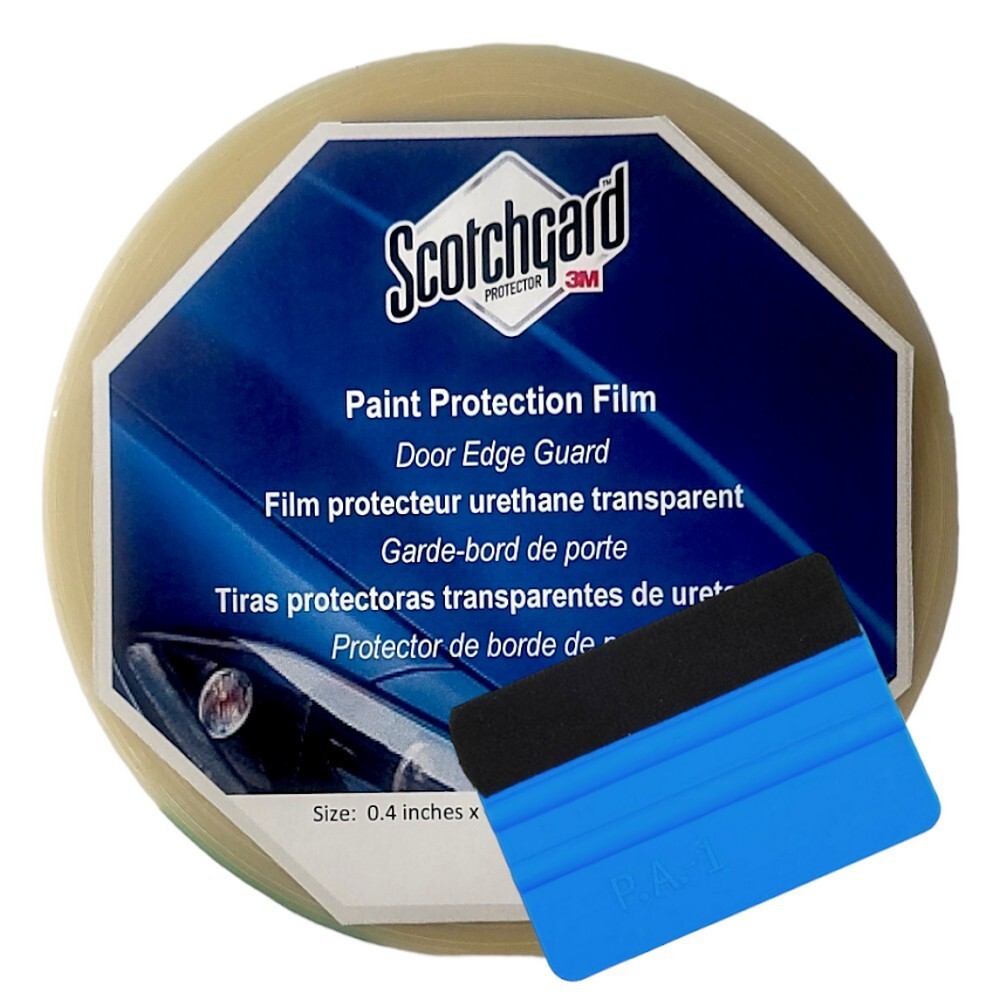

Photos from current listings. Actual item, color, and included accessories may vary.
3m Door Edge Protection Film Buying Guide
3M door edge protection film is a clear, pressure-sensitive urethane or vinyl tape applied to door edges to absorb impact chips and scratches. The core trade-off is film grade: automotive-grade urethane (3M Scotchgard Pro Series or Scotchgard Paint Protection Film) resists yellowing and impact far better than thin PVC vinyl, which hardens and peels within a season. Buy urethane film with a written 5+ year warranty for daily-driven cars; choose vinyl only for temporary lease-return or low-exposure use.


At a glance
- Category
- Exterior Protection & Accessories
- Data updated
- Nov 15, 2026
Current offers
Highlights
- 3M Scotchgard Pro Series is 8-mil thermoplastic urethane with a clearcoat top layer; standard Scotchgard PPF is 6-mil urethane, and generic 'door edge guard' rolls are often 4-mil PVC vinyl that yellows under UV.
- Urethane film stretches and self-heals light scuffs with heat; PVC vinyl does not self-heal and embrittles below freezing, cracking at the door's leading edge.
- Film width must cover the door edge return: 0.4 in (10 mm) suits thin edges, while 0.8 in (20 mm) wraps around the edge and onto the inner jamb for full chip protection.
- 3M's acrylic adhesive is pressure-activated and removable without residue for roughly 3-5 years; cheap rubber-based adhesives on generic vinyl leave glue lines after one summer.
Best use cases
- Best fit: daily-driven cars parked outdoors in gravel, road-salt, or tight garages — buy 6-8 mil urethane film in 0.8 in width for full edge wrap. Skip 4-mil vinyl; it chips through in one winter.
- Best fit: leased vehicles or short-ownership flip cars — a 0.4 in clear vinyl roll is adequate and cheap to remove at lease return. Skip premium urethane; the added cost won't pay back.
- Wrong fit: track cars or vehicles with existing edge chips — film is sacrificial protection, not body repair; correct the paint first, then apply film to clean, cured edges only.
Buying tips
- Match film thickness to exposure: 8-mil urethane (3M Pro Series) for highway/hail/salt states; 6-mil urethane for mild climates; 4-mil vinyl only for indoor-kept or temporary use.
- Calculate length: measure each door edge (typically 36-42 in per door on sedans), multiply by door count, and add 10% waste — a 33 yd (99 ft) roll covers four doors with margin.
- Choose width by edge geometry: 0.4 in (10 mm) for thin door edges, 0.8 in (20 mm) where you want wrap onto the jamb; pre-cut kits exist for specific models and beat universal rolls on fit.
- Confirm the film is genuine 3M Scotchgard-labeled urethane with a warranty card; unbranded '3M-style' rolls are usually PVC and will yellow and shrink at the edges within a year.
Specs
| Film Material | Urethane (PPF) vs PVC vinyl |
|---|---|
| Film Thickness | 6-8 mil urethane / 4 mil vinyl |
| Roll Width | 0.4 in (10 mm) or 0.8 in (20 mm) |
| Adhesive Type | Acrylic (removable) vs rubber |
Related searches
What to check before buying
- Measure door edge thickness and length with a caliper or tape before ordering width and roll length — edges vary from 0.1 to 0.3 in thick across models.
- Verify ambient application temperature: film should be applied at 60-90°F (15-32°C); below 50°F the adhesive won't tack and edges lift.
- Check door edge condition: clean, wax-free, and chip-free paint is mandatory; film over wax or chips will fail and trap moisture.
- Confirm you have a squeegee, slip solution (water + baby shampoo), and heat gun or hair dryer for edge wrapping — these are required companion parts, not optional.
FAQ
Data sources: eBay / Amazon listings and product attribute feeds Data updated Nov 15, 2026.
Some links on this page are affiliate links. If you buy after clicking one, we may earn a commission at no extra cost to you. This does not change which products appear here or their order. Affiliate disclosure.