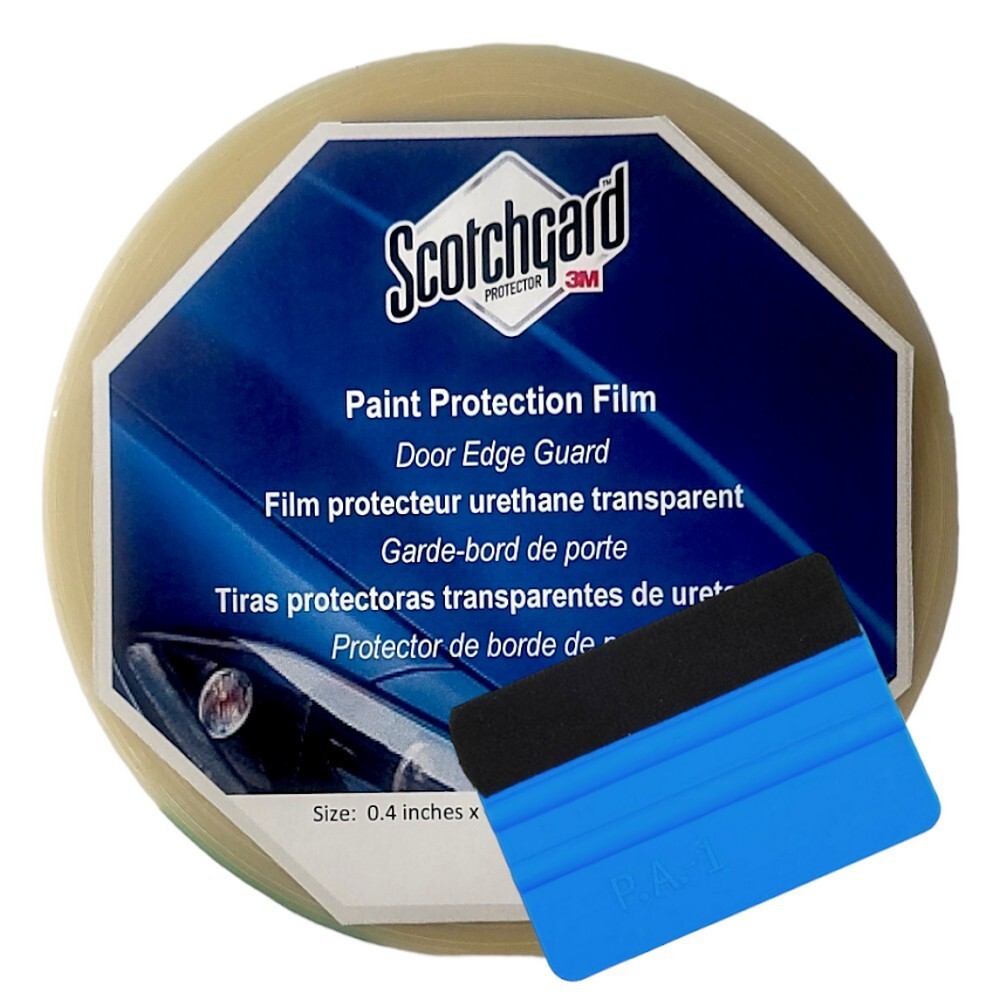

Photos from current listings. Actual item, color, and included accessories may vary.
3m Car Paint Protection Buying Guide
3M car paint protection refers to transparent urethane films (PPF) and vinyl wraps that shield OEM paint from rock chips, scratches, and UV. The core trade-off is film thickness and top-coat quality versus conformability and cost: thicker 8-mil urethane with a clear-coated top layer resists impact and yellowing, while thin 2-mil vinyl only handles light abrasion. The decision rule is simple: choose cast urethane film of at least 6 mil for impact-prone panels, and skip calendared vinyl for anything beyond decorative door-edge guards.


At a glance
- Category
- Exterior Protection & Accessories
- Data updated
- Nov 15, 2026
Current offers
Highlights
- 3M Scotchgard Pro Series PPF uses 8-mil aliphatic urethane with a clear coat; 3M Scotchgard standard film is 6-mil and suited to lower-impact areas.
- Cast film conforms to compound curves without lifting; calendared vinyl is stiffer and best limited to flat or low-curvature surfaces like door edges.
- Aliphatic urethane resists yellowing and UV degradation far better than aromatic versions, which discolor within a few seasons in direct sun.
- Door edge guard rolls are typically 0.4-inch wide vinyl strips; full-panel PPF comes in wider sheets measured in mils of urethane thickness.
Best use cases
- Daily highway commuters: install 8-mil cast urethane PPF on the front bumper, hood leading edge, mirror caps, and A-pillars to absorb rock strikes; skip thin vinyl there.
- Track or spirited-driving enthusiasts: use 8-mil film on high-impact zones and add a ceramic top coat; 6-mil film is adequate for rear bumper load areas and door cups.
- Budget-conscious shoppers protecting only door edges: a 0.4-inch vinyl door edge guard roll is the correct low-cost pick; do not expect it to stop gravel chips on the hood.
Buying tips
- Match film thickness to exposure: 8-mil urethane for front-facing panels, 6-mil for doors and rear bumper, and 2-mil vinyl only for edge trim.
- Choose cast urethane over calendared vinyl whenever the surface curves in two directions; cast film stretches without clouding or lifting.
- Confirm the film is aliphatic urethane with a clear top coat; aromatic urethane is cheaper but yellows under UV within roughly two to three years.
- For DIY door edge guards, a 0.4-inch width fits most door seams; wider 0.5-inch strips may bind on tight gaps and peel at the corners.
Specs
| Film Type | Cast urethane vs calendared vinyl |
|---|---|
| Thickness | 2-mil vinyl to 8-mil urethane |
| Urethane Grade | Aliphatic (UV-stable) vs aromatic |
| Top Coat | Clear-coated vs uncoated |
Related searches
What to check before buying
- Measure panel curvature and width before ordering: full hoods need 60-inch-wide sheets, while door edges only need 0.4-inch strips.
- Verify your paint is fully cured (at least 30 days after respray) and free of wax or sealant before film application.
- Check climate: in extreme heat or cold, install cast film in a 60-80°F space; vinyl edge guards may need adhesive promoter in winter.
- Confirm you have the companion tools: slip solution, squeegee, and heat gun for cast urethane; door edge guards need only a clean surface and pressure.
FAQ
Data sources: eBay / Amazon listings and product attribute feeds Data updated Nov 15, 2026.
Some links on this page are affiliate links. If you buy after clicking one, we may earn a commission at no extra cost to you. This does not change which products appear here or their order. Affiliate disclosure.