Photos from current listings. Actual item, color, and included accessories may vary.
Polishing Pad Buying Guide
Polishing pads are the consumable interface between a machine or drill and your paint, and their foam density, fiber type, and diameter dictate cut, finish, and heat buildup more than the polish itself. The core trade-off is aggression versus finish: wool and microfiber cut hard but can haze, while open-cell foam finishes cleanly but loads up and heats faster. Buy foam for finishing and daily correction, wool or microfiber only when you need serious defect removal, and always match pad diameter to backing-plate size.

At a glance
- Category
- Car Polishers & Compounds
- Data updated
- Nov 16, 2026
Current offers
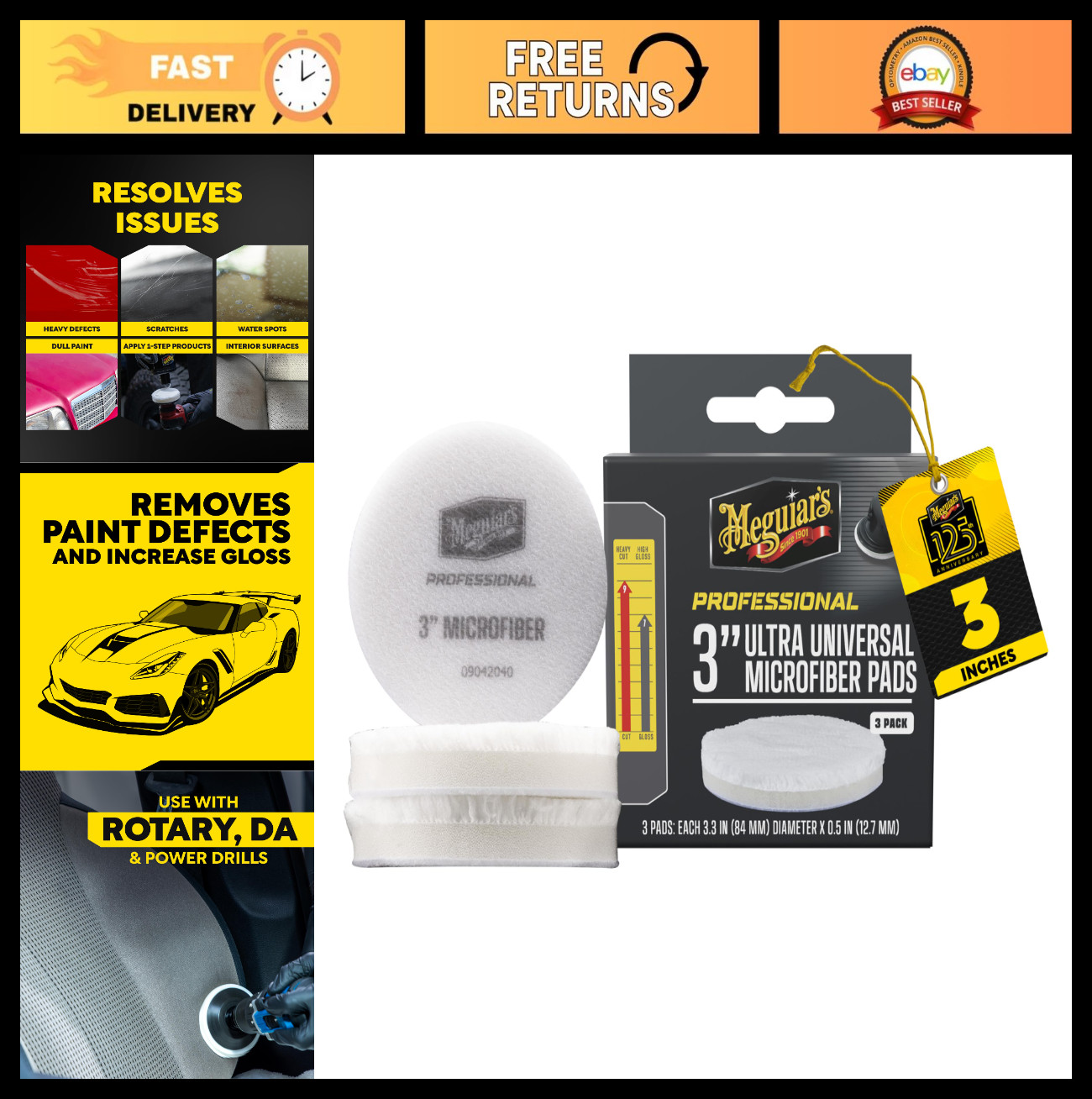 3" Microfiber Polishing Pads, 3-Pack for Car Detailing, Auto Care Accessories$41.99
 View on eBay
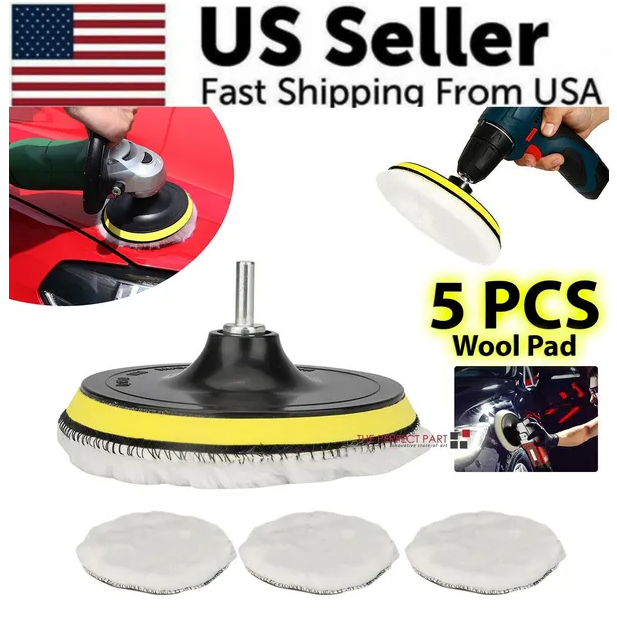 5PCS Buffing Polishing Pad Wool Wheel Mop Kit For Car Polisher Drill Adapter$21.99
 View on Mallflare
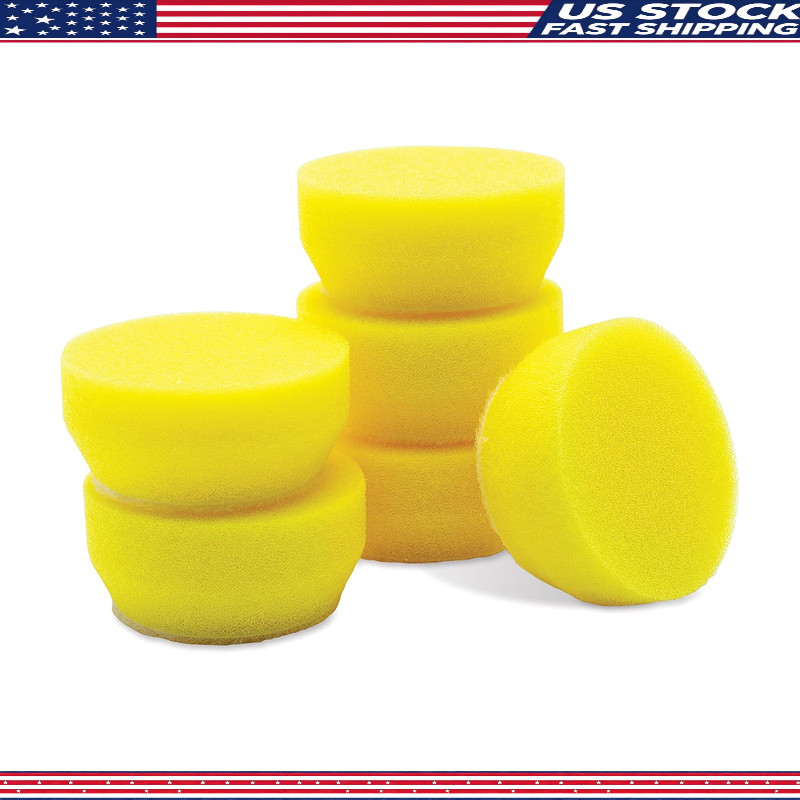 Yellow 1 Foam Pads Car Polishing, Detailing, Paint Correction and Waxing, Set 6$32.99View on eBay
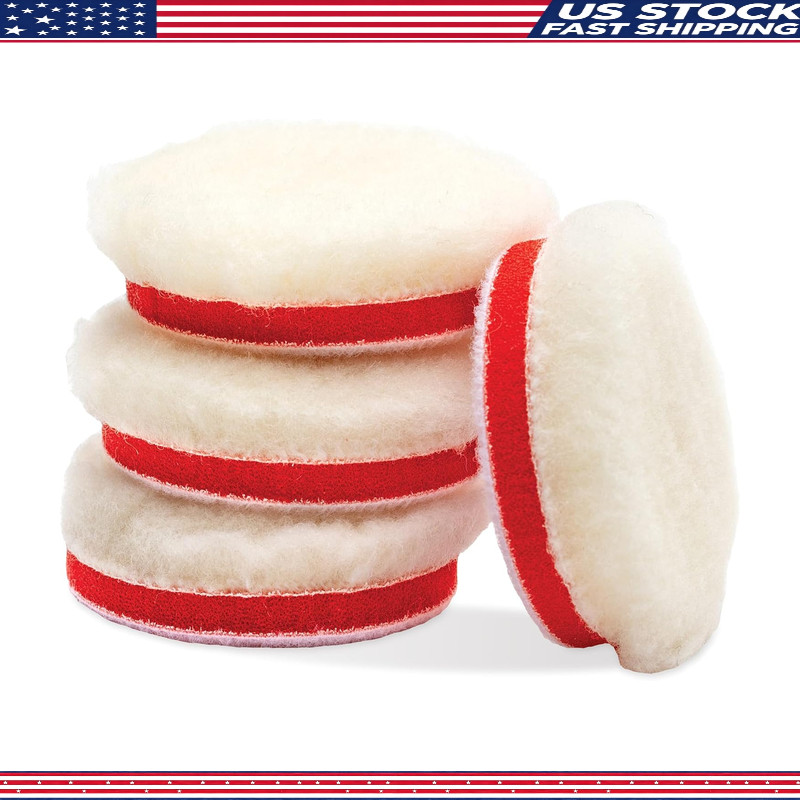 BOSS Knitted Wool Pads Car Detailing, Polishing, Paint Correction, Buffing Pads$36.99View on eBay
Highlights
- Foam pads are graded by cell structure and density, not color: open-cell cutting foams shear defects fast, closed-cell finishing foams refine without haze.
- Wool pads cut fastest because natural fiber strands act as microscopic blades, but they require a follow-up foam pass to remove wool marring.
- Microfiber pads sit between wool and foam: short fibers cut like a light wool while leaving a finish close to a polishing foam.
- Pad diameter must match the backing plate within about 0.5 inch; an oversized pad on a small plate causes edge wobble and uneven rotation.
Best use cases
- Choose 5- to 6-inch open-cell foam pads on a dual-action polisher for safe one-step correction and waxing on daily drivers.
- Choose 3-inch microfiber or foam pads on a drill adapter for tight areas like pillars, mirrors, and bumper corners; skip large pads on a drill because drill speed is hard to modulate.
- Choose knitted wool pads only for heavily oxidized or scratched paint followed by a foam finishing pass; skip wool on soft or fresh paint where haze risk is high.
Buying tips
- Match pad size to plate: a 5-inch plate takes 5- to 5.5-inch pads, a 3-inch plate takes 3- to 3.5-inch pads, and a 6-inch plate takes 6- to 6.5-inch pads.
- For drill use, pick pads with a 5/16-inch or M14 adapter and keep drill speed low; high RPM on a drill generates heat that can burn edges.
- Buy at least three pads per grade so you can swap when a pad loads with polish; a loaded pad stops cutting and just smears.
- Prefer pads with a centered backing hook-and-loop layer and tapered edge; flat, wide pads are harder to keep spinning on a drill.
Specs
| Pad Material | Foam / Wool / Microfiber |
|---|---|
| Pad Diameter | 3 in / 5 in / 6 in |
| Mounting Type | Hook-and-loop backing |
| Adapter Thread | 5/16 in drill / M14 rotary |
Related searches
What to check before buying
- Measure your backing plate diameter before ordering; pad diameter should be equal to or no more than 0.5 inch larger than the plate.
- Confirm your machine or drill chuck accepts the pad's adapter thread (5/16-inch for most drill adapters, M14 for rotary polishers).
- Check that your polisher's spindle speed range suits the pad type; foam finishes best below about 1800 OPM on a DA, wool tolerates higher speeds.
- Have a pad cleaning brush and at least two spare pads per grade so heat and polish loading don't stall the job.
FAQ
Data sources: eBay / Amazon listings and product attribute feeds Data updated Nov 16, 2026.
Some links on this page are affiliate links. If you buy after clicking one, we may earn a commission at no extra cost to you. This does not change which products appear here or their order. Affiliate disclosure.