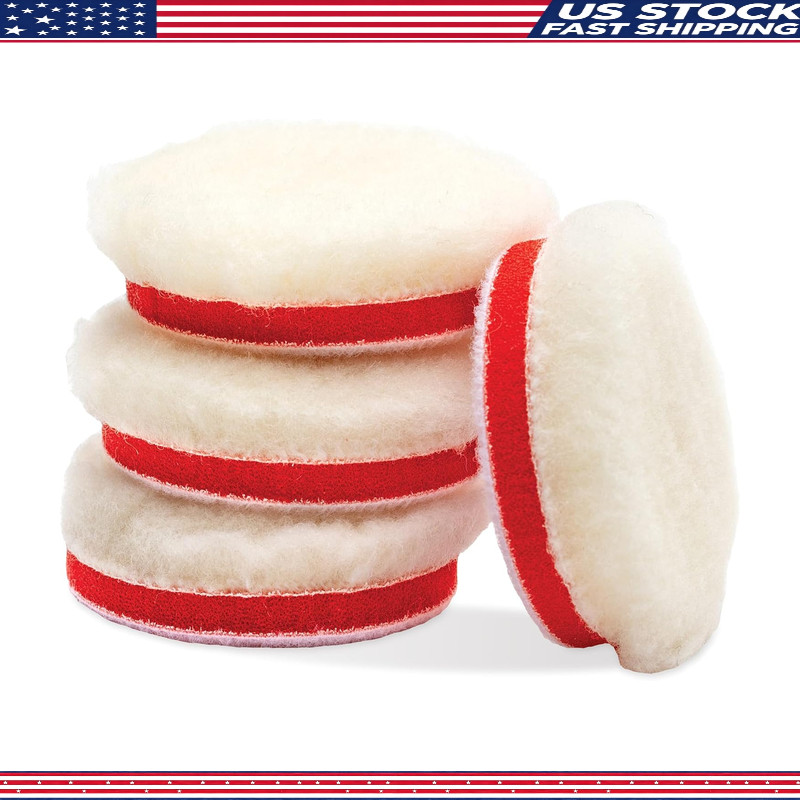

Photos from current listings. Actual item, color, and included accessories may vary.
Buffing Pad Buying Guide
Buffing pads are the consumable interface between your machine and paint, and their foam density, wool grade, and backing plate diameter dictate cut, finish, and heat tolerance. The core trade-off is cut rate versus finish quality: aggressive wool and open-cell foam cut fast but haze, while fine closed-cell foam finishes cleanly but removes little defect. Buy the pad diameter and attachment type that matches your machine's backing plate and speed range, and treat pad condition as a wear item rather than a permanent tool.


At a glance
- Category
- Car Polishers & Compounds
- Data updated
- Nov 16, 2026
Current offers
Highlights
- Foam pads are graded by pore structure: open-cell cutting pads (often yellow/orange) generate more friction and heat, while closed-cell finishing pads (black/blue) run cooler and leave a finer gloss.
- Natural knitted wool pads cut faster than foam and resist heat buildup, but they shed fibers and require a spur or compressor to clean between panels.
- Pad diameter must match or slightly exceed the backing plate: a 5-inch pad on a 5-inch plate is standard, while oversizing a pad on a small plate causes edge folding and pad failure.
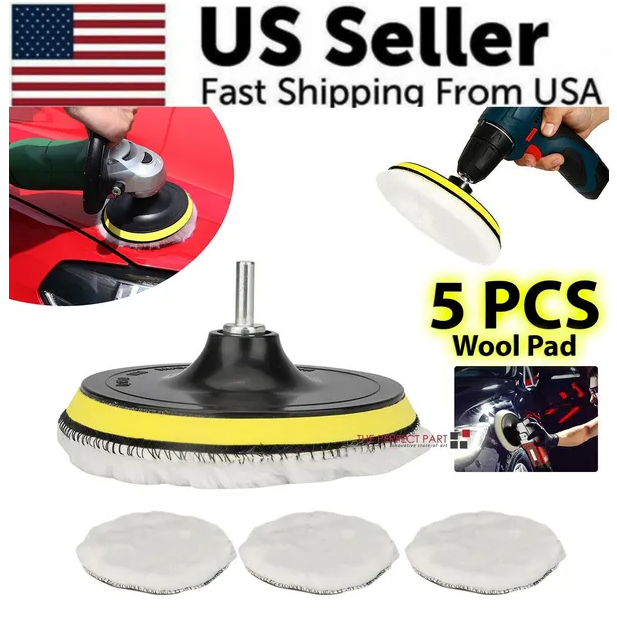
- Drill-mounted pad kits use a hex-shank adapter and rely on the drill's RPM ceiling, so pads rated for high-speed rotary use are required to avoid delamination.
Best use cases
- Best fit: choose a 5-inch open-cell foam cutting pad plus a matching backing plate when removing swirls and light oxidation with a dual-action polisher; skip wool if you want a one-step finish without haze.
- Best fit: choose knitted wool pads for heavy compounding on oxidized or neglected paint where fast cut matters more than a perfect finish; follow with a foam finishing pad to refine.
- Wrong fit: avoid drill-mounted wool mop kits for finishing work on modern clearcoat—their aggressive cut and inconsistent speed control leave holograms that require a second machine step.
- Best fit: pick a multi-density foam kit (cutting, polishing, finishing) when you are new to machine polishing, so you can match pad aggressiveness to the defect level instead of buying one pad for all jobs.
Buying tips
- Match pad diameter to backing plate: 5-inch pads for 5-inch plates, 6-inch pads for 6-inch plates; a pad more than 1 inch larger than the plate will flop and fold at the edges.
- Choose foam density by task: heavy-cut open-cell for defect removal, medium polishing foam for gloss refinement, and soft closed-cell for wax or sealant application.
- For drill adapters, confirm the pad's maximum RPM exceeds your drill's top speed—most drills spin faster than rotary polishers at low settings, which can melt foam.
- Wool pads need a spur or compressed air for cleaning; buy a spur if you plan to use wool across multiple panels, otherwise pad loading reduces cut rate.
Specs
| Pad Material | Open/closed-cell foam, knitted wool |
|---|---|
| Pad Diameter | 3 / 5 / 6 in (match backing plate) |
| Attachment Type | Hook-and-loop or drill hex shank |
| Max Speed Rating | Rotary/DA or drill RPM limit |
Related searches
What to check before buying
- Measure your machine's backing plate diameter in inches before ordering pads; pad size is listed by diameter and must match the plate.
- Confirm your machine type (dual-action, rotary, or drill) and its spindle thread or adapter style so the pad attaches without wobble.
- Check your drill's chuck size and maximum RPM if using a drill adapter kit; 3/8-inch chucks handle hex shanks, and high RPM requires high-speed-rated pads.
- Verify pad thickness: thinner pads (around 1 inch) transfer more direct force for cutting, while thicker pads (1.25 inches and up) conform to curves and run cooler.
FAQ
Data sources: eBay / Amazon listings and product attribute feeds Data updated Nov 16, 2026.
Some links on this page are affiliate links. If you buy after clicking one, we may earn a commission at no extra cost to you. This does not change which products appear here or their order. Affiliate disclosure.