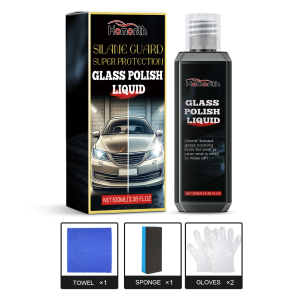

Photos from current listings. Actual item, color, and included accessories may vary.
Ceramic Car Wax Buying Guide
Ceramic car wax is a sprayable or paste hybrid product that blends carnauba or synthetic wax with SiO2 ceramic particles to deliver easier application and longer durability than traditional wax. The key trade-off is SiO2 concentration vs. ease of use: high-solids ceramic waxes last months but require careful buffing, while spray sealants sacrifice longevity for speed. Choose a true ceramic wax only if you want 3–6 months of protection with DIY application; otherwise stick to a pure sealant or coating.


At a glance
- Category
- Car Coatings, Waxes & Sealants
- Data updated
- Nov 15, 2026
Current offers
Highlights
- SiO2 content determines durability: 5–10% SiO2 gives 2–3 months, 15–20% gives 4–6 months, and >20% approaches entry-level coating performance but can streak.
- Spray ceramic waxes are solvent- or water-based; solvent carriers flash faster and bond better to bare paint, while water-based formulas are safer on trim and plastic.
- Carnauba-ceramic hybrids offer warm gloss but shorter life (4–8 weeks); pure SiO2 waxes are more durable but less forgiving on dark paint.
- 9H hardness claims refer to pencil-scale scratch resistance, not real-world swirl prevention; only true coatings (not waxes) form a semi-permanent glass-like layer.
Best use cases
- Best fit: DIY owners wanting 3–6 months of gloss and water beading on a daily driver — pick a 15–20% SiO2 spray wax and apply every 2–3 months.
- Wrong fit: show-car owners needing maximum depth on black paint — choose a carnauba-rich hybrid wax instead, as high-SiO2 waxes can look sterile.
- Best fit: quick maintenance between coatings — use a low-solids ceramic detailer spray after each wash; wrong fit: trying to replace a true ceramic coating with any wax.
- Best fit: vehicles parked outdoors in rain — ceramic waxes with high contact angle (>100°) bead water well; skip on matte or vinyl wraps, which need dedicated matte products.
Buying tips
- Check SiO2 percentage on the label: 10–15% is the sweet spot for DIY spray wax; above 20% requires panel-by-panel buffing to avoid high spots.
- Prefer solvent-based sprays for bare paint and water-based for plastic trim; solvent formulas bond tighter but can stain porous trim if not wiped.
- Match applicator to format: spray waxes need 2–3 microfiber towels; paste waxes need foam applicators and longer cure times (12–24 hours).
- Durability claims are unregulated — look for independent tests or user reports of 3+ months rather than '9H' or '10H' marketing.
Specs
| SiO2 Content | 5–20% (higher = longer durability) |
|---|---|
| Durability | 2–6 months (spray vs paste) |
| Formulation | Solvent-based vs water-based |
| Compatibility | Gloss paint only; not matte/vinyl |
Related searches
What to check before buying
- Confirm your paint condition: ceramic wax does not correct swirls or scratches — you must polish first or durability drops sharply.
- Measure ambient temperature: apply between 50–80°F (10–27°C) in shade; high heat causes flash-off streaking.
- Check compatibility with existing protection: ceramic wax layers over sealants but not over freshly applied coatings (wait 7 days).
- Verify you have enough product: a 16 oz spray bottle covers 2–3 mid-size cars per application; paste wax tins last 8–12 applications.
FAQ
Data sources: eBay / Amazon listings and product attribute feeds Data updated Nov 15, 2026.
Some links on this page are affiliate links. If you buy after clicking one, we may earn a commission at no extra cost to you. This does not change which products appear here or their order. Affiliate disclosure.