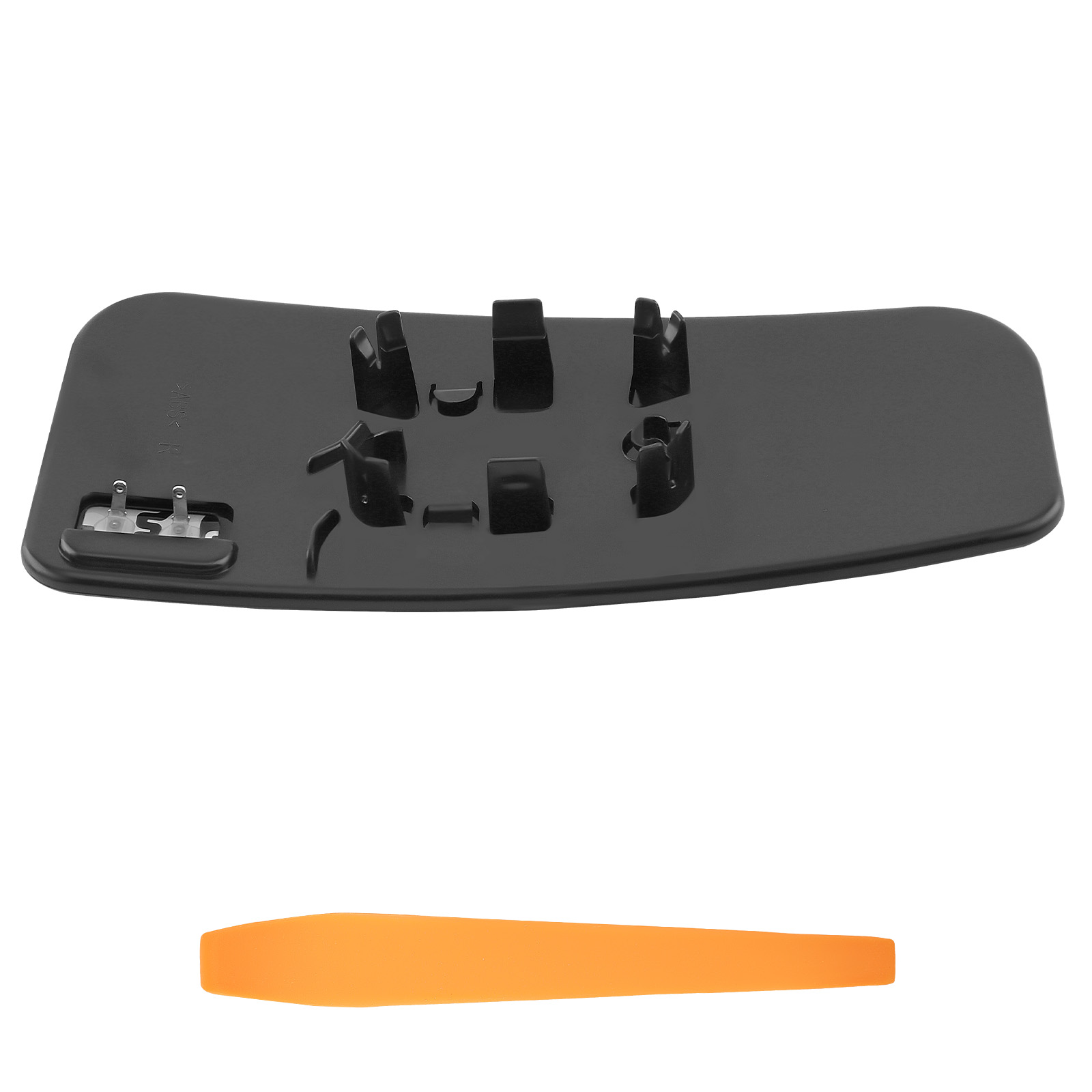

Photos from current listings. Actual item, color, and included accessories may vary.
Side Mirror Glass Buying Guide
Side mirror glass is the replaceable reflective element that restores visibility when a factory mirror is cracked, delaminated, or lost to impact. The core trade-off is between a flat, manually adjusted glass and a heated, convex, or electrochromic assembly that must match the vehicle's mirror housing, wiring, and mounting plate. Durable replacements use OEM-grade glass with factory-fit backing plates and correct curvature and heating resistance; compromises are flat-cut adhesive glass with no heating grid or wrong convexity.


At a glance
- Category
- Body, Interior & Hardware Parts
- Data updated
- Nov 16, 2026
Current offers
Highlights
- Heated mirror glass uses a resistive grid bonded to the back; unheated glass has no connector and will not defrost in cold climates.
- Convex (aspheric) glass widens the field of view on the passenger side but distorts distance; flat glass on the driver side preserves true distance judgment.
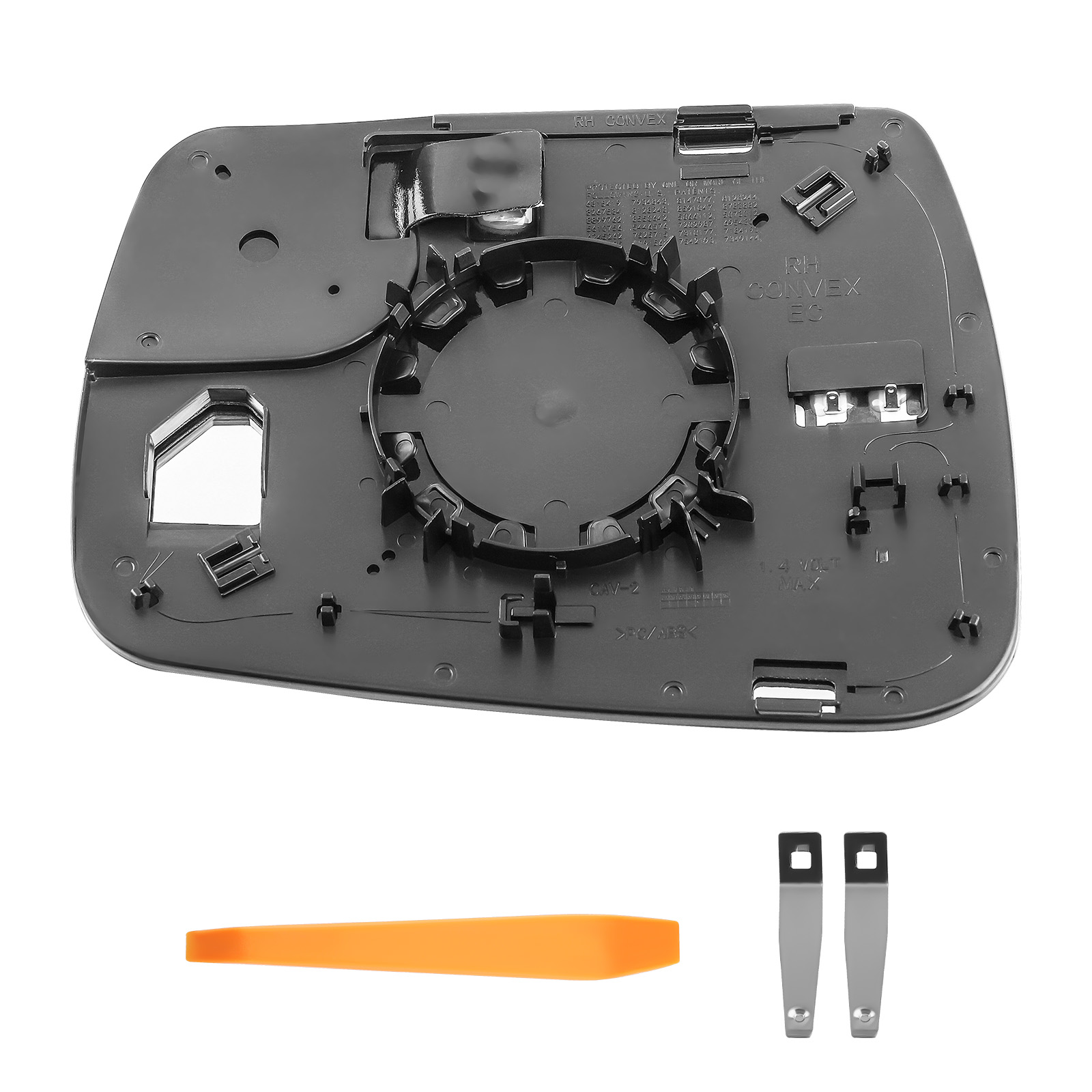
- OEM-fit glass includes a molded plastic backing plate with snap tabs that match the mirror motor; universal cut glass requires adhesive and often loses heating and auto-dimming.
- Electrochromic (auto-dimming) glass has a gel layer and two wire leads; replacing it with non-dimming glass disables the dimming circuit and may trigger a dash warning on some models.
Best use cases
- Best fit: direct OEM-replacement heated convex glass for a specific model year and side when the factory housing, motor, and connector are intact—snaps in and restores defrost and wide view.
- Wrong fit: universal flat-cut adhesive glass on a heated or auto-dimming mirror—loses defrost and dimming, and adhesive mounting often vibrates or falls off.
- Best fit: non-heated flat glass for warm-climate vehicles with manual mirrors and no wiring—lowest cost and simplest install.
- Wrong fit: buying by vehicle brand alone without confirming side, curvature, and connector—left and right glass differ, and heated versus non-heated connectors are not interchangeable.
Buying tips
- Match the mirror glass by side (driver/passenger), curvature (flat/convex/aspheric), and feature (heated/non-heated/auto-dimming) to the original; the backing plate tab pattern must match the mirror motor.
- Confirm the model-year range and cab style (e.g., F-150 2015–2021, Ram 1500 2019–2022) because mirror housings and connector plugs change across generations.
- Choose OEM or OEM-equivalent glass with a molded backing plate and factory connector; avoid universal cut glass if the vehicle has heating or auto-dimming.
- Check the heating grid resistance and connector type: two-pin connectors are common, but pin shape and housing depth vary by manufacturer and must match the door harness.
Specs
| Glass Type | Flat / Convex / Aspheric |
|---|---|
| Heating | Heated grid vs non-heated |
| Mounting | Snap-in backing plate / Adhesive |
| Feature | Auto-dimming / Turn signal / Blind spot |
Related searches
What to check before buying
- Measure the existing glass or backing plate length and height and note the curvature; replacement glass must match within a few millimeters to seat in the housing.
- Verify the mirror housing has a heating connector and that the door harness supplies 12V to it; non-heated housings have no grid and require non-heated glass.
- Confirm the mounting method: snap-in backing plate tabs versus adhesive; snap-in requires the correct tab count and spacing for the mirror motor.
- Check the vehicle's mirror generation and side-specific part number; driver and passenger glass are not interchangeable and year ranges often split mid-cycle.
FAQ
Data sources: eBay / Amazon listings and product attribute feeds Data updated Nov 16, 2026.
Some links on this page are affiliate links. If you buy after clicking one, we may earn a commission at no extra cost to you. This does not change which products appear here or their order. Affiliate disclosure.